Artwork
Rita
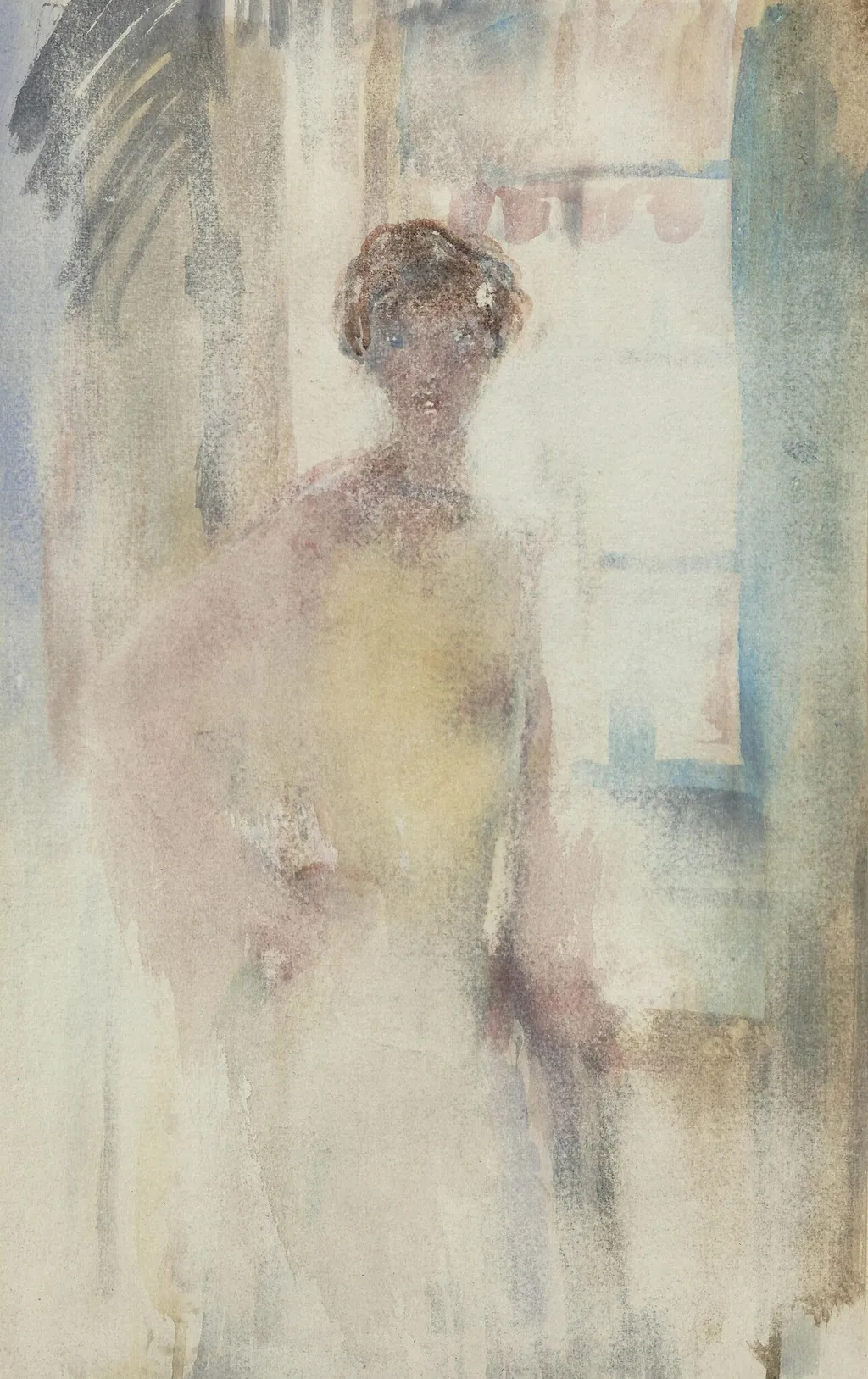
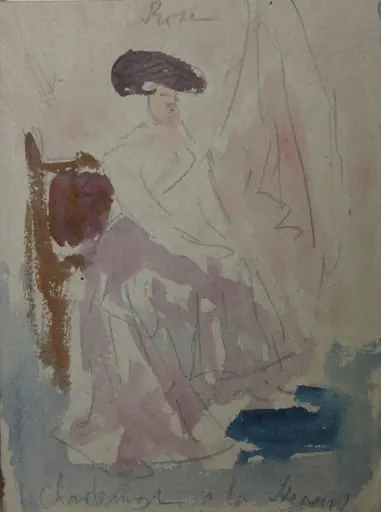
Rita is a watercolor work on paper by the Aestheticist artist Ambrose McEvoy. It dates from 1920 and is held in the collection of the Victoria and Albert Museum.
About this work
Overview
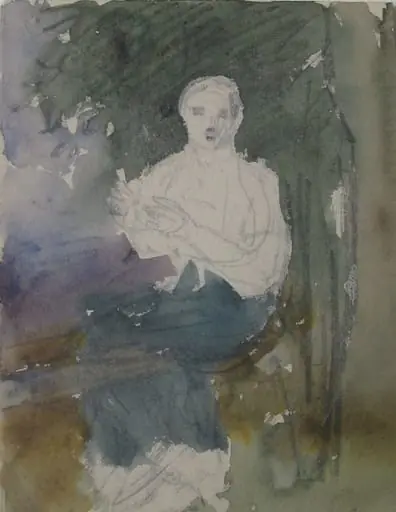
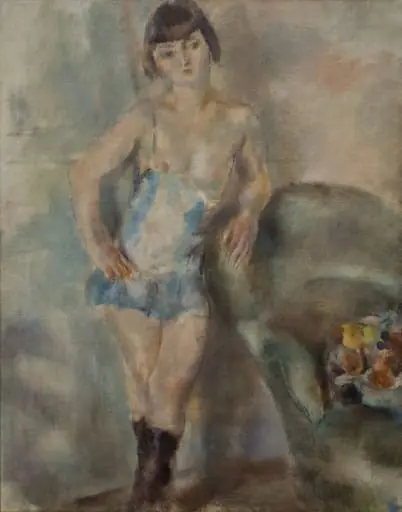
Painted in 1920 by Ambrose McEvoy, this watercolour portrays a solitary figure named Rita. Executed in delicate, translucent washes, the work captures a quiet, intimate moment in a dimly lit interior. The composition emphasizes atmosphere over detail, with soft edges and muted tones that suggest a fleeting presence rather than a defined portrait.
Subject & Meaning
The figure, identified as Rita, stands nude in an ambiguous interior space. Her face is intentionally blurred, obscuring identity and inviting contemplation of the body as form rather than person. The lack of facial detail and the subdued lighting shift focus from individuality to presence, evoking a sense of solitude and introspection.
Technique & Style
McEvoy employed thin, layered watercolour washes to model form with minimal brushwork. Light falls sharply across the left side of the figure, casting the rest into shadow, while the rough wall texture is suggested through uneven pigment application. The palette is restrained, pale pinks, greys, and ochres, enhancing the ethereal, almost ghostly quality of the figure.
History & Provenance
The painting bears an inscription with its title and the number 3, possibly indicating it was part of a small series or study. Its early 20th-century origin aligns with McEvoy’s interest in intimate, tonal portraits. No public record of its early ownership exists, but it remains within the corpus of his lesser-known, experimental works from this period.
Context
Created during a time when British artists were exploring psychological depth through simplified forms, this work reflects McEvoy’s departure from formal portraiture. His use of watercolour, often considered a sketch medium, here becomes a tool for emotional resonance. The subdued lighting and obscured face echo contemporary interests in mood over narrative.
Legacy
Though not widely exhibited, the painting exemplifies McEvoy’s quieter, more introspective phase. It contributes to a broader understanding of early 20th-century British watercolour as a vehicle for psychological nuance. Its restraint and ambiguity distinguish it from more decorative or illustrative works of the era.
Own this work as a print
Artist & collection

Artist
Arthur Ambrose McEvoy was an English artist. His early works are landscapes and interiors with figures, in a style influenced by James McNeill Whistler. Later he gained success as a portrait painter, mainly of women and…