Artwork
Margherita
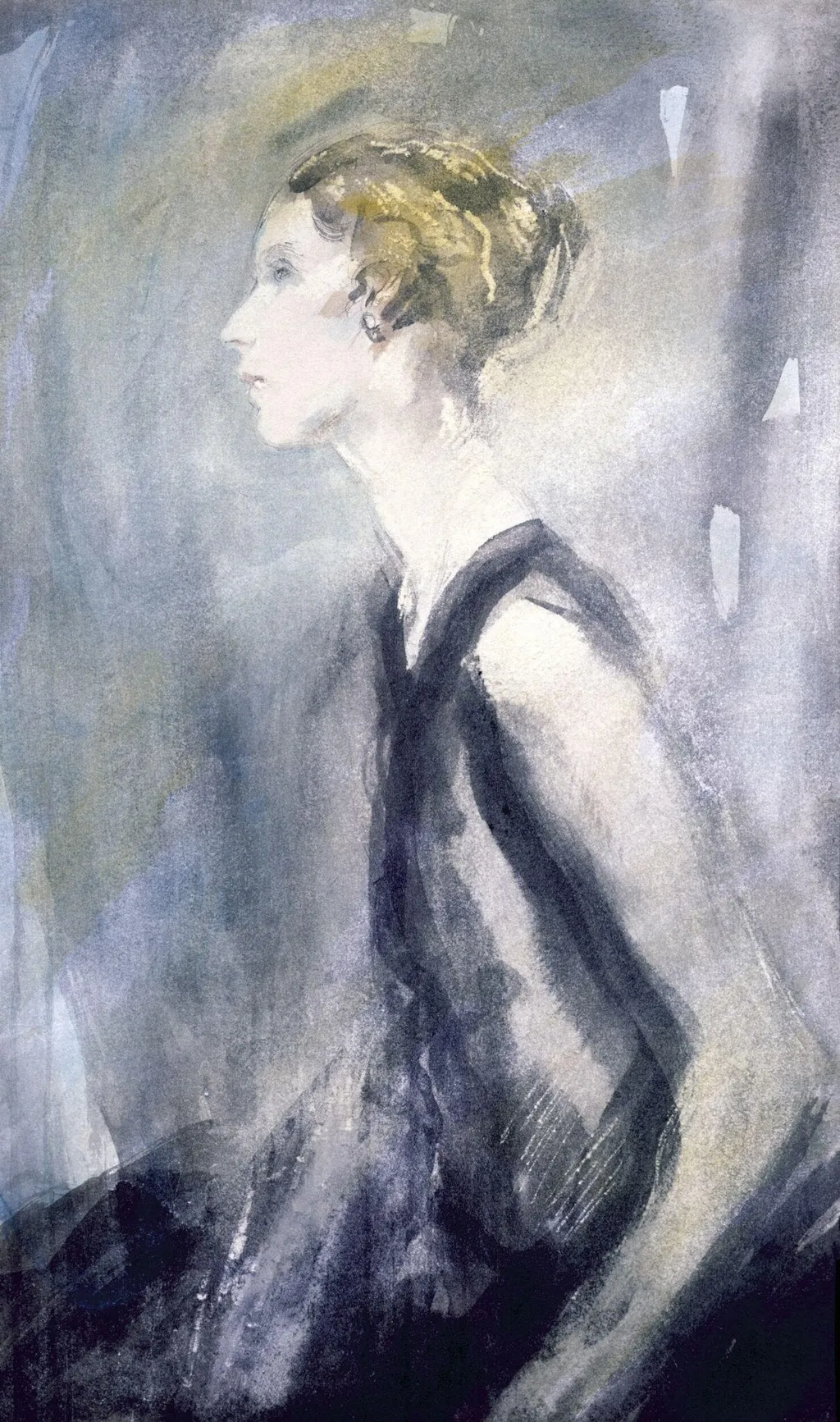
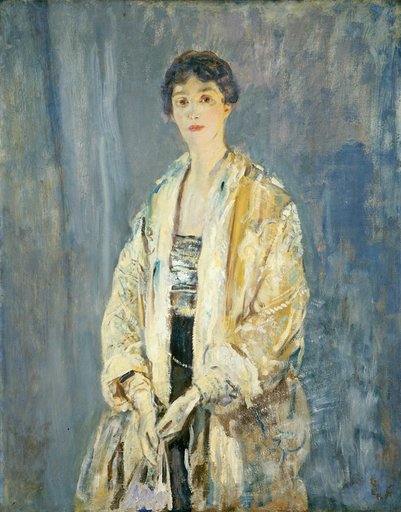
Margherita is a watercolor work on paper by the Aestheticist artist Ambrose McEvoy. It is held in the collection of the Victoria and Albert Museum.
About this work
Overview
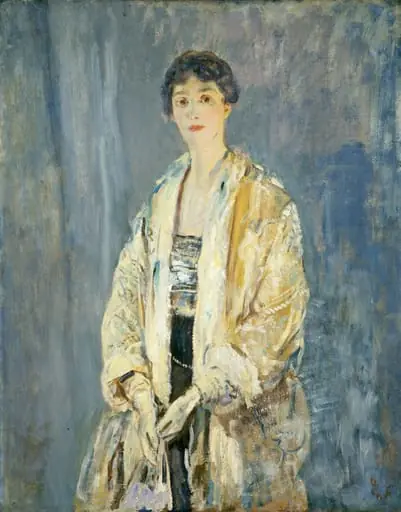
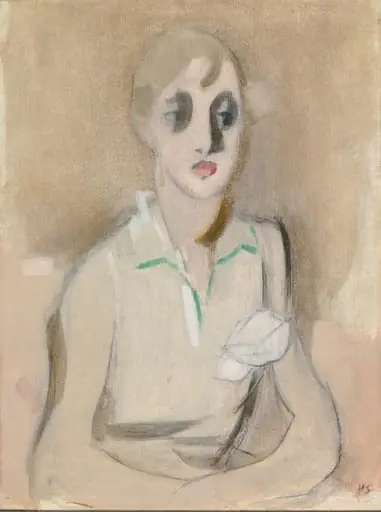
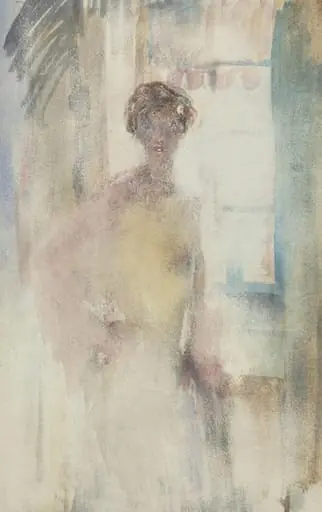
Created in 1920, Margherita is a watercolour portrait by Ambrose McEvoy depicting a woman seated in profile, rendered from the shoulders up. The composition emphasizes quiet intimacy, with minimal background detail and a focus on the subject’s facial structure. The medium’s fluidity allows for subtle transitions between light and shadow, lending the figure a delicate, almost ephemeral presence.
Subject & Meaning
The simplicity of her attire and the absence of contextual clues suggest a focus on inner stillness rather than social identity.
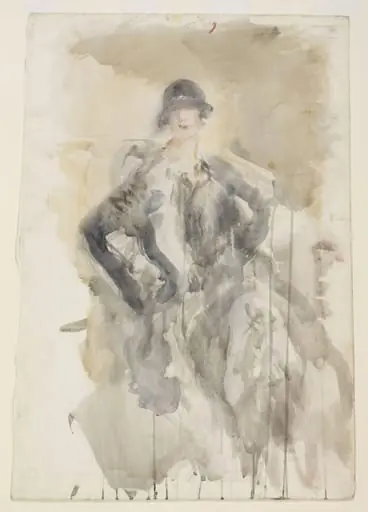
The sitter, identified as Margherita, is portrayed without ornament or overt expression, her gaze turned away from the viewer. The simplicity of her attire and the absence of contextual clues suggest a focus on inner stillness rather than social identity. The reverse side, bearing a pencil sketch of a child, hints at a personal connection between the artist and the subject, possibly indicating a private, domestic moment captured in passing.
Technique & Style
McEvoy employed wet-on-wet watercolour techniques to achieve soft, blurred edges and muted tonal shifts. The face and neck are modeled with faint washes, avoiding hard lines in favor of gradual gradations that recall sfumato. The dark, sleeveless dress contrasts with the pale skin, while the background remains indistinct, reinforcing the figure’s isolation and the work’s contemplative mood.
History & Provenance
The work was completed in 1920 during McEvoy’s period of heightened focus on intimate portraiture. It remained in the artist’s possession until his death in 1927, after which it passed through private collections. The presence of the child’s sketch on the reverse suggests it was kept as a personal study rather than a commissioned piece, reinforcing its private character.
Context
In early 20th-century Britain, watercolour was often associated with amateur practice, yet McEvoy elevated it through refined technique and psychological depth. Margherita aligns with contemporaneous trends in portraiture that favored restraint and emotional subtlety over grandeur, reflecting a broader shift toward modernist introspection in British art.
Legacy
Though not widely exhibited during McEvoy’s lifetime, Margherita has come to exemplify his mastery of watercolour as a vehicle for quiet psychological observation. Its understated elegance and technical nuance have influenced later artists interested in the expressive potential of translucent media, securing its place in discussions of British modernist portraiture.
Artist & collection