Artwork
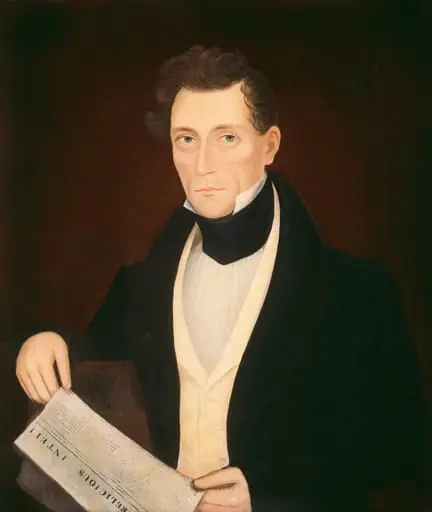
Man Named Hubbard Reading "Boston Atlas"
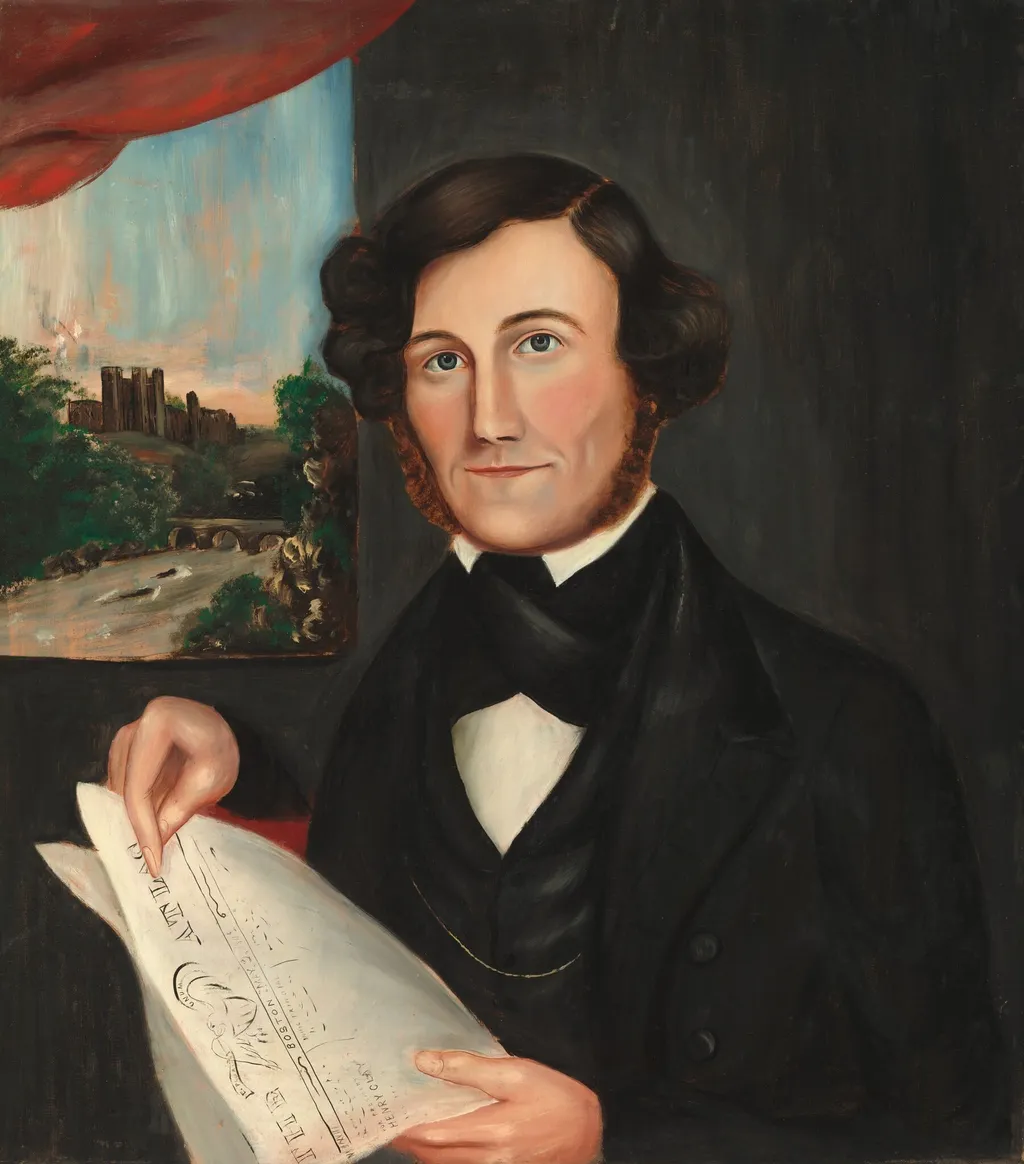
Man Named Hubbard Reading "Boston Atlas" is an oil painting. It dates from 1843 and is held in the collection of the National Gallery of Art.
- Inscription
- Inscribed:lower left on newspaper: E PLURIBUS UNUM / THE ATLAS / [NO.] [ ] XVIII Boston May 3, 184[3]. / WHIG PRINCIPAL / FOR PRESIDENT / HENRY CLAY
About this work
Subject & Meaning
The work belongs to the genre of everyday life scenes, reflecting the period's interest in ordinary activities as subjects for fine art.
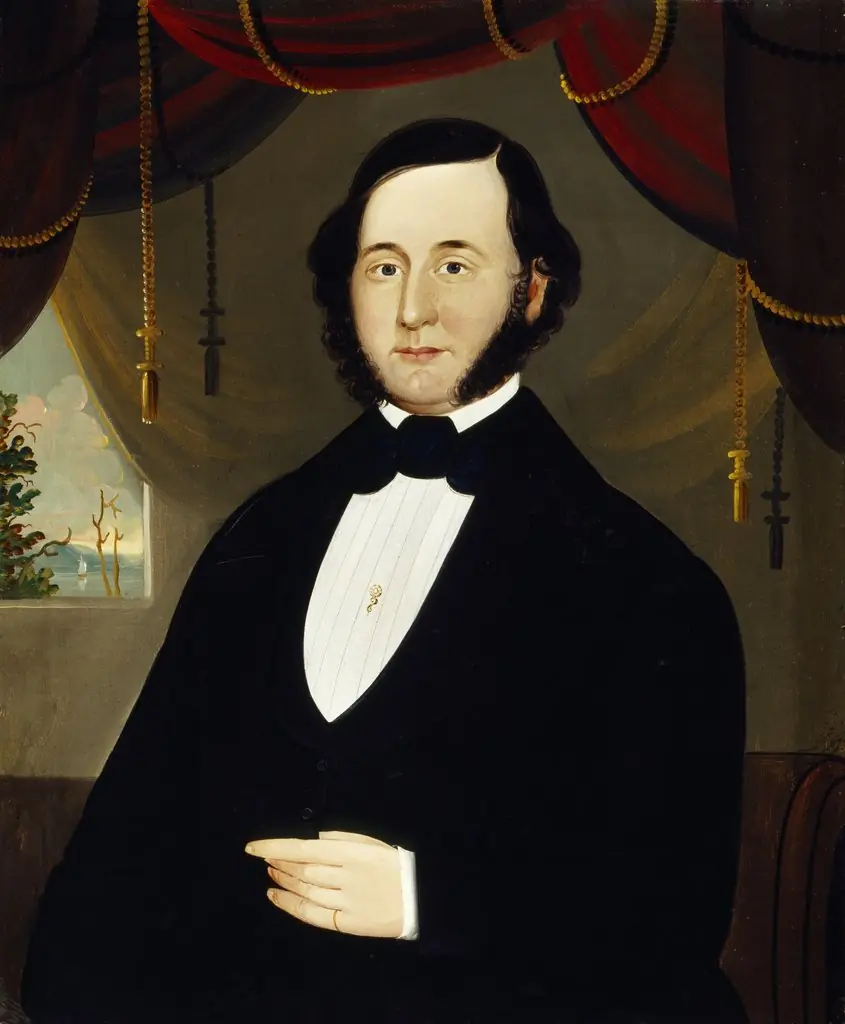
The painting shows a man identified as Hubbard engrossed in reading a Boston newspaper, a scene that symbolizes contemporary engagement with public affairs and the diffusion of information in mid-19th century America. The work belongs to the genre of everyday life scenes, reflecting the period's interest in ordinary activities as subjects for fine art. Hubbard's act of reading the "Boston Atlas" functions as a visual metaphor for intellectual participation in civic discourse, while the domestic interior setting underscores the growing middle-class audience for such narratives.
The composition thus conveys both a specific moment of domestic reading and a broader commentary on the role of the press in shaping public opinion during the era.
Technique & Style
The work is executed in oil on canvas, a standard medium for American genre painting of the mid-nineteenth century. Its physical support measures 74.3 cm in height by 66 cm in width, yielding a modestly scaled, nearly square format suited to an intimate domestic reading scene.
Stylistically, the painting belongs to the American 19th-century genre tradition, depicting a figure absorbed in the pages of the Boston Atlas newspaper. The classification as a genre scene underscores its focus on everyday subject matter rather than formal portraiture, with attention directed toward the sitter's engagement with the printed press.
History & Provenance
The painting Man Named Hubbard Reading "Boston Atlas" is dated to 1843 or later and was created by an American artist from the 19th century. Executed in oil on canvas, the work's early history places its origin in Massachusetts. It was previously owned by Robert Schuyler Tompkins of Sheffield, Massachusetts, who sold the piece in 1949 to Edgar William and Bernice Chrysler Garbisch.
The Garbisch couple subsequently donated the artwork to the National Gallery of Art in Washington, D.C., in 1978.
The painting Man Named Hubbard Reading "Boston Atlas" is held at the National Gallery of Art in Washington, D.C. It bears the accession number 1978.143.1. The work entered the collection through a gift from Edgar William and Bernice Chrysler Garbisch in 1978, having previously been owned by Robert Schuyler Tompkins of Massachusetts and sold in 1949. It was exhibited in the National Gallery of Art's 1949 exhibition of American Paintings and later featured in the 1978 exhibition "American Paintings from the Garbisch Collection" at the same institution.
Legacy
The painting Man Named Hubbard Reading "Boston Atlas" was acquired by the National Gallery of Art in Washington, D.C., in 1978, ensuring its preservation and public accessibility. Its presence in the museum’s collection has contributed to renewed scholarly interest in 19th‑century American genre scenes, highlighting everyday domestic activities.
Overview
The work is an oil painting on canvas that portrays a solitary figure in a dark suit, holding a newspaper titled "Boston Atlas" and gazing directly ahead. The composition is simple, focusing on the individual and the act of reading, rendered in a style linked to Romanticism.
Artist & collection