Artwork
Samuel Eells
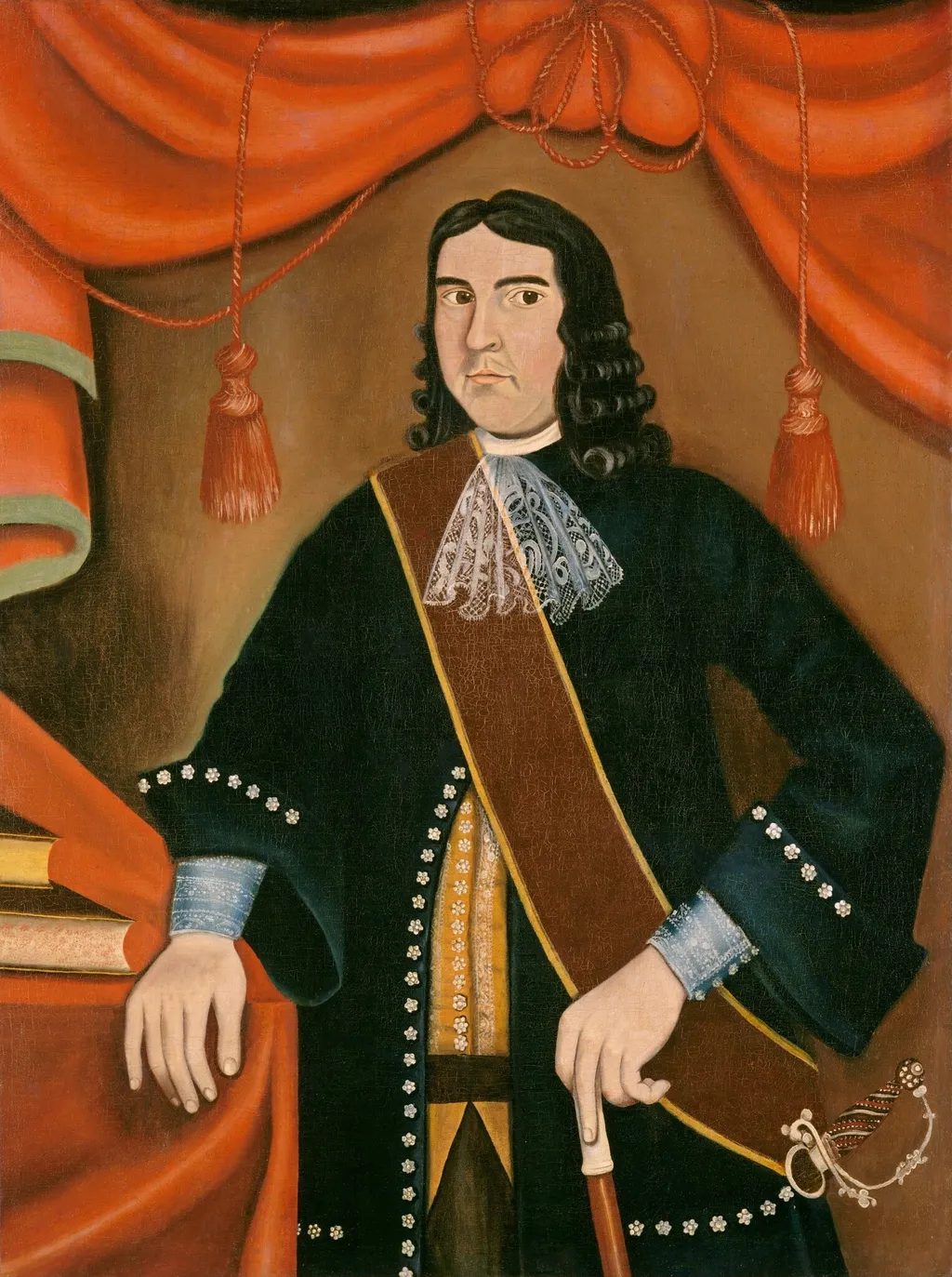
Samuel Eells is an oil painting. It dates from 1800 and is held in the collection of the National Gallery of Art.
About this work
Technique & Style
Samuel Eells is executed in oil on canvas, a support noted in the work’s material description.
Samuel Eells is executed in oil on canvas, a support noted in the work’s material description. The painting, dated to 1800, measures roughly 111.4 cm in height by 84 cm in width, as recorded by the National Gallery of Art. Oil paint was applied to the canvas to create a portrait that reflects the conventions of early American portraiture, though specific stylistic characteristics are not detailed in the available documentation.
The support consists of a single canvas panel, and the surface bears the typical handling of 19th‑century portrait commissions, with no recorded restoration notes beyond the exchange documented in 1954.
History & Provenance
The portrait, oil on canvas, dates to circa 1800. It remained in the Eells family in Massachusetts, passed from a brother of Reverend Ozias Eells to his sister-in-law Phebe Eells, who gave it to her son Ozias Shelton Eells upon his marriage in 1828. Ozias Shelton Eells gave it in 1882 to Reverend William Woodward Eells (unrelated), who bequeathed it to the Alpha Delta Phi Fraternity at Hamilton College.
The fraternity transferred it in 1924 to Mrs. Benjamin E. Tilton, then to the Milford Historical Society in 1949 (later exchanged 1954). After passing through Hirschl and Adler Galleries and the Garbisch collection, it entered the National Gallery of Art as a gift in 1971.
Overview
This oil on canvas portrait depicts Samuel Eells, a figure presented with an air of dignity and affluence. The painting showcases a man in formal attire, set against a rich, draped background, characteristic of portraiture intended to convey social standing. Its execution in oil allows for a depth of color and texture that enhances the subject's presence and the luxurious details of his clothing and surroundings.
Subject & Meaning
The subject, Samuel Eells, is portrayed in a dark, embellished coat with gold trim and delicate lace cuffs, complemented by a crisp white cravat. His serious demeanor, combined with the opulent fabrics of his attire and the tasseled red curtain behind him, underscores a deliberate presentation of wealth and social standing. The presence of another individual's arm on the left edge hints at a larger, perhaps familial or social, context.
Artist & collection

- Mr. Van Vechten
 John Lothrop
 Possibly William Metcalf
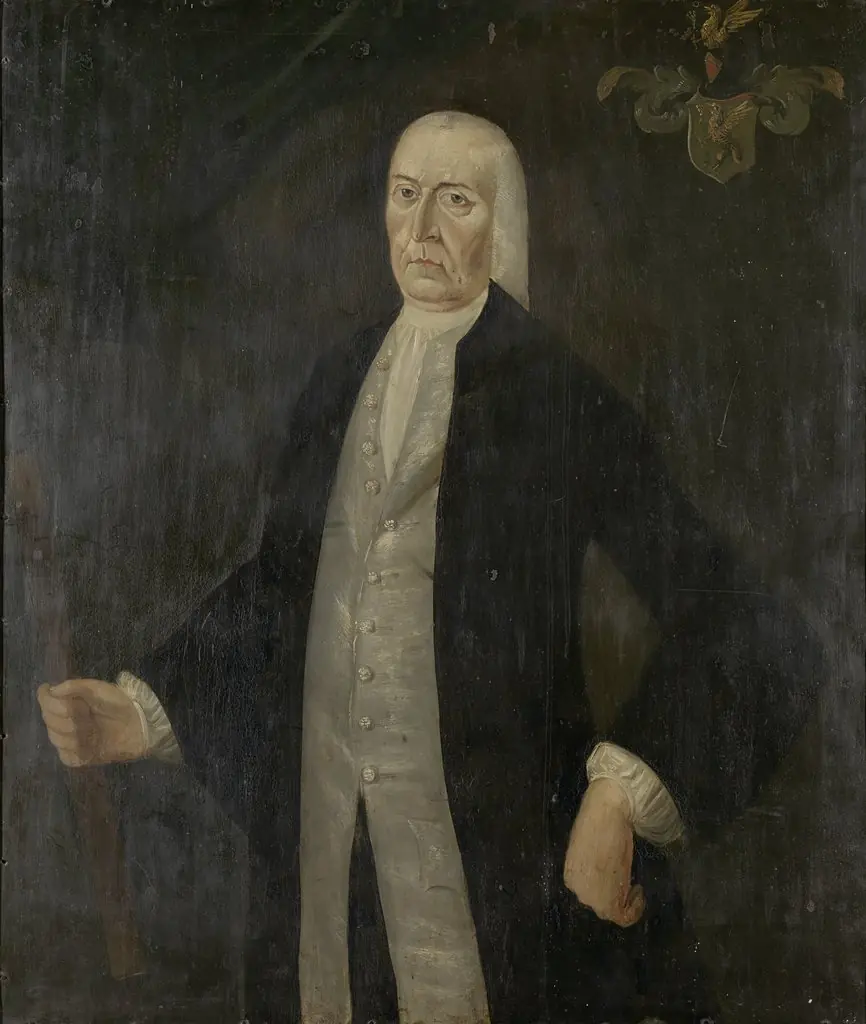 Portrait of gouverneur-generaal Jeremias van Riemsdijk
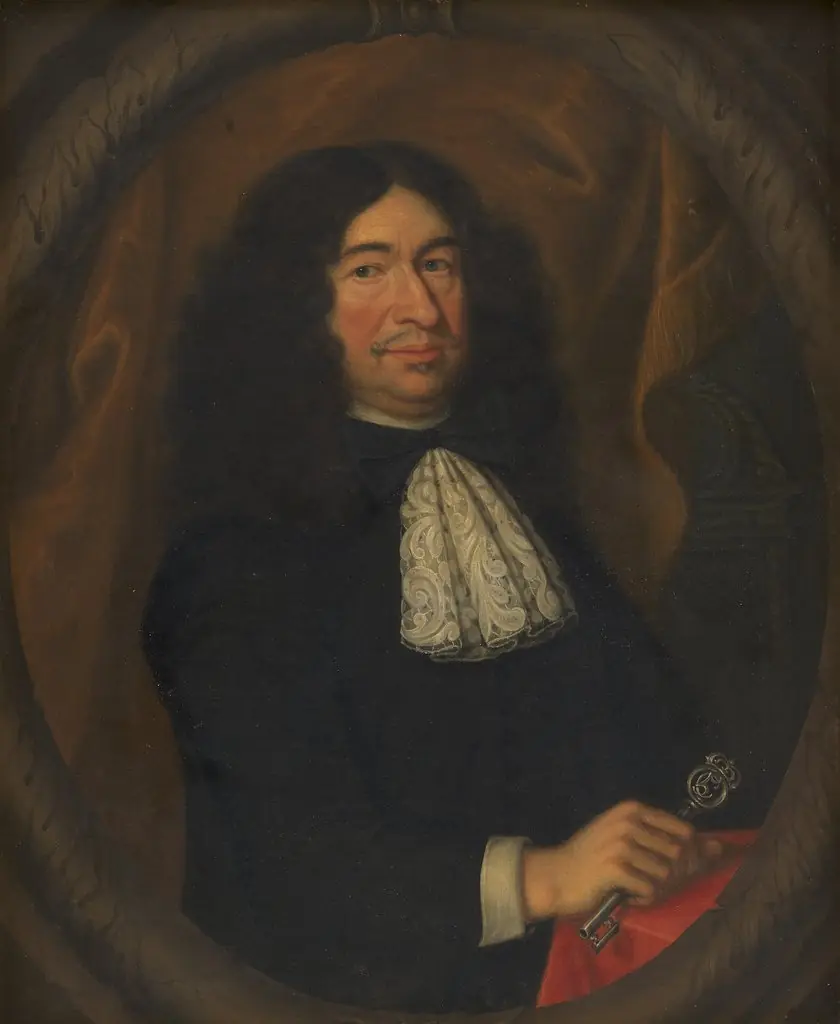 Kunstkammerforvalter Bendix Grodtschilling den ældre, kunstnerens fader
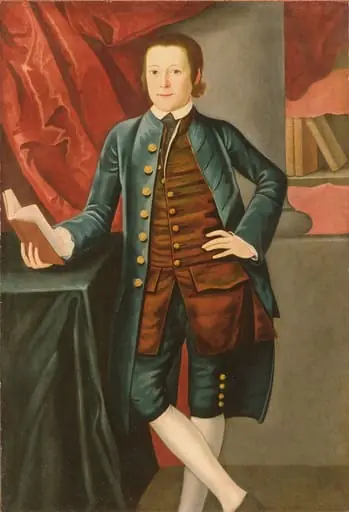 Boy of the Crossfield Family (Possibly Richard Crossfield)
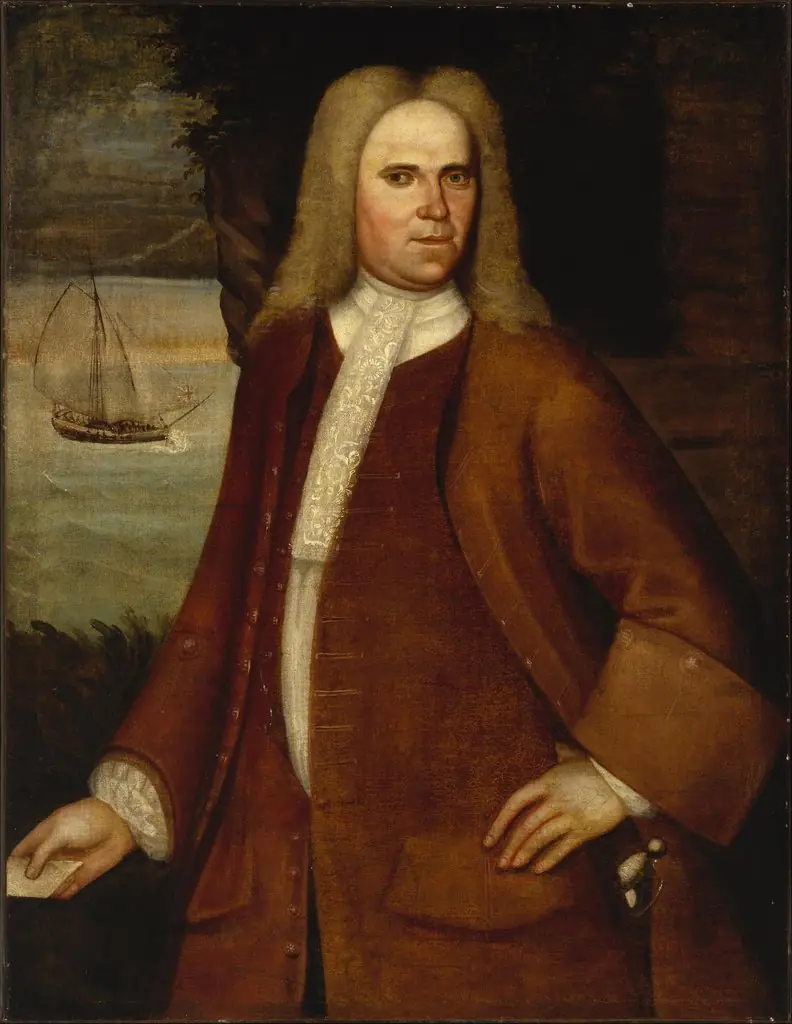 Portrait of Ebenezer Coffin
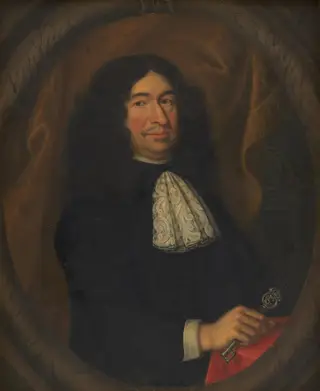 The Artist's Father, Bendix Grodtschilling the Elder, Warden of the Royal Kunstkammer
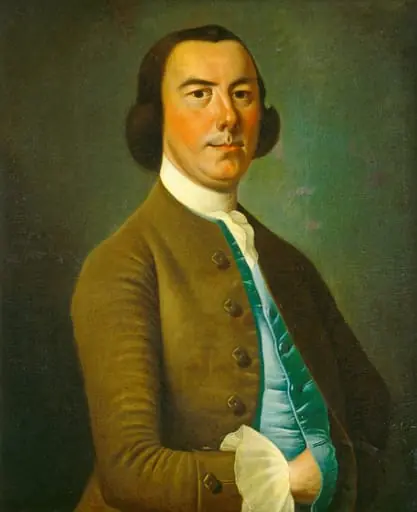 Mr. Motte
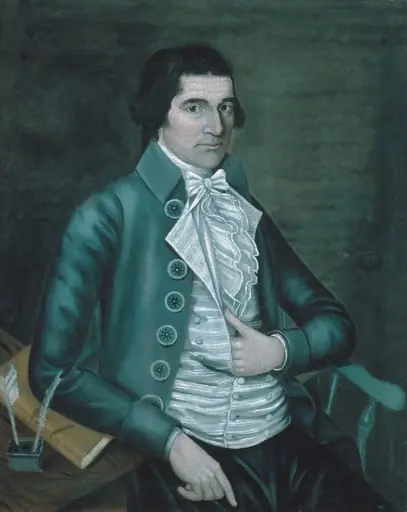 Job Perit
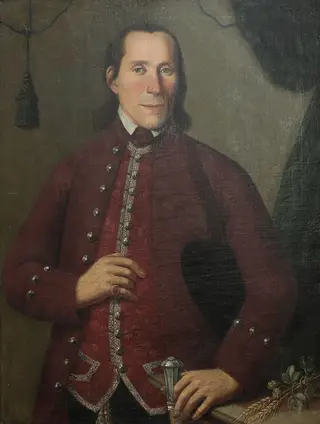 Rődl András
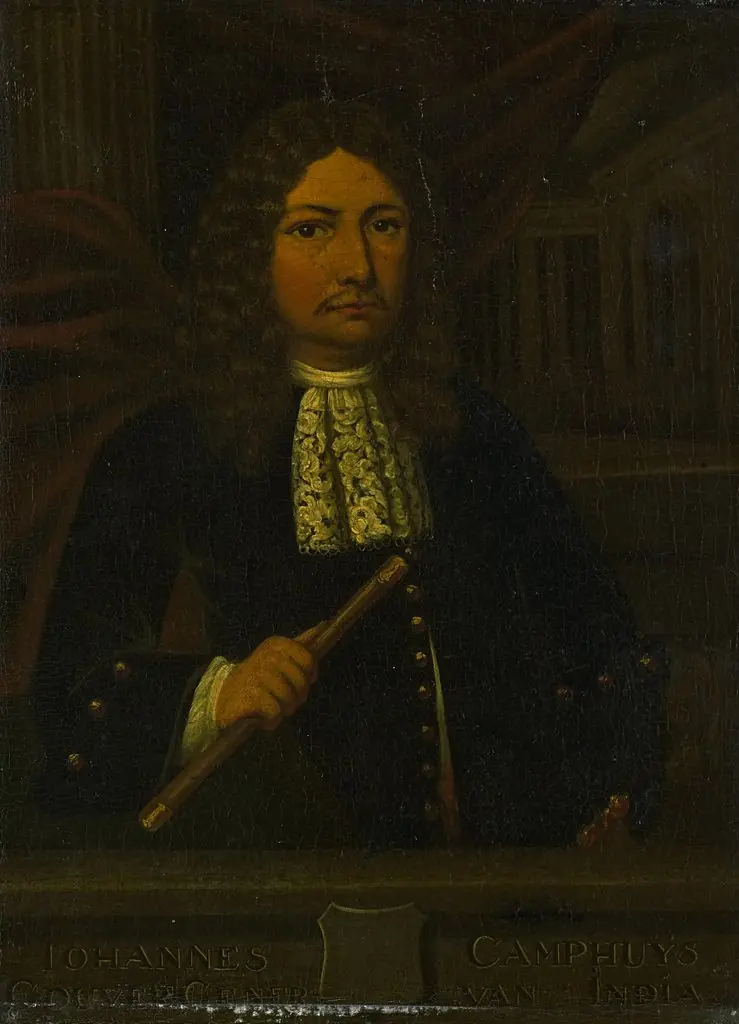 Portrait of Johannes Camphuys (1634-95), Gouverneur-generaal (1684-91)