Artwork
The Colonel
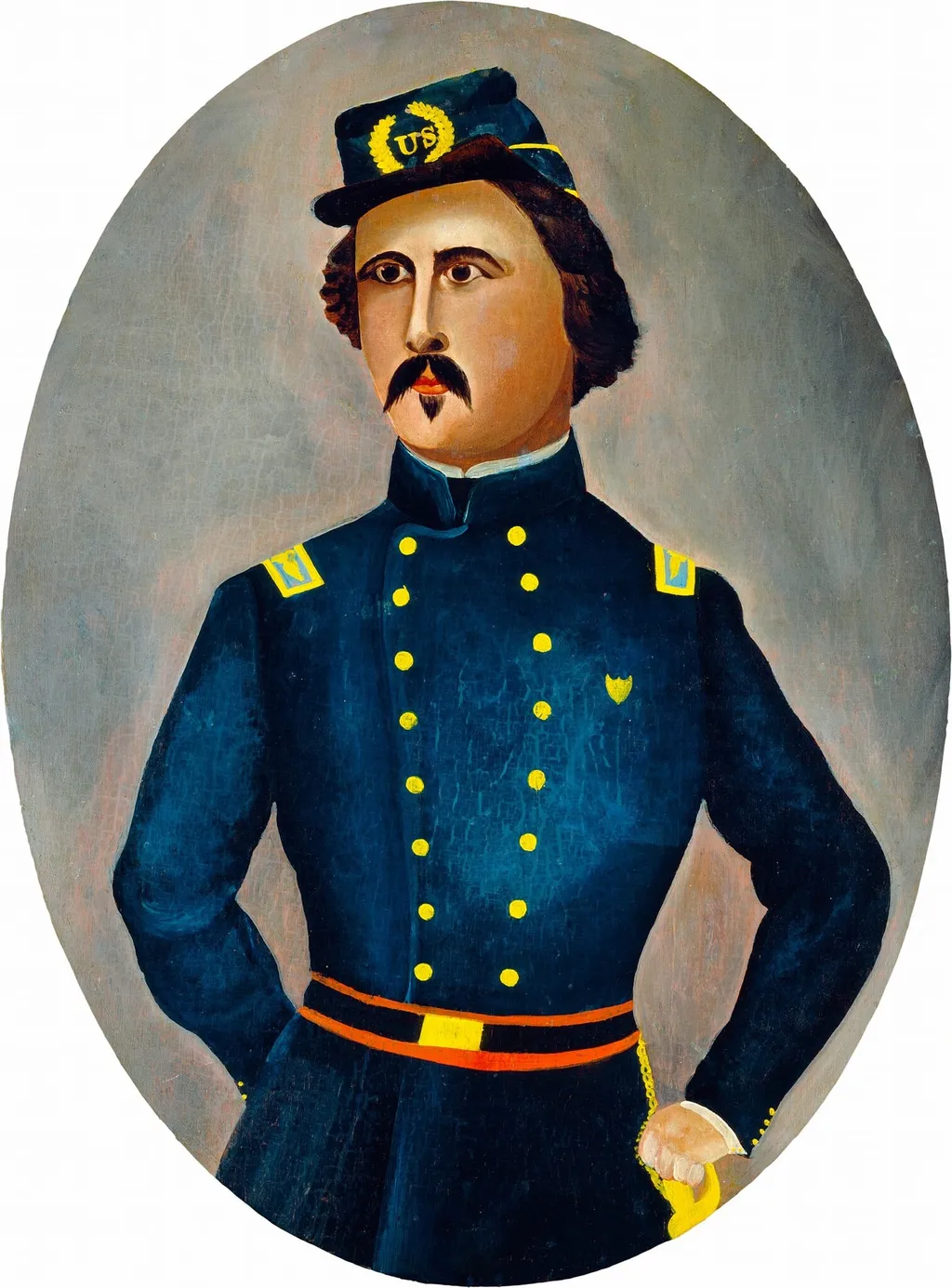
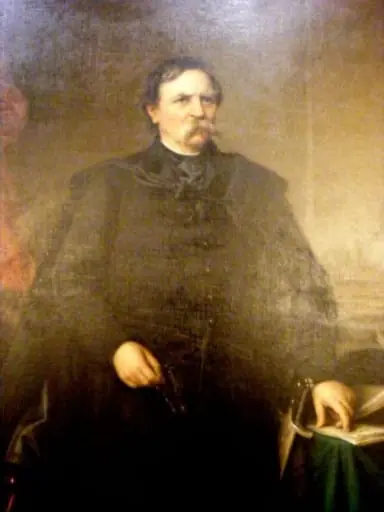
The Colonel is an oil painting. It dates from 1865 and is held in the collection of the National Gallery of Art.
- Inscription
- Inscribed:on cap: US
About this work
Technique & Style
The paint is applied in a smooth, controlled manner typical of portraiture of the period, allowing fine delineation of the sitter's features and attire.
The work is executed in oil paint on a wood panel support, a medium used by American artists in the mid-nineteenth century. The paint is applied in a smooth, controlled manner typical of portraiture of the period, allowing fine delineation of the sitter's features and attire. As a portrait, the painting presents a straightforward, likeness-focused composition with attention to facial expression and clothing details, reflecting the realist tendencies of American 19th-century portraiture. The wood panel provides a rigid ground that contributes to the painting's stability.
History & Provenance
The Colonel is an oil-on-wood portrait painted in 1865 by an American artist of the 19th century. Its early history places it in Massachusetts, where it remained until 1950, when it was acquired by Edgar William and Bernice Chrysler Garbisch; the couple subsequently gifted the painting to the National Gallery of Art in Washington, D.C., in 1953. The work has been part of the museum's collection ever since, listed in the National Gallery's records as a portrait in oil on panel. The sources provided do not document any exhibition history or a specific accession number.
Context
The Colonel is an 1865 oil portrait on wood attributed to an unidentified American 19th-century painter. Its provenance traces to a Massachusetts owner, purchase by Edgar William and Bernice Chrysler Garbisch in 1950, and donation to the National Gallery of Art in 1953, where it remains in Washington, D.C. The work is catalogued as a portrait in the Gallery's collection and illustrates the genre's emphasis on formal realism and personal stature.
Legacy
The Colonel remains on display at the National Gallery of Art, where its inclusion in the permanent collection affirms its standing as a representative work of American 19th-century portraiture. Acquired in 1950 by Edgar William and Bernice Chrysler Garbisch and gifted to the museum in 1953, the painting's long-term preservation and public exhibition have reinforced its reputation within the field.
Overview
This oil painting on wood, titled The Colonel, presents a portrait of a military figure. The artwork depicts a man dressed in a distinctive blue uniform, characterized by its ornate details and formal presentation. His posture, with hands on hips, conveys a sense of authority and directness.
The artist's focus on precise rendering of the subject's attire and features aligns with a particular artistic approach.
Subject & Meaning
The central figure of the painting is a man portrayed in a striking blue military uniform. His attire features prominent gold buttons, shoulder accents, and a red and gold belt, indicating a specific rank or affiliation. He wears a hat and has dark hair complemented by a mustache.
Posed with his hands on his hips, the subject projects an air of confidence and command, emphasizing his military identity.
Artist & collection

 Luigi Palma di Cesnola
 Retrato de Don Alejandro Díaz
 French Officer
 General Beauregard
 Portrait of Brigadier General Joseph Lewis Hogg
 Esikuntakapteeni Danielsson
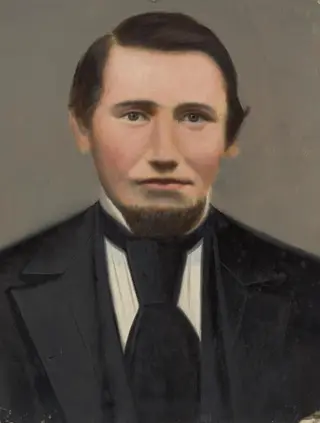 David H. Jones, 'Dewi Arfon'
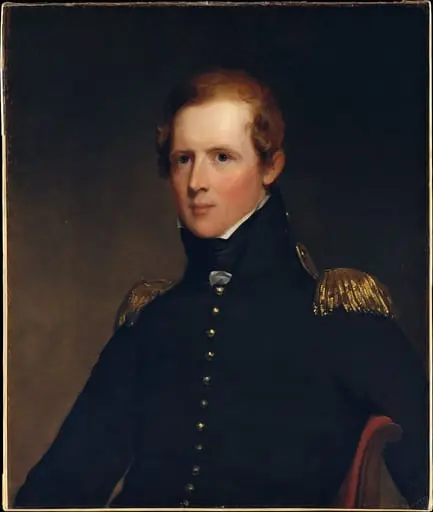 Major John Biddle
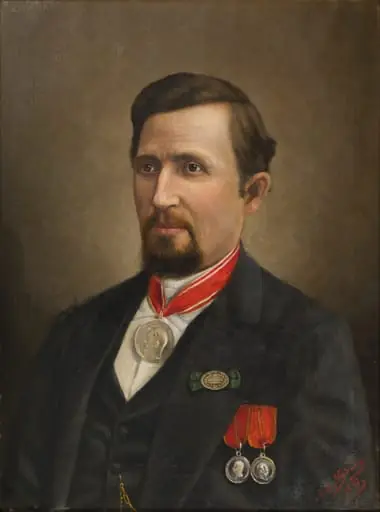 Johan Fredrik Holmberg (k. 1900)
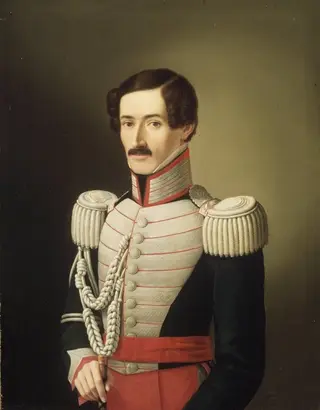 Don José Ygnacio de Cervantes de Ozta y de Velasco
 Deák Ferenc
- Portrait of an Officer