Artwork
West View of Mount Vernon Mansion
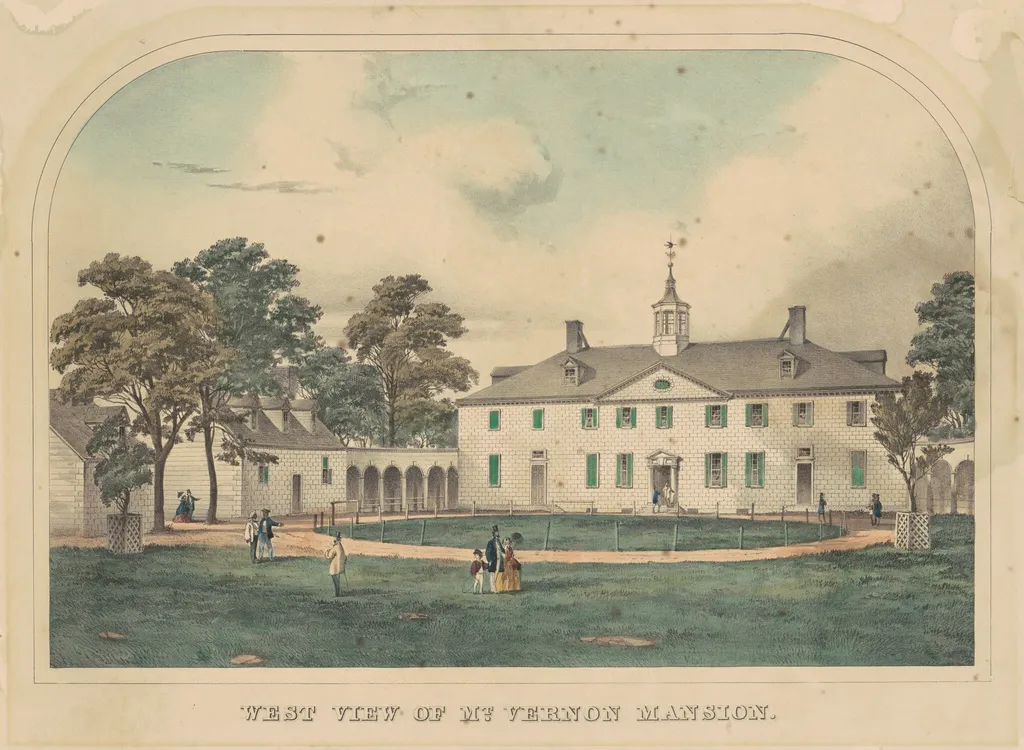
West View of Mount Vernon Mansion is an ink print by the Impressionist artist American 19th Century. It dates from 1860 and is held in the collection of the National Gallery of Art. This hand‑colored lithograph presents a westward perspective of Mount Vernon, the historic residence associated with George Washington.
- Inscription
- Inscribed:text at bottom on stone: West View of Mt. Vernon Mansion.
About this work
Overview
This hand‑colored lithograph presents a westward perspective of Mount Vernon, the historic residence associated with George Washington. The composition centers on the mansion’s balanced façade, marked by a raised cupola and a row of columns, set amid a grove of mature trees. Small figures are placed on the front lawn, offering a visual cue to the building’s scale.
Subject & Meaning
The image captures the architectural prominence of Mount Vernon, emphasizing its symmetrical design and the surrounding landscaped grounds. By including diminutive people, the print conveys both the grandeur of the estate and its role as a lived, inhabited space, reflecting the domestic aspect of the historic home.
Technique & Style
Executed as a lithograph on wove paper, the work combines precise line work with subtle hand‑applied coloration. A restrained palette of pale greens, creams and sky‑blue tones accentuates the structural details without overwhelming the scene, while the crisp outlines maintain clarity typical of early 19th‑century printmaking.
History & Provenance
The print belongs to a series of images produced to document notable American landmarks during the period when lithography was gaining popularity as a means of reproducing architectural views. Though specific dates of issuance are not recorded here, such prints were often circulated for educational and commemorative purposes, contributing to public awareness of Washington’s estate.
Artist & collection

Artist
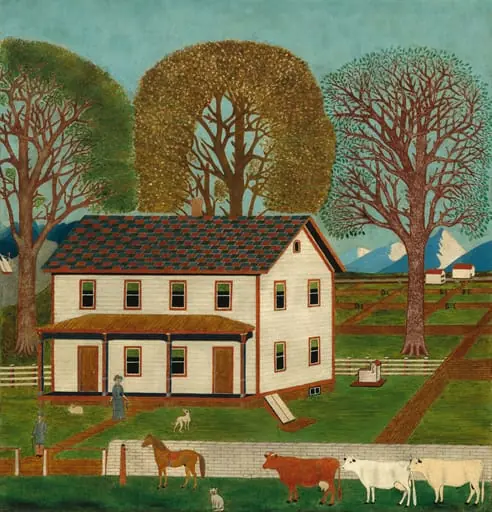
Scenes of everyday American life in the 1800s. Farmhouse in Mahantango Valley is a quiet, sunlit view of rural Pennsylvania; Boy and Girl shows two children standing close, faces turned outward. A small woodcut, The…