Artwork
East View of Mount Vernon Mansion
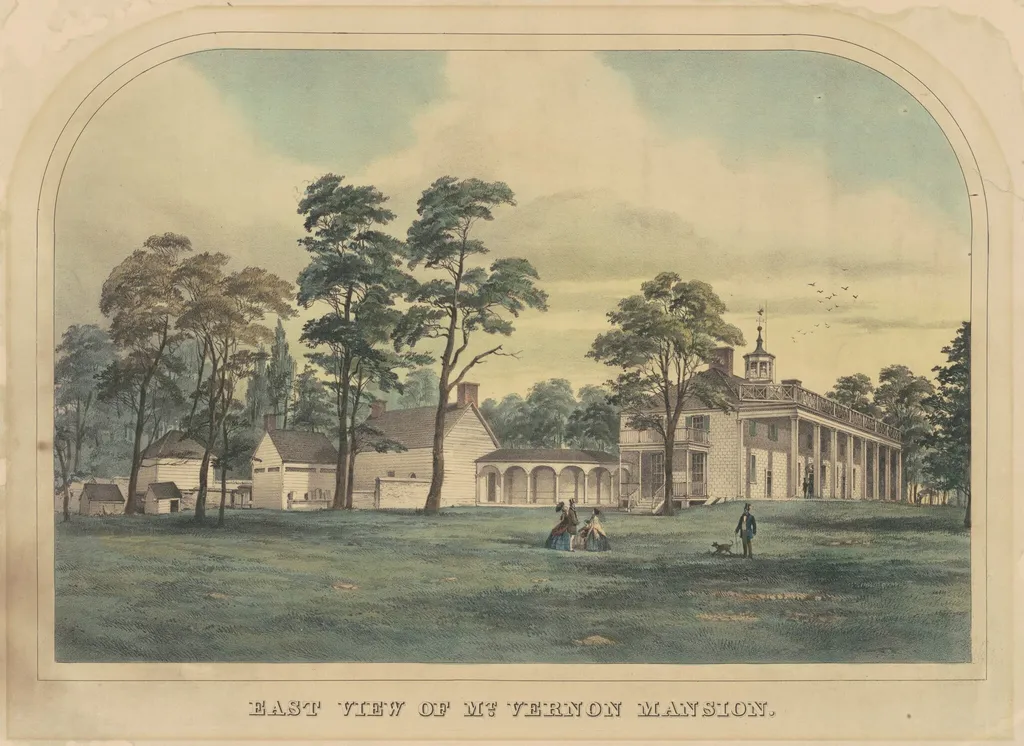
East View of Mount Vernon Mansion is an ink print by the Impressionist artist American 19th Century. It dates from 1860 and is held in the collection of the National Gallery of Art. This hand-colored lithograph captures the eastern perspective of Mount Vernon, George Washington’s Virginia estate.
- Inscription
- Inscribed:text at bottom on stone: East View of Mt. Vernon Mansion.
About this work
This painting is similar to the work of American 19th Century artists who used lithography.
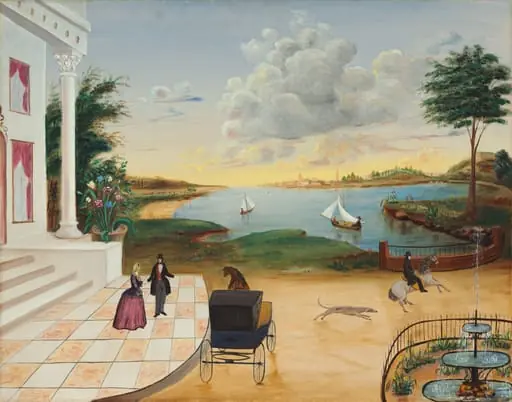
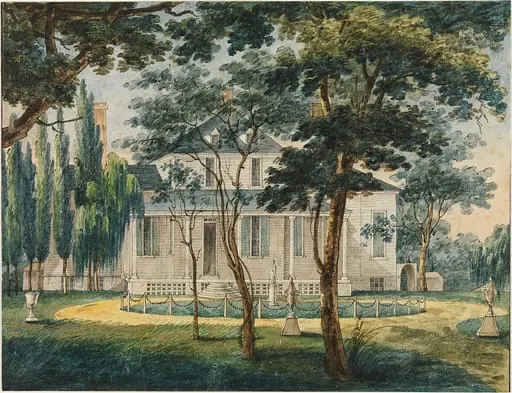
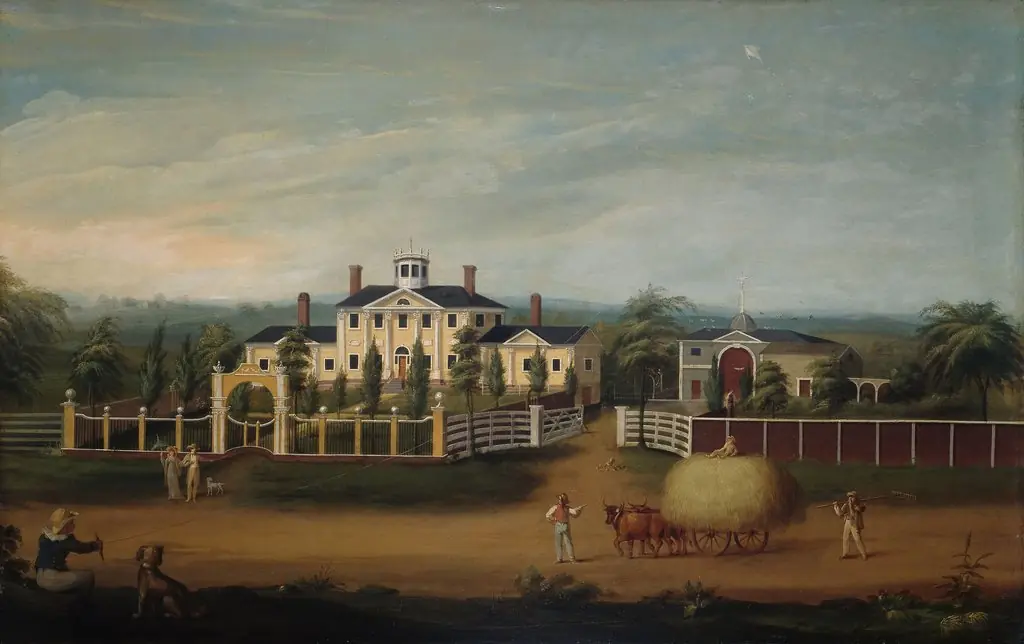
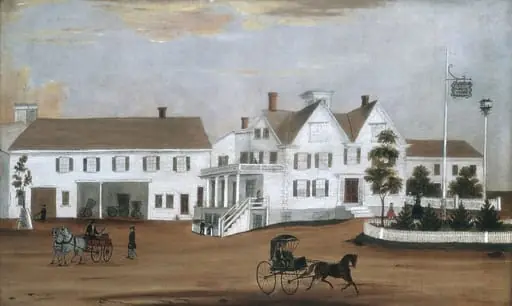
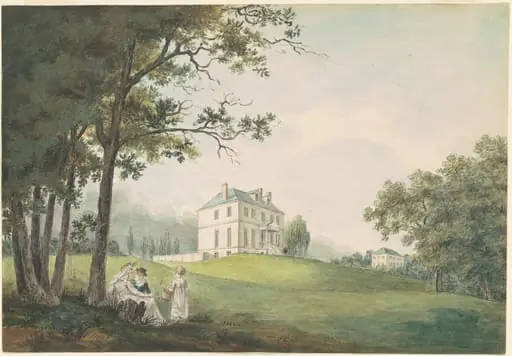
This painting shows a large white house with a porch and a balcony. There are trees around the house, and people are standing in the grass. The sky is light blue with white clouds.
The house has a tall tower with a cross on top. There is a dog running in the grass. The people are wearing old-fashioned clothes.
This painting is similar to the work of American 19th Century artists who used lithography.
Overview
This hand-colored lithograph captures the eastern perspective of Mount Vernon, George Washington’s Virginia estate. Executed on wove paper, the print combines precise architectural detail with soft, naturalistic coloring. The scene includes figures in early 19th-century attire, a dog in motion, and a landscape of trees and open grass, all rendered under a pale sky with scattered clouds.
Subject & Meaning
The image presents Mount Vernon not as a battlefield or political symbol, but as a domestic retreat. The presence of figures and a dog suggests quiet daily life, reinforcing the estate’s role as a private residence. The tower with a cross atop may reflect religious or aesthetic tastes of the era, emphasizing order and serenity over grandeur.
Technique & Style
The artist employed lithography, a print method gaining popularity in early American art for its ability to reproduce fine detail. Hand-coloring added subtle tonal variation, mimicking watercolor effects. The composition balances architectural clarity with loose, atmospheric elements, aligning with the observational style of contemporary American topographical prints.
History & Provenance
Created in the 19th century, the print likely served as a souvenir or educational image for those unable to visit Mount Vernon in person. Its production coincided with rising public interest in Washington’s legacy, as the estate became a site of national reverence. Exact origins remain undocumented, but similar works circulated through print shops in eastern cities.
Context
This print emerged during a period when American artists increasingly documented historic sites through accessible media. Lithography allowed wider distribution than paintings, making such images tools of civic memory. The depiction of Mount Vernon reflects a broader cultural effort to preserve and romanticize the nation’s founding era through visual representation.
Legacy
Though not attributed to a major artist, the print contributes to a visual archive of early American domestic architecture. It preserves details of Mount Vernon’s appearance before later restorations and offers insight into how the public imagined the lives of the nation’s founders. Such works remain valuable for historical and architectural study.
Artist & collection

Artist
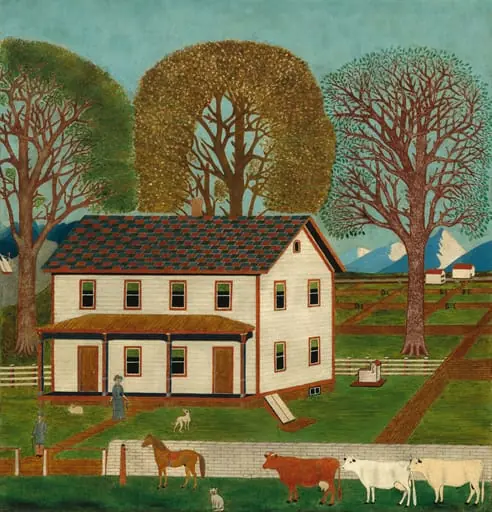
Scenes of everyday American life in the 1800s. Farmhouse in Mahantango Valley is a quiet, sunlit view of rural Pennsylvania; Boy and Girl shows two children standing close, faces turned outward. A small woodcut, The…