Artwork
Altarpiece of Saint George
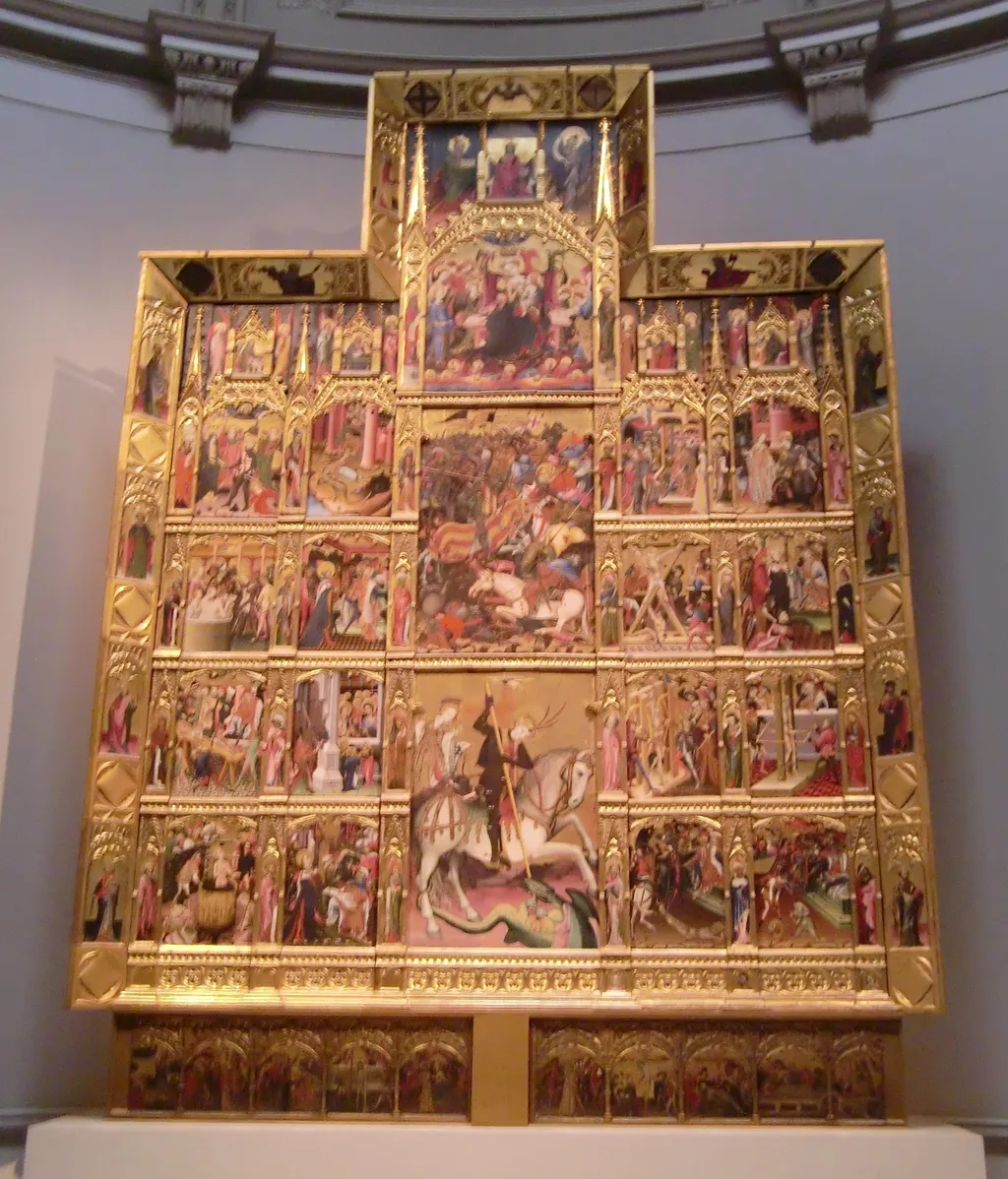
Altarpiece of Saint George is a tempera painting by the Gothic painting artist Andrés Marzal de Sas. It dates from 1410 and is held in the collection of the Victoria and Albert Museum.
About this work
The piece was created for the Centenar de la Ploma, a guild that wanted to remember the Battle of the Puig in 1237.
The Altarpiece of Saint George was painted by Andrés Marzal de Sas in 1410. It is done in tempera. It is a large‑scale International Gothic work.
The piece was created for the Centenar de la Ploma, a guild that wanted to remember the Battle of the Puig in 1237. The altarpiece shows the guild’s pride and its link to Saint George. It was bought in 1864 and now lives in London.
You might also check out the Victoria and Albert Museum.
Overview
The Altarpiece of Saint George, created for the Valencian guild known as the Centenar de la Ploma, is a monumental panel painted in tempera. Executed at the turn of the 15th century, it exemplifies the International Gothic aesthetic and measures a considerable size for liturgical display. The work presently resides in the Victoria and Albert Museum in London.
Subject & Meaning
The central narrative commemorates the 1237 Battle of the Puig, a decisive encounter in the Reconquista. Saint George, the patron saint of the guild, is depicted as the heroic intercessor, linking the martial triumph to divine protection. The imagery reinforces the collective identity and pride of the Centenar de la Ploma, presenting the conflict as a sacred victory.
Technique & Style
Rendered in tempera on wood, the altarpiece displays the delicate brushwork and elegant linearity typical of International Gothic art. Gold leaf accents highlight halos and ornamental details, while the figures are elongated and draped in richly patterned garments. The composition balances narrative clarity with ornamental richness, characteristic of early 15th‑century Iberian painting.
History & Provenance
Commissioned around 1400 by the Centenar de la Ploma, the panel remained in Valencia until the mid‑19th century. In 1864 it entered the collection of the Victoria and Albert Museum, where it has been conserved and displayed. The acquisition reflects the period’s growing interest in medieval Iberian art among British institutions.
Context
The altarpiece belongs to a broader tradition of guild-sponsored devotional works that linked civic militancy with saintly patronage. Its creation coincided with a flourishing of International Gothic in the Crown of Aragon, where artists such as Andreu Marçal de Sax and Miquel Alcanyís blended local iconography with pan‑European stylistic currents.
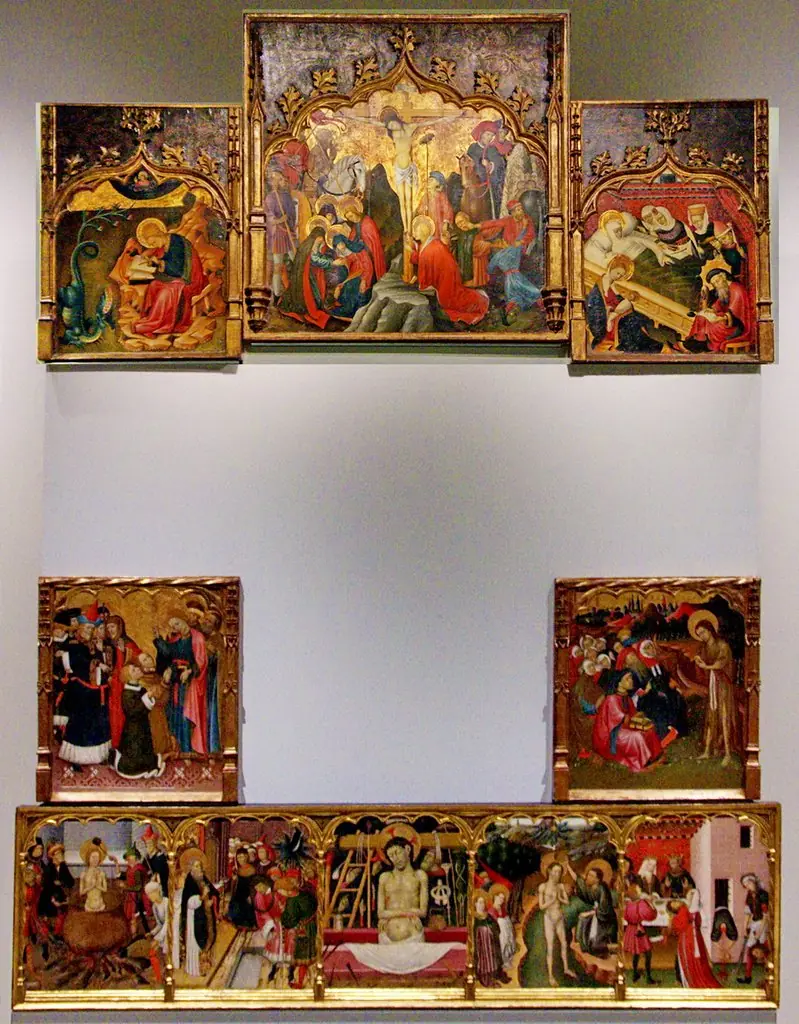
Own this work as a print
Artist & collection
Artist
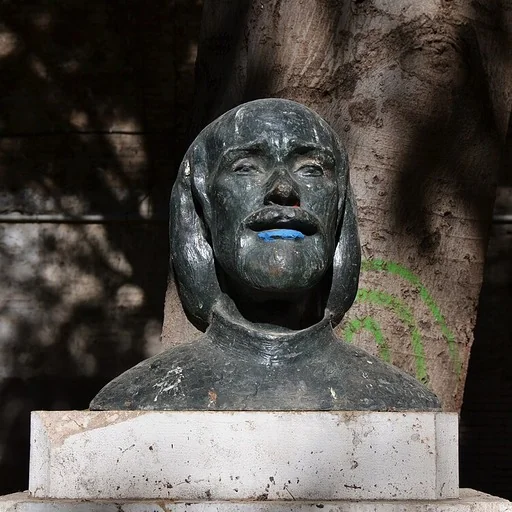
Andrés Marzal de Sas, or Andreu Marçal de Sax (fl. 1390–1410) was a painter of Dutch origin who worked in Valencia. Based on his name, he was from Sas van Gent, although some sources indicate he may have been from…

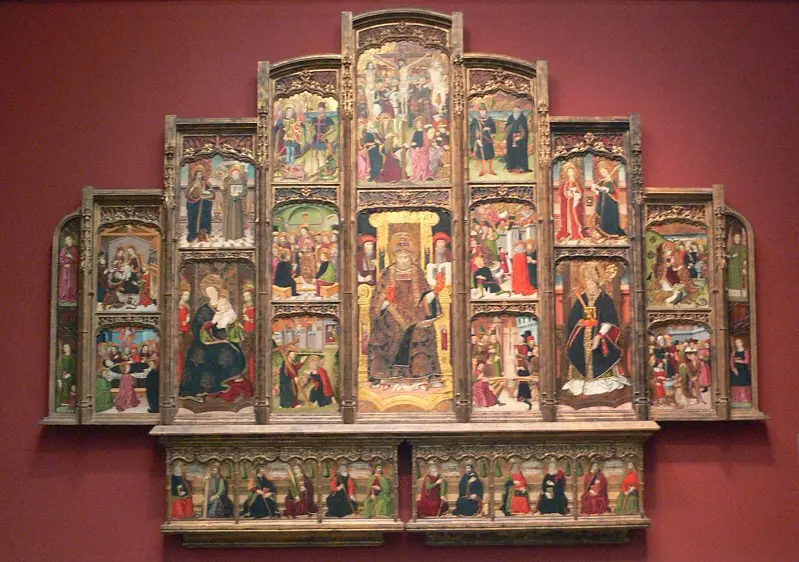
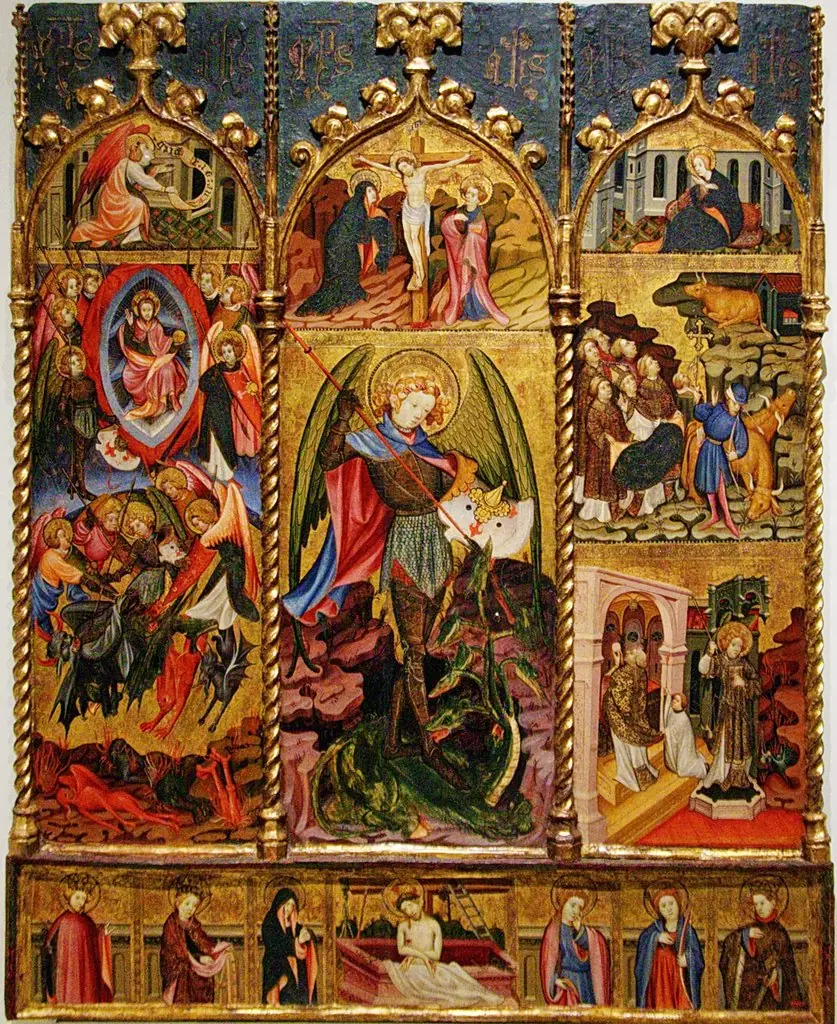
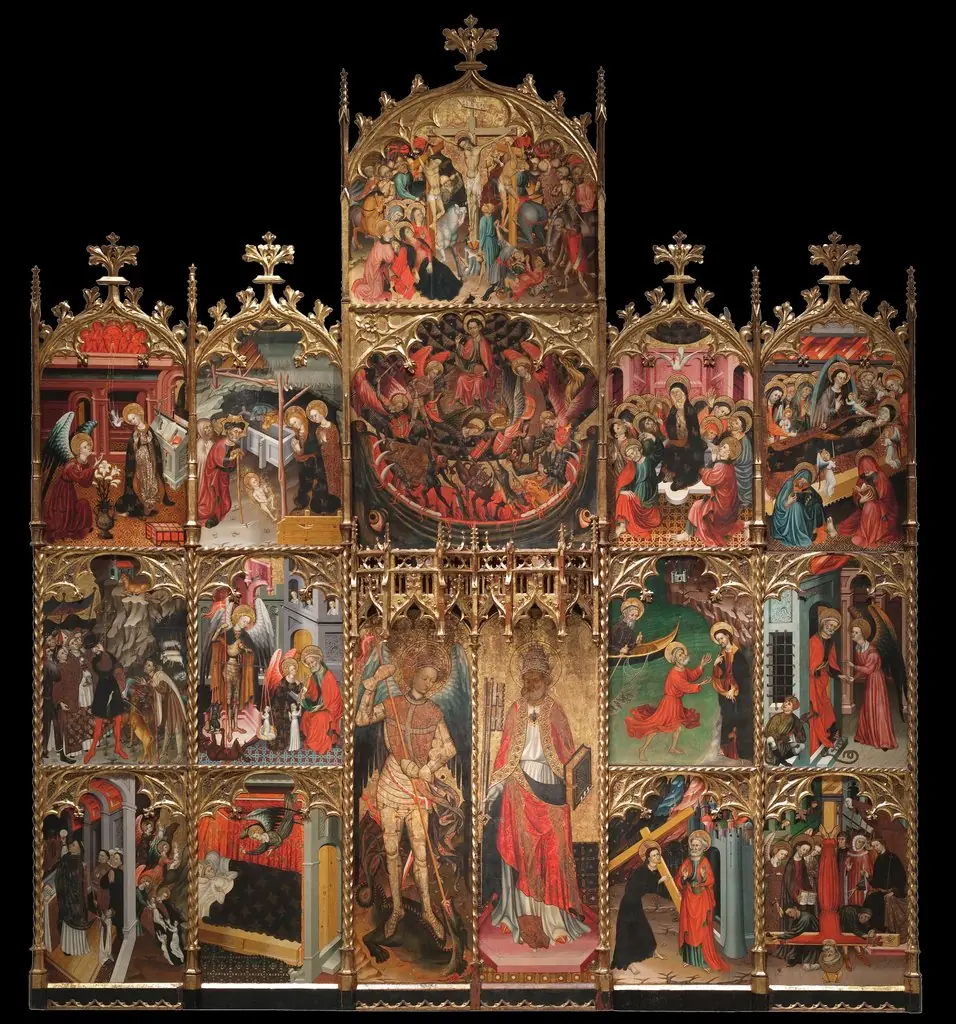 Altarpiece of Saint Michael and Saint Peter
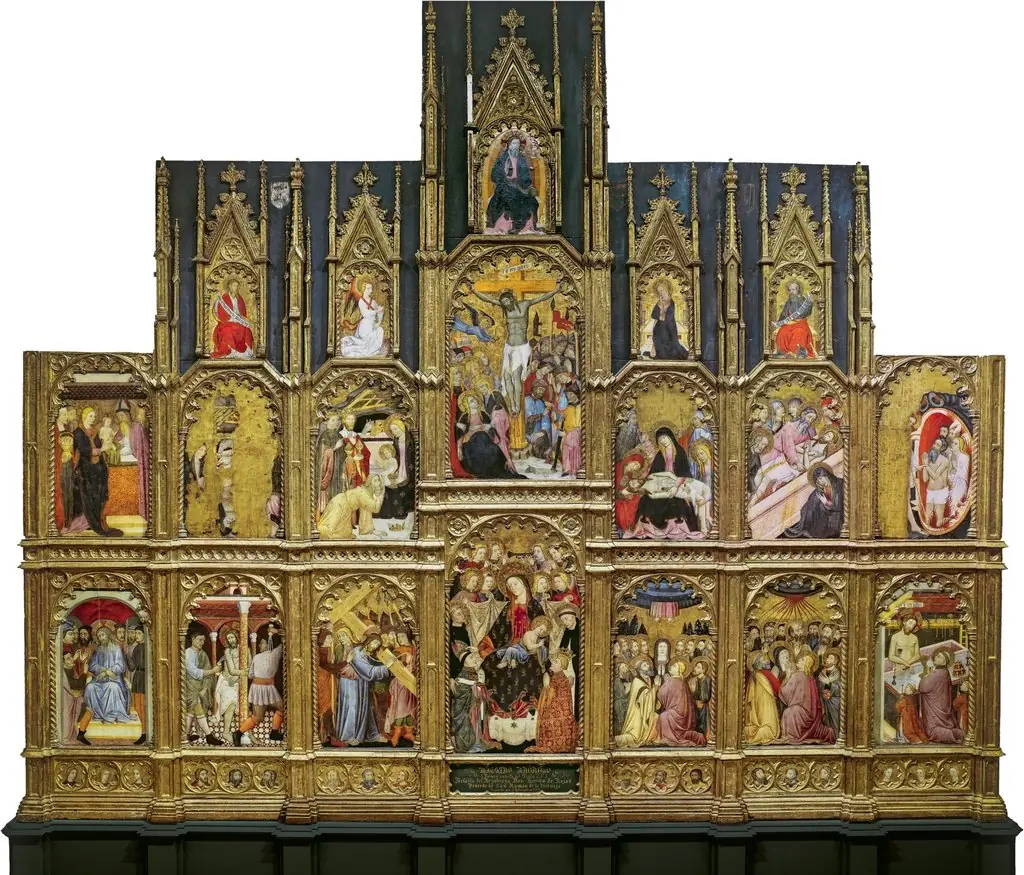 Altarpiece of Archbishop Sancho de Rojas
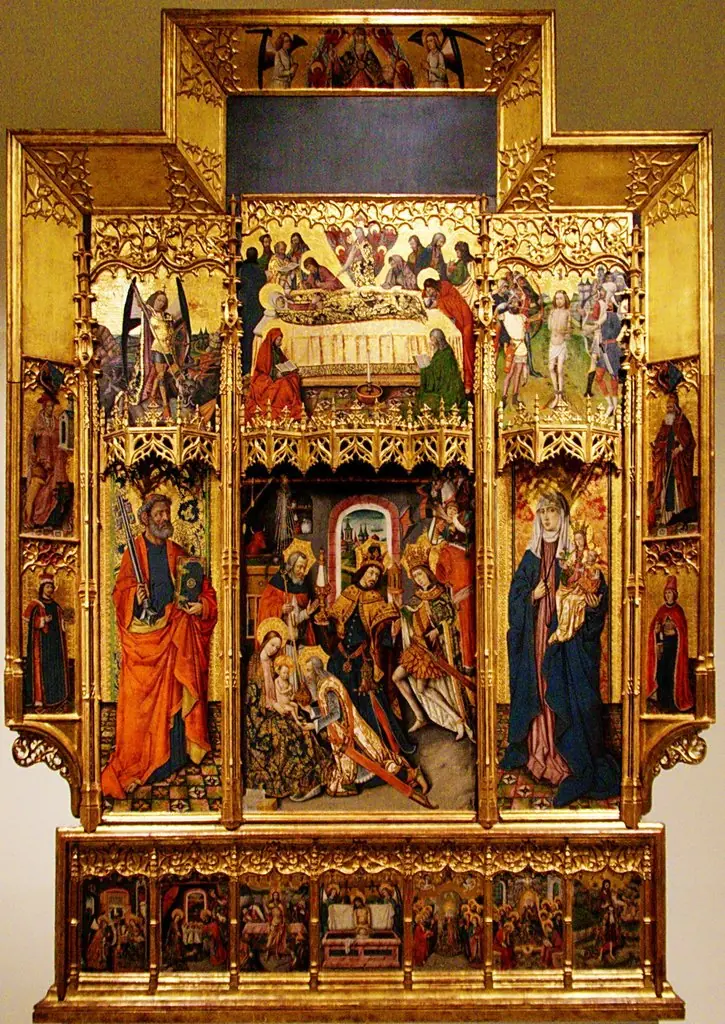 Retablo de la Epifanía
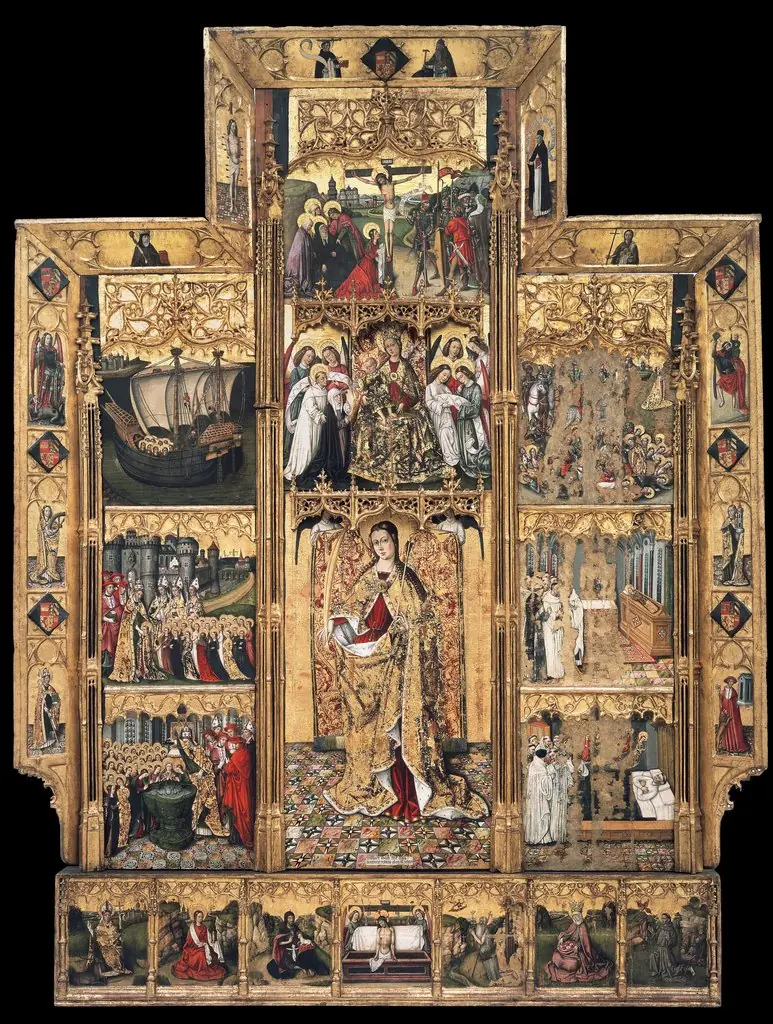 Altarpiece of Saint Ursula and the Eleven Thousand Virgins
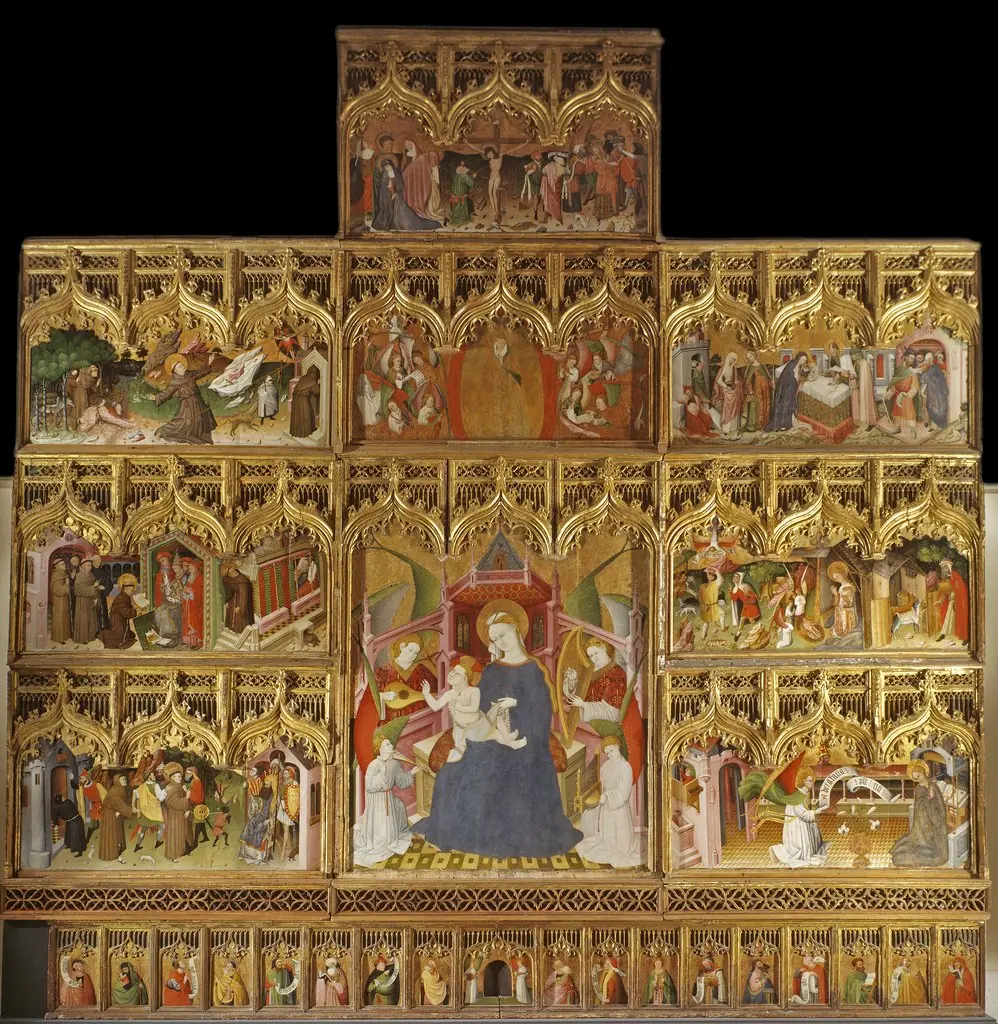 Altar Piece of the Lives of the Virgin and Saint Francis
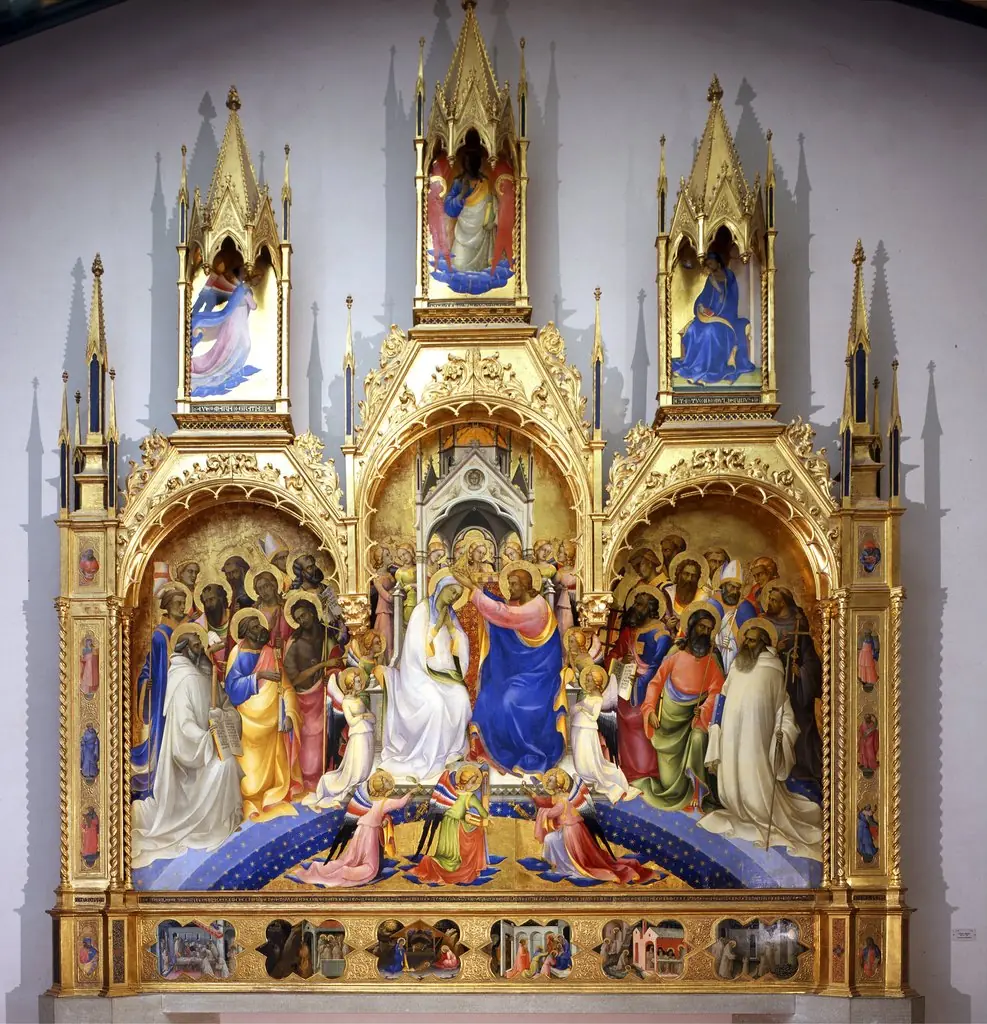 Coronation of the Virgin
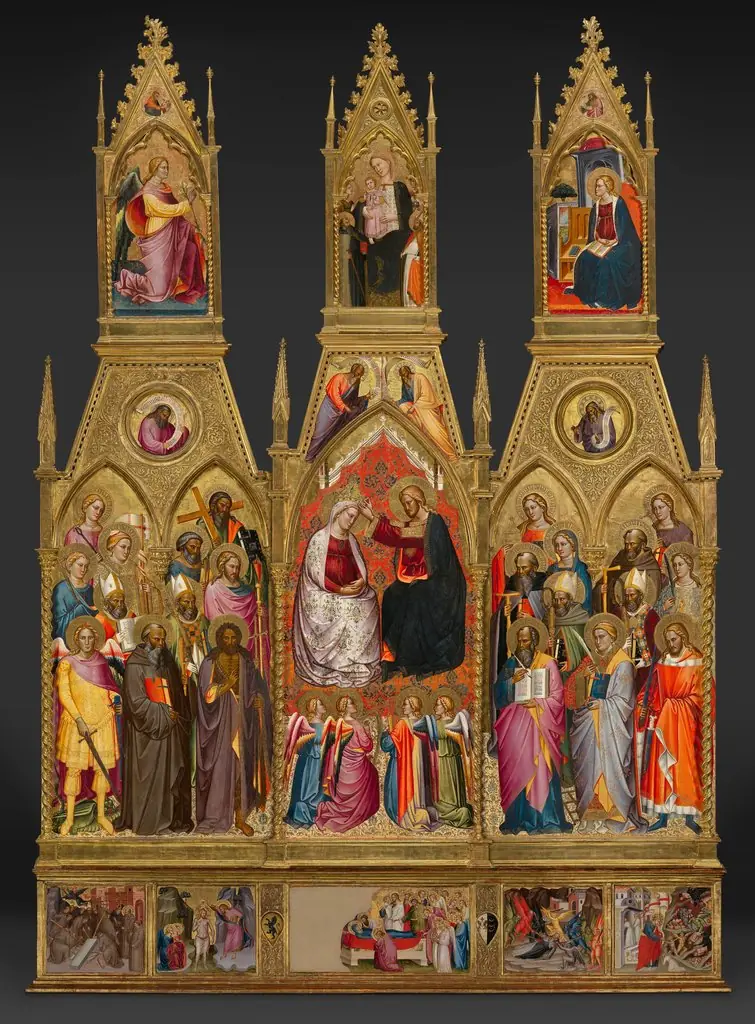 Polyptych with Coronation of the Virgin and Saints
 Winged Altarpiece