Artwork
Coronation of the Virgin
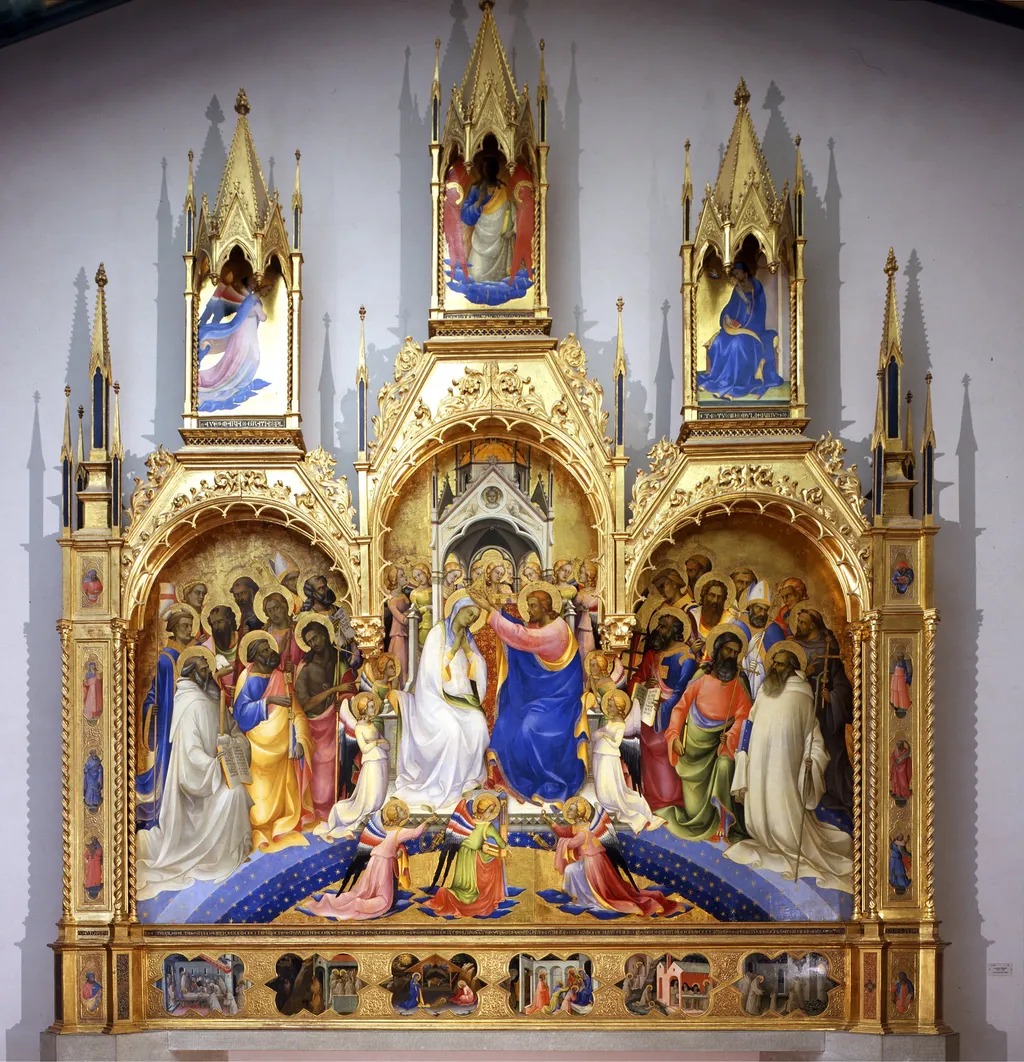
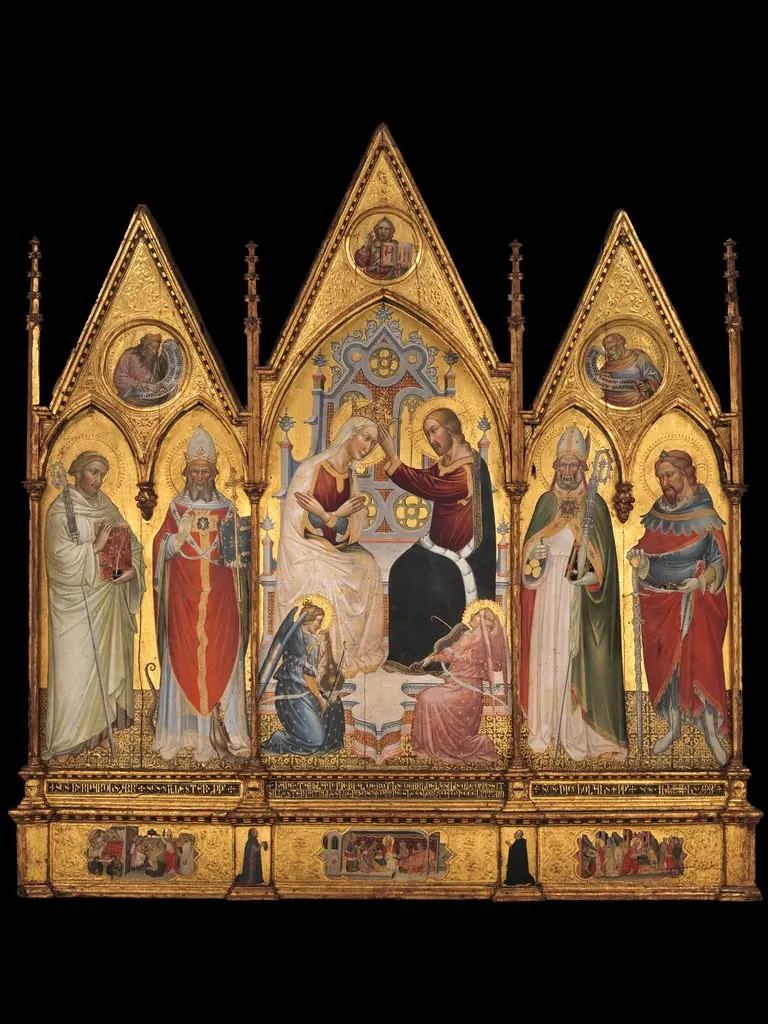
Coronation of the Virgin is a tempera painting by the Early Renaissance artist Lorenzo Monaco. It dates from 1414 and is held in the collection of the Uffizi Gallery.
About this work
Lorenzo Monaco painted a tempera polyptych called Coronation of the Virgin in 1414. It shows Mary being crowned by Jesus. The work was made for a monastery before moving to the Uffizi in Florence.
Here’s the odd part: the date says February 1413, but in Florence’s calendar, that year was 1414. So artists back then had their own way of counting time.
Look up the artist Lorenzo Monaco next.
Overview
The Coronation of the Virgin is a large tempera-and-gold-on-panel polyptych painted by the Italian late Gothic artist Lorenzo Monaco in 1414.
The Coronation of the Virgin is a large tempera-and-gold-on-panel polyptych painted by the Italian late Gothic artist Lorenzo Monaco in 1414. Measuring 450 by 350 centimeters, the altarpiece was originally commissioned for the high altar of the Camaldolese monastery of Santa Maria degli Angeli in Florence, where the artist himself was a monk. The work is noted for its sumptuous decoration, extensive use of gold leaf, and a brilliant, expensive lapis lazuli blue. It remained on its original altar until the late sixteenth century, when changing tastes led to its removal. After centuries of obscurity and deterioration, it was recovered and restored, and it now resides in the Uffizi Gallery in Florence.
Subject & Meaning
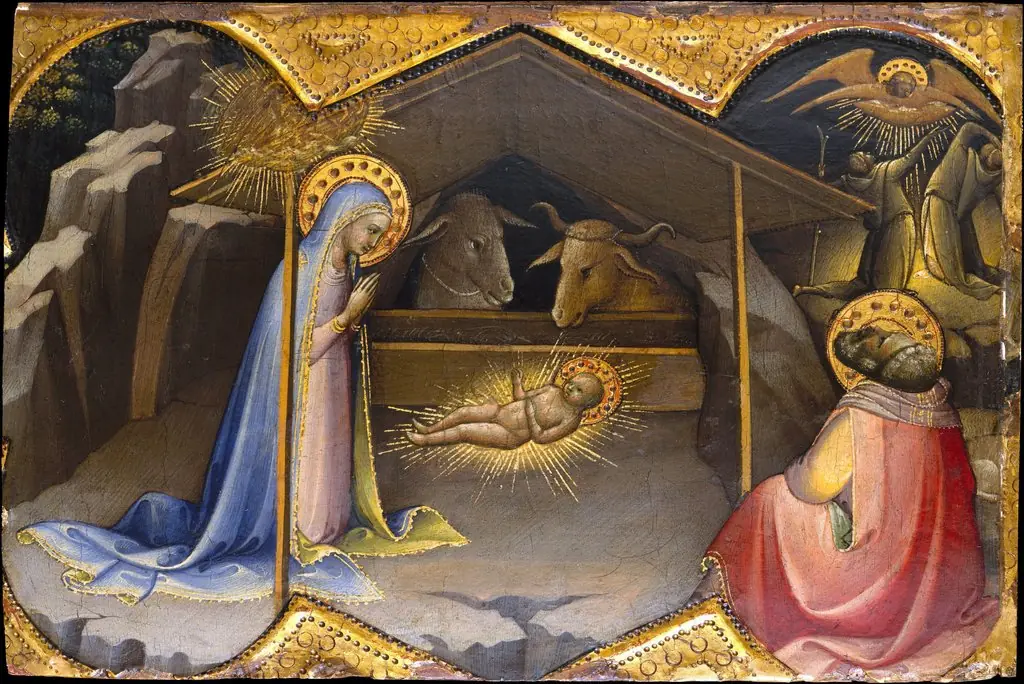
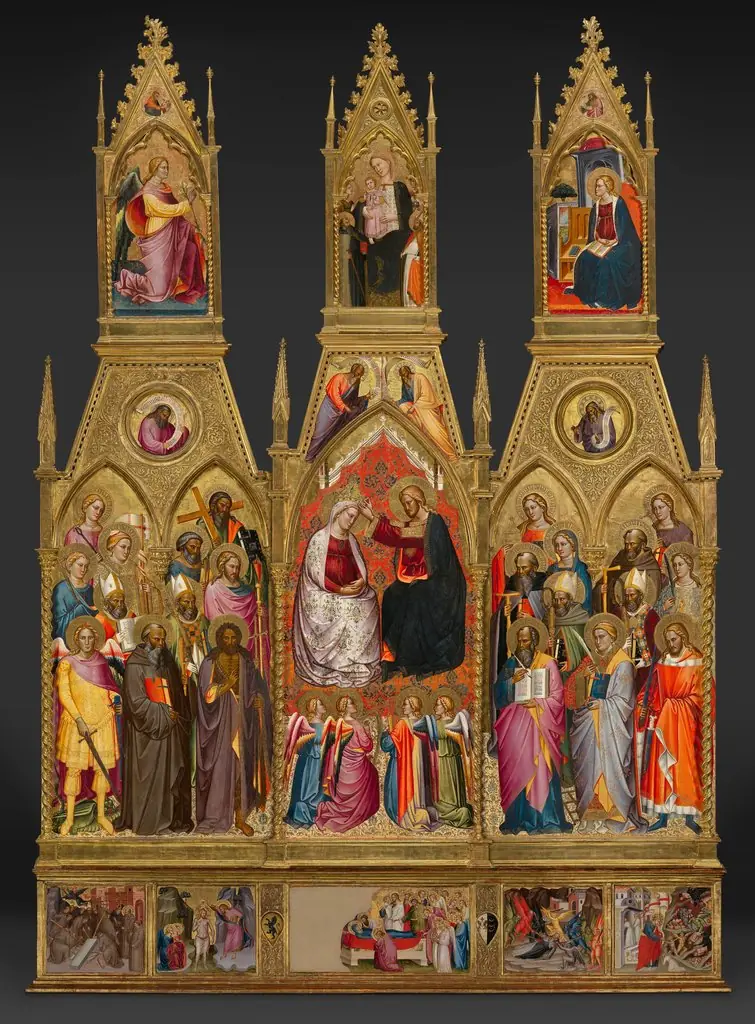
The central scene depicts Christ crowning his mother, Mary, as Queen of Heaven, a popular theme in medieval Italy that, while not mentioned in the Gospels, symbolized her Assumption and the authority of the Church. The scene is set in Paradise, represented by a starry rainbow or blue starred belts that allude to the celestial spheres of medieval cosmology. Christ and the Virgin are seated on a throne surrounded by a dense crowd of haloed figures, including angels making music and burning incense, and two symmetrical groups of saints arranged in three rows. The left group includes Saint John the Baptist, Saint Peter, Saint Bernard of Clairvaux, and Saint Benedict, while the right group features Saint John the Evangelist, Saint Andrew, Saint Benedict, and Saint Romuald. The prominent inclusion of Saint Benedict in white robes and Saint Romuald reflects the institutional identity of the Camaldolese order, a reformed Benedictine congregation. Above the main panel, pinnacles contain the Angel of the Annunciation, a Blessing Christ between Cherubim, and the Virgin of the Annunciation, while the predella below depicts the Nativity, the Adoration of the Magi, and episodes from the lives of Saints Benedict and Bernard.
Technique & Style
Executed in tempera on a wooden panel, the polyptych exemplifies the International Gothic style in Florence. The composition is highly crowded and largely flat, lacking the mathematical perspective developing in contemporary Florentine painting, a characteristic it shares with earlier Giottoesque works. Instead, Lorenzo Monaco relies on a dominant gold leaf background and a surface pattern that vies for attention with the volumes of the figures, even creating a decorative pattern through the superimposition of the crowd. The figures are elongated with delicate modeling, and their garments feature a subtle, calligraphic drawing with linear, flowing drapery folds that move independently of the bodies. The palette is defined by cold, brilliant, and iridescent tones, utilizing deep blues, pinks, greens, and whites, with a lavish application of expensive lapis lazuli for the ultramarine blue. A 1990 restoration recovered this brilliant coloration, which had been obscured over time, and technical analysis has noted that the Virgin's robe, now appearing white, originally faded from a bold red or pinkish mauve.
History & Provenance
An inscription on the frame, partially restored in the nineteenth century, records that the altarpiece was commissioned by Zanobi di Cecco del Frasca for the high altar of Santa Maria degli Angeli, painted by Don Lorenzo, and dated February 1413. Because the Florentine calendar began the new year on March 25, this date corresponds to February 1414. The early sixteenth-century writer Antonio Billi mentioned the work, describing it as elaborately ornamented. By the late sixteenth century, the painting was considered old-fashioned and replaced on the altar by a canvas by Alessandro Allori. Subsequently, the altarpiece suffered severe water damage that ruined much of the original wooden carpentry. It was rediscovered in the nineteenth century at the Camaldolese abbey of San Pietro a Cerreto. In 1872, Uffizi restorer Ettore Franchi undertook a major restoration of the frame. A further restoration in 1990 revitalized the painted surface and revealed the precious lapis lazuli pigment. The painting is now in the collection of the Uffizi Gallery.
Context
Lorenzo Monaco, born Piero di Giovanni, took his vows at the Camaldolese monastery of Santa Maria degli Angeli in 1391, remaining Florence's leading painter for decades. The Coronation of the Virgin represents the maturity of his elegant style, placing his personal figurative language at the service of Camaldolese spirituality. Unlike other Italian regions, Florentine masters of this period largely avoided courtly worldliness; Lorenzo Monaco instead emphasized a profound religious sentiment, underscored by his persistent use of gold backgrounds and the intense, thoughtful faces of his figures. While the main panel's composition is conventional and flat, the figures display a new fluidity in their poses and drapery that suggests the International Style then being employed in sculpture by contemporaries like Lorenzo Ghiberti and Niccolò Lamberti. The predella scenes, free from the gold background, allowed the artist to explore more intense, original, and imaginative settings, which are counted among his highest achievements.
Legacy
The Coronation of the Virgin stands as one of the most representative works of late Gothic painting in Florence. Its lavish use of gold and expensive ultramarine blue would have made the altarpiece a strong focal point in the church, testifying to its institutional importance and the donor's extraordinary generosity. The work's historical trajectory, from its removal as passée in the late sixteenth century to its rediscovery and subsequent restoration in the nineteenth and twentieth centuries, mirrors the broader shifts in art historical taste from Renaissance classicism back to an appreciation of the International Gothic. The 1990 restoration, in particular, recovered the luminous colors that had been lost, allowing modern viewers to appreciate the sophisticated linear intervals and brilliant chromaticism that originally defined Lorenzo Monaco's transcendental vision.
Own this work as a print
Artist & collection

Artist
Lorenzo Monaco was a Sienese painter and miniaturist of the late Gothic to early Renaissance age, active principally in Florence.

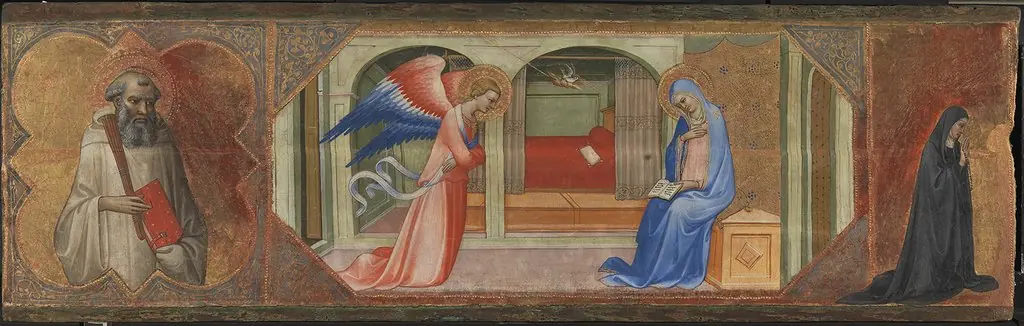
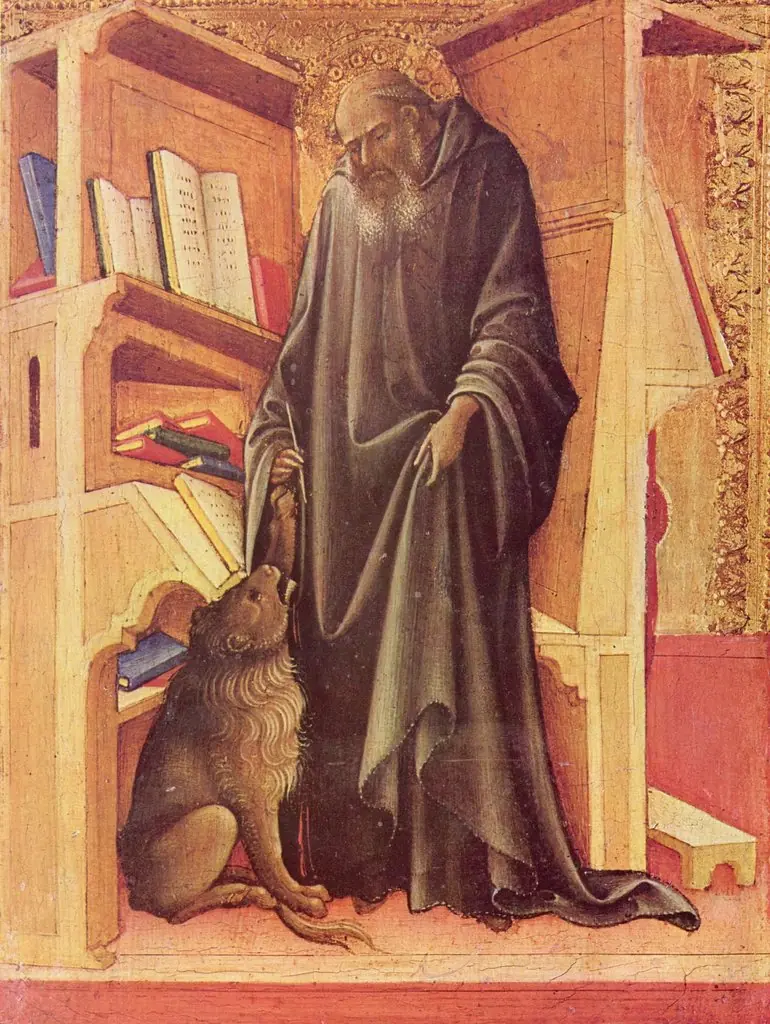
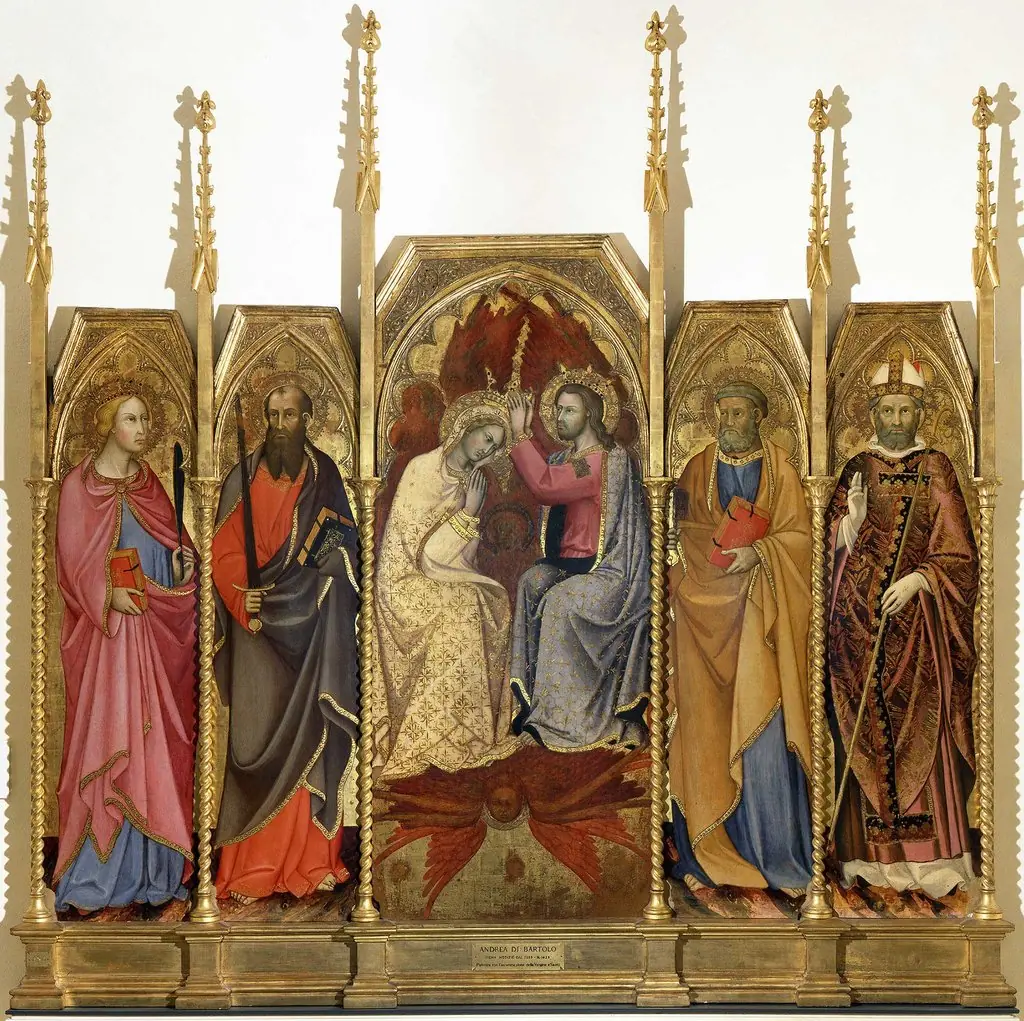
 The Coronation of the Virgin, and Saints
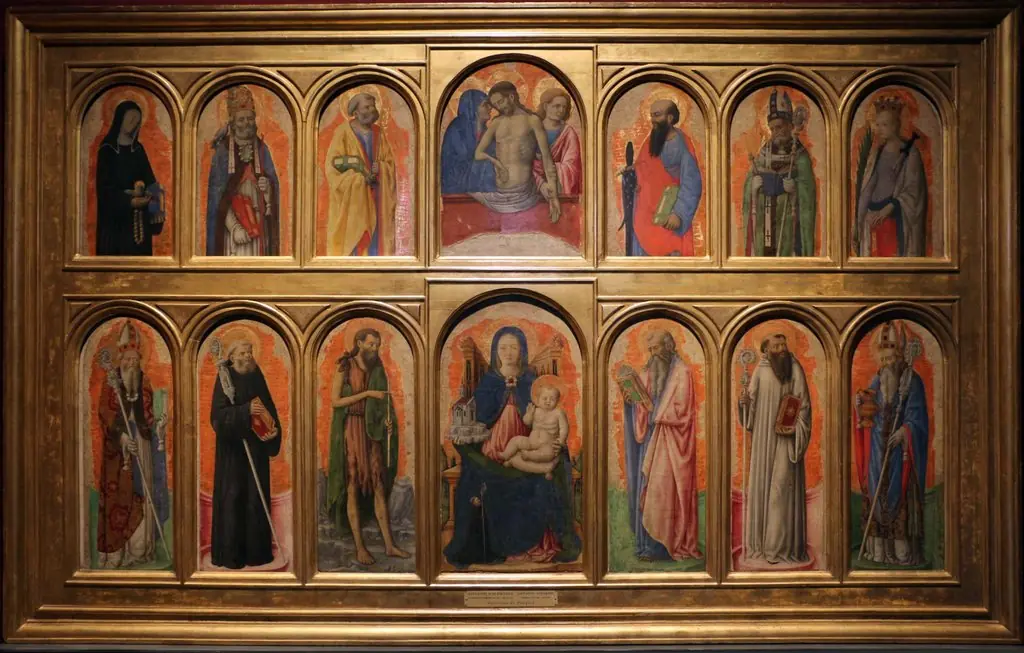 Polyptych of Praglia
 Polyptych with Coronation of the Virgin and Saints
 Pentecost table (6 panels)
 Triptych
![Madonna and Child with Saints Andrew, Benedict, Bernard, and Catherine of Alexandria with Angels [entire triptych], by Agnolo Gaddi](https://artifactworldgallery.com/img/agnolo-gaddi--madonna-and-child-with-saints-andrew-benedict-bernard-and-ca--93a6585f38530738-w320.webp) Madonna and Child with Saints Andrew, Benedict, Bernard, and Catherine of Alexandria with Angels [entire triptych]
Madonna and Child with Saints Andrew, Benedict, Bernard, and Catherine of Alexandria with Angels [entire triptych] Parts of a triptych: Annunciation and saints Jerome and Lawrence
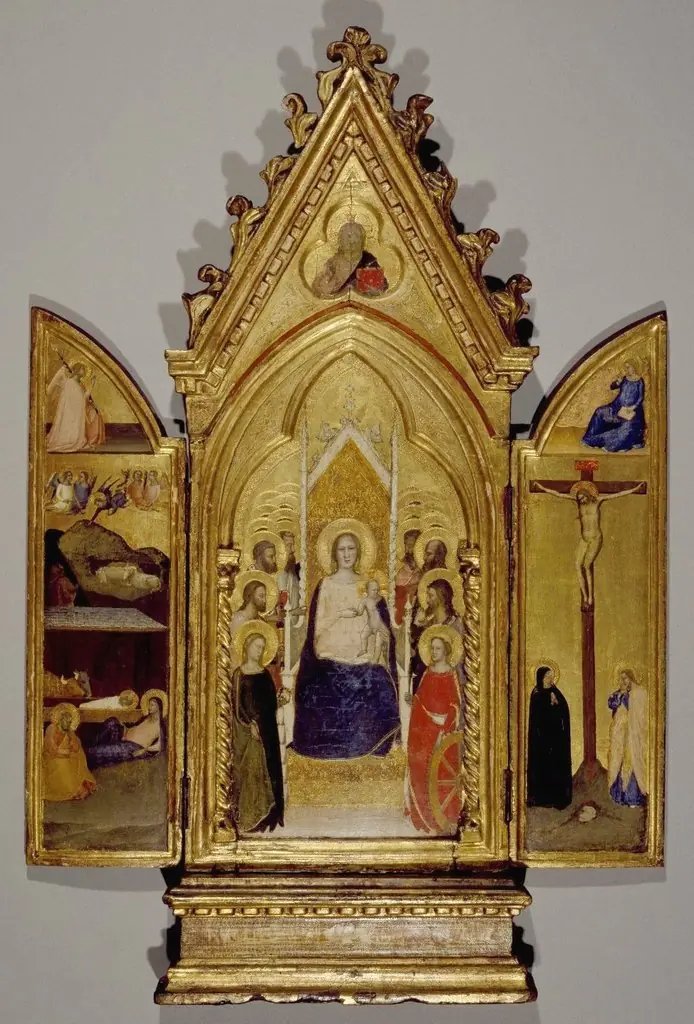 Triptych: Madonna with Saints and Christ Blessing (Center); The Nativity and the Annunciate Angel (Left Wing); Crucifixion and the Virgin Annunciate (Right Wing)
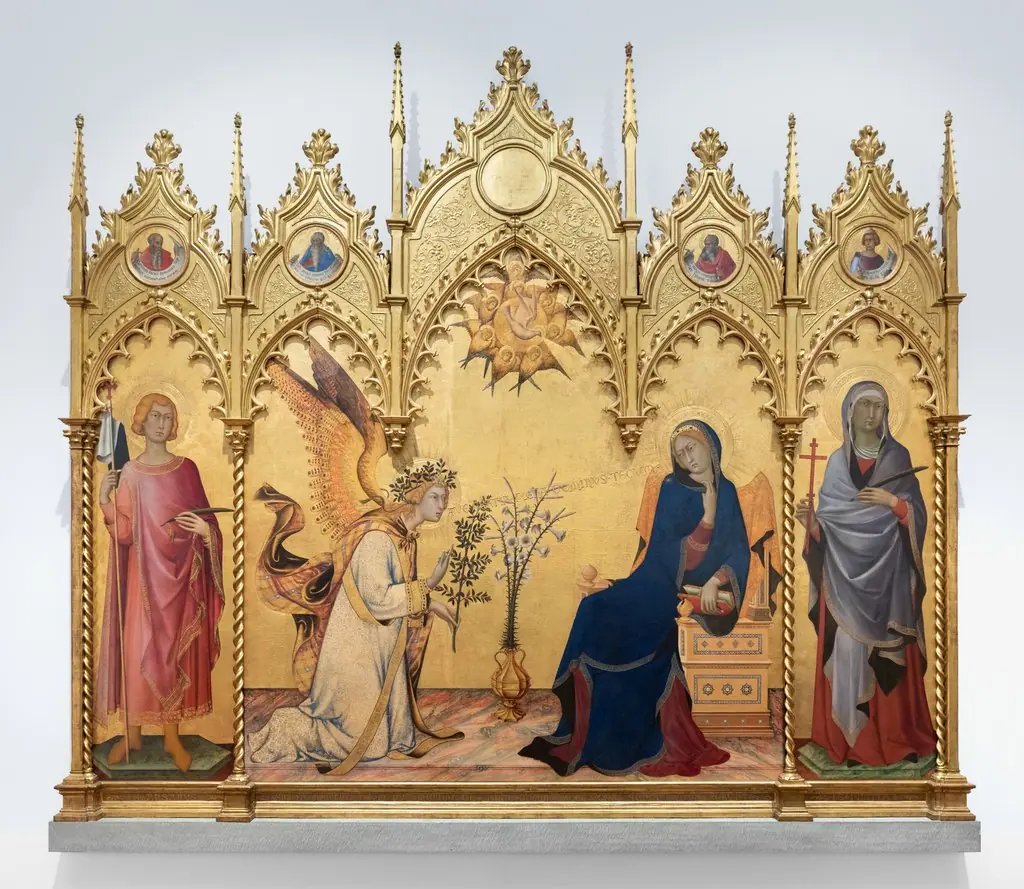 Annunciation with Saints Maxima and Ansanus
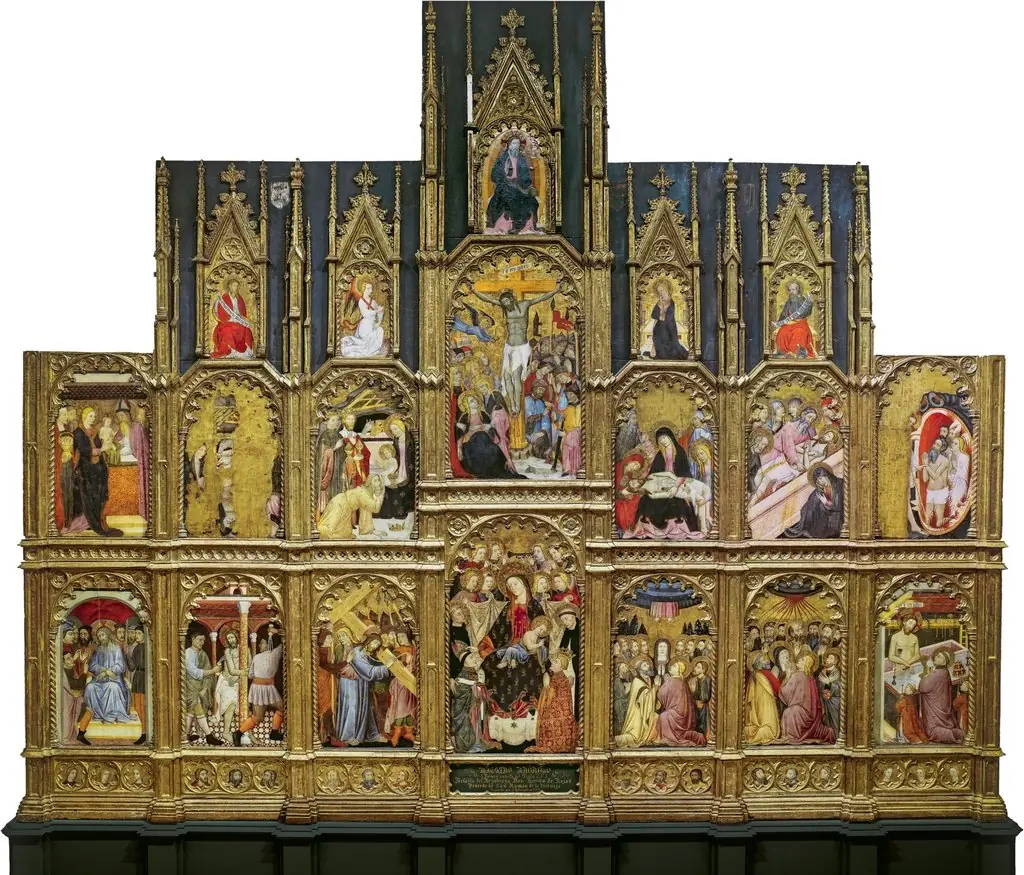 Altarpiece of Archbishop Sancho de Rojas