Artwork
Aeneas Takes Leave of Dido
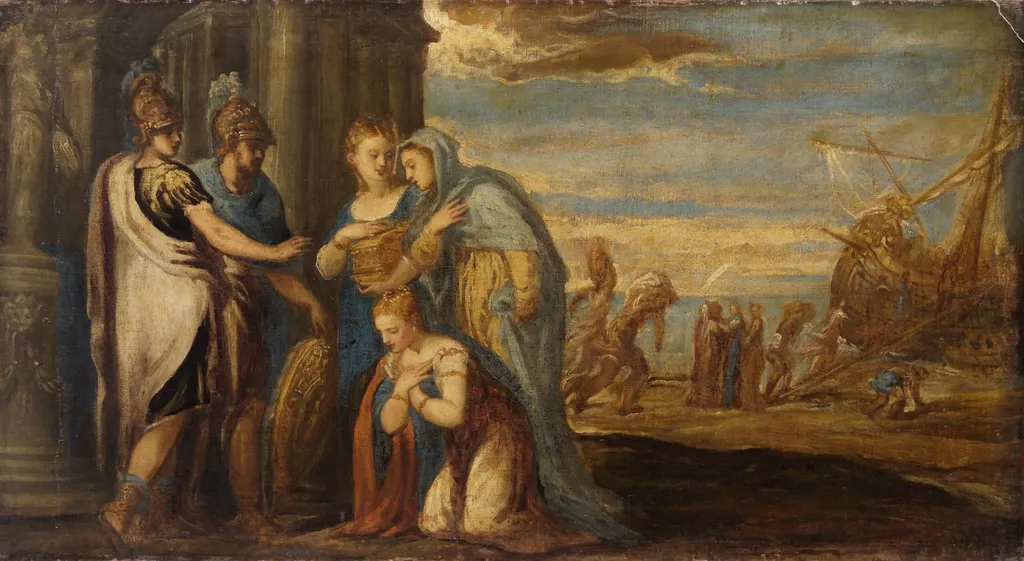
Aeneas Takes Leave of Dido is an oil painting by the Mannerist artist Andrea Schiavone. It dates from 1555 and is held in the collection of the Kunsthistorisches Museum.
About this work
Subject & Meaning
Aeneas, the Trojan hero, is shown leaving the Carthaginian queen Dido, whom he had loved, in order to fulfill his destiny to found Rome.
The painting depicts the mythological scene of Aeneas's departure from Dido, drawn from Virgil's Aeneid. Aeneas, the Trojan hero, is shown leaving the Carthaginian queen Dido, whom he had loved, in order to fulfill his destiny to found Rome. The work portrays a man and a woman in a moment of emotional parting, with Aeneas and Dido as the central figures.
As a mythological painting, the subject carries themes of duty over desire, the conflict between personal love and public obligation, and the tragic consequences of divine fate. The scene captures the tension of a pivotal narrative moment in classical mythology.
Technique & Style
Andrea Schiavone’s Aeneas Takes Leave of Dido (1555) is executed in oil paint on an unidentified support, with dimensions of 62.5 × 115 cm. The handling reflects Schiavone’s characteristic loose, expressive brushwork, favoring rapid, fluid strokes over meticulous detail. This technique lends the composition a dynamic, almost sketch-like quality, emphasizing emotional intensity over precise anatomical accuracy.
Stylistically, the work aligns with mid-16th-century Venetian painting, particularly in its rich coloration and dramatic chiaroscuro. The figures, depicting Aeneas, Dido, and attendant figures, are rendered with a sense of movement, their forms merging with the atmospheric background. The painting’s condition is not detailed in available sources, though its survival in the Kunsthistorisches Museum collection suggests preservation over time.
History & Provenance
Andrea Schiavone created the oil painting Aeneas Takes Leave of Dido in 1555. The work measures 62.5 cm in height and 115 cm in width. Its provenance traces back to Archduke Leopold Wilhelm of Austria, who owned the piece before it entered the collection of the Kunsthistorisches Museum in Vienna. The painting depicts the mythological figures Aeneas and Dido.
The painting is housed in the Kunsthistorisches Museum in Vienna, where it holds inventory number KH 659. It entered the collection through Archduke Leopold Wilhelm of Austria, who bequeathed his holdings to the museum. The work has been part of the museum’s exhibition schedule, appearing in displays of the museum’s collection of mythological paintings and in special exhibitions on Renaissance art.
Context
The mythological scene depicting Aeneas abandoning Dido was created in 1555 by Andrea Schiavone for an oil painting now housed in the Kunsthistorisches Museum in Vienna. Originally owned by Archduke Leopold Wilhelm of Austria, the work belongs to the mythological painting genre within the Northern Renaissance tradition. Schiavone's composition has been frequently referenced in scholarship on mythological subjects, particularly in analyses of 16th-century narrative strategies in mythological painting.
The painting's subject draws from Book IV of Virgil's Aeneid, focusing on the poignant moment of departure between the Trojan hero and the Carthaginian queen. Art historical studies of the work often contextualize it within Schiavone's broader oeuvre of mythological paintings, emphasizing his role in disseminating classical narratives through visual media in the Italianate tradition of Central Europe. Its inclusion in the Archduke's collection reflects the Habsburg patronage of mythological art, linking the piece to the political and cultural ambitions of the Holy Roman Empire.
Overview
Andrea Schiavone’s oil painting Aeneas Takes Leave of Dido, executed in 1555, portrays the dramatic farewell between the Trojan hero and the Carthaginian queen. The composition gathers several figures in classical attire before a columned façade, with a ship poised on the water in the background. The work is part of the Kunsthistorisches Museum’s collection in Vienna.
Artist & collection
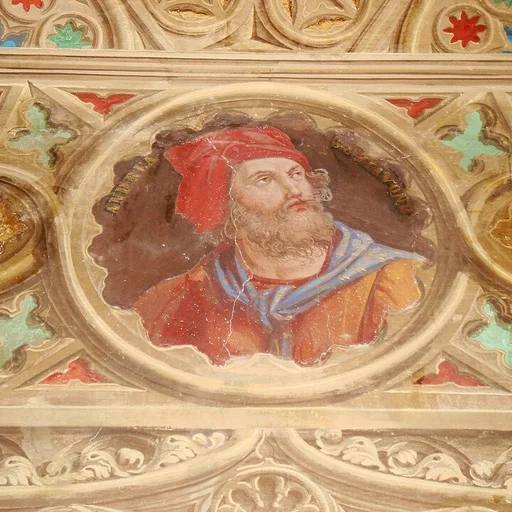
Artist
Andrea Meldolla (Croatian: Andrija Medulić), also known as Andrea Schiavone or Andrea lo Schiavone, literally "Andrew the Slav", (c.

 Birth of Jupiter
 The Meeting of David and Abigail
 David Meeting Abigail
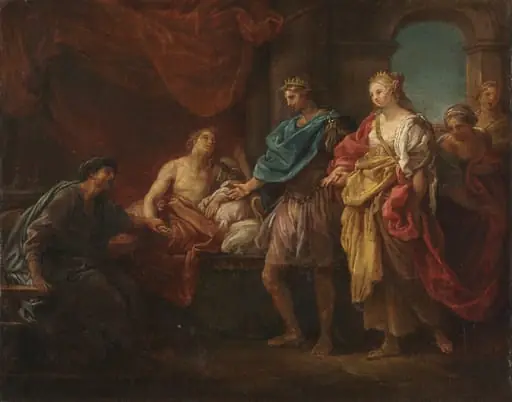 Study for "Antiochus and Stratonice"
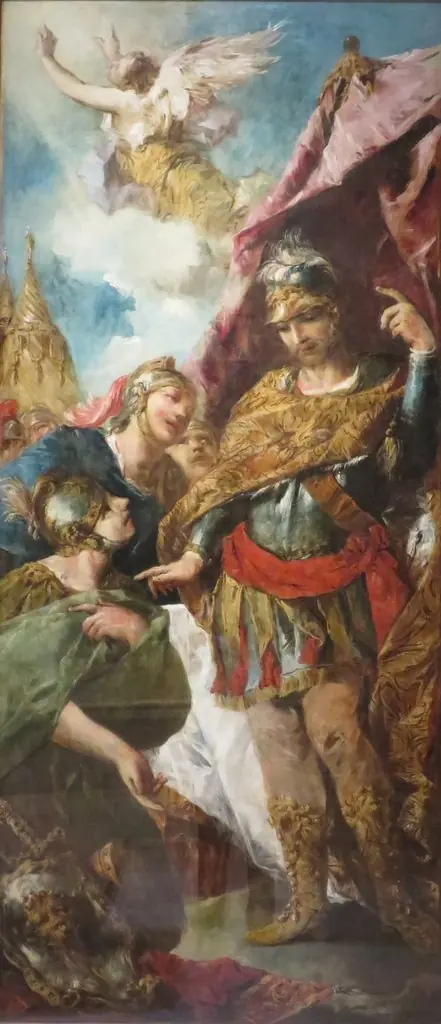 Godfrey of Boulogne Summons His Chiefs to Council
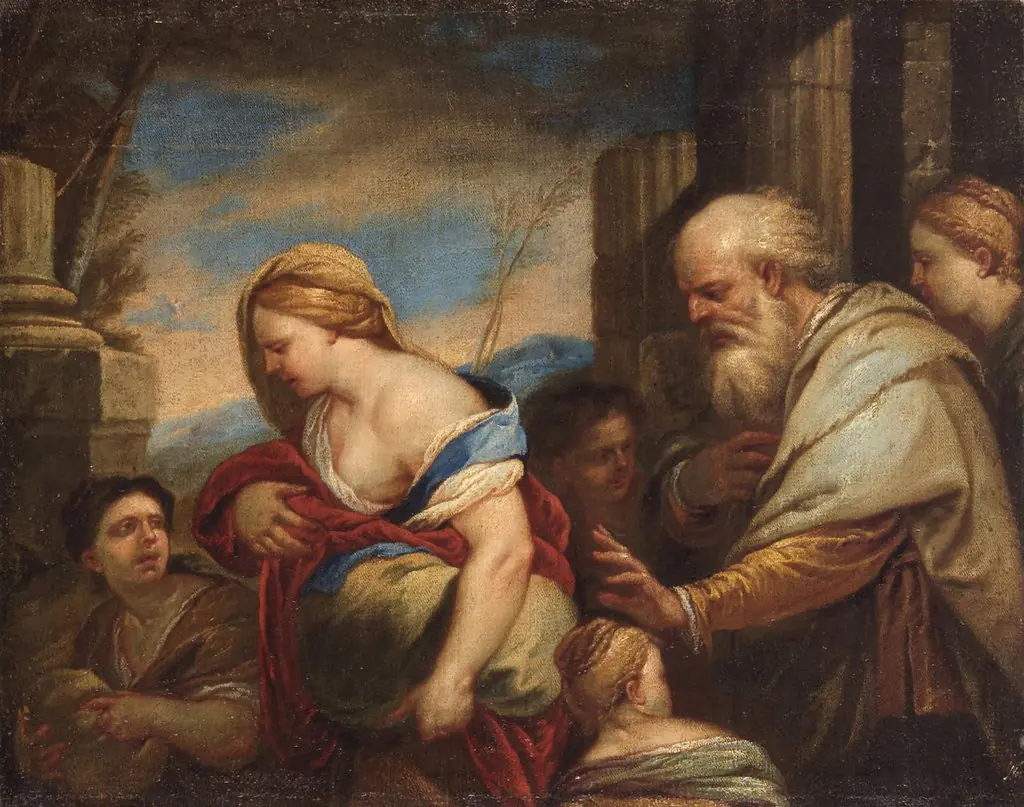 Expulsion of Hagar by Abraham
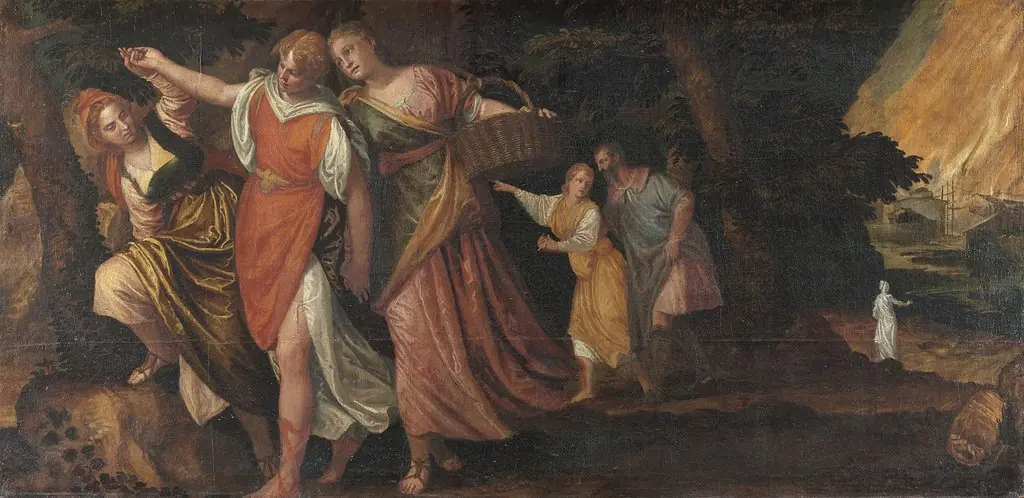 Lot flees Sodom
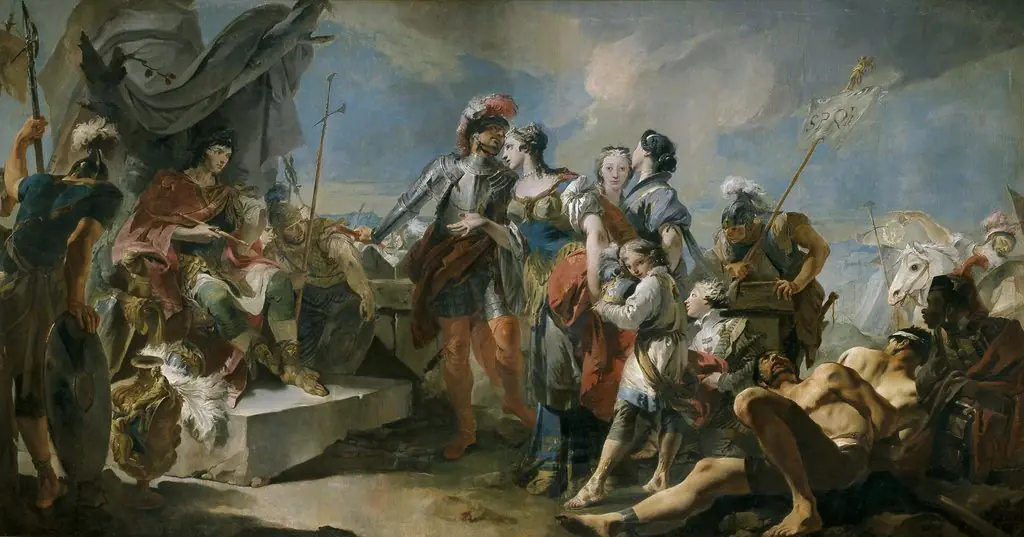 Queen Zenobia before the Emperor Aurelian
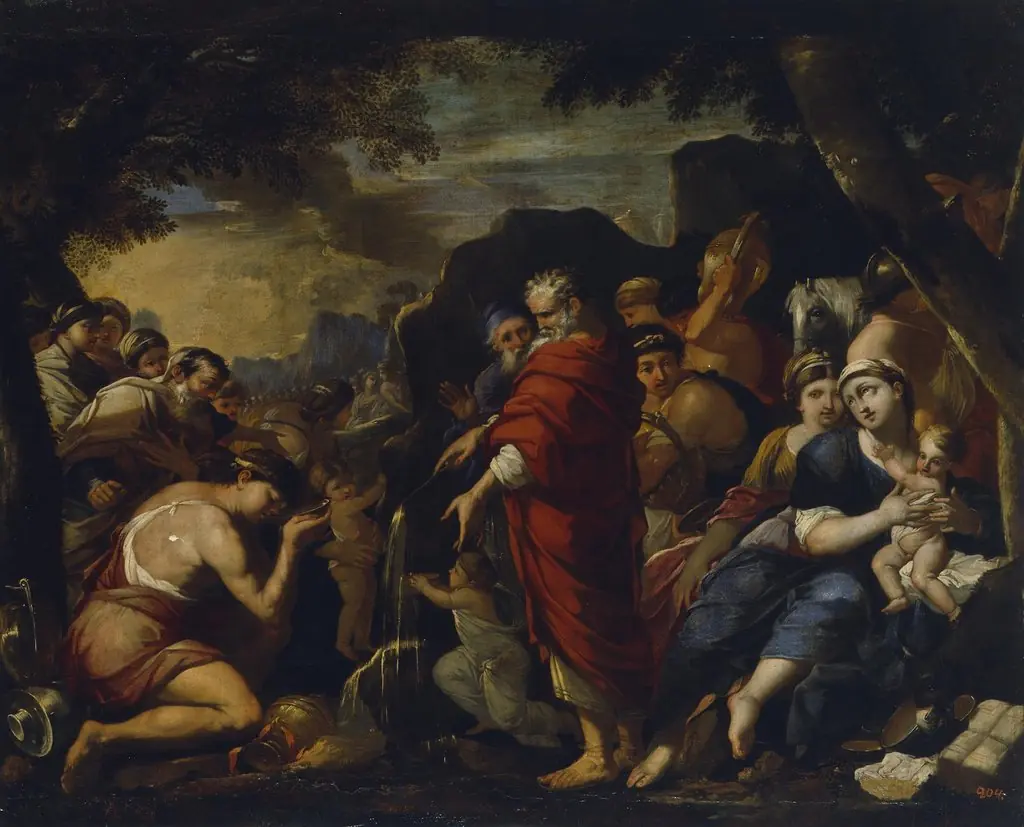 Moses Striking the Rock
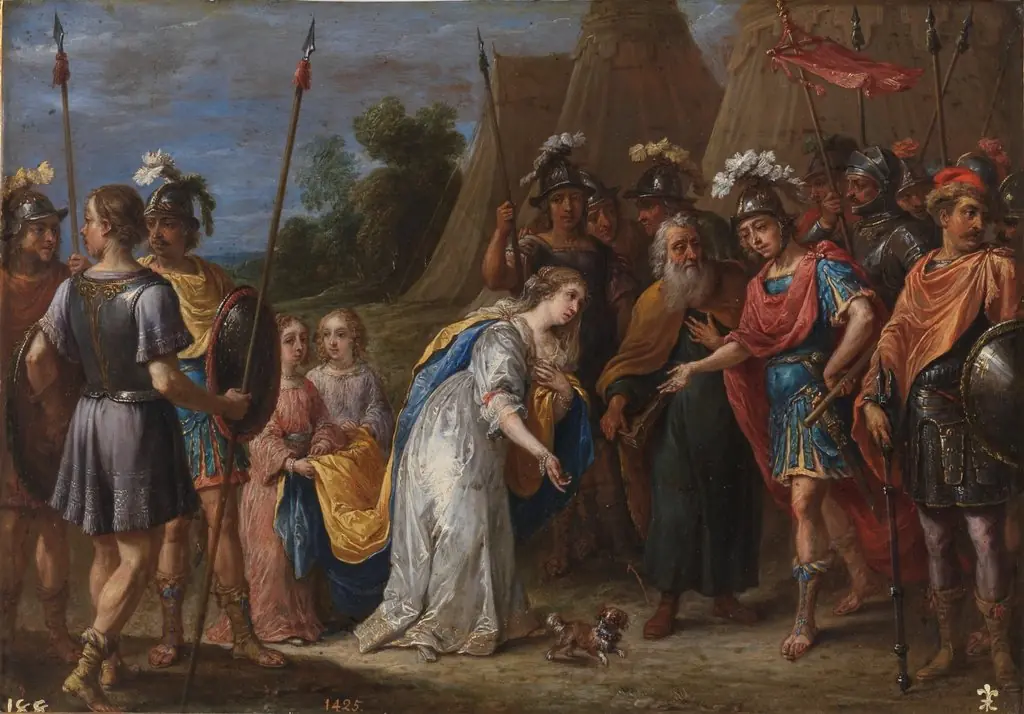 Armida ante Godofredo de Bouillon
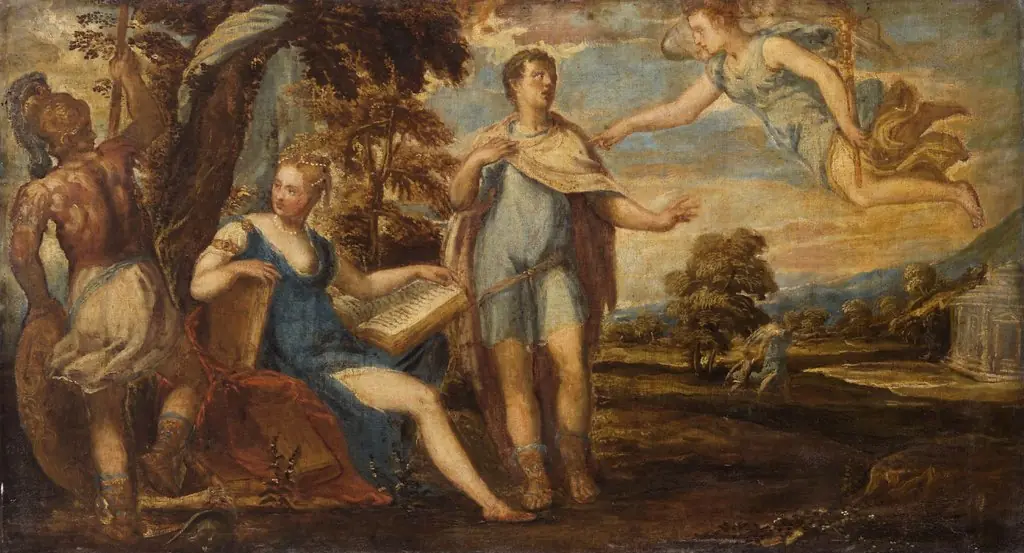
- Aeneas called away from Dido