Artwork
Queen Zenobia before the Emperor Aurelian
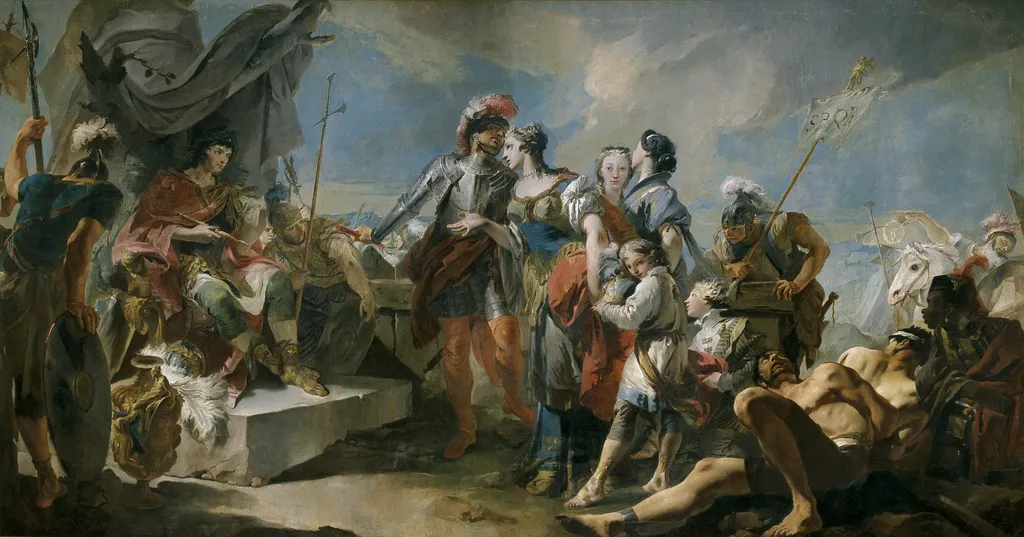
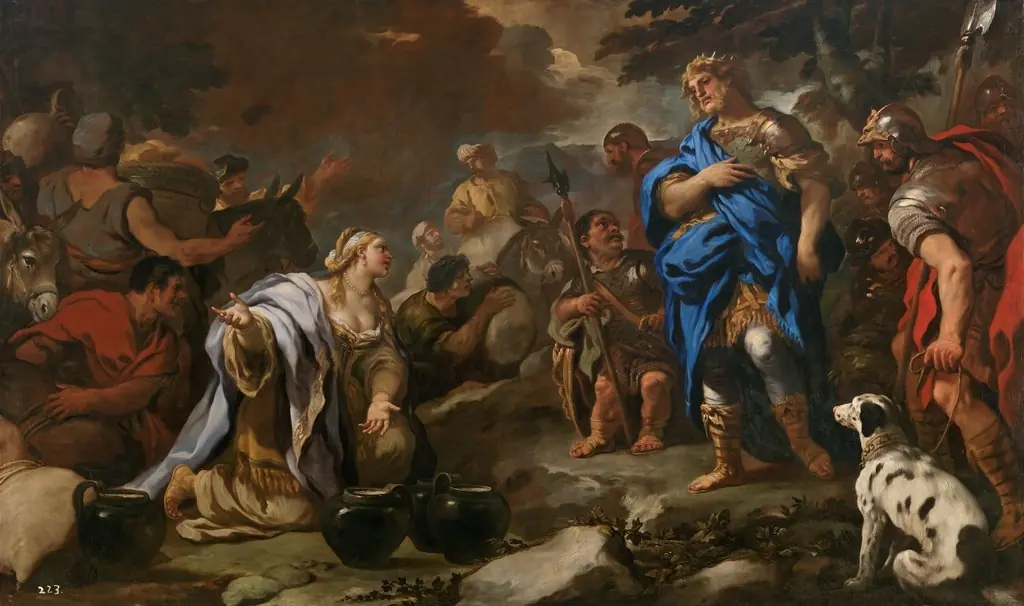
Queen Zenobia before the Emperor Aurelian is an oil painting by the Rococo painting artist Giovanni Battista Tiepolo. It dates from 1717 and is held in the collection of the Museo del Prado.
About this work
Subject & Meaning
The painting shows Queen Zenobia, sovereign of Palmyra in the third century, captured before the Roman Emperor Aurelian after her defeat.
The painting shows Queen Zenobia, sovereign of Palmyra in the third century, captured before the Roman Emperor Aurelian after her defeat. She is presented in regal attire, holding a scepter, while a weapon, combat helmet and shield lie at her feet, underscoring her former military authority and the triumph of imperial power. The work thus symbolizes the subjugation of an eastern ruler by Rome and reflects Enlightenment interest in historical subjects that combine political narrative with moral exempla.
Technique & Style
The work is an oil painting executed on canvas, reflecting the conventional technique of 18th‑century Italian art. Giovanni Battista Tiepolo applied oil paint to the canvas support, producing a composition marked by dramatic chiaroscuro and a dynamic, theatrical pose that emphasizes Zenobia’s regal bearing and the imperial context of Aurelian’s triumph. The formal handling showcases a refined brushstroke and a rich palette that heighten the narrative tension.
History & Provenance
The painting Queen Zenobia before the Emperor Aurelian by Giovanni Battista Tiepolo is housed in the Museo del Prado in Madrid. Its inventory number is P00968. The work has been part of several exhibitions at the Museo del Prado, including the retrospective Tiepolo: The Brush of the Gods in 1996 and the exhibition Italian Masters of the Eighteenth Century in 2001.
Overview
Giovanni Battista Tiepolo’s oil on canvas, executed in 1717, portrays the captured queen Zenobia confronting the Roman emperor Aurelian. The composition is set on a rugged shoreline, where a crowd gathers around the central figures. A storm‑laden sky and a distant vessel frame the dramatic encounter, which is now displayed in Madrid’s Museo del Prado.
Context
Zenobia’s rebellion against Rome (c. 267–272 CE) and her eventual capture by Aurelian were popular subjects in European art, symbolising the triumph of imperial order over exotic sovereignty. Tiepolo’s interpretation reflects contemporary interest in grand historical narratives, aligning with the Enlightenment’s fascination with antiquity and moral exempla.
Artist & collection

Artist
Giovanni Battista Tiepolo, also known as Giambattista Tiepolo, was an Italian painter and printmaker from the Republic of Venice who painted in the Rococo style, considered an important member of the 18th-century Venetian school.

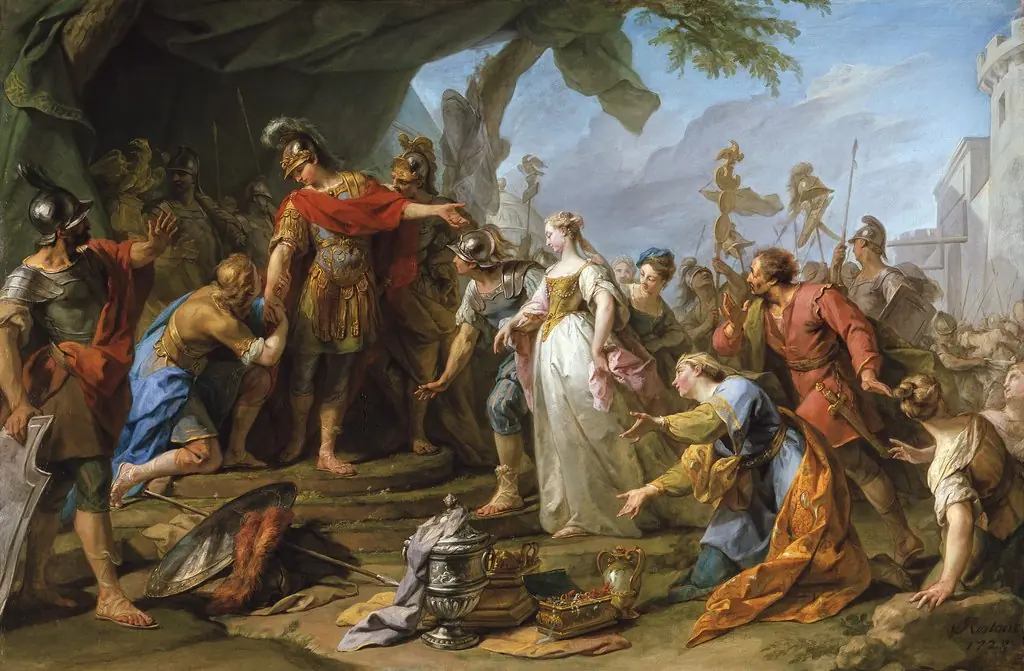 The Generosity of Scipio
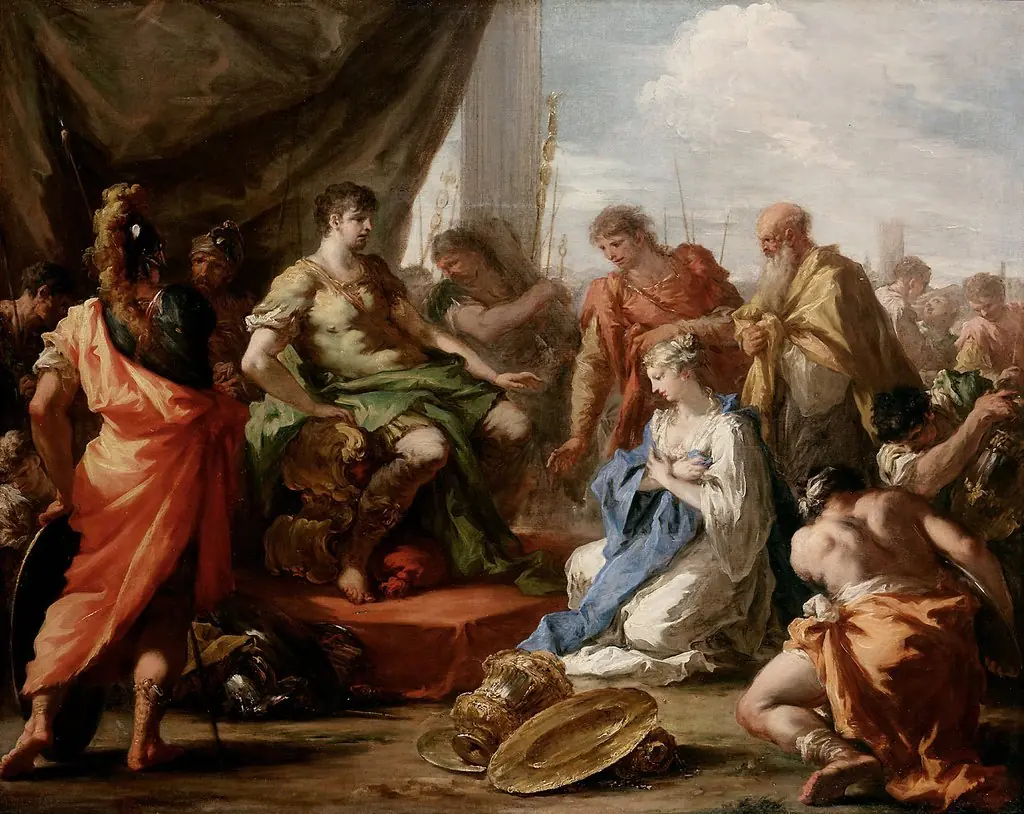 Enthaltsamkeit des Scipio
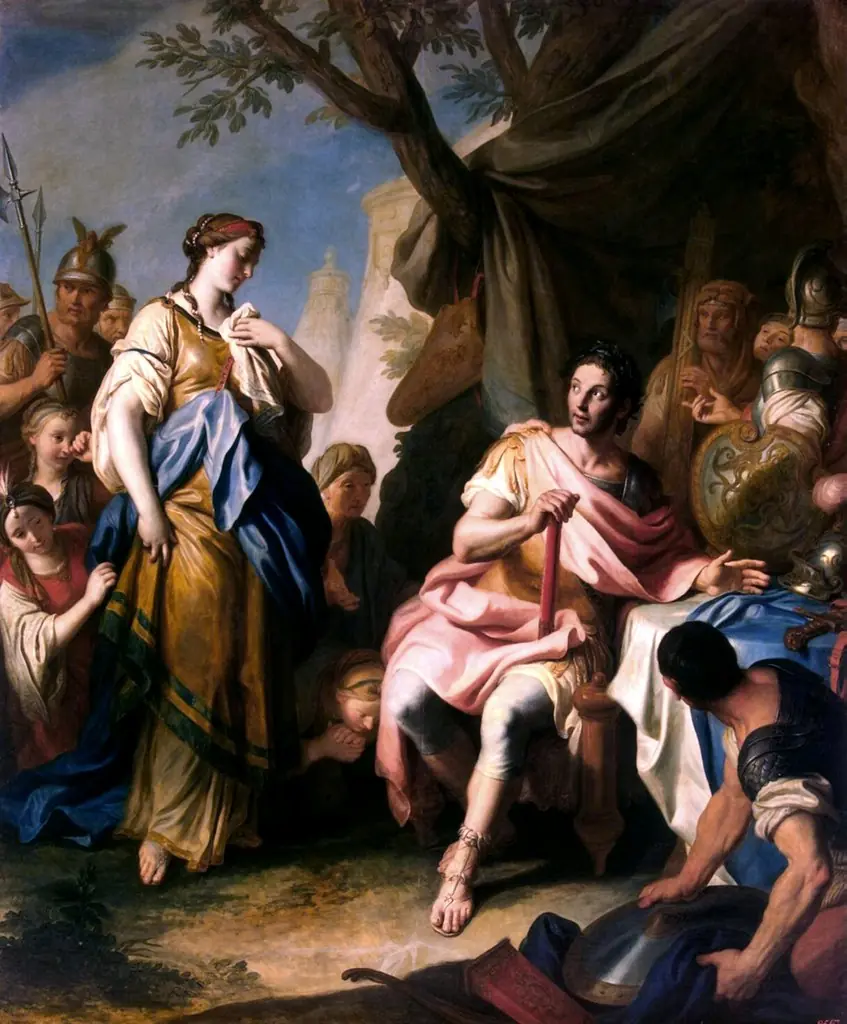 Alexander the Great and Roxana
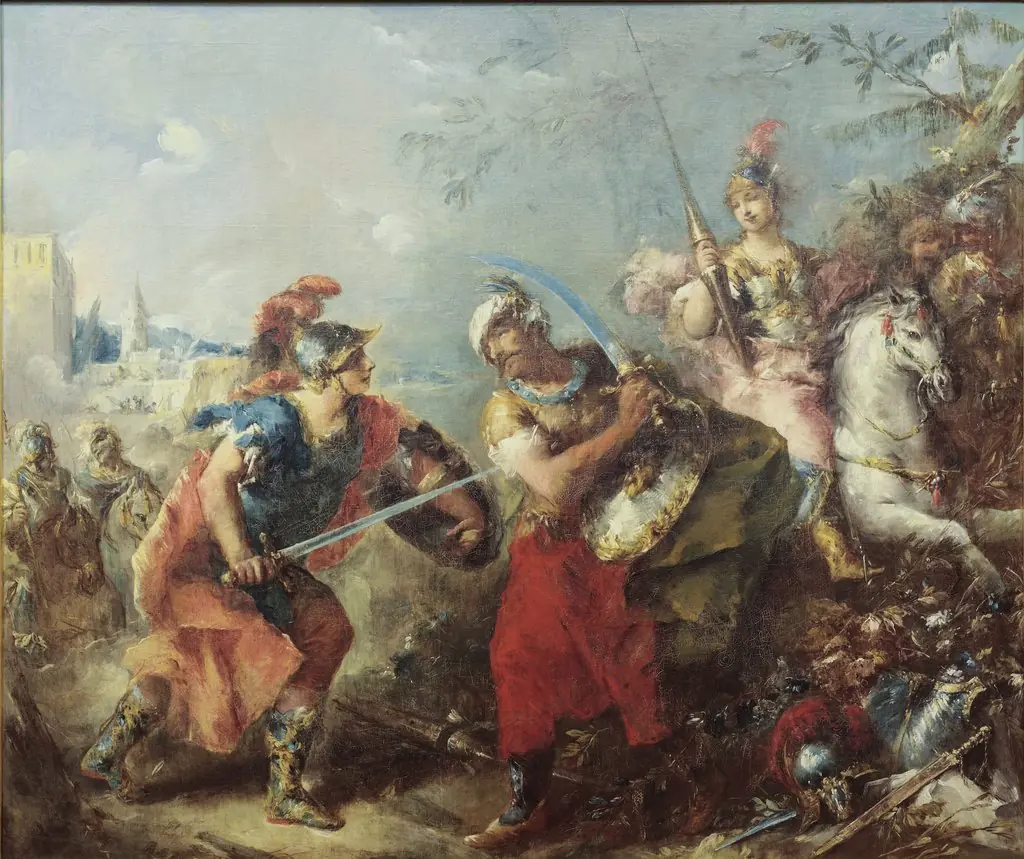 The Fight between Tancred and Argante With Clorinda in the Background
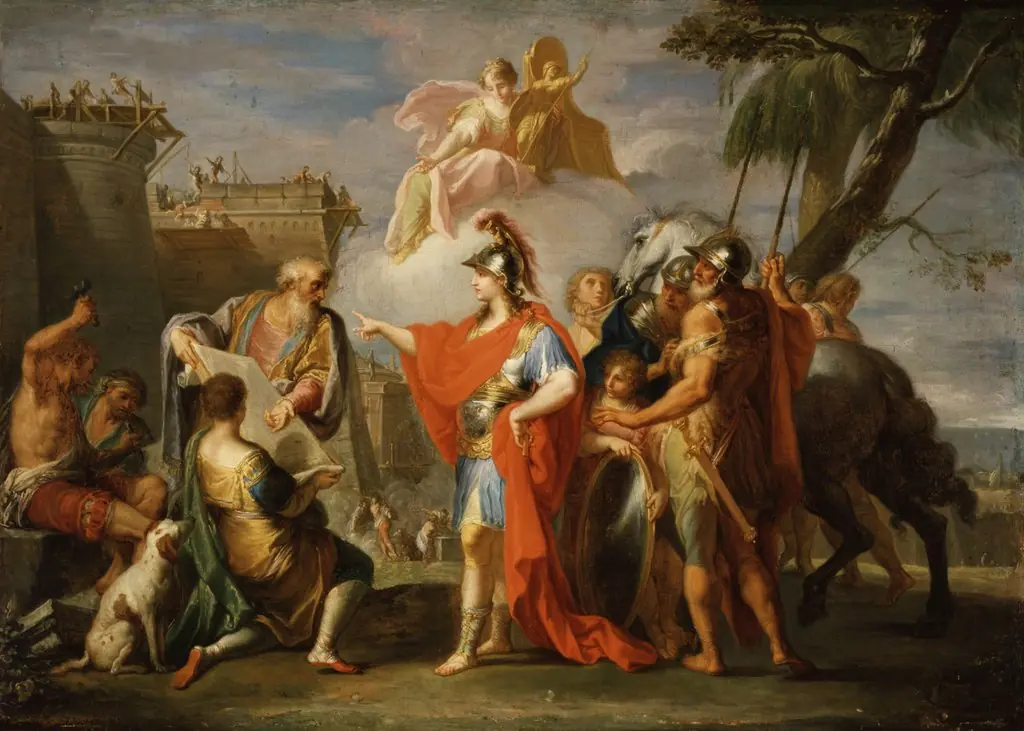 Alexander the Great Founding Alexandria
 The Fight between Tancred and Argante With Clorinda in the Background
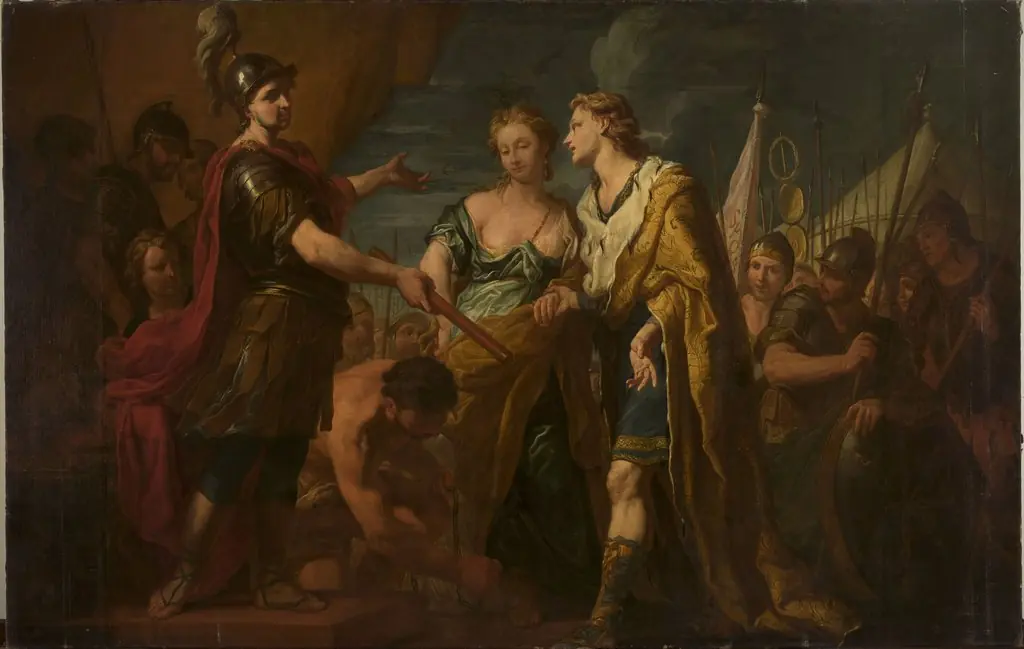 Magnanimity of Scipio
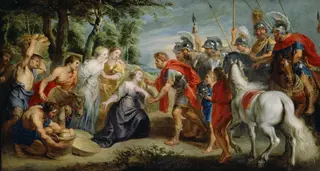 David Meeting Abigail
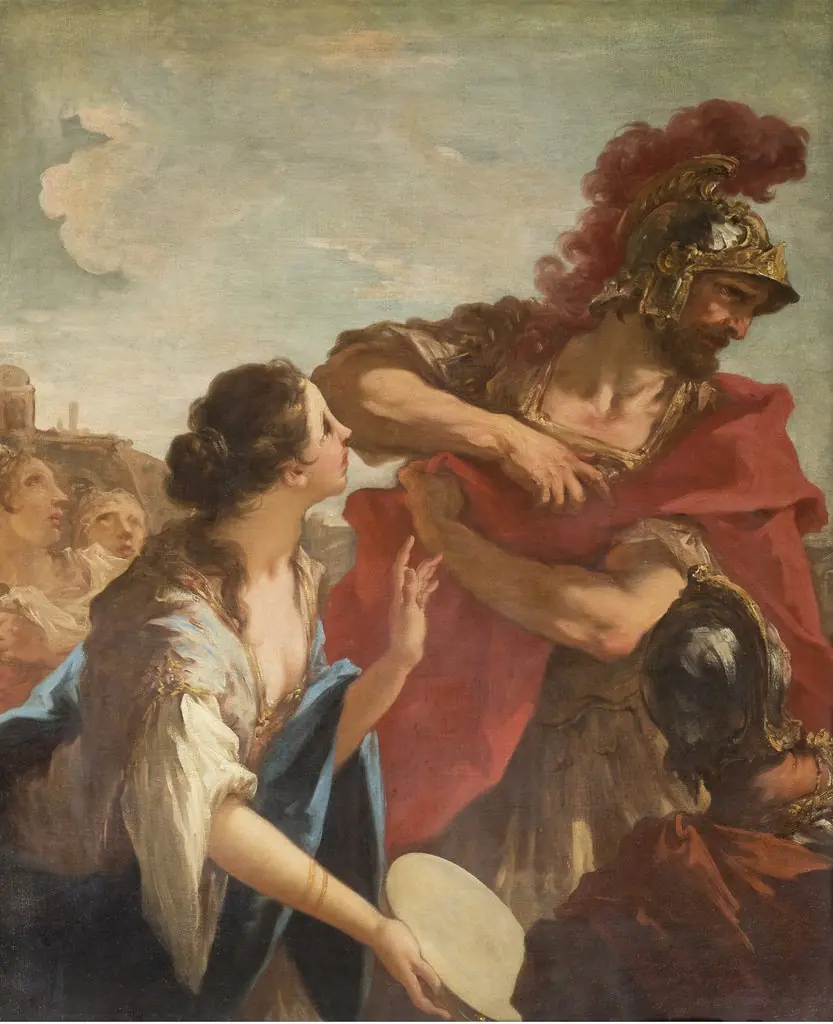 Jephthah returning from Battle is greeted by his Daughter
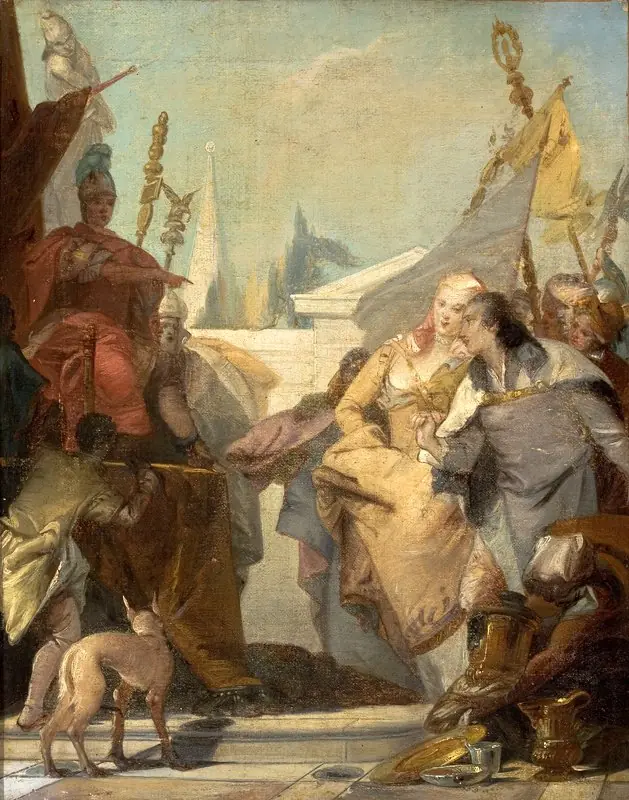 Continence of Scipio
 La prudente Abigail
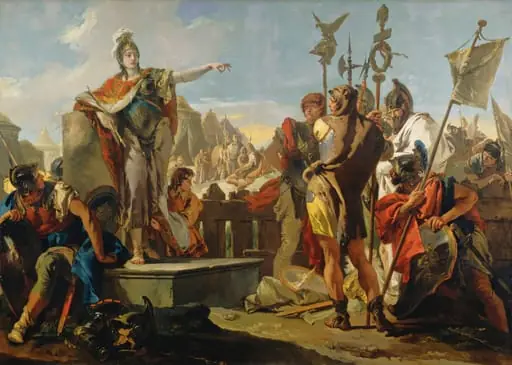
- Queen Zenobia Addressing Her Soldiers