Artwork
Diana and Actaeon
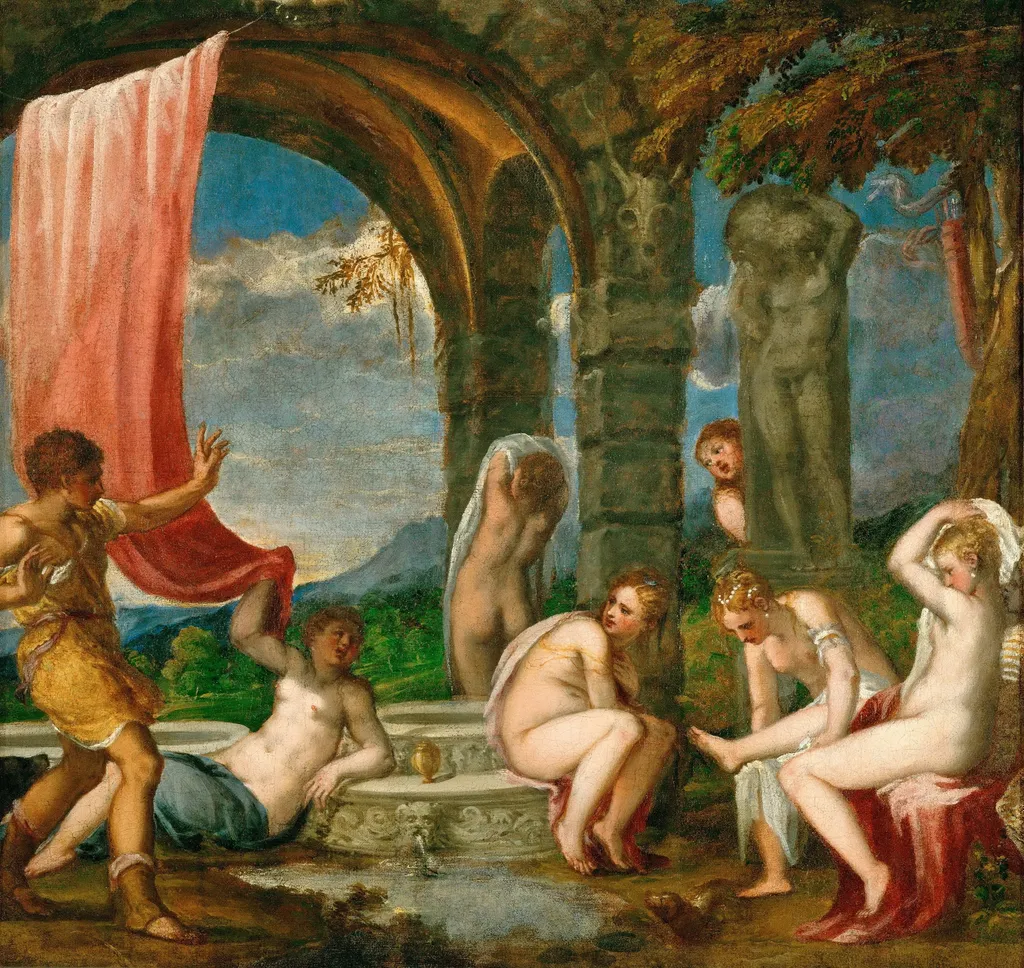
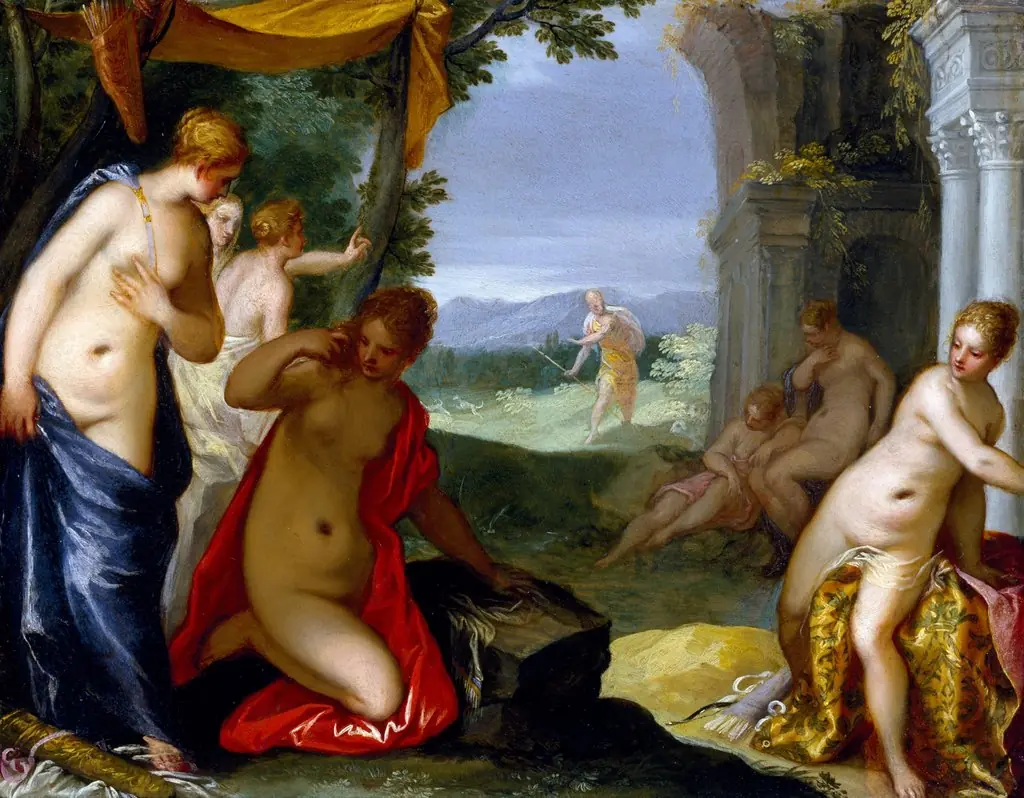
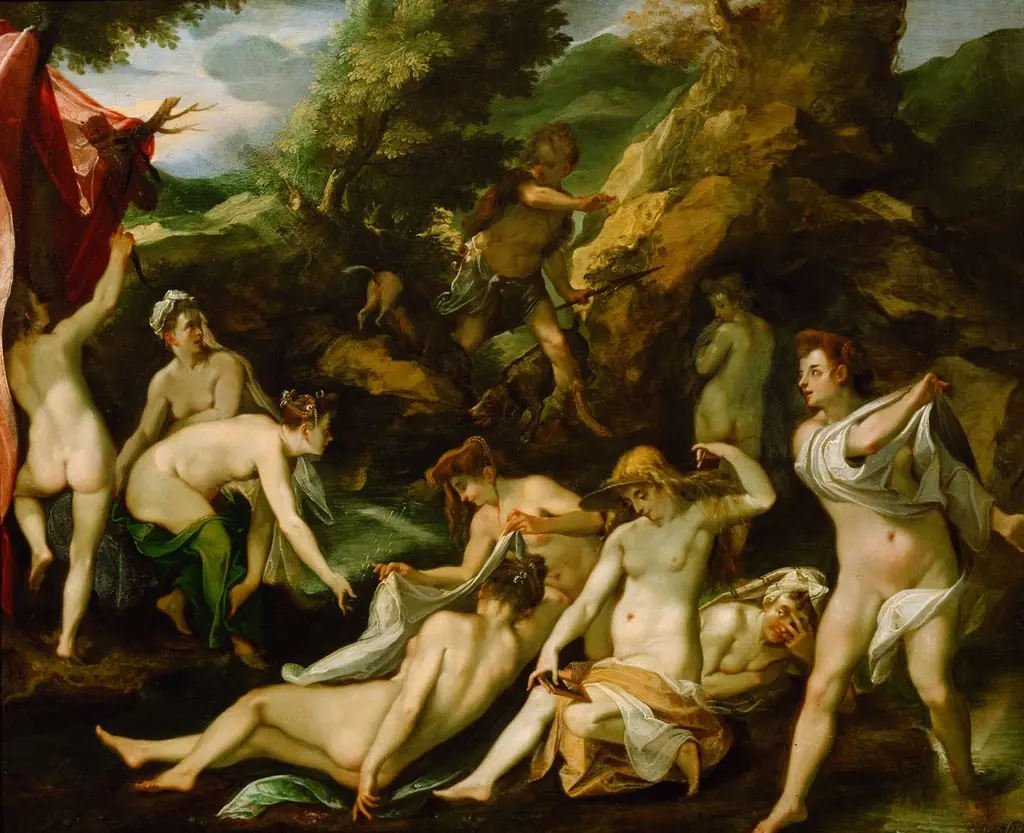
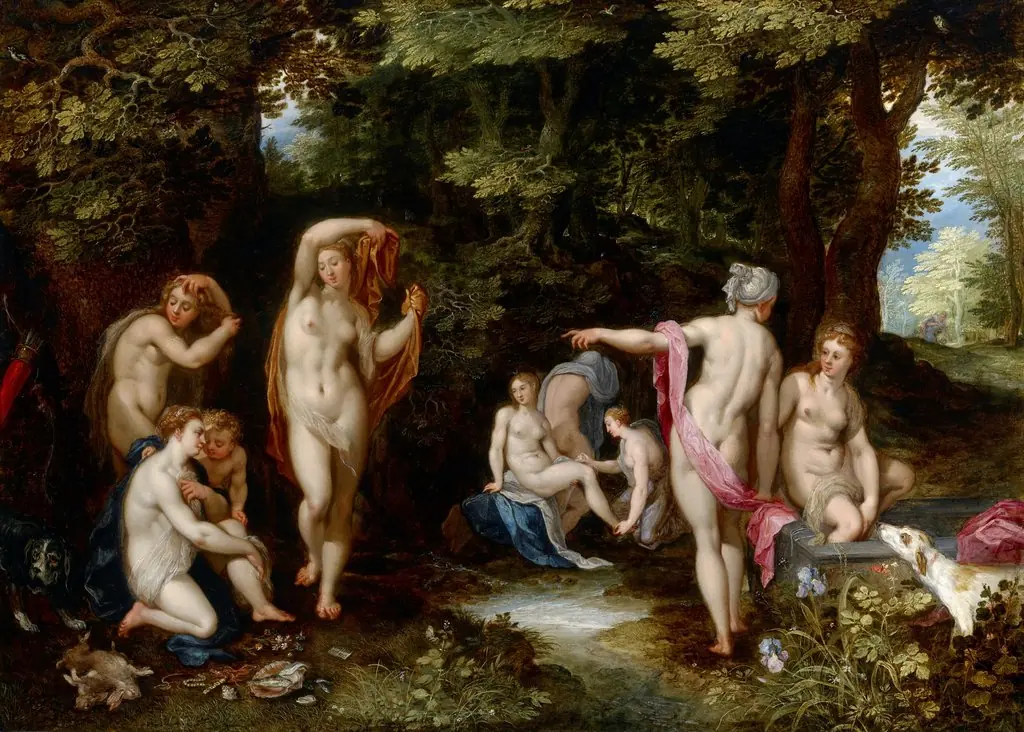
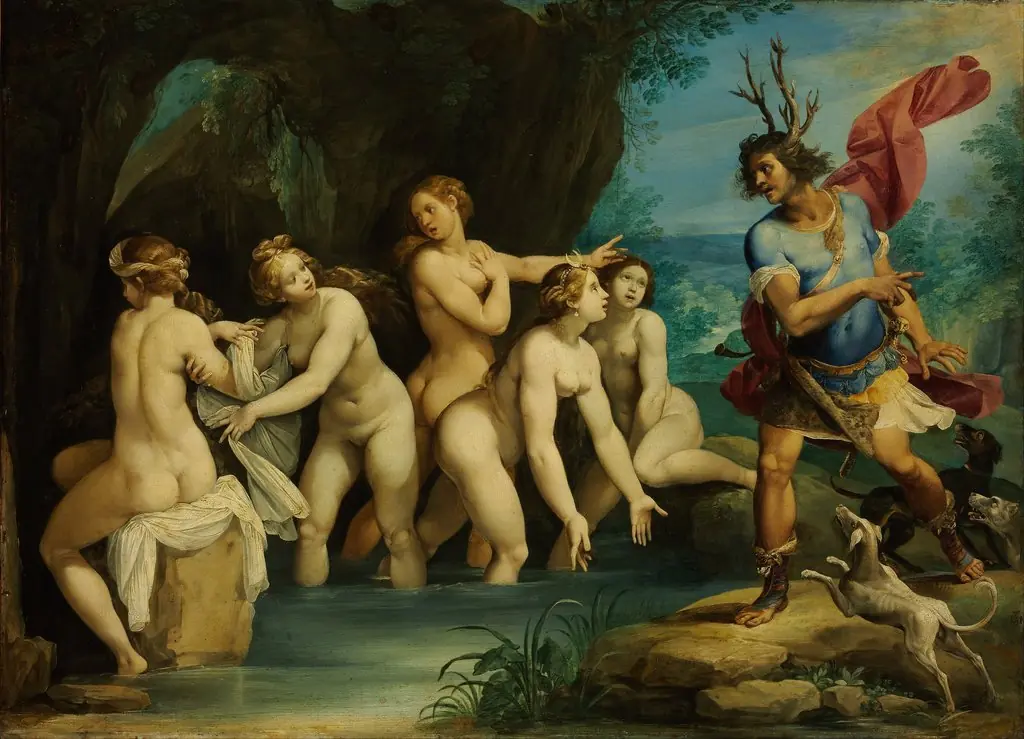
Diana and Actaeon is an unspecified painting by the Mannerist artist Andrea Schiavone. It dates from 1550 and is held in the collection of the Kunsthistorisches Museum.
About this work
Subject & Meaning
Schiavone's mythological painting treats this Ovidian subject, with Diana and Actaeon identified as the figures portrayed.
The painting depicts the mythological encounter between Diana and Actaeon, drawn from Ovid's Metamorphoses. In the tale, the hunter Actaeon chances upon the goddess Diana and her nymphs bathing, and as punishment is transformed into a stag and torn apart by his own hounds. Schiavone's mythological painting treats this Ovidian subject, with Diana and Actaeon identified as the figures portrayed.
The work belongs to the genre of mythological painting, situating it within the Renaissance tradition of visualizing classical narratives for sophisticated patrons. The dramatic moment of divine punishment and metamorphosis offered artists an opportunity to explore themes of transgression, the vulnerability of mortals before the gods, and the violent transformation of the human into the animal.
History & Provenance
Diana and Actaeon is a mythological painting executed by Andrea Schiavone circa 1550. It is classified as a mythological genre work within the artist’s oeuvre. Measuring 93 cm in height and 97 cm in width, the canvas depicts the goddess Diana discovering the hunter Actaeon.
The work entered the holdings of the Kunsthistorisches Museum in Vienna, where it remains on display. No earlier owners or commission details are recorded in the available sources.
Overview
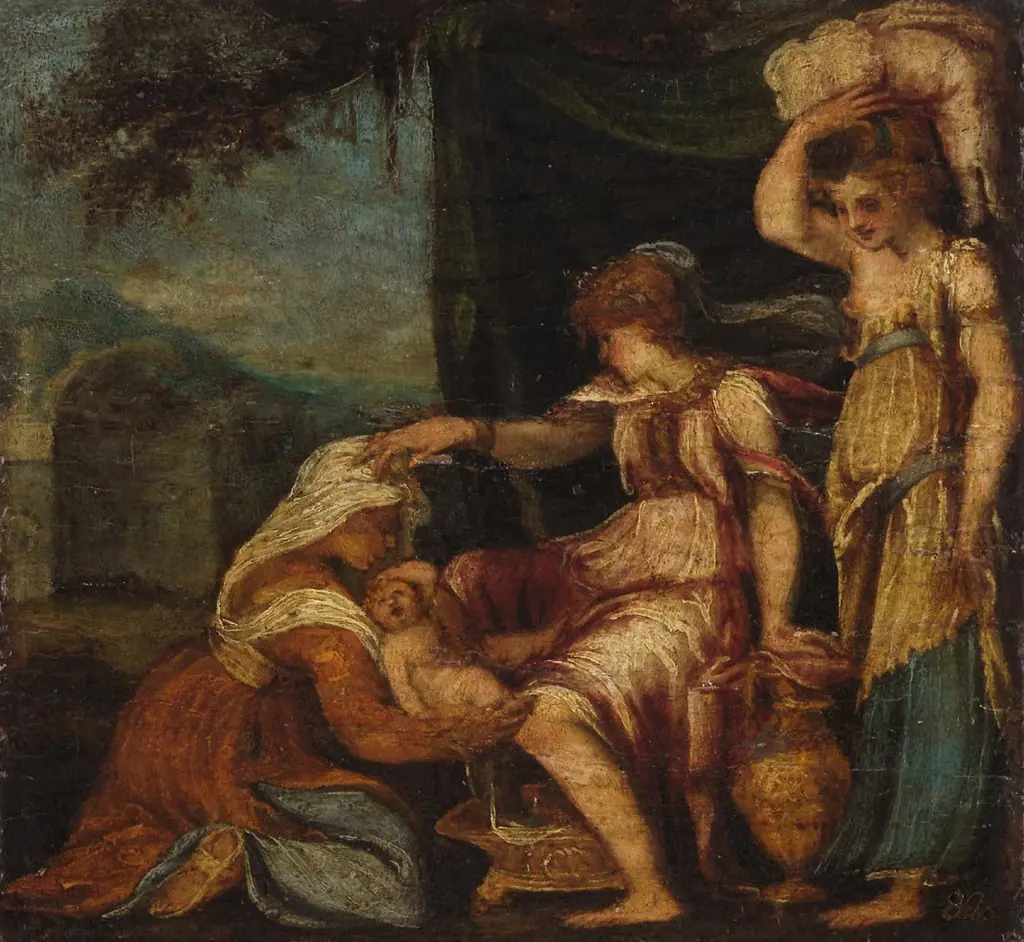
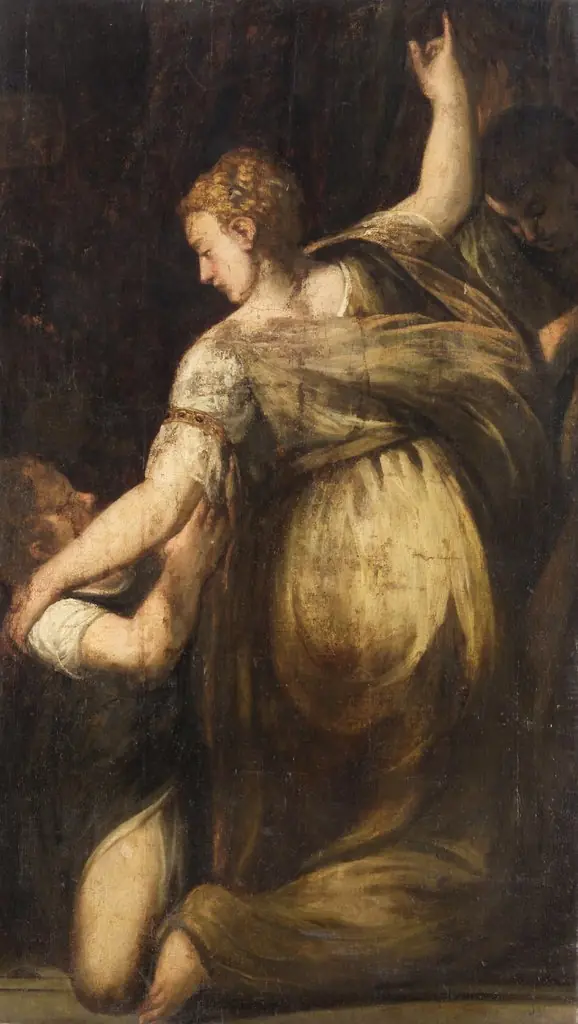
Andrea Schiavone’s Diana and Actaeon, executed circa 1550, portrays the mythological encounter in which the hunter Actaeon inadvertently witnesses the goddess Diana bathing with her attendants. Rendered in a compact, outdoor setting, the composition centers on a female figure raising a red cloth, while surrounding figures react with surprise amid crumbling statuary and a dimly lit arch.
Technique & Style
Schiavone merges the elongated forms and artificial poses characteristic of Mannerism with the luminous, saturated hues associated with Venetian colorism, particularly the influence of Titian. A vibrant palette of reds, blues, and warm flesh tones interacts with chiaroscuro modeling, creating depth through contrasting light that heightens the scene’s dramatic tension.
Context
Created during the mid‑16th century, the work reflects the period’s fascination with classical mythology and the intellectual climate of the Venetian Republic. Its synthesis of Mannerist elegance and Venetian color demonstrates the cross‑regional exchange of styles that defined the artistic environment of the time.
Own this work as a print
Artist & collection
Artist
Andrea Meldolla (Croatian: Andrija Medulić), also known as Andrea Schiavone or Andrea lo Schiavone, literally "Andrew the Slav", (c.