Artwork
Cain and Abel
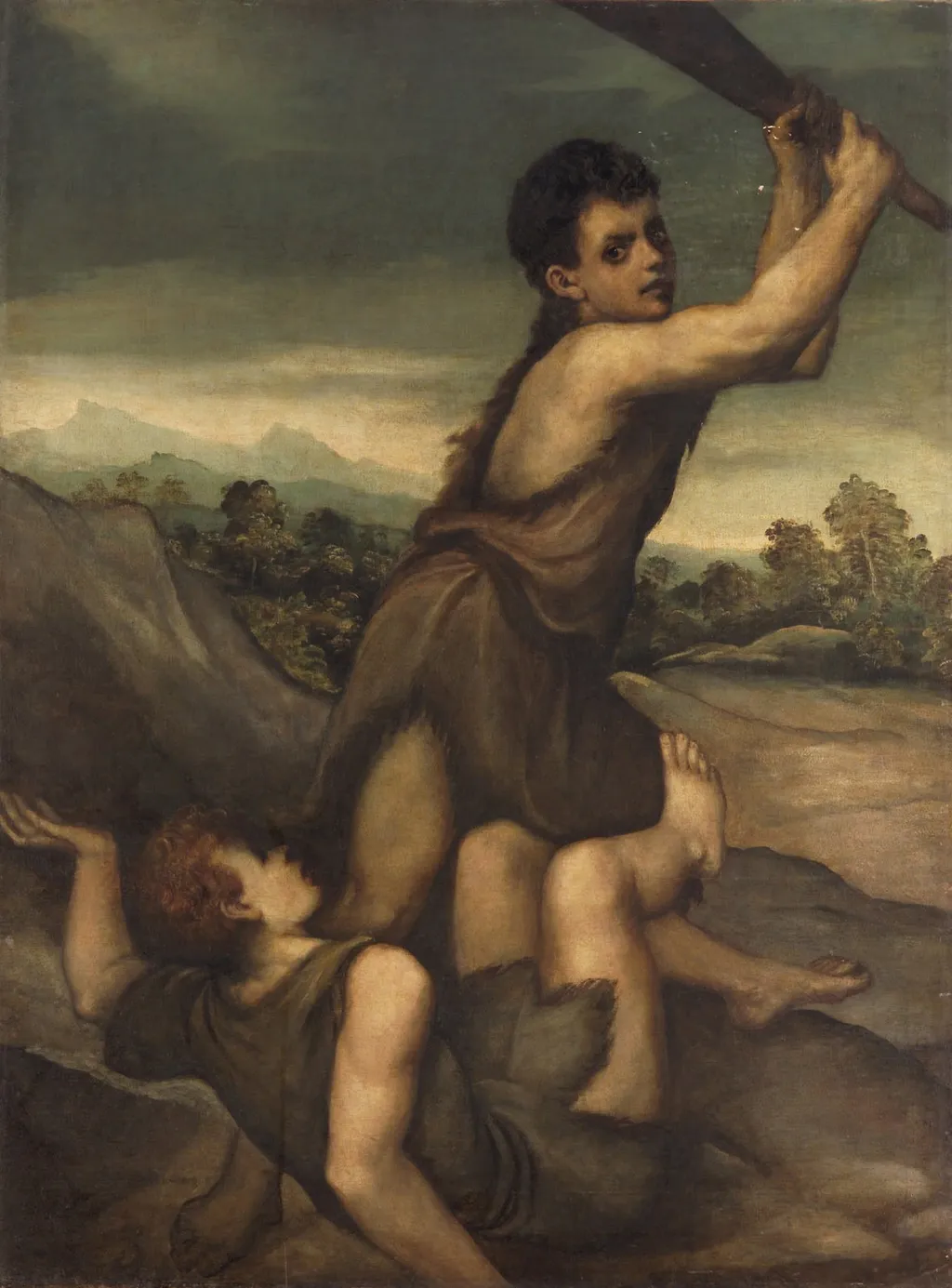
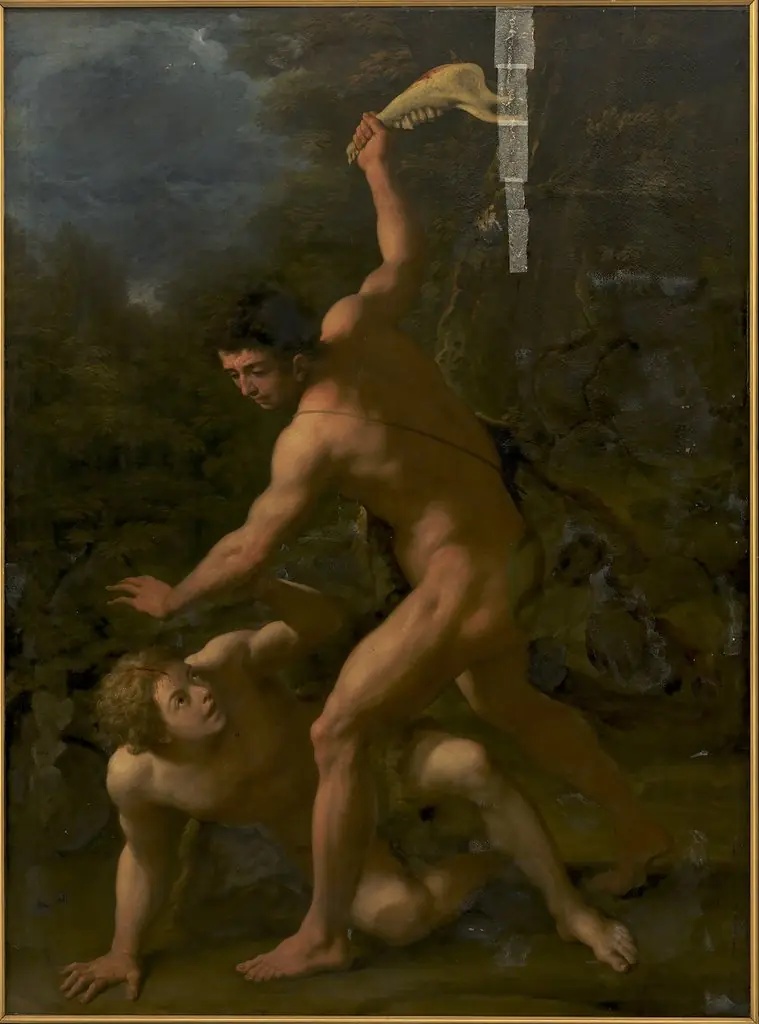
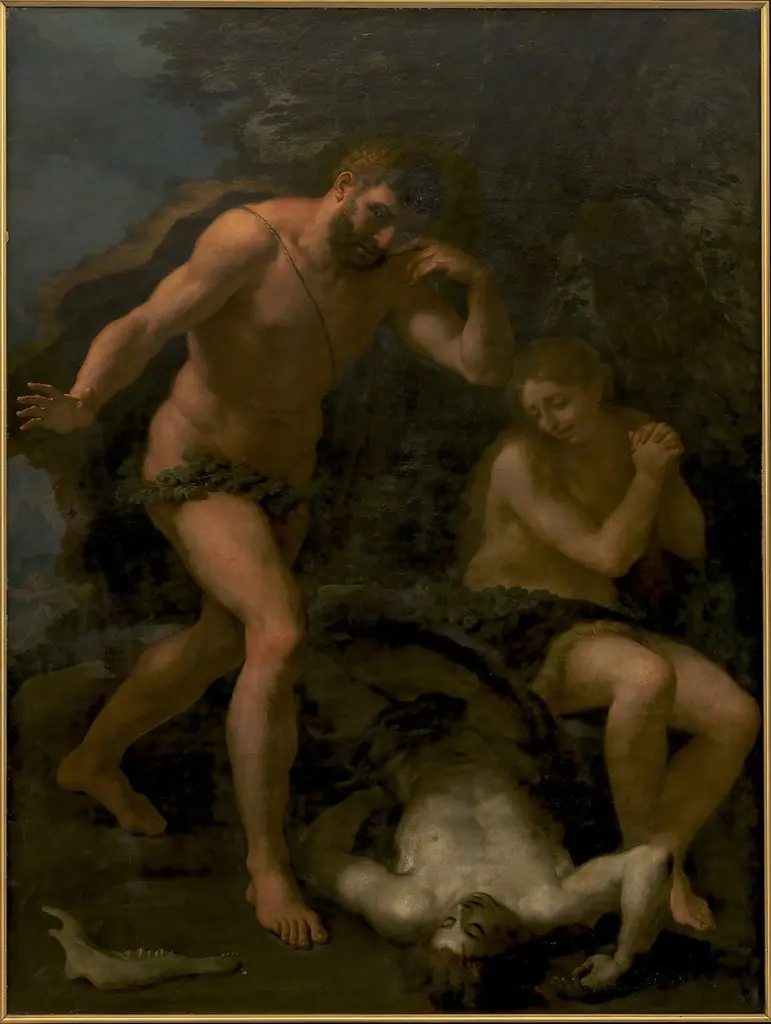
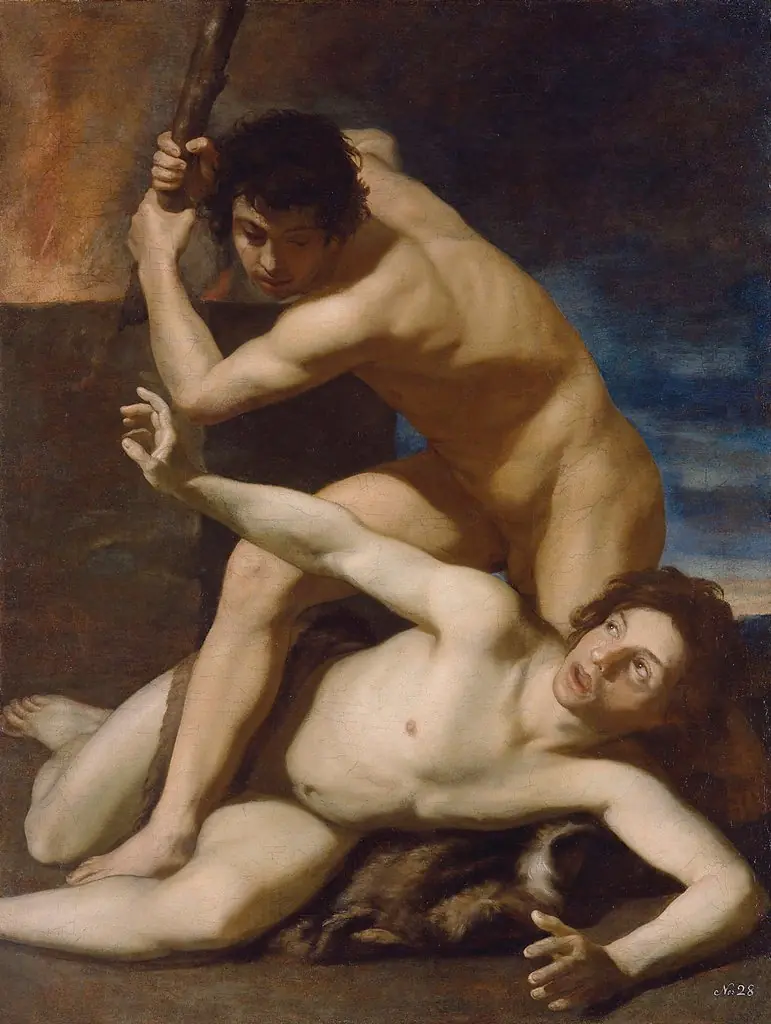
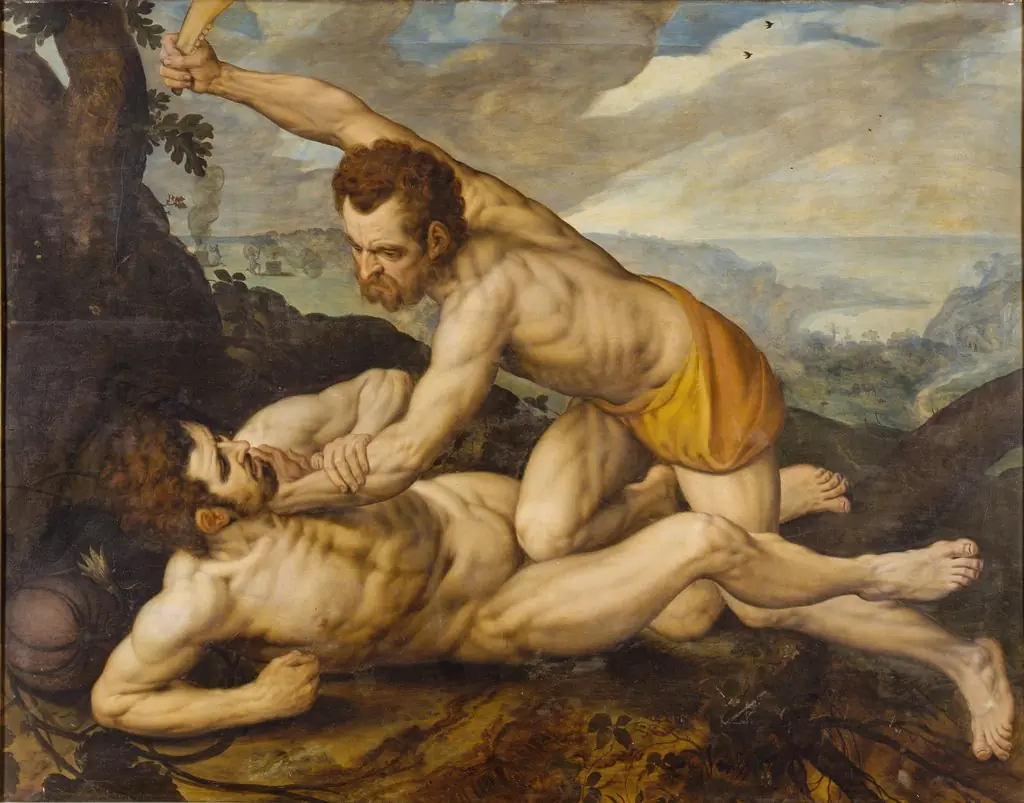
Cain and Abel is an unspecified painting by the Mannerist artist Andrea Schiavone. It dates from 1555 and is held in the collection of the Kunsthistorisches Museum.
About this work
Technique & Style
The painting remains in the collection of the Kunsthistorisches Museum, where it is preserved as a significant example of Schiavone's mid-16th-century output.
Created in 1555 by Andrea Schiavone, Cain and Abel is an oil painting on canvas that serves as a religious depiction of the biblical narrative. The work measures 139 cm in height and 103.5 cm in width, presenting a substantial scale for its genre. As a product of the Venetian school, the piece reflects the artist's characteristic handling of color and light, though specific technical details regarding the ground layer or brushwork are not detailed in the available records.
The painting remains in the collection of the Kunsthistorisches Museum, where it is preserved as a significant example of Schiavone's mid-16th-century output.
History & Provenance
The painting Cain and Abel was created in 1555 by the artist Andrea Schiavone, also known as Andrea Meldolla. Classified as a religious work, the piece depicts the biblical figures of Cain and Abel. The artwork is currently held in the collection of the Kunsthistorisches Museum, where it remains on display.
No specific details regarding its original commission or intermediate ownership history prior to its museum acquisition are provided in the available records.
The painting Cain and Abel by Andrea Schiavone is housed in the Kunsthistorisches Museum. It entered the collection as inventory number 1925.158 and has been part of multiple exhibitions at the museum, including a 1995 survey of Renaissance religious paintings and a 2012 display of Italian Baroque works. The work measures 139 cm in height and 103.5 cm in width.
Context
Andrea Schiavone's 1555 painting Cain and Abel, housed at the Kunsthistorisches Museum in Vienna, depicts the biblical story of the first murder as recounted in Genesis. Art historians situate the work within the Mannerist tradition, reflecting the stylistic conventions of late Renaissance religious painting in Italy. The composition emphasizes dramatic gesture and spatial complexity characteristic of the period, aligning with broader scholarly interpretations of Schiavone's role in the transition from High Renaissance to Mannerist visual storytelling.
Its presence in a major European collection since its creation underscores its significance in the transmission of Italian artistic influence across the continent.
Overview
Andrea Schiavone’s Cain and Abel, executed in 1555, is a religious canvas that belongs to the Mannerist period. The work is part of the Kunsthistorisches Museum’s holdings and portrays the biblical episode of the first murder. Schiavone, a Dalmatian-born painter active in Venice, merges the heightened elegance of Mannerism with the rich colorism of the Venetian school.
Subject & Meaning
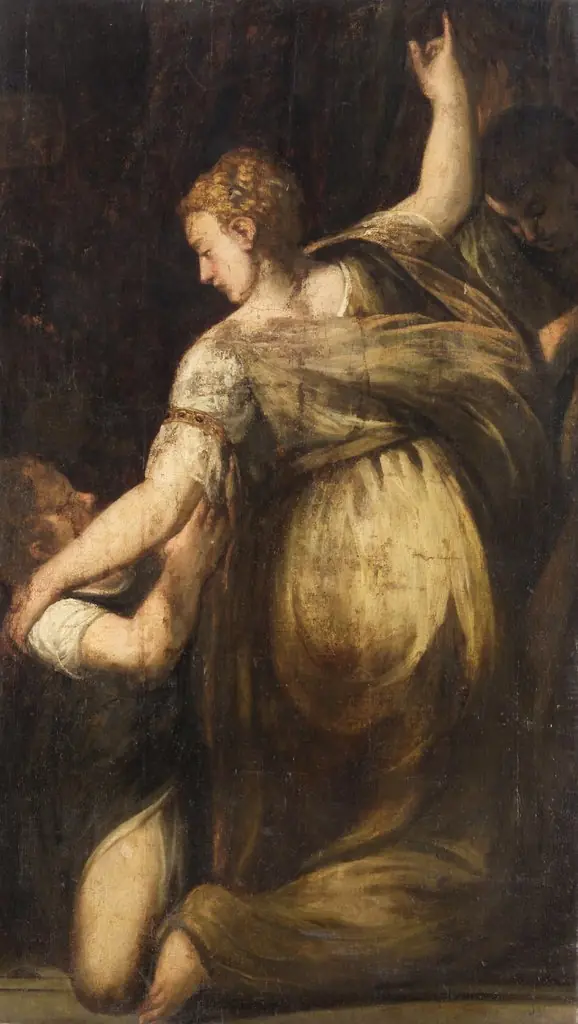
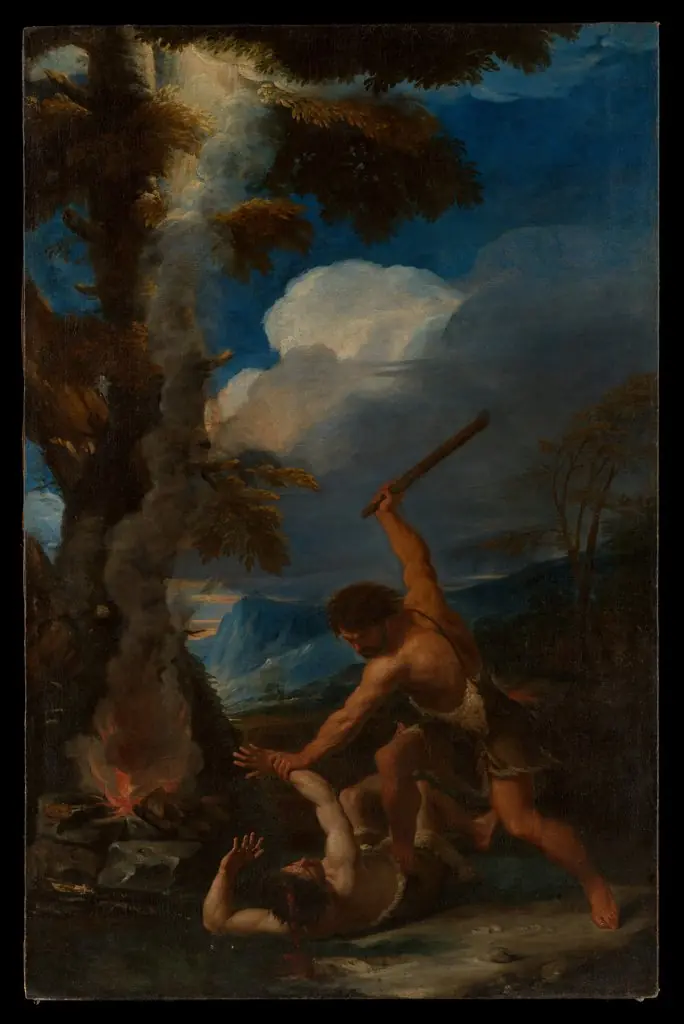
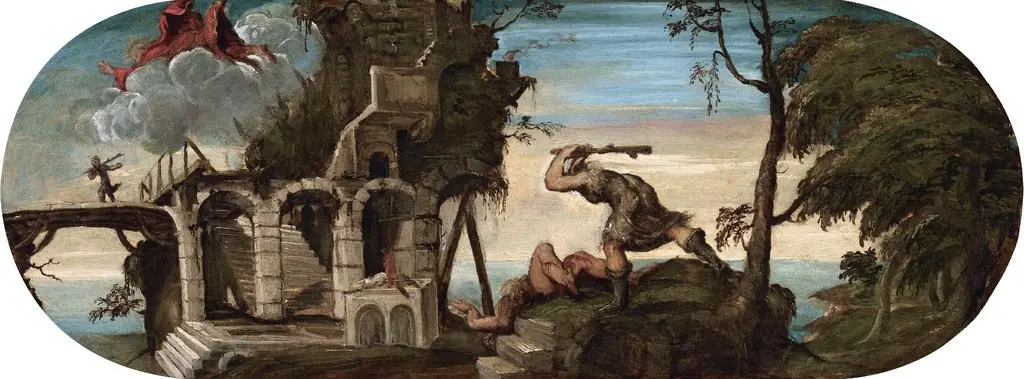
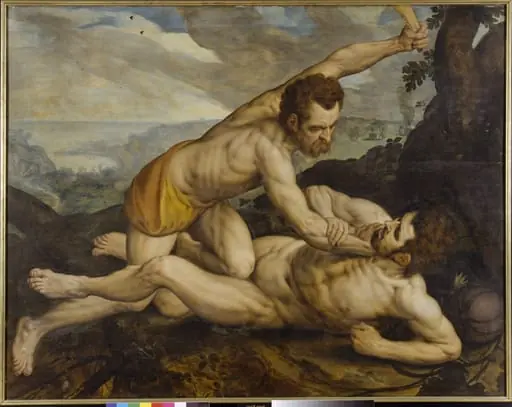
The composition presents the two brothers in a stark outdoor setting: the taller figure, arms raised and clutching a staff, dominates the scene, while the kneeling figure, holding a stone, looks downward in a posture of submission. The contrast between the powerful, muscular man and the smaller, subdued figure underscores the narrative tension of rivalry and violence inherent in the story of Cain and Abel.
Artist & collection
Artist
Andrea Meldolla (Croatian: Andrija Medulić), also known as Andrea Schiavone or Andrea lo Schiavone, literally "Andrew the Slav", (c.