Artwork
Diana and Actaeon
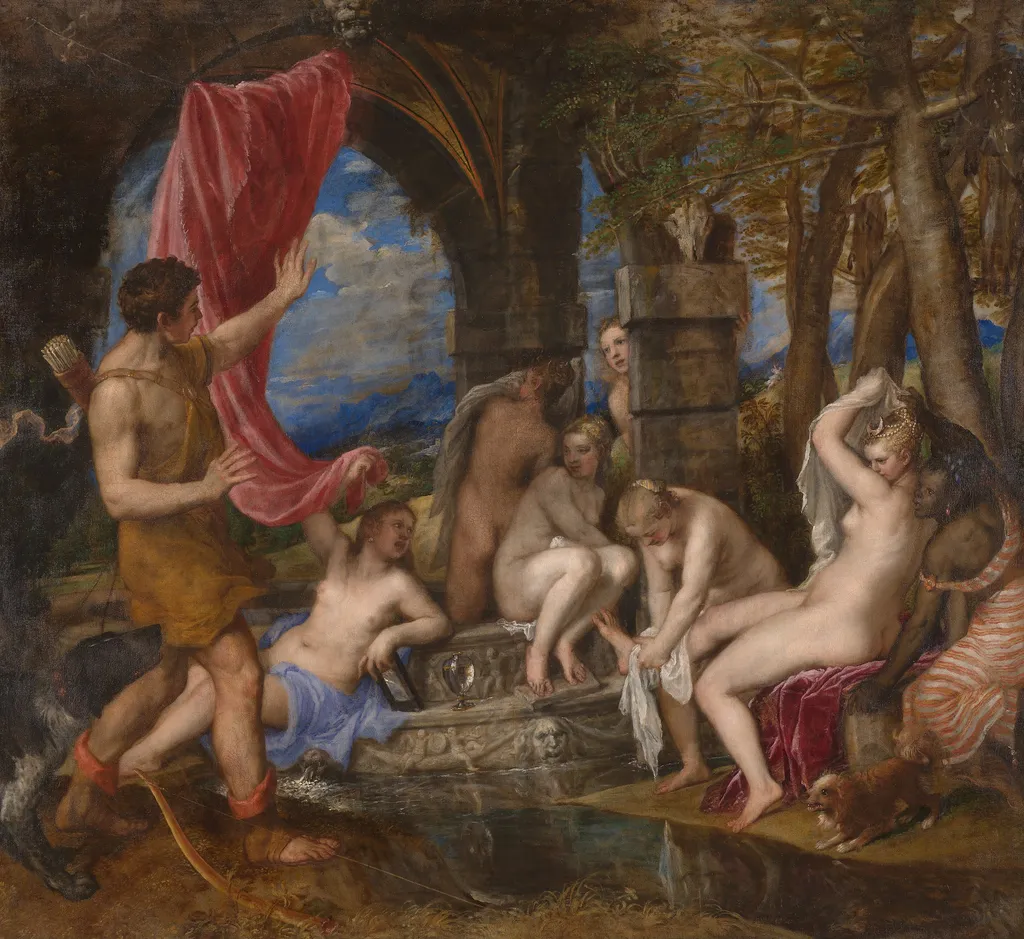
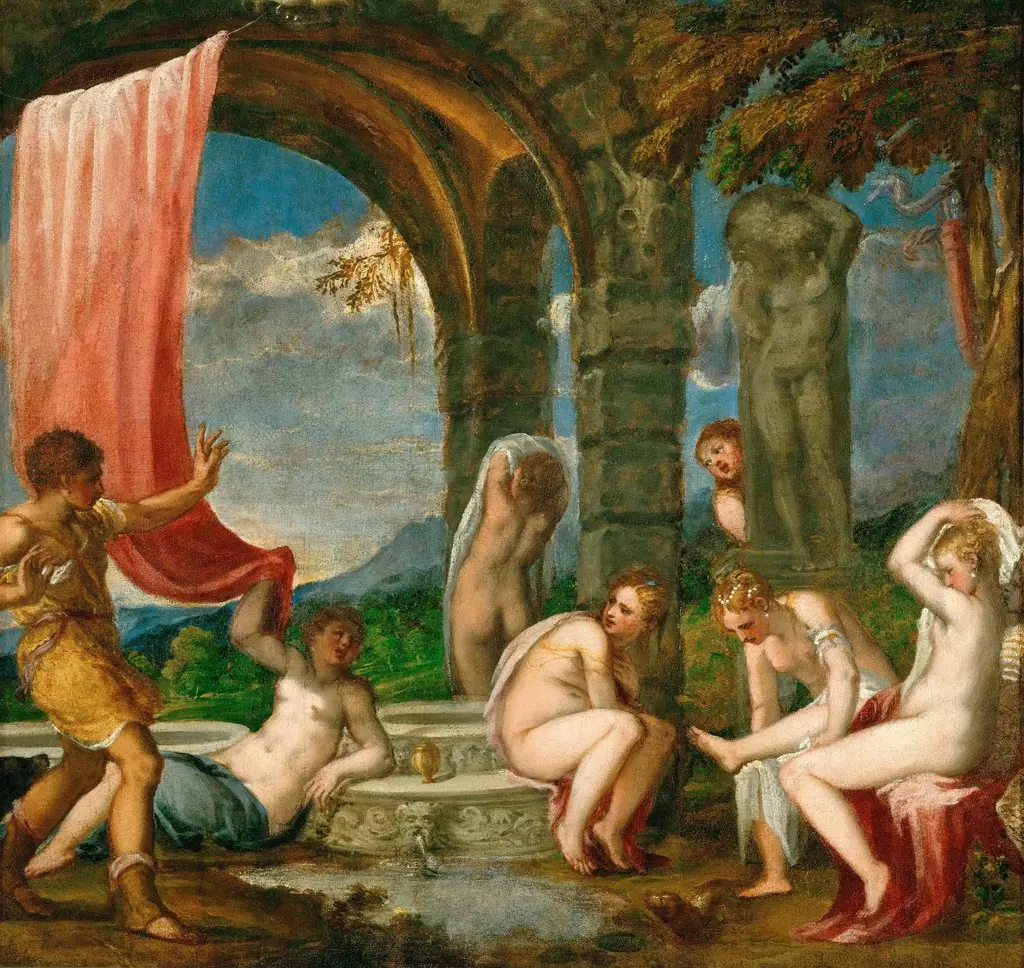
Diana and Actaeon is an oil painting by the Mannerist artist Titian. It dates from 1557 and is held in the collection of the National Gallery.
About this work
Overview
2 centimeters, the work portrays the dramatic moment the hunter Actaeon stumbles upon the goddess Diana bathing with her nymphs.
Diana and Actaeon is a large oil on canvas painting by the Italian Renaissance master Titian, executed between 1556 and 1559. Measuring 184.5 by 202.2 centimeters, the work portrays the dramatic moment the hunter Actaeon stumbles upon the goddess Diana bathing with her nymphs. It is the fourth in a series of six mythological paintings known as the poesie, which Titian created for King Philip II of Spain based on the Roman poet Ovid's Metamorphoses. Designed as a pendant to Diana and Callisto, the two canvases share continuous landscape and water features. Jointly acquired by the National Gallery in London and the National Galleries of Scotland in Edinburgh in 2009, the painting alternates between the two institutions on five-year terms.
Subject & Meaning
The painting illustrates a pivotal scene from the third book of Ovid's Metamorphoses. While hunting, Actaeon inadvertently wanders into the sacred valley of Gargaphia and discovers Diana, the chaste goddess of the hunt, bathing nude with her nymphs in a grotto. The composition captures the exact moment of intrusion: Actaeon enters from the left, pulling back a billowing red curtain, while the nymphs react with alarm, scrambling to cover themselves and their goddess. Diana, identifiable by a crown featuring a crescent moon, sits at the far right, glaring at the intruder as a dark-skinned maidservant attempts to shield her with a white veil. The narrative foretells Actaeon's grim fate; furious at being seen naked, Diana will transform him into a stag to be torn apart by his own hounds. Titian embeds this foreshadowing directly into the scene through a stag skull placed on a stone plinth and animal skins hanging above Diana, alongside the hounds eagerly crowding at Actaeon's feet.
Technique & Style
Executed in oil on canvas, the work exemplifies Titian's late style, characterized by coloristic brilliance, dynamic composition, and loose, animated brushwork. The palette employs warm flesh tones, deep reds, golden yellow, and cool blues set against the greens and browns of the forest and stone ruins. Light falls strongly on the central figures, leaving the periphery in shadow and creating shimmering reflections on the water and flesh. Titian's handling varies across the canvas, utilizing smooth blending for the nude bodies and looser, more textured strokes for the foliage and drapery. The figures, slightly smaller than life-size, display exaggerated physiques and expressive poses that heighten the dramatic tension. Titian significantly altered Ovid's setting, replacing the naturally occurring grotto described in the poem with the ruins of a Gothic cathedral and adding a rusticated stone column to the fountain. This architectural adaptation reflects Renaissance associations of Gothic and rustic forms with the artlessness of nature, while visually framing the startled figures.
History & Provenance
Titian conceived the poesie series after meeting Philip of Spain in 1548 and 1550, enjoying exceptional freedom in choosing the Ovidian subjects. He completed Diana and Actaeon and its pendant Diana and Callisto by 1559, notifying Philip in a letter dated June 19 of that year that the canvases were ready for transport to Spain. The paintings remained in the Spanish royal collection until 1704, when King Philip V gifted them to the French ambassador, who passed them to the Duke of Orleans. Facing the upheaval of the French Revolution, the Duke sold his collection to a Brussels art dealer in 1791. The dealer exhibited the works in London, where the coal magnate Francis Egerton, 3rd Duke of Bridgewater, purchased Diana and Actaeon and Diana and Callisto in 1798. The Bridgewater Collection passed by inheritance to the Dukes of Sutherland and was displayed at Bridgewater House in London, opening to select visitors during the summer months from 1803. During World War II, the collection was moved to Scotland for safety, and from 1946 the paintings were on long-term loan to the Scottish National Gallery. In 2009, the 7th Duke of Sutherland offered Diana and Actaeon to the British public for 50 million pounds, roughly a third of its market value. Following a major fundraising campaign, the National Gallery in London and the National Galleries of Scotland jointly acquired the painting, ensuring it remains on public display on a rotating five-year basis.
Context
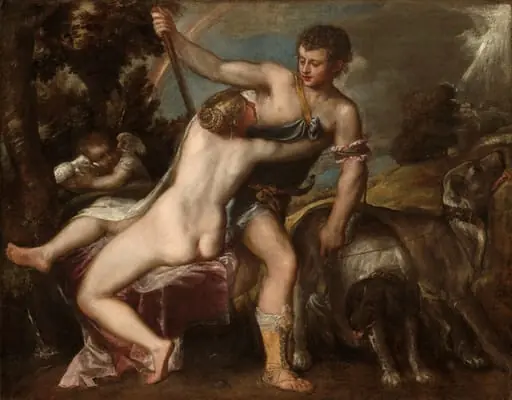
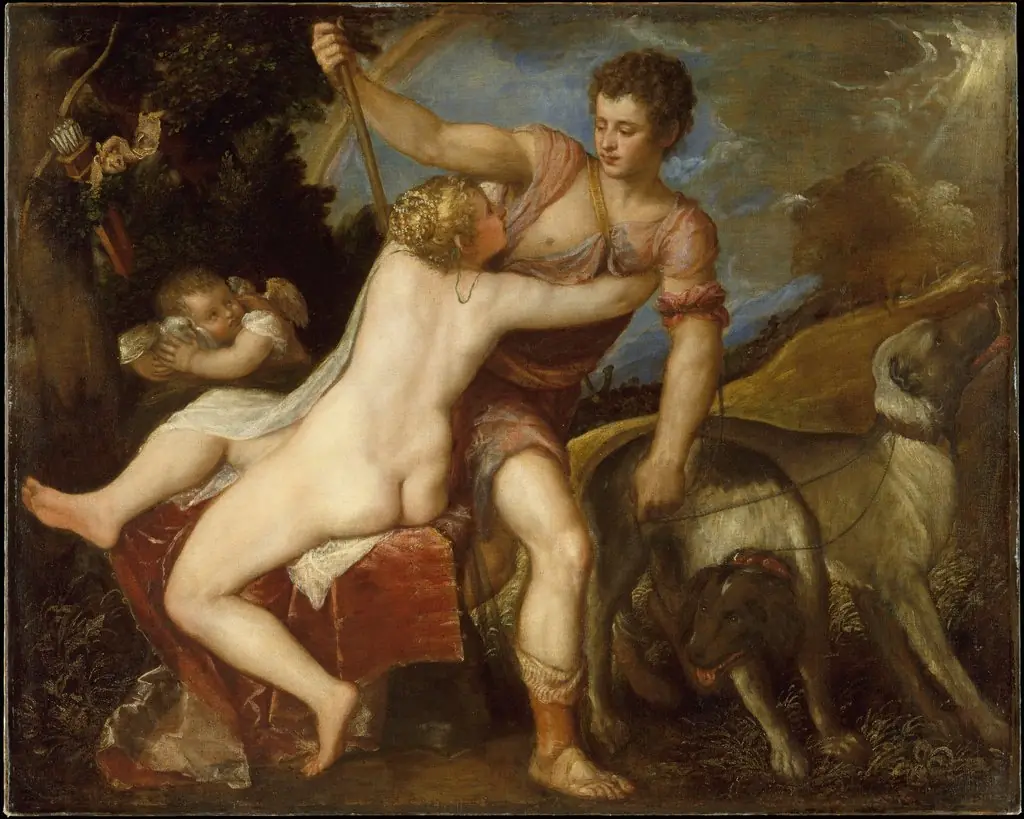
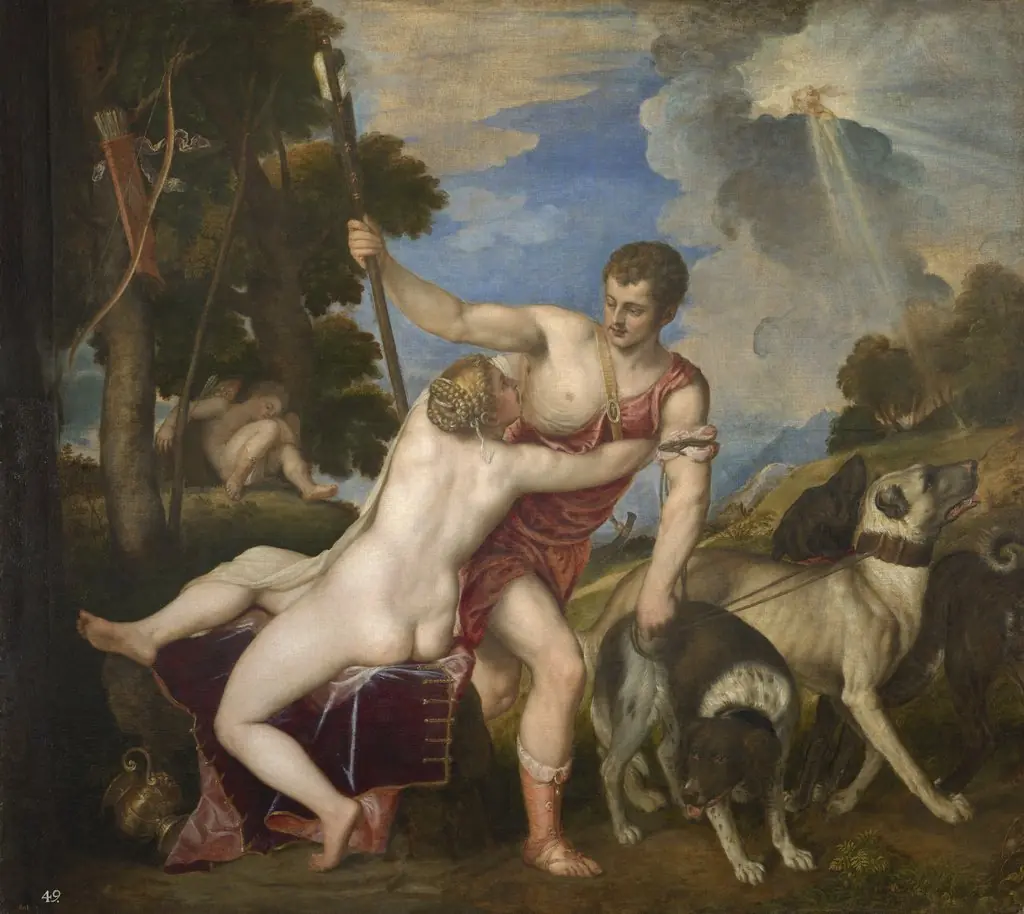
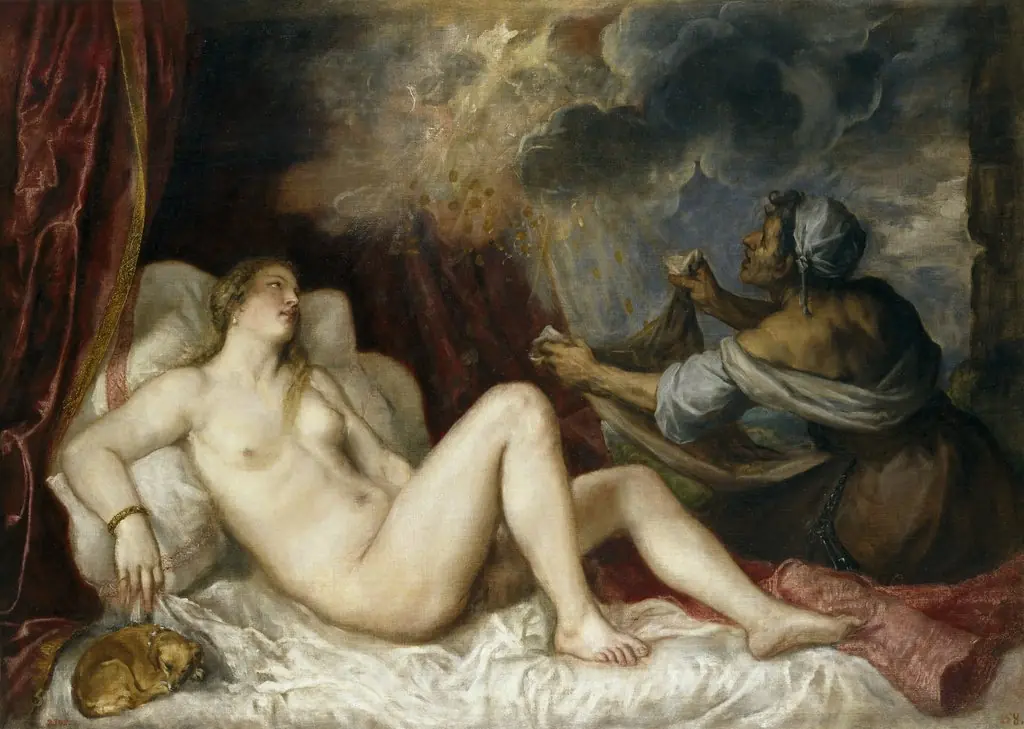
Diana and Actaeon belongs to Titian's celebrated poesie series, a sequence of six large mythological paintings produced for Philip II between 1549 and 1562. Titian coined the term poesie to describe these works, considering them visual equivalents of poetry that demanded imaginative engagement from the viewer. The series, which includes Danae, Venus and Adonis, Perseus and Andromeda, and The Rape of Europa, represents the pinnacle of the artist's career, blending erudition and sensuality drawn from classical antiquity. Diana and Actaeon and Diana and Callisto form a distinct diptych within the group, centered on the chaste huntress goddess and exploring themes of violation and punitive transformation. Titian later continued the Actaeon narrative in a seventh related painting, The Death of Actaeon, which remained unfinished in his studio and was never sent to Philip. Key scholarly studies by Ellis Kirkham Waterhouse, Lars Skarsgard, and Marie Tanner have examined the painting's artistic innovation and the role of chance and coincidence in its composition.
Legacy
Diana and Actaeon ranks among Titian's most celebrated achievements and has exerted a profound influence on subsequent European artists, who drew inspiration from its sensual vitality and narrative immediacy. The work highlights the Venetian school's emphasis on visual splendor and coloristic brilliance over Florentine linearity. The painting's cultural significance was underscored in the early 21st century during the Campaign for the Titians, a high-profile national fundraising effort that successfully secured the work for public ownership in the United Kingdom. The 2009 acquisition, supported by the Scottish Government, the National Heritage Memorial Fund, the Art Fund, and numerous private trusts and public appeals, preserved public access to the masterpiece. The painting's alternating display between London and Edinburgh continues to affirm its status as a shared national treasure, while the myth itself has inspired contemporary multimedia projects, including interactive installations and film series exploring the Ovidian narrative.
Own this work as a print
Artist & collection
Artist
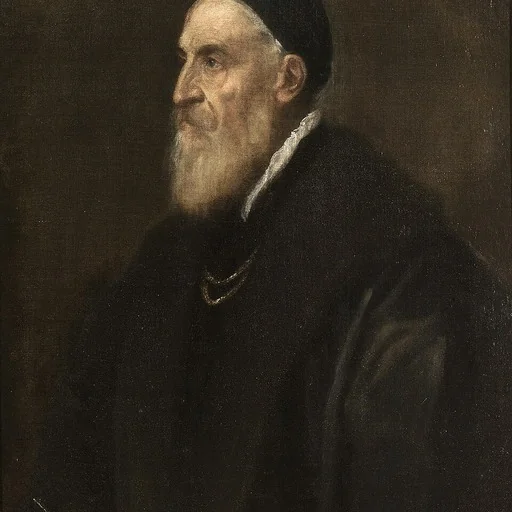
Tiziano Vecellio (Italian:; c. 1488/1490 – 27 August 1576), Latinized as Titianus, hence known in English as Titian ( TISH-ən), was an Italian Renaissance painter. The most important artist of Renaissance Venetian…