Artwork
Saint Agatha
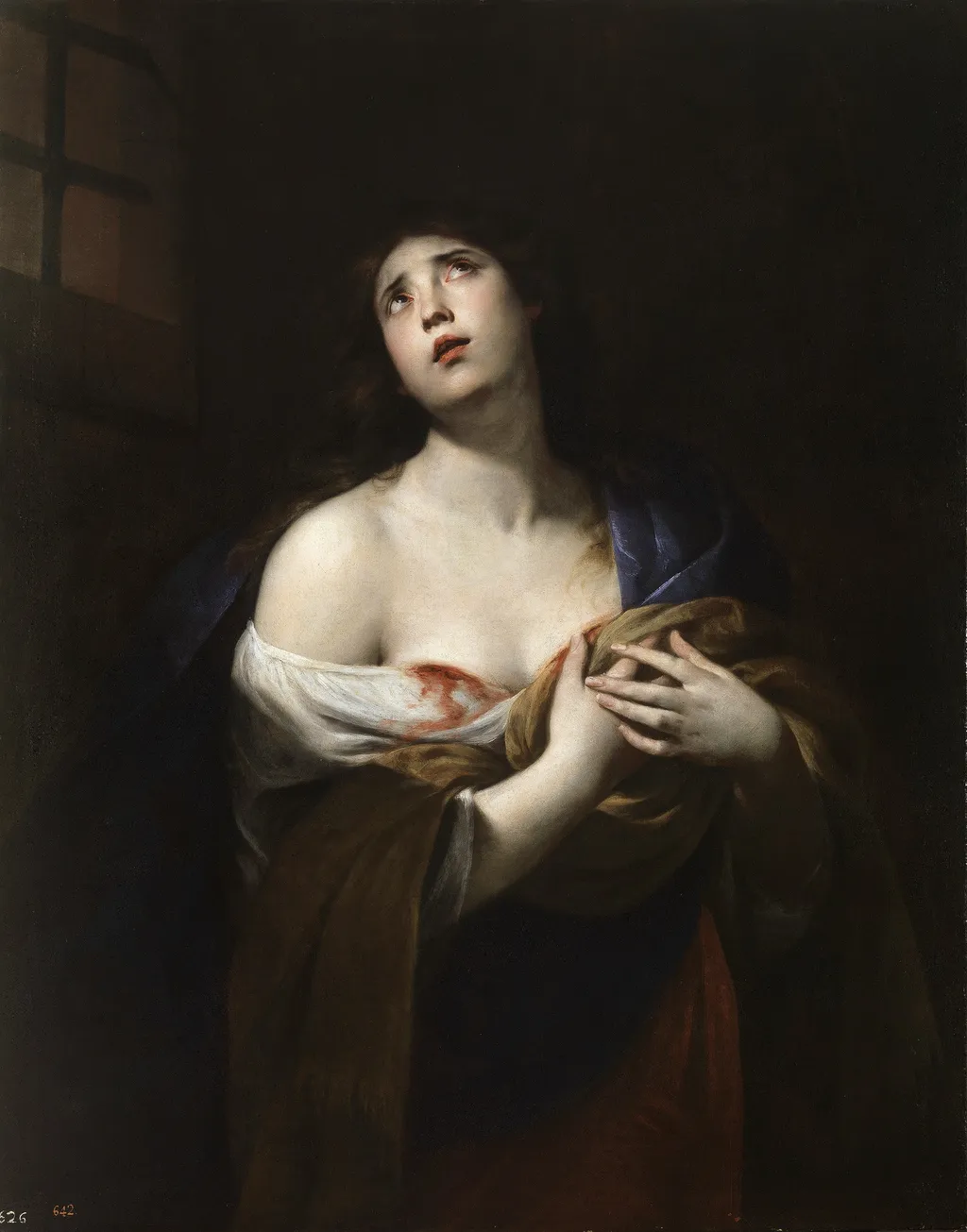
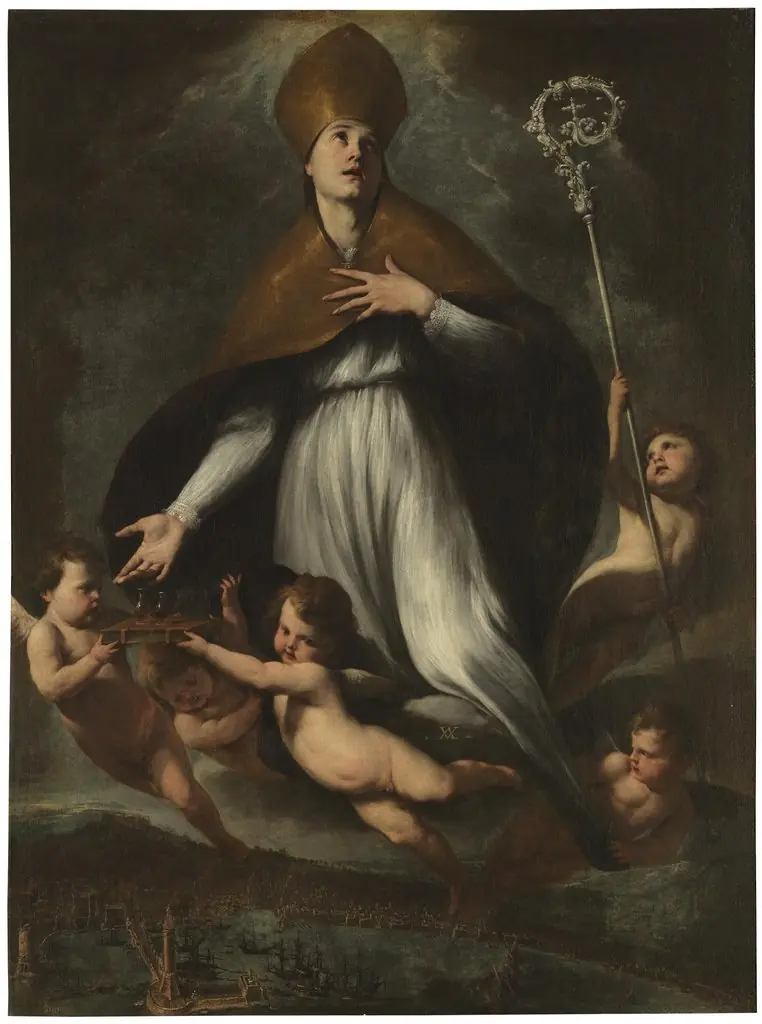
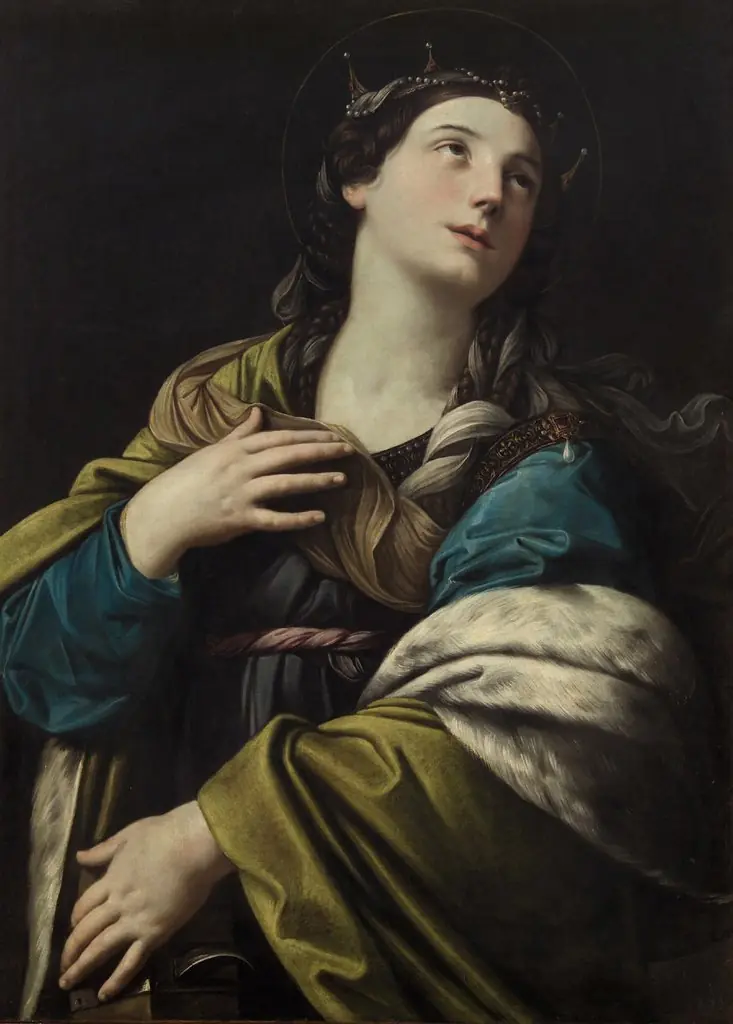
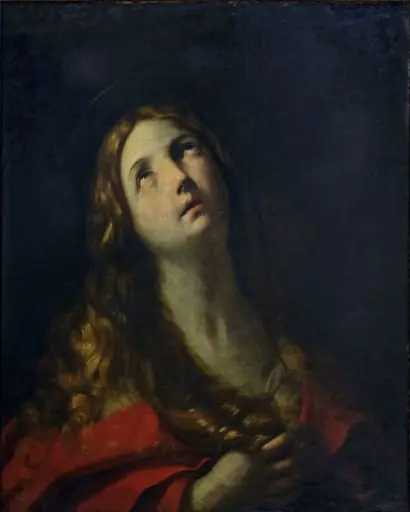
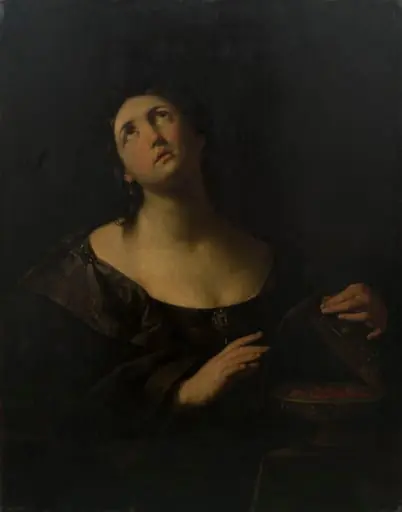
Saint Agatha is an oil painting by the Early Baroque Italian artist Andrea Vaccaro. It dates from 1635 and is held in the collection of the Museo del Prado.
About this work
Subject & Meaning
The painting shows Agatha of Sicily, a Christian martyr commemorated for her steadfast faith and suffering during the early centuries of the Church.
The painting shows Agatha of Sicily, a Christian martyr commemorated for her steadfast faith and suffering during the early centuries of the Church. In this depiction she is identified by the traditional symbols of a martyr's palm and a wound to the throat, emphasizing her virginity and the violence she endured. The work functions as a devotional image, inviting contemplation of her sacrifice and reinforcing her role as a protector against breast disease, a connection rooted in later hagiographic tradition.
Its presence in the royal collection of Ferdinand VII and Charles III underscores the political and spiritual resonance of saintly intercession in early eighteenth‑century Spanish court culture.
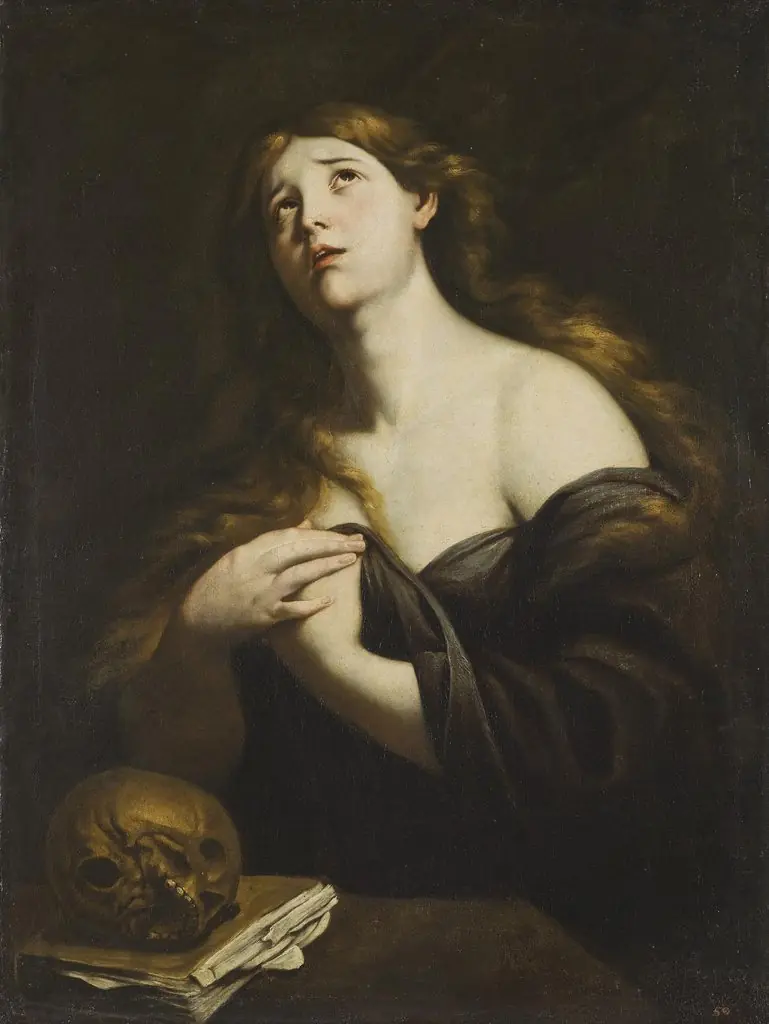
Visual analysis highlights the chiaroscuro modeling that accentuates her serene expression, while the richly rendered drapery and subtle color palette reflect the influence of contemporary Neapolitan realism. The composition directs the viewer's focus toward the saint's downcast gaze, symbolizing introspection and piety.
The painting measures 128.5 cm by 101 cm, an aspect ratio typical of devotional panels of the period, and is executed in oil on canvas, a medium favored for its durability and capacity to capture fine detail.
Technique & Style
Saint Agatha is an oil-on-canvas painting executed in 1635 by Andrea Vaccaro. The work measures 128.5 cm in height by 101 cm in width. As a religious genre painting, it reflects the Baroque period's engagement with dramatic sacred subjects.
The use of oil paint on canvas was standard for Neapolitan painters of Vaccaro's generation, allowing for rich color saturation and subtle tonal transitions. The medium and support enabled the detailed rendering of textures and the controlled modeling of form characteristic of Vaccaro's devotional imagery.
History & Provenance
The canvas was painted by Andrea Vaccaro in 1635 and entered the Spanish royal collection during the eighteenth century. It is recorded among the holdings of Charles III of Spain and later inventoried under Ferdinand VII of Spain at the Royal Palace of Madrid.
The work was subsequently transferred to the Museo del Prado, where it remains in the permanent collection.
The painting is held in the collection of the Museo del Prado, Madrid, where it remains today.
Its inventory number is P001179.
The work was exhibited at the Museo del Prado in 2007 as part of the display "El Prado en el Prado: obras maestras del siglo XVII".
Overview
Andrea Vaccaro’s Saint Agatha (1635) is an oil painting that presents the Sicilian martyr in a restrained, contemplative pose. Executed in the early Baroque period, the work is part of the Prado Museum’s collection and exemplifies the Neapolitan artist’s engagement with religious subjects for both local and Spanish patrons.
Context
Vaccaro worked in a period when Neapolitan art was heavily shaped by Caravaggio’s tenebrism and by the Counter‑Reformation’s demand for emotionally resonant religious imagery. Saint Agatha illustrates how these trends merged with local devotional practices, presenting a saint’s suffering in a dignified, accessible manner.
Own this work as a print
Artist & collection
Artist
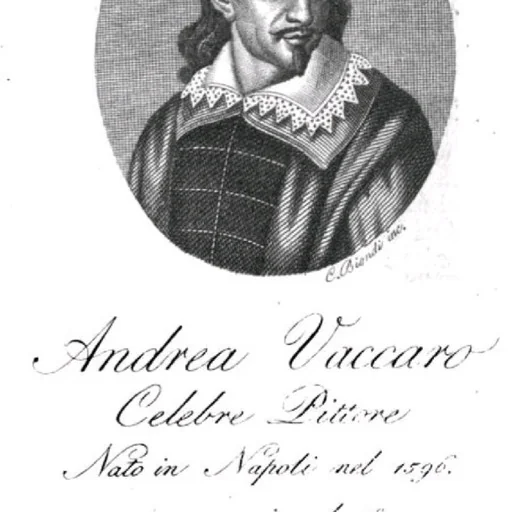
Andrea Vaccaro (baptised on 8 May 1604 – 18 January 1670) was an Italian painter of the Baroque period.