Artwork
Penitent Magdalen
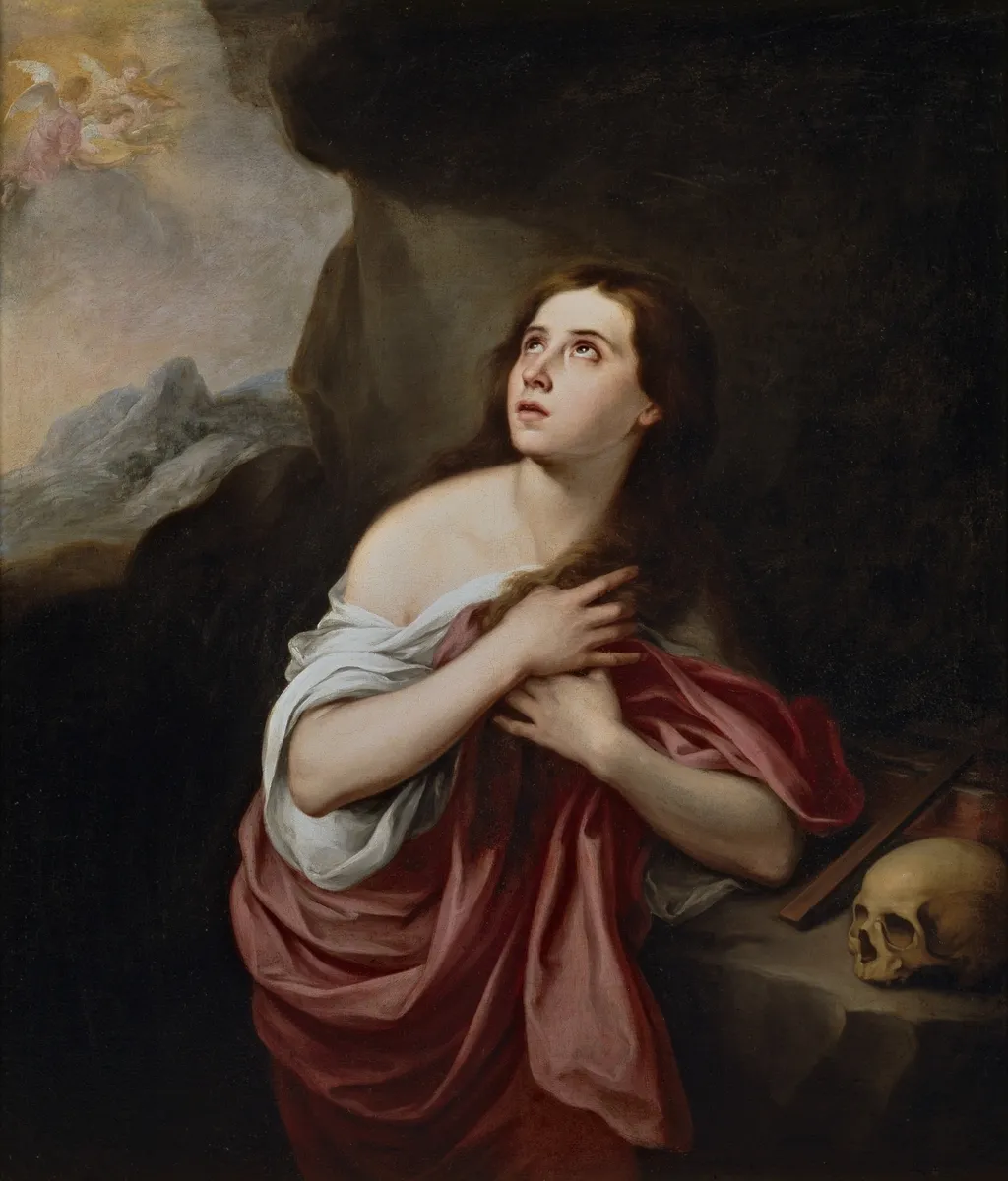
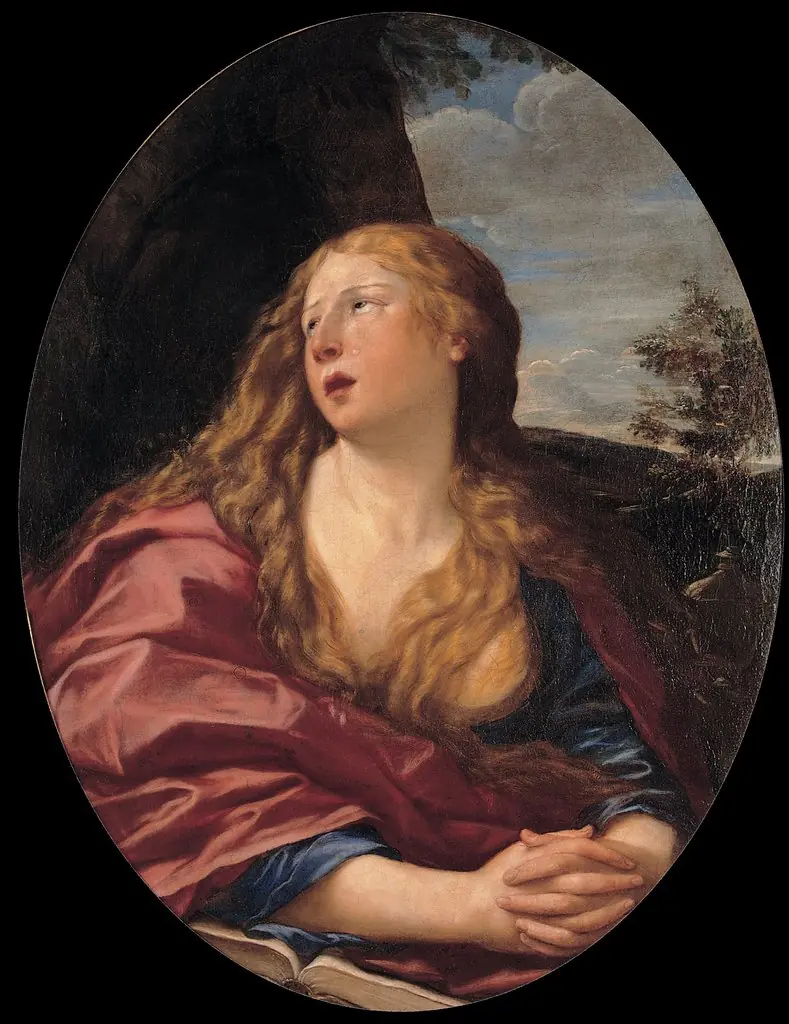
Penitent Magdalen is an oil painting by the Early Baroque Italian artist Bartolomé Esteban Murillo. It dates from 1601 and is held in the collection of the Museo del Prado.
About this work
Subject & Meaning
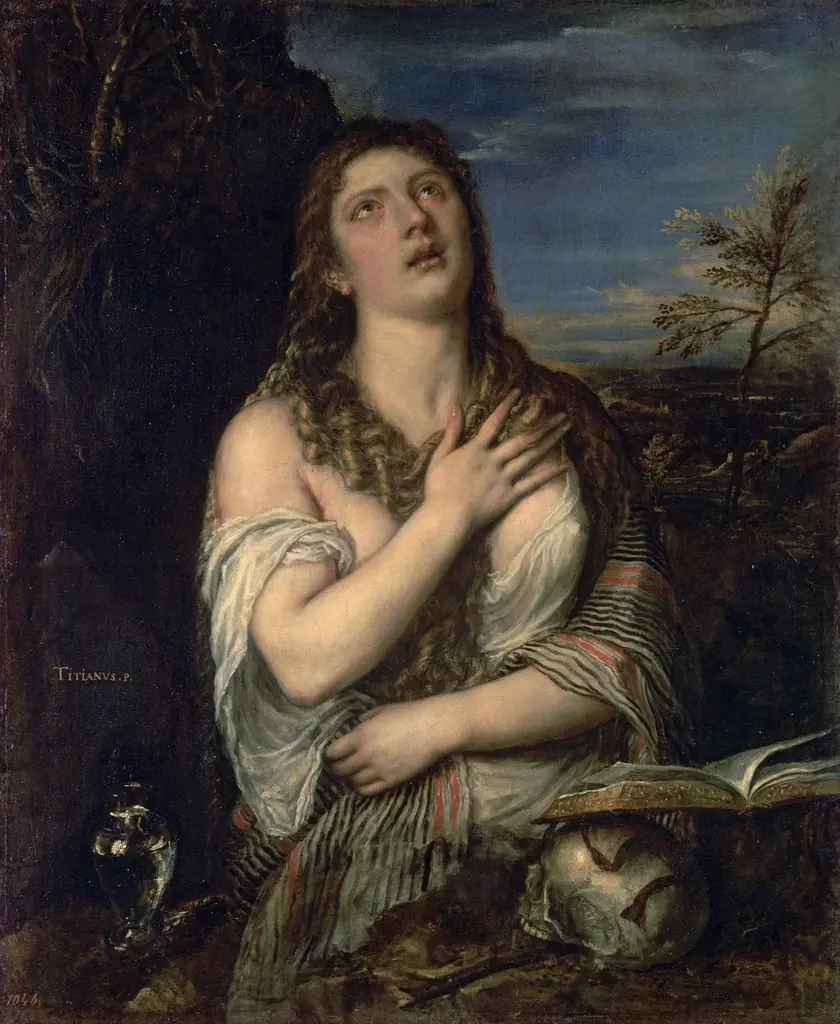
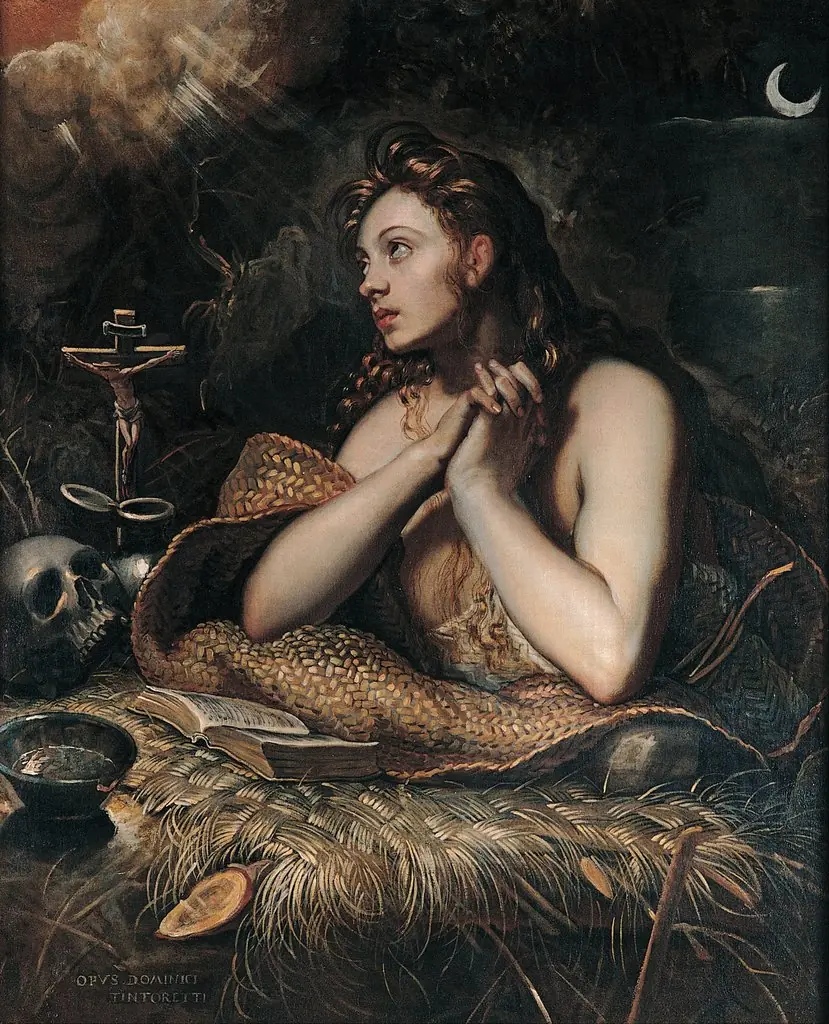
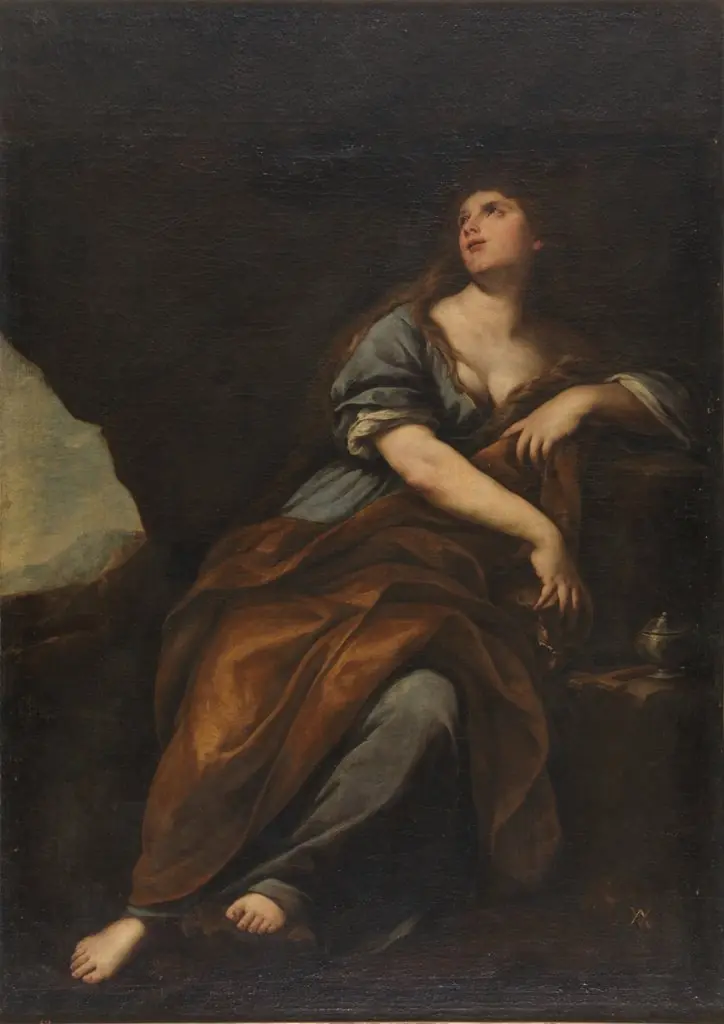
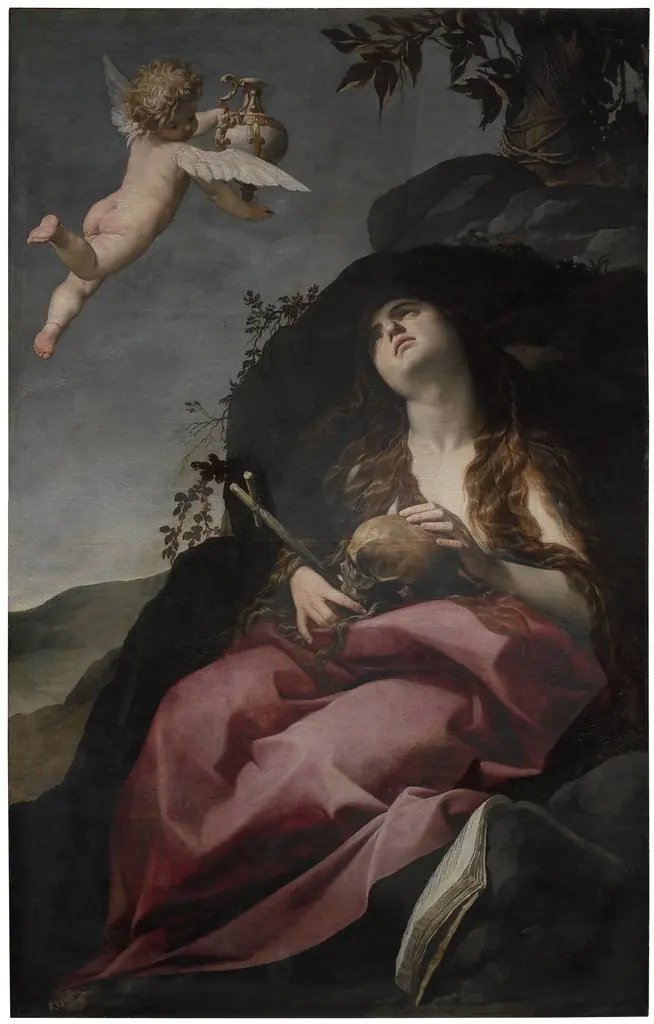
The work portrays Mary Magdalene in a pose of penitence, holding a skull that symbolizes mortality and a lute and violin that allude to the music of repentance.
The work portrays Mary Magdalene in a pose of penitence, holding a skull that symbolizes mortality and a lute and violin that allude to the music of repentance.
A book and a cross appear as attributes of scriptural reflection and Christian devotion, together conveying the Counter‑Reformation emphasis on personal conversion and spiritual transformation.
Executed in 1601 and later acquired by Ferdinand VII, the painting entered the collection of the Museo del Prado, where it remains displayed.
Technique & Style
The work is executed in oil paint on canvas, a medium consistent with Murillo's standard practice. Its dimensions are 125 by 107 cm.
The composition centers on the Penitent Magdalene, accompanied by attributes traditionally associated with her penitential subject matter: a skull, a lute, a violin, a book, and a cross. These objects function as conventional iconographic markers rather than as indicators of a particular stylistic mannerism, though their inclusion points to a contemplative, devotional mode of religious painting.
No information is available in the provided sources regarding the painting's condition, handling, or specific stylistic qualities such as brushwork, palette, or finish.
History & Provenance
Created by Bartolomé Esteban Murillo, this oil painting on canvas depicts the Penitent Magdalene. While one internal record lists the date as 1601, authoritative data establishes the work's inception in 1650. The painting measures 125 cm in height and 107 cm in width.
Regarding its ownership history, the work was once possessed by Ferdinand VII of Spain. It currently resides in the collection of the Museo del Prado, having been located at the Royal Palace of Aranjuez.
The painting is held in the collection of the Museo del Prado in Madrid. According to the associated records, the work has also been located at the Royal Palace of Aranjuez. Provenance information indicates that the canvas was once owned by Ferdinand VII of Spain before entering the Prado's holdings.
No specific inventory or accession number is recorded in the available sources, and no exhibition history is documented.
Context
Penitent Magdalen (1601) is an oil on canvas religious painting by Bartolomé Esteban Murillo that belongs to the Spanish Baroque tradition. The work depicts Mary Magdalene with a skull, lute, and cross, and it entered the Spanish royal collection before being installed in the Museo del Prado, where it was held by Ferdinand VII. Scholars have analyzed its devotional imagery as part of Murillo’s broader exploration of penitential subjects, situating the composition within the artist’s mature output and noting its role in shaping later representations of Magdalene in European art.
Overview
This oil painting by Bartolomé Esteban Murillo portrays Mary Magdalene in a moment of profound introspection. A notable example of Spanish Baroque art, the work depicts the saint with traditional attributes, emphasizing her penitence and spiritual contemplation. Murillo, a prominent painter of his era, frequently explored religious themes, and this piece exemplifies his approach to devotional imagery, now housed in the collection of the Museo del Prado in Madrid.
Own this work as a print
Artist & collection
Artist
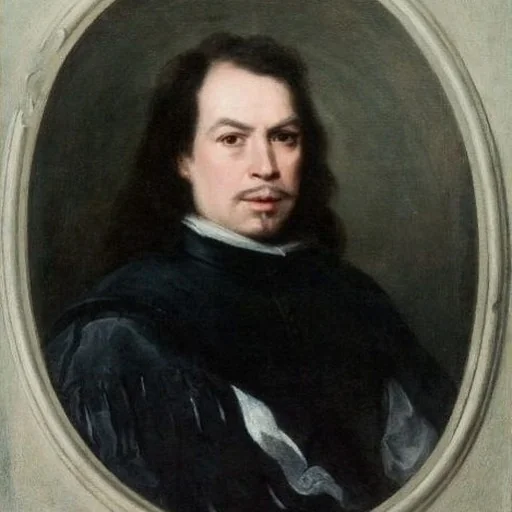
Bartolomé Esteban Murillo ( mure-IL-oh, m(y)uu-REE-oh, Spanish:; late December 1617, baptised 1 January 1618 – 3 April 1682) was a Spanish Baroque painter.