Artwork
Portrait of James Loudon
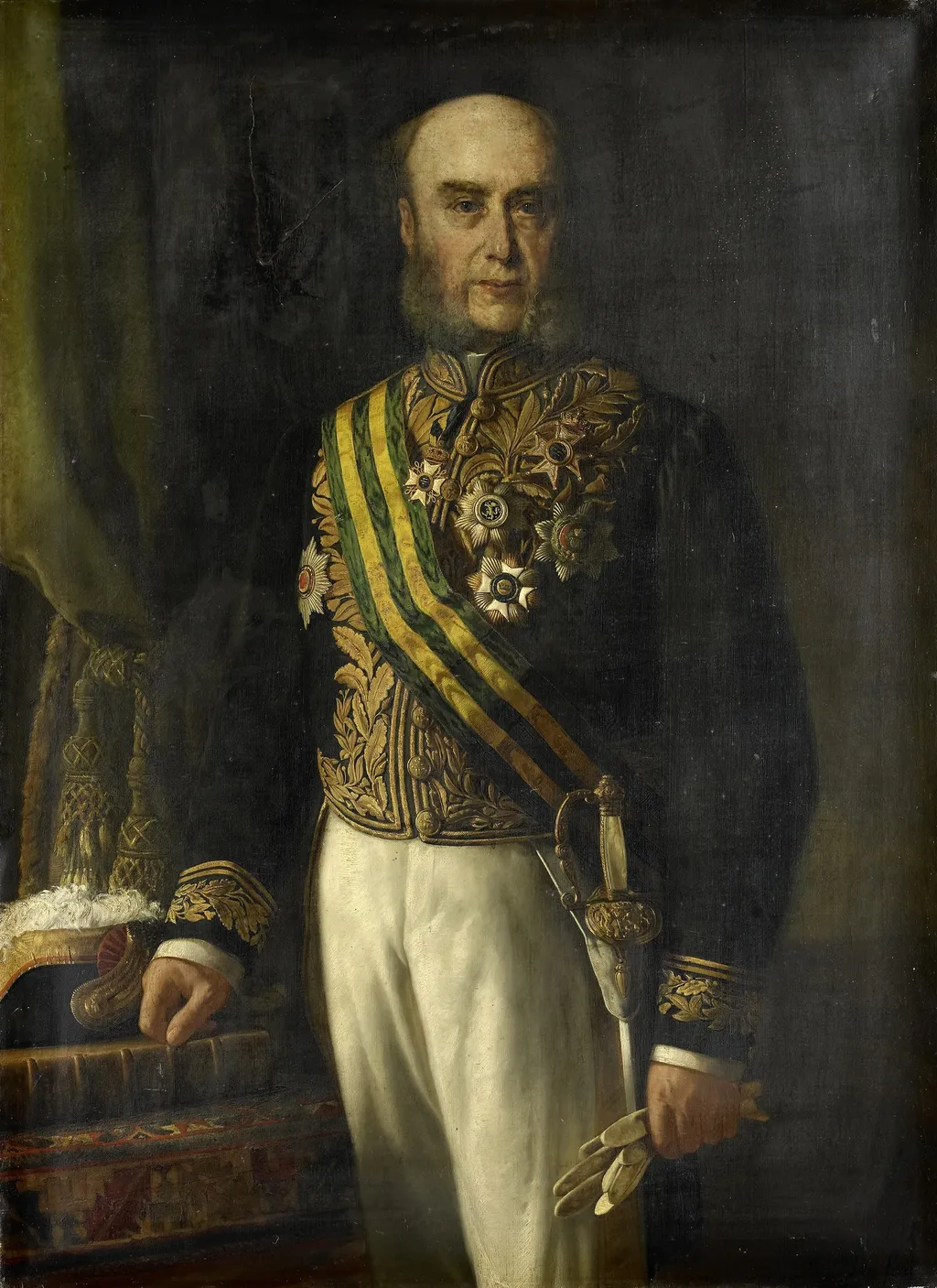
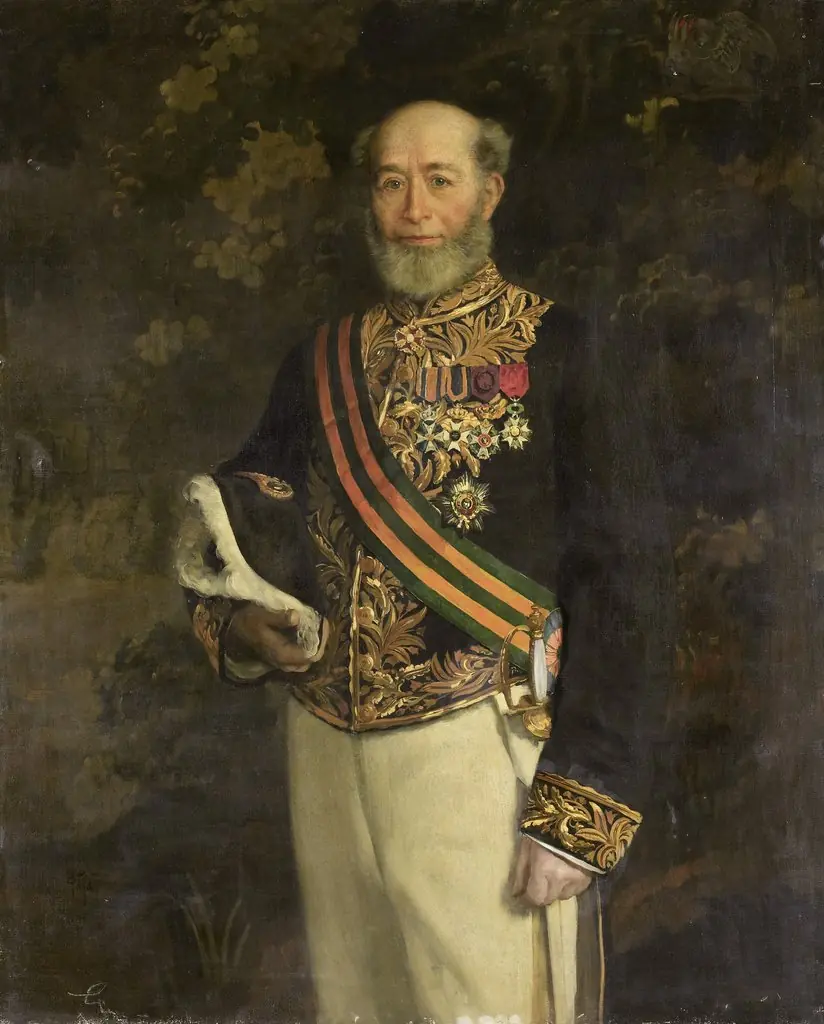
Portrait of James Loudon is an oil painting by the Impressionist artist Andries van den Berg. It dates from 1890 and is held in the collection of the Rijksmuseum.
About this work
Subject & Meaning
This three-quarter length portrait depicts James Loudon (1824–1900), the Governor-General of the Dutch East Indies, standing in full official regalia.
This three-quarter length portrait depicts James Loudon (1824–1900), the Governor-General of the Dutch East Indies, standing in full official regalia. He wears a dark blue broadcloth tailcoat adorned with gold embroidery featuring intertwined oak branches, leaves, acorns, laurel sprigs, and cups, along with gilded buttons bearing a crowned 'W'. His attire includes white cashmere trousers and the cross of the Order of the Netherlands Lion suspended from a neck ribbon, accompanied by insignia of the Order of the Oak Crown on his jacket.
Loudon holds gloves in his left hand, while his right rests upon a copy of J.P.I. de Bois's Vies des Gouverneurs Généraux (1763). His distinctive bicorne hat, decorated with gold braid and a red edge, lies on the table beside him, and a sword with a gilded hilt hangs at his side. Set against a draped green curtain, the composition symbolizes Loudon's administrative authority and his specific place within the lineage of colonial governors.
Technique & Style
Created in 1878 by Andries van den Berg, the Portrait of James Loudon is an oil-on-canvas painting measuring 134.5 cm in height and 97.5 cm in width. The work functions as a half-length portrait depicting the subject standing in an official ceremonial uniform. Loudon is shown wearing a dark blue wool frock coat adorned with gold embroidery featuring oak and laurel motifs, paired with white cashmere trousers.
He holds gloves in his left hand while his right rests on a book, with a ceremonial sword hanging at his side and a green draped curtain forming the background. The painting bears the signature 'A. v.d. Berg fecit' in the lower right corner. Historical records indicate the canvas was previously restored in the Dutch East Indies, where a plaster patch was applied behind a damage spot near the subject's head, a repair that remains visible through the painted surface.
History & Provenance
Created by Andries van den Berg, the portrait was commissioned by James Loudon, who served as Governor-General of the Dutch East Indies. While the artist signed the work 'A. v.d. Berg fecit', the Rijksmuseum dates the painting to the period between 1871 and 1885, with a specific inception year of 1878 cited in catalog records. The painting originally hung in the governors-general portrait gallery at Palace Rijswijk in Batavia.
In January 1950, the work was transferred from the Indonesian collection to the Rijksmuseum in Amsterdam. During subsequent examination in the Netherlands, it was discovered that the canvas had previously undergone restoration in the Dutch East Indies, where a plaster patch was applied behind a damage spot near the sitter's head.
The portrait is held in the collection of the Rijksmuseum in Amsterdam, having been transferred there in January 1950. It originally belonged to the gallery of Governors-General of the Dutch East Indies housed at Rijswijk Palace in Batavia, where it joined sixty-six other works moved to the Netherlands. The painting depicts James Loudon in his official uniform, elements of which are separately preserved at Museum Bronbeek.
Regarding its exhibition history and physical context, the work was commissioned by Loudon himself for the colonial portrait series. While specific temporary exhibition records are not detailed in the available sources, the painting's permanent location shifted from Indonesia to the Dutch national collection during the post-colonial transfer of heritage assets in 1950.
Context
The painting Portrait of James Loudon by Andries van den Berg is part of a series of governor-general portraits commissioned for Batavia and later transferred to the Rijksmuseum, reflecting 19th-century Dutch colonial portraiture and institutional representation. It depicts James Loudon in his official robes with orders of the Netherlands Lion and the Order of the Oak Crown, holding gloves and a sword, with symbolic details such as a book on the table and a draped curtain in the background. The work is signed 'A. v.d. Berg fecit' and was painted between 1871 and 1885, measuring 134.5 cm by 97.5 cm. It was restored in the Netherlands with a patch visible near Loudon's head, originally applied during earlier conservation in the Dutch East Indies.
Legacy
The painting has been recognized as part of a significant series of governor portraits commissioned for colonial administration, influencing how 19th-century Dutch colonial officials were visually represented in official collections. Its detailed depiction of ceremonial attire established visual standards for portraying authority in Dutch colonial portraiture, particularly through its intricate embroidery and symbolic regalia. The work's inclusion in the Rijksmuseum's holdings since 1950 ensured continued scholarly attention to Van den Berg's role in documenting colonial figures, with its specific details, such as the Order of the Dutch Lion insignia and the depiction of Loudon's personal effects, providing insight into 19th-century ceremonial practices.
The conservation history, including the visible patch applied during restoration in the Dutch East Indies, further informs its provenance and material journey.
Overview
The Portrait of James Loudon is an oil painting created by Andries van den Berg in 1890, currently held at the Rijksmuseum.
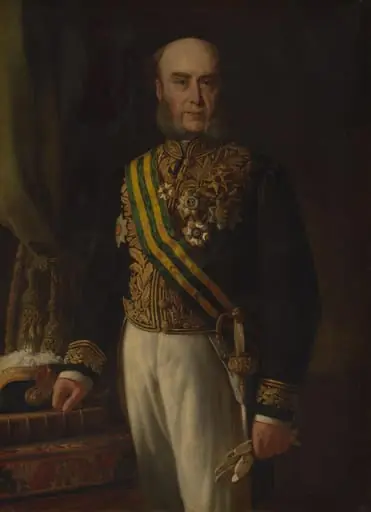
Own this work as a print
Artist & collection

- Untitled
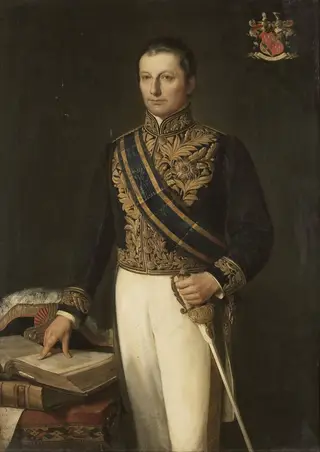 Untitled
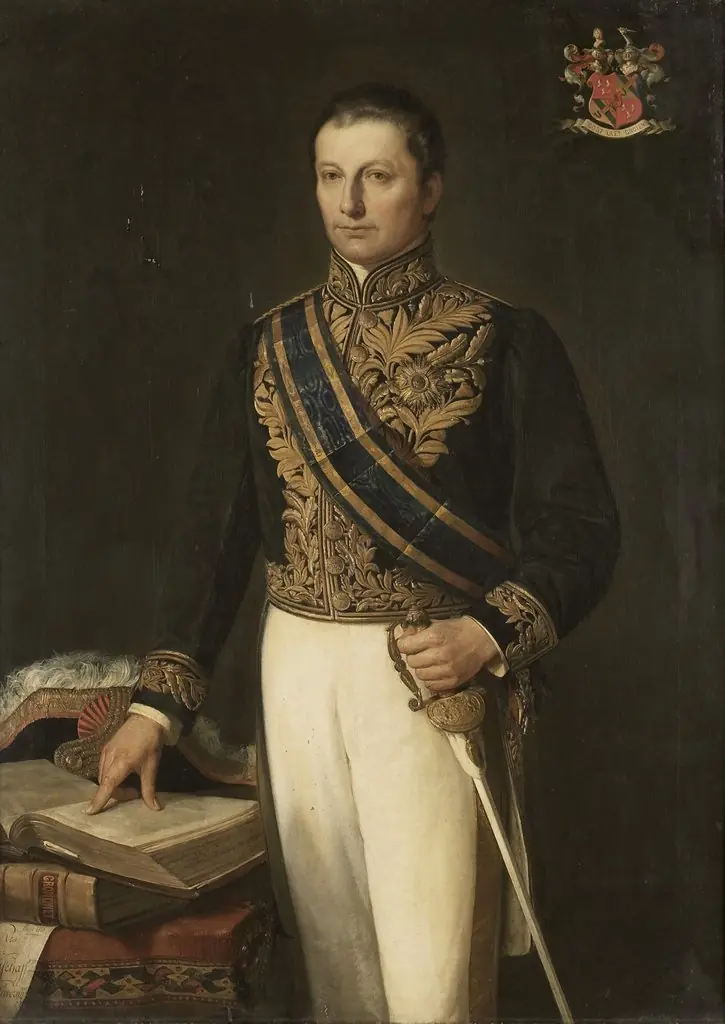
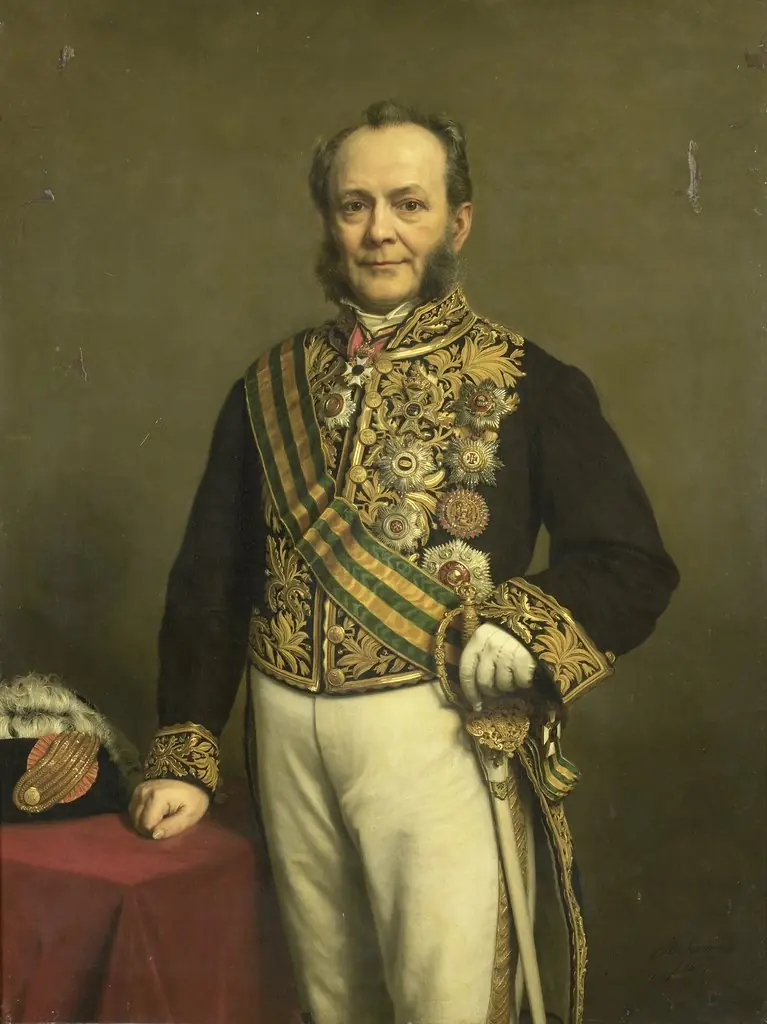 Pieter Mijer (1812-81). Gouverneur-generaal (1866-71)
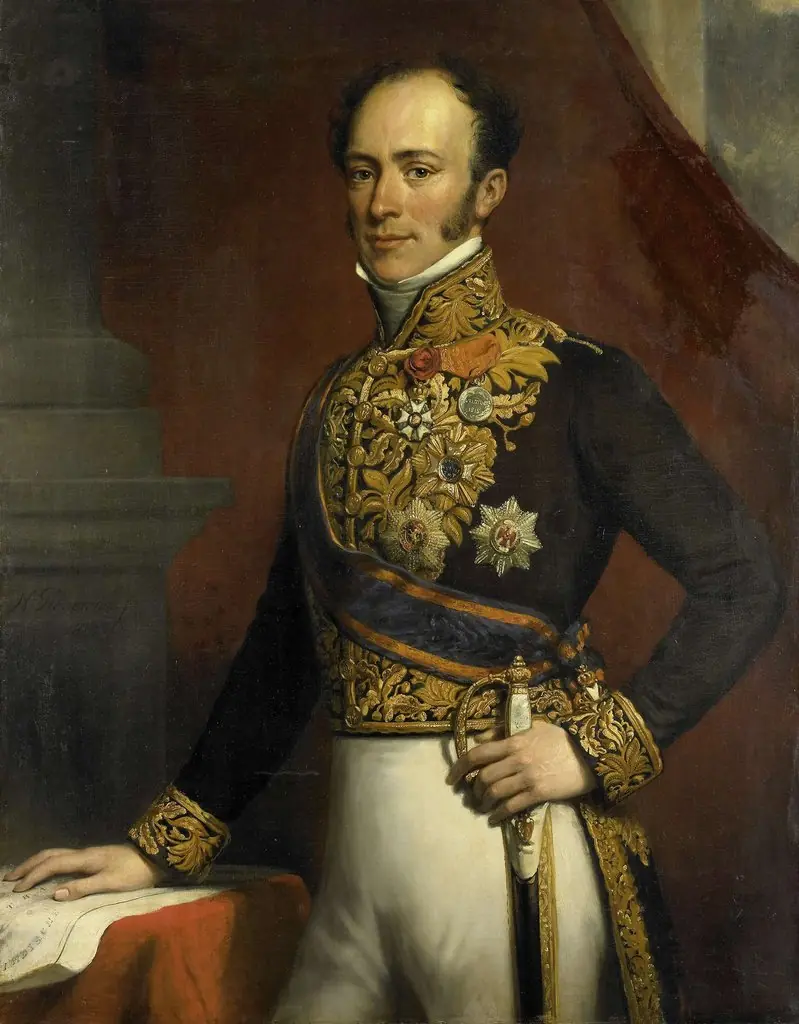 Portrait of Jan Jacob Rochussen, Governor-General of the Dutch East Indies
 Portrait of Jan Jacob Rochussen, Governor-General of the Dutch East Indies
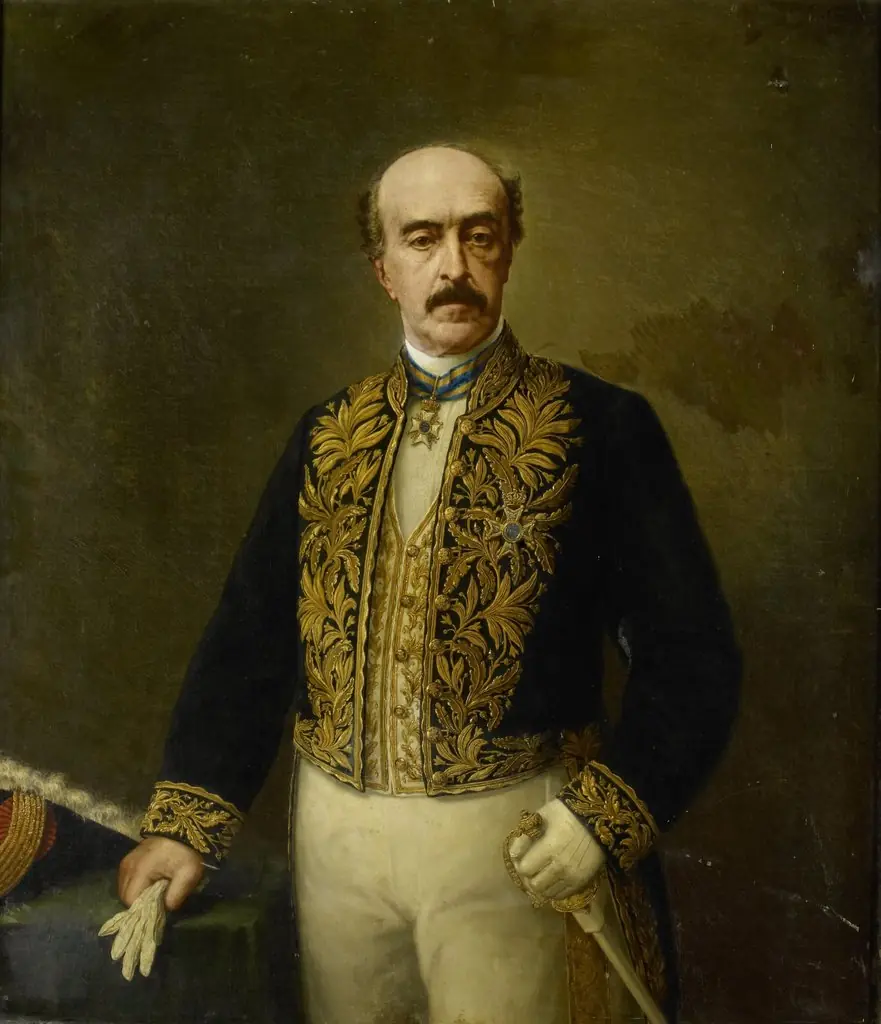 Otto van Rees (1823-92). Gouverneur-generaal (1884-88)
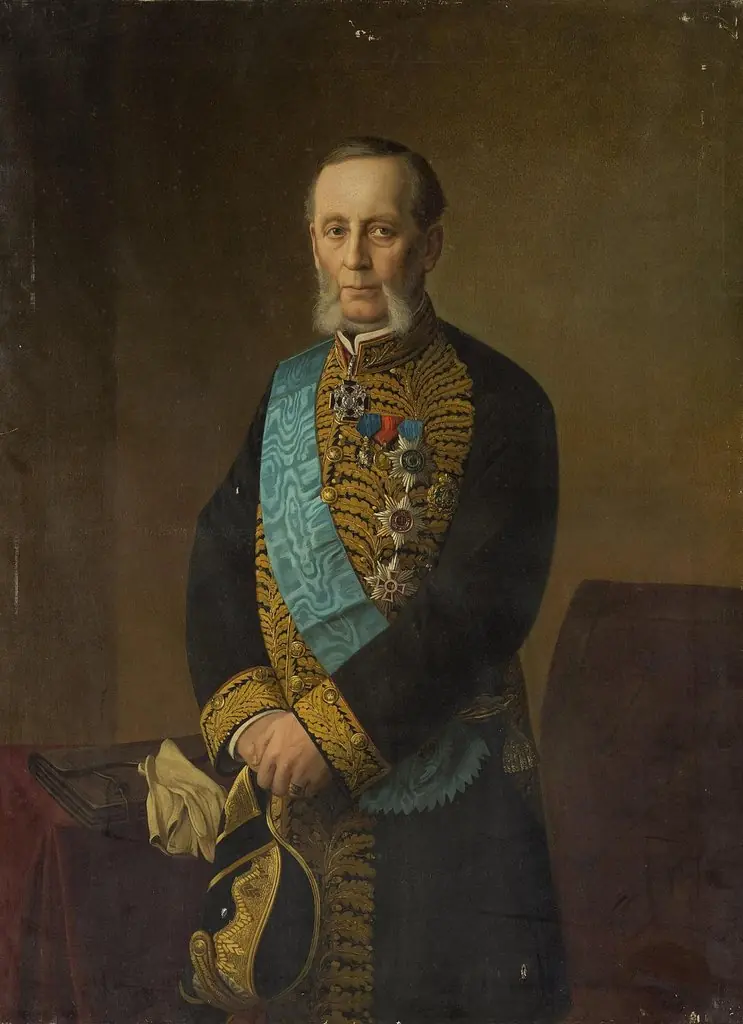 Portrait of Count Piotr Valuyev
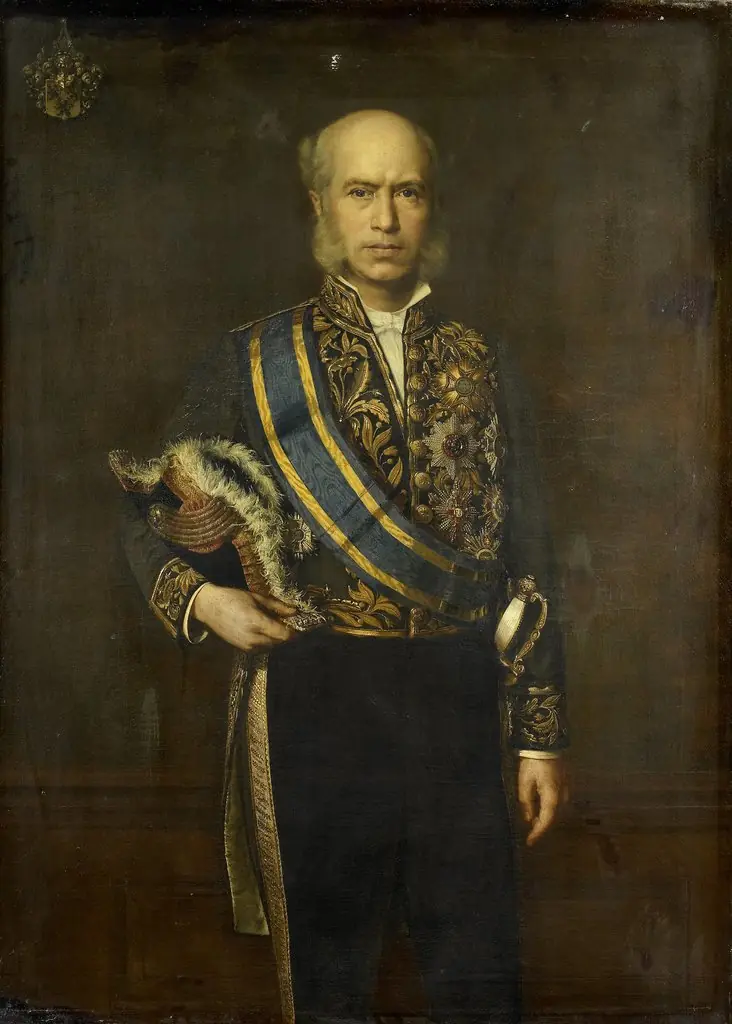
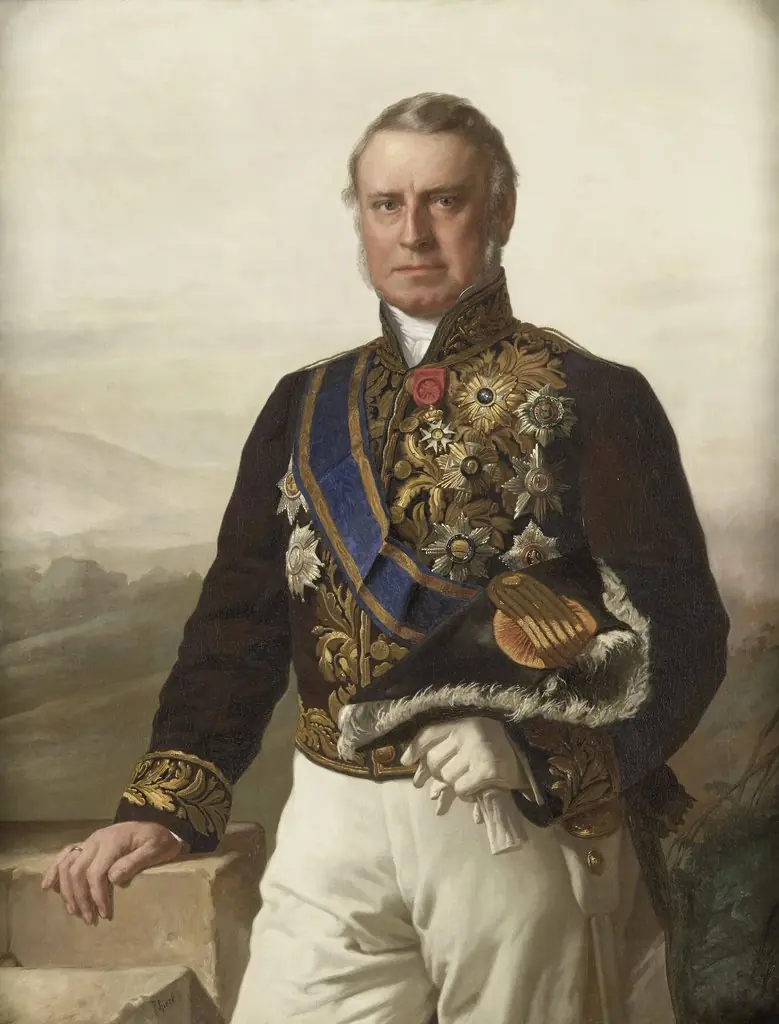 Charles Ferdinand Pahud (1803-73). Gouverneur-generaal (1855-61)
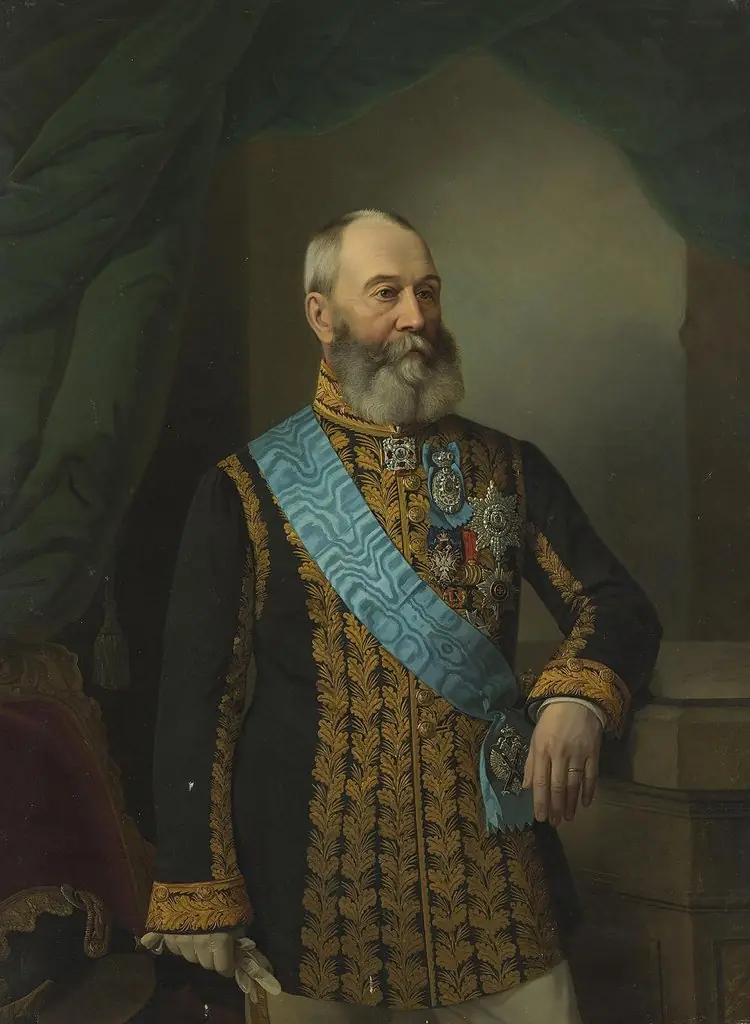 Portrait of P.P. Gagarin
 Frederik s'Jacob (1822-1901). Gouverneur-generaal (1880-84)
 Untitled