Artwork
Elijah Taken Up in a Chariot of Fire
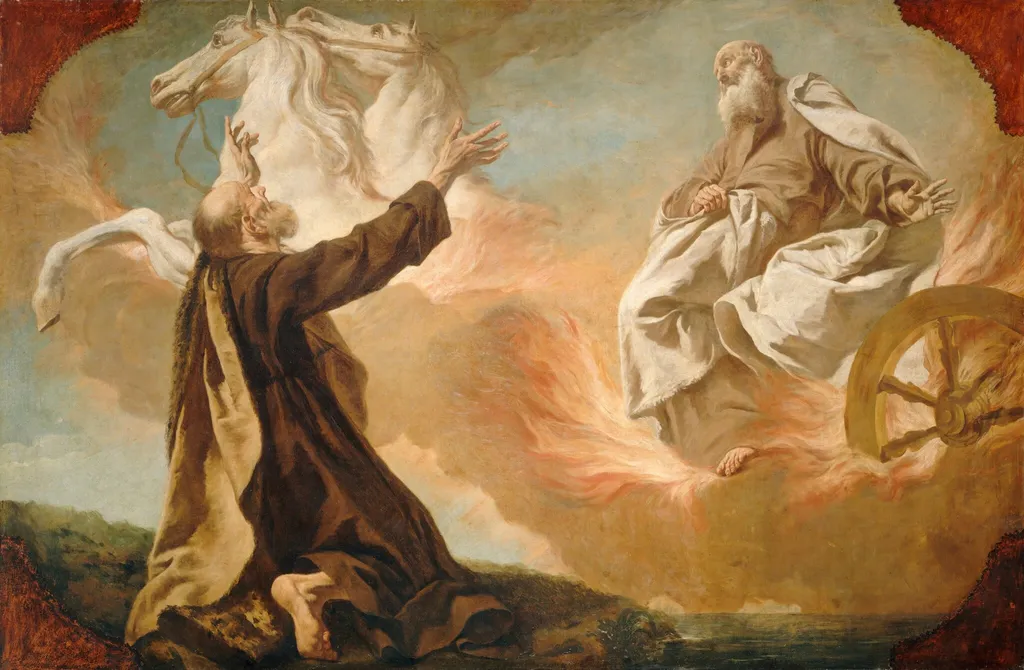
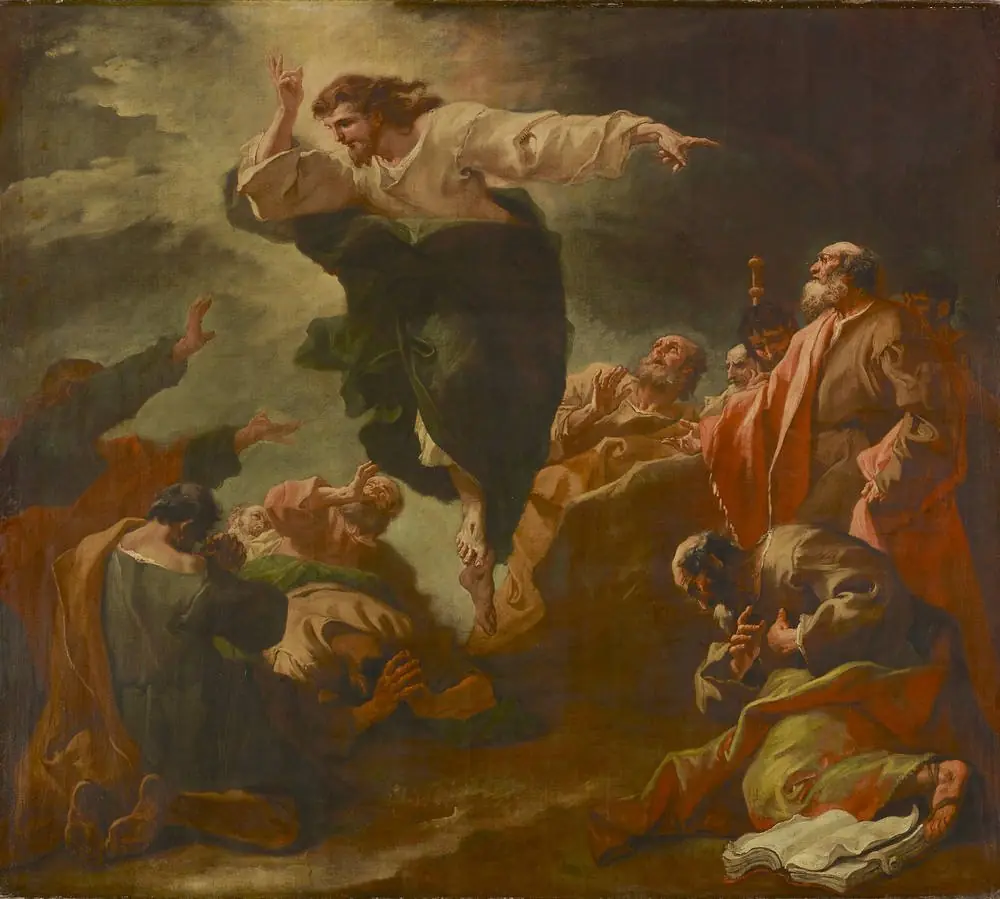
Elijah Taken Up in a Chariot of Fire is an oil painting by the Baroque artist Giuseppe Angeli. It dates from 1748 and is held in the collection of the National Gallery of Art.
About this work
Subject & Meaning
Giuseppe Angeli’s Elijah Taken Up in a Chariot of Fire (1740) visualizes the biblical episode of Elijah’s ascension, drawn from 2 Kings 2:11, where the prophet is carried to heaven in a fiery chariot by a whirlwind. The composition centers on the ascending figure of Elijah, distinguished by his prophetic mantle, while a flaming chariot drawn by horses dominates the upper half, conveying divine transportation. Below, the prophet Elisha kneels in witness, underscoring the moment’s significance as a testament to Elijah’s legacy and the transfer of his spiritual authority.
The dramatic interplay of light and shadow, along with the upward diagonal thrust of the chariot, emphasizes transcendence and divine intervention, reinforcing the work’s theological message of spiritual elevation and continuity.
Technique & Style
The subject matter depicts the biblical figure Elijah ascending in a chariot, rendered within the conventions of religious genre art.
Executed in 1740, this religious painting by Giuseppe Angeli utilizes oil paint applied to a canvas support. The work presents a substantial horizontal format, measuring approximately 174.6 centimeters in height and 264.8 centimeters in width. As an oil-on-canvas composition, the piece employs traditional materials characteristic of eighteenth-century Venetian painting.
The subject matter depicts the biblical figure Elijah ascending in a chariot, rendered within the conventions of religious genre art. While specific details regarding the artist's brushwork, surface condition, or conservation history are not explicitly detailed in the available records, the fundamental technical construction remains defined by its medium and large-scale dimensions.
History & Provenance
The painting was executed in 1740 by Giuseppe Angeli as an oil on canvas work originally housed in the church of San Giorgio in Alga, Venice, where it remained until the suppression of the monastery in 1806–1807, after which it entered the Pivan collection in Venice by 1934; it subsequently belonged to Count Alessandro Contini Bonacossi in Florence before being acquired by the Samuel H. Kress Foundation in 1950 and gifted to the National Gallery of Art in 1952. The work’s creation date and provenance are documented in contemporary records and the Kress collection catalog, confirming its 1740 inception and transfer through these owners.
The painting is held by the National Gallery of Art in Washington, D.C., as part of the Samuel H. Kress Collection. It entered the Kress holdings in 1950, when the Samuel H. Kress Foundation purchased it from Count Alessandro Contini Bonacossi of Florence, and was given to the NGA in 1952. Earlier, the work had passed through the Pivan collection in Venice by 1934, having been removed from the suppressed church and monastery of San Giorgio in Alga in Venice in 1806 or 1807.
Legacy
The work entered the Samuel H. Kress Collection in 1950 and was gifted to the National Gallery of Art in 1952, where it remains on public view; its provenance traces from the church of San Giorgio in Alga in Venice (suppressed in 1806–07) through the Pivan collection to the Kress acquisition.[1] The painting is catalogued in the Kress Collection inventory and described as a religious work by Giuseppe Angeli, reflecting the 18th‑century Venetian tradition.[2] Its inclusion in scholarly inventories of the Kress Collection underscores its recognized significance within the study of religious art and Venetian painting.[1][2]
Overview
This oil on canvas painting, Elijah Taken Up in a Chariot of Fire, by Peter Paul Rubens, captures a pivotal moment from the Old Testament. The work depicts the prophet Elijah's miraculous ascension into heaven, carried aloft by a fiery chariot. Rubens's dynamic composition and vibrant palette imbue the scene with intense drama and spiritual significance, characteristic of the Baroque period.
Own this work as a print
Artist & collection


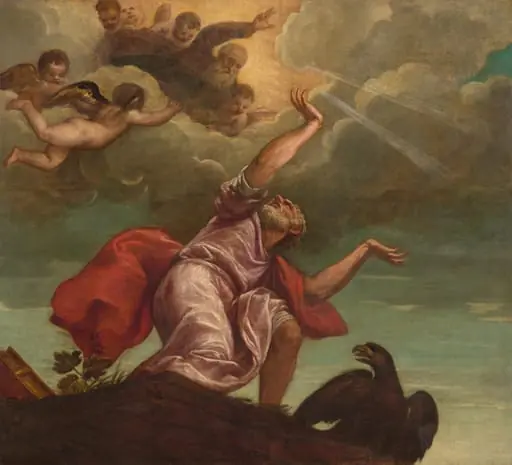 Saint John the Evangelist on Patmos
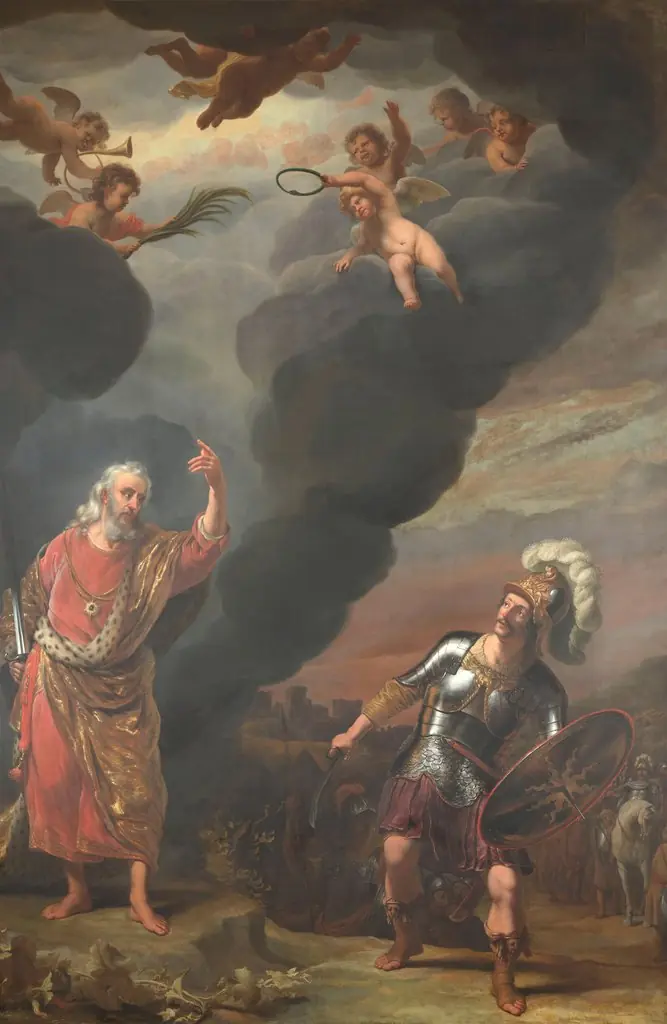 The Captain of God's Army Appearing to Joshua
 God the Father
 Prophets and Kings of the Old Testament Adoring the Name of Jehovah
 Le Prophète Elie
 The Holy Trinity
 Prophet Zechariah
 Moses Shown the Promised Land
 Verkündigung an die Hirten
 God the Father
 Christi Himmelfahrt
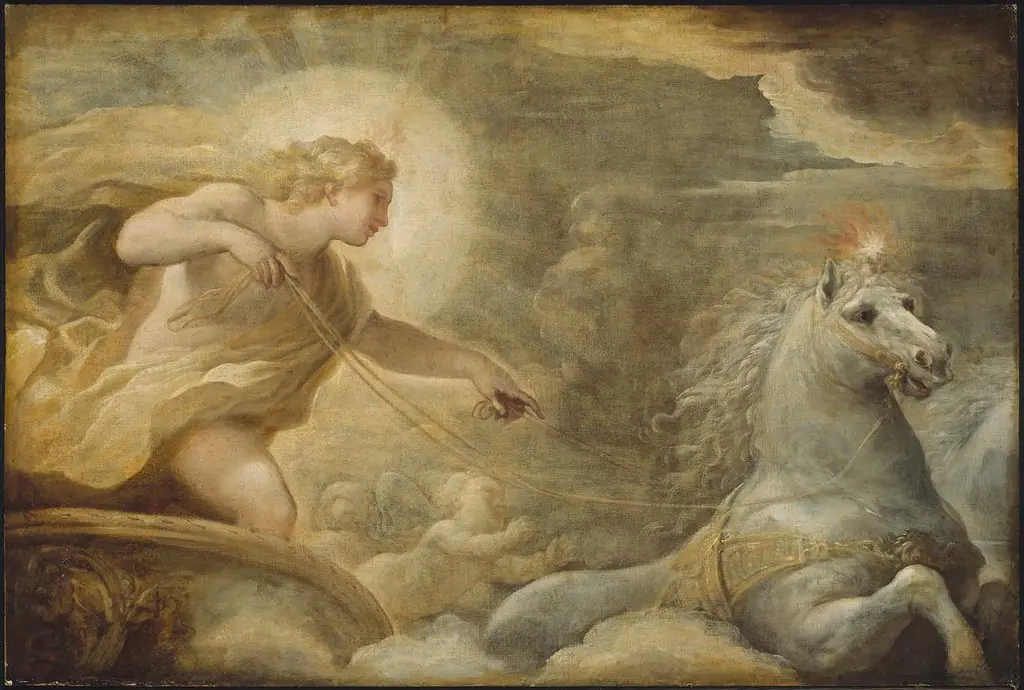
- Apollo in his Chariot