Artwork
Saint John the Evangelist on Patmos
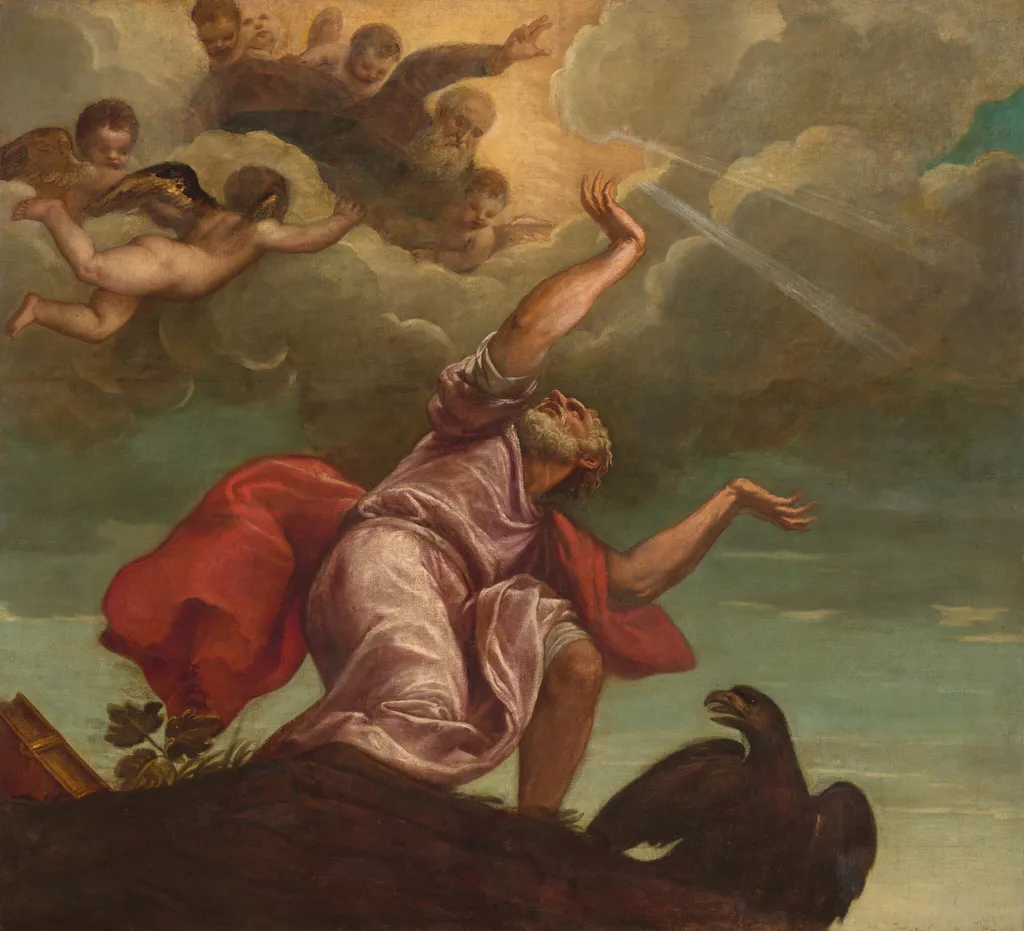
Saint John the Evangelist on Patmos is an oil painting by the High Renaissance artist Titian. It dates from 1554 and is held in the collection of the National Gallery of Art. This oil on canvas portrays Saint John the Evangelist situated on the rocky terrain of Patmos.
About this work
Subject & Meaning
The iconography thus conveys John’s role as the divinely chosen scribe of the apocalyptic text.
The painting shows Saint John the Evangelist on the island of Patmos at the moment he receives the apocalyptic vision that prompts him to write the Book of Revelation. Titian renders the apostle from a low, foreshortened viewpoint against the sky, dressed in a rosy garment with a red cloak draped between his shoulder and elbow; the eagle, John’s traditional attribute, appears in the composition. God is depicted in the heavens surrounded by angels, with two luminous rays extending from the divine figure to touch John’s left hand, symbolizing the transmission of heavenly inspiration. The iconography thus conveys John’s role as the divinely chosen scribe of the apocalyptic text.
Technique & Style
The work is executed in oil on canvas, a typical Venetian support that allowed Titian to build up translucent layers of color. The saint is viewed from a low viewpoint, his body dramatically foreshortened and twisted, with arms and legs folded; he wears a rosy garment and a large red cloak draped loosely over his shoulder. An eagle, John’s symbol, appears in the lower register, while God and angels emerge from the sky, sending two luminous lines that touch the evangelist’s hand amid soft clouds.
These compositional choices emphasize the visionary moment and reflect Titian’s mature handling of light, color, and spatial tension.
History & Provenance
Titian's Saint John the Evangelist on Patmos was commissioned by the Scuola di San Giovanni Evangelista in Venice for the Sala dell'Albergo Nuovo, where it originally functioned as a ceiling decoration. While some sources date the work to 1547, others place its creation between 1553 and 1555. In 1806, the painting was confiscated by the state and transferred to the Gallerie dell'Accademia in Venice.
It was subsequently exchanged in 1818 with a private collector in Turin, eventually passing to Count Bertalazione d'Arache by 1885. The work later entered the collection of Count Alessandro Contini Bonacossi in Florence. In 1954, the Samuel H. Kress Foundation purchased the painting from the Count's estate, with final payment completed in early 1957.
The Kress Foundation later gifted the canvas to the National Gallery of Art in Washington, D.C., in 1957.
Currently held in the Samuel H. Kress Collection at the National Gallery of Art in Washington, D.C., this canvas entered the institution as a gift from the Samuel H. Kress Foundation in 1957. The work's modern provenance traces back to Count Alessandro Contini Bonacossi of Florence, who sold it to the Kress Foundation in June 1954; final payment occurred in early 1957 following the Count's death. Prior to this, the painting was recorded in the collection of Count Bertalazione d'Arache in Turin by 1885.
Its earlier history includes an 1818 exchange from the Gallerie dell'Accademia in Venice, having been confiscated by the state in 1806 after originally serving the Scuola di San Giovanni Evangelista. While originally installed as a ceiling decoration in Venice, the provided sources do not list specific temporary exhibition events.
Context
Titian’s Saint John the Evangelist on Patmos was commissioned around 1553‑1555 for the ceiling of the Sala dell’Albergo Nuovo of the Scuola di San Giovanni Evangelista in Venice, where it was surrounded by cherubim, satyr heads, female faces and the symbols of the four evangelists. The painting exemplifies the Venetian school’s emphasis on colour and light, situating Titian within a broader regional tradition. The motif of John on Patmos receiving the apocalyptic vision was a popular subject treated by numerous artists, including Hieronymus Bosch, underscoring its place in the wider narrative of Renaissance religious imagery.
Overview
This oil on canvas portrays Saint John the Evangelist situated on the rocky terrain of Patmos. The composition captures him in a moment of profound spiritual engagement, his gaze directed towards a brilliant light. He holds a book and a pen, poised to transcribe a divine revelation. The artwork conveys the saint's intense concentration and the dramatic nature of his prophetic experience.
Own this work as a print
Artist & collection

Artist
Tiziano Vecellio (Italian:; c. 1488/1490 – 27 August 1576), Latinized as Titianus, hence known in English as Titian ( TISH-ən), was an Italian Renaissance painter. The most important artist of Renaissance Venetian…






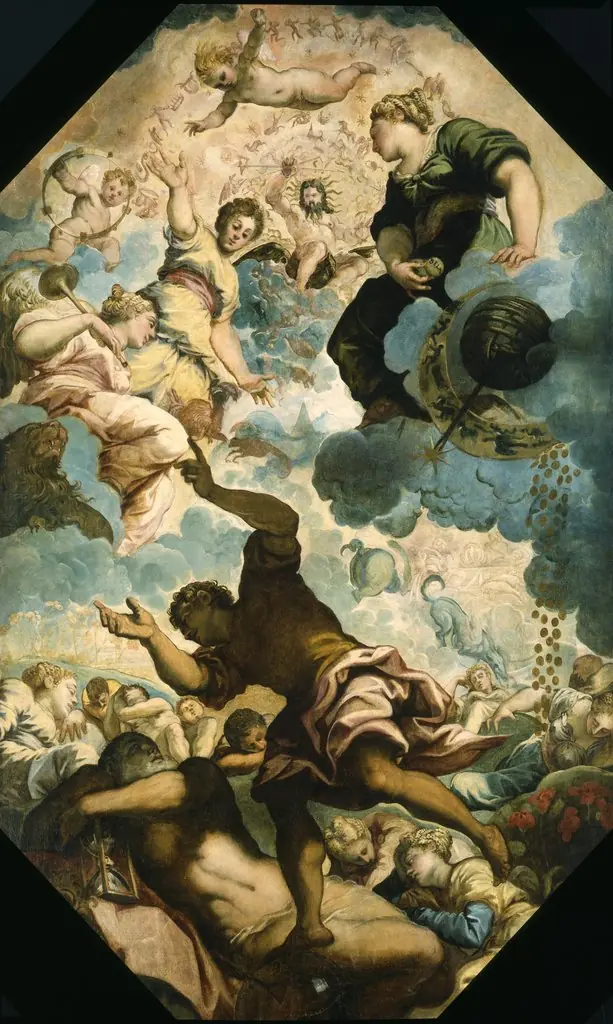 The Dreams of Men
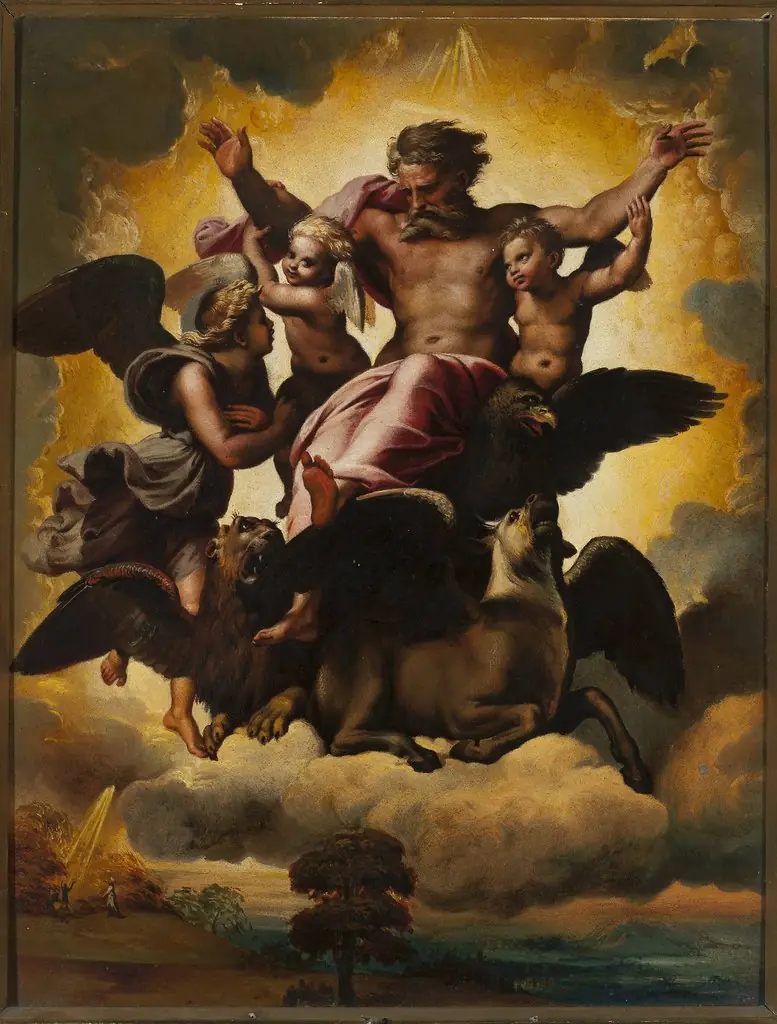 Ezekiel's Vision
 The Sacrifice of Isaac
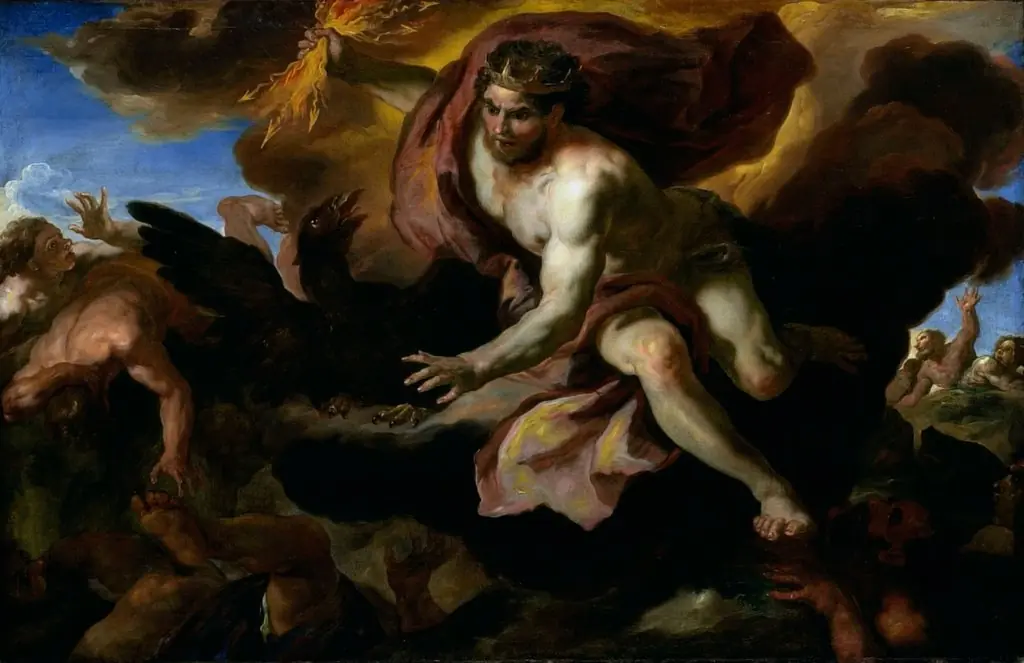 Jove casts his Thunderbolts at the Rebellious Giants
 God the Father
 La vision de saint Jérôme
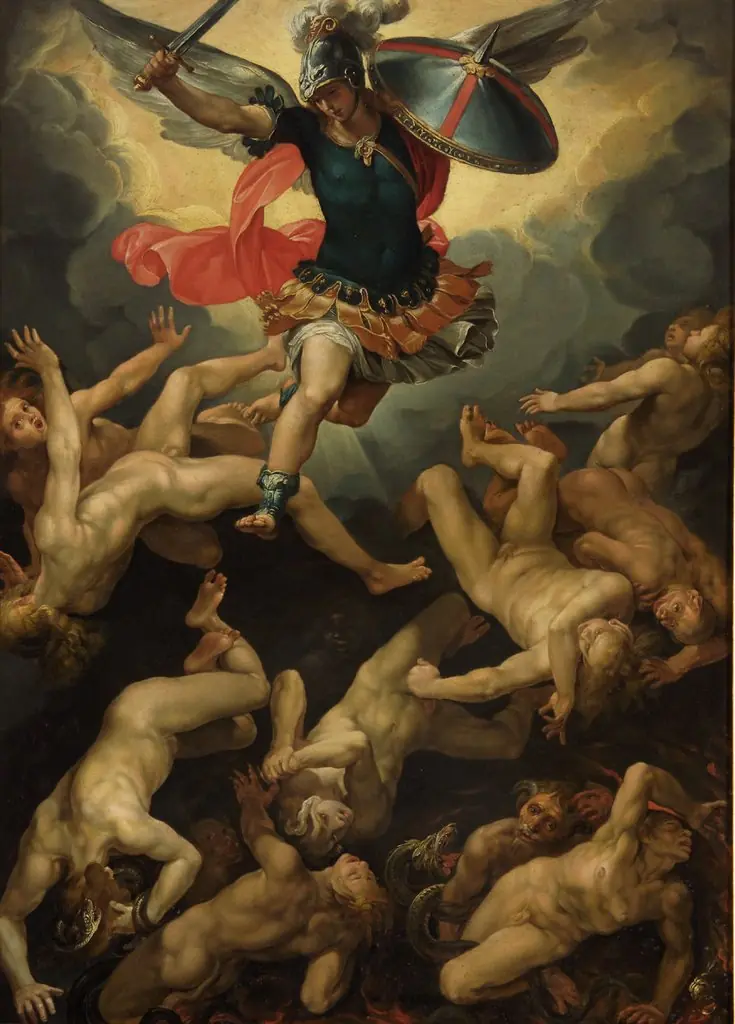 The Fall of the Rebel Angels
 Jove Casts His Thunderbolts at the Rebellious Giants
 Moses Shown the Promised Land
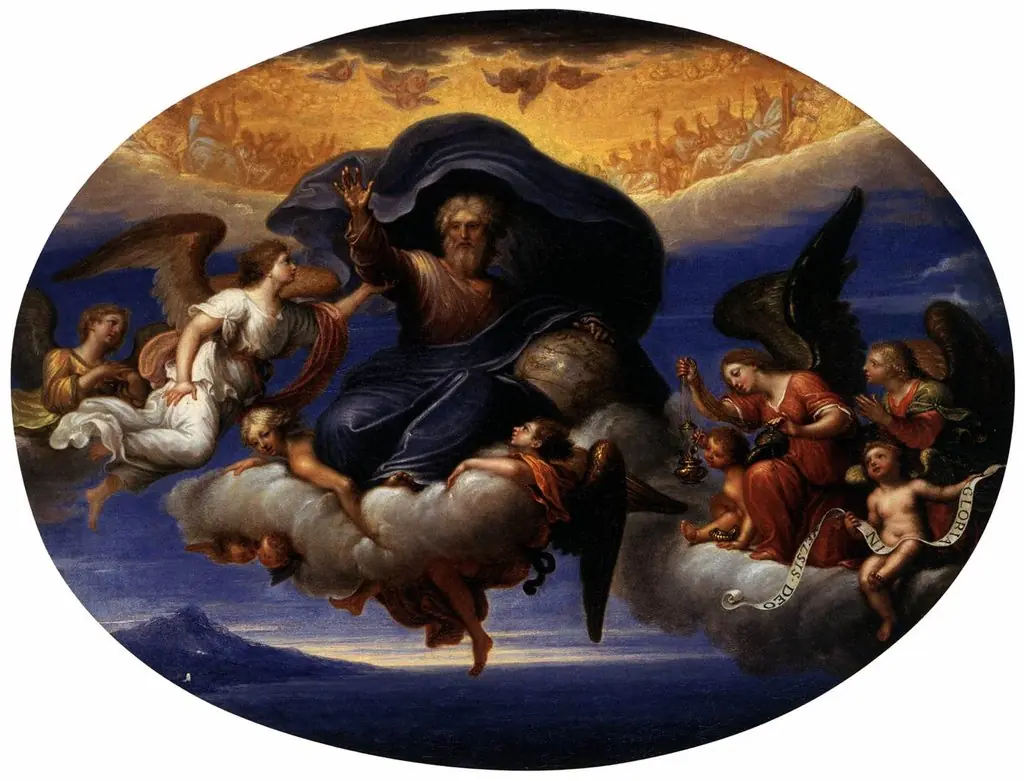 God the Father
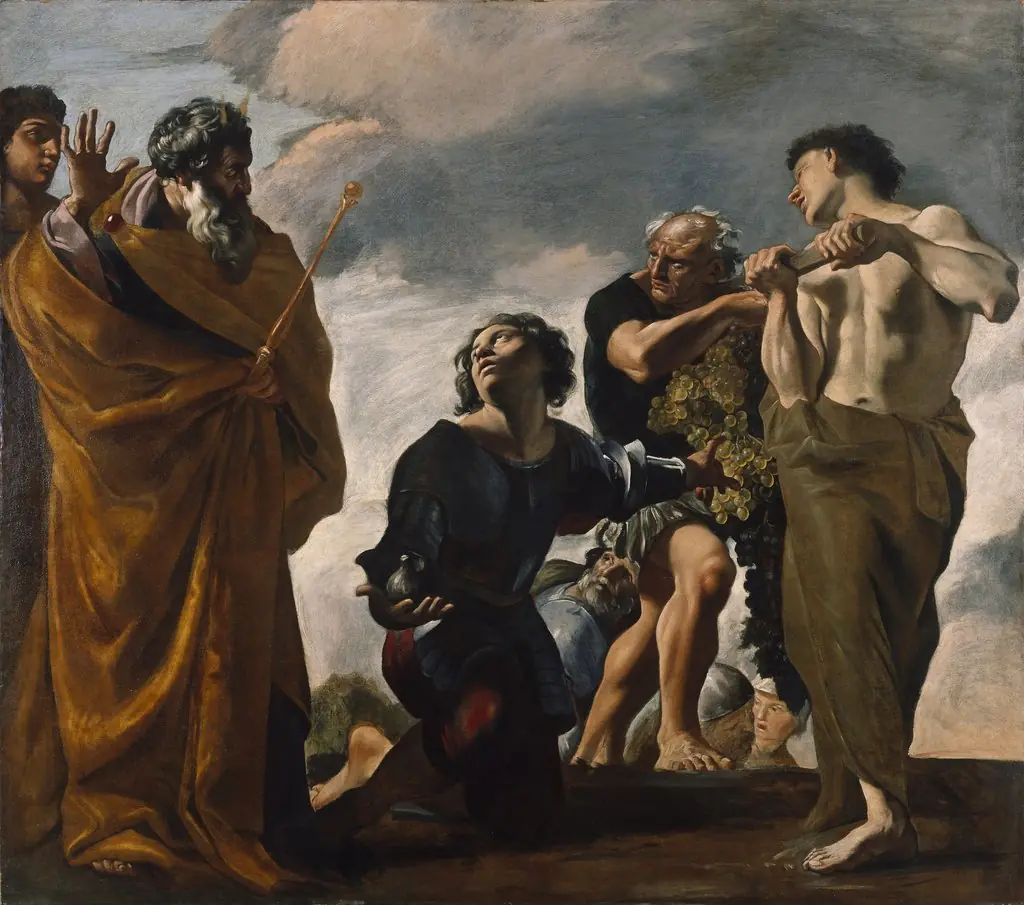 Moses and the Messengers from Canaan
- Saint John the Evangelist on Patmos