Artwork
Sketch for "The Revolt at Cairo"
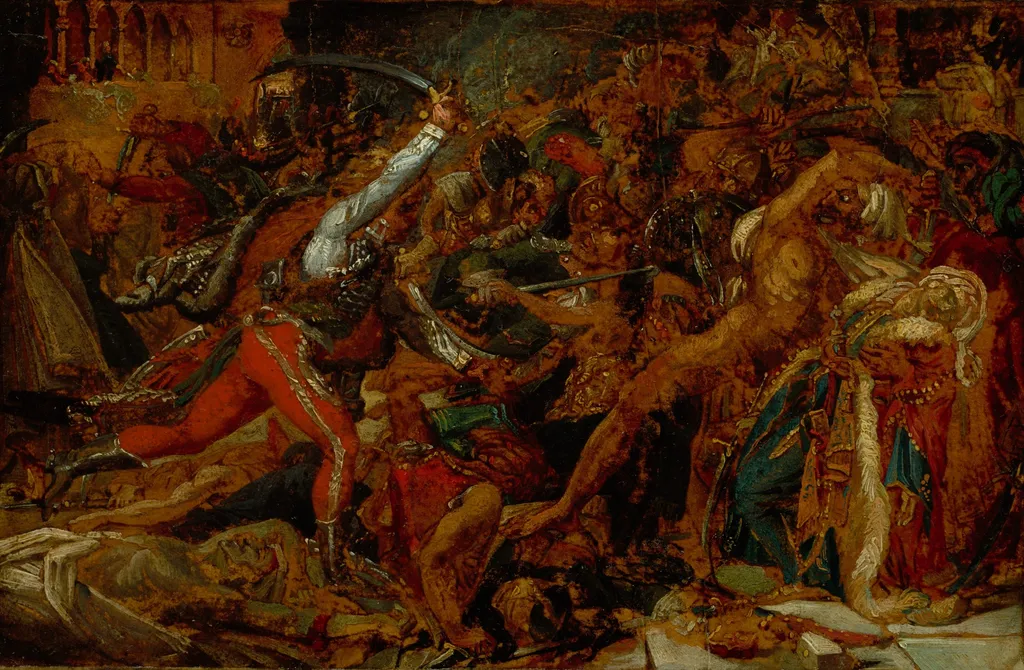
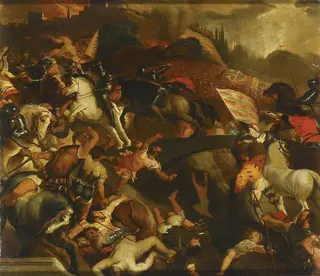
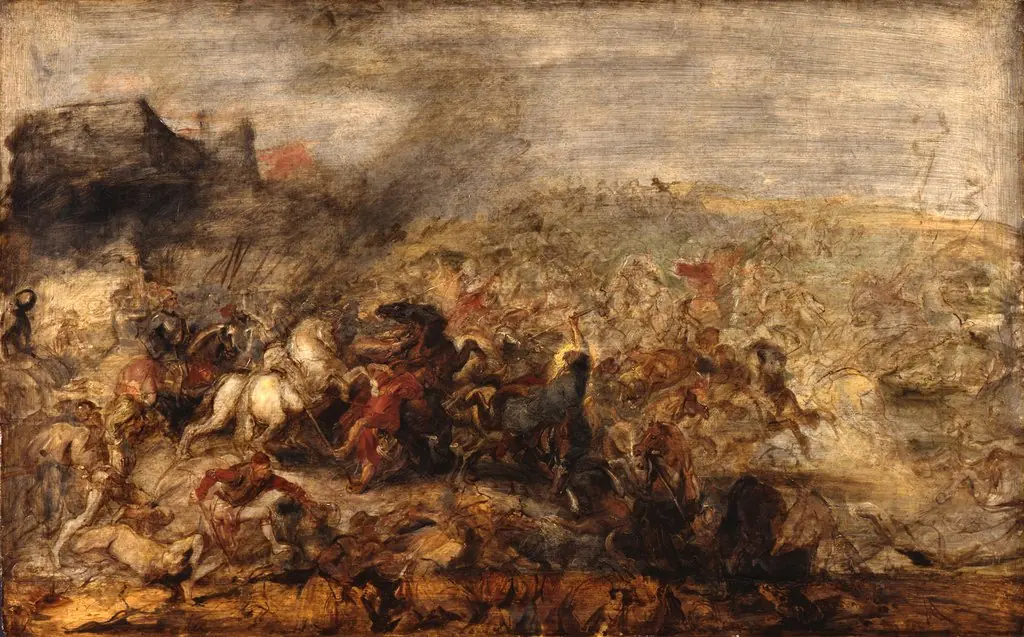
Sketch for "The Revolt at Cairo" is an unspecified painting by the French Romanticist artist Anne-Louis Girodet. It dates from 1809 and is held in the collection of the Cleveland Museum of Art.
About this work
If you're interested in learning more about the artist behind this piece, you might want to look up Anne-Louis Girodet.
This painting is a sketch for "The Revolt at Cairo" by Anne-Louis Girodet, created in 1809. It's a canvas piece, and it's held at The Cleveland Museum of Art.
The scene depicts a chaotic and intense moment, with multiple figures in the midst of a struggle. The colors are muted, with earthy tones dominating the palette. The overall mood is one of tension and conflict.
If you're interested in learning more about the artist behind this piece, you might want to look up Anne-Louis Girodet.
Technique & Style
Executed in 1809 by Anne-Louis Girodet, this work is a painting created on a canvas support. The piece measures 15.2 cm in height and 23.3 cm in width, indicating a small-scale format consistent with its function as a preparatory sketch. Produced in France, the artwork utilizes standard painting materials of the period, though specific pigment details or binding media are not delineated in the available records.
The compact dimensions and canvas medium suggest a rapid handling intended to establish compositional arrangements rather than a finished surface.
History & Provenance
The work is a canvas sketch dated 1809, created by Anne‑Louis Girodet in France as a preparatory study for his painting The Revolt at Cairo. No record of a specific commission survives in the sources, but the sketch remained in the artist’s circle until it entered the collection of the Cleveland Museum of Art, where it is now catalogued as 1965.310. Its provenance thus traces from Girodet’s studio to its present holding at the CMA.
Legacy
Legacy of the painting arises from its role in shaping revolutionary visual discourse in early nineteenth-century France. Art historians note its dramatic composition and psychological depth influenced subsequent generations of French academic painters who sought to merge classical form with contemporary political subject matter. The work's preservation at the Cleveland Museum of Art ensures continued scholarly examination of Girodet's innovative technique and his contribution to the evolution of historical painting.
Its inclusion in major exhibitions has reinforced public awareness of Girodet's significance beyond his more famous works, cementing its status as a pivotal piece in the narrative of French art during the Napoleonic era.
Overview
Anne-Louis Girodet’s 1809 canvas serves as a preparatory study for his later composition on the Egyptian uprising. Executed in oil, the work captures a moment of violent confrontation, rendered with a restrained palette of earth tones that heighten the sense of urgency. The piece is part of the Cleveland Museum of Art’s collection.
Subject & Meaning
The drawing portrays a tumultuous scene of combatants locked in struggle, suggesting the chaos of the Egyptian revolt that accompanied Napoleon’s campaign. By focusing on the physical clash rather than narrative detail, Girodet emphasizes the raw intensity of conflict and the human drama within the historical episode.
Own this work as a print
Artist & collection
Artist
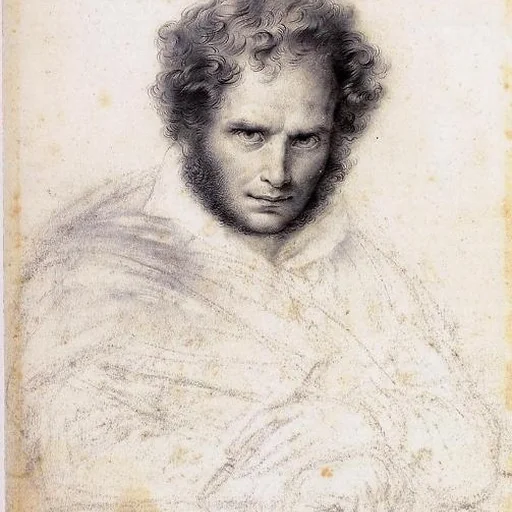
Anne-Louis Girodet de Roussy-Trioson (French pronunciation:; or de Roucy), also known as Anne-Louis Girodet-Trioson or simply Girodet (29 January 1767 – 9 December 1824), was a French painter and pupil of Jacques-Louis…