Artwork
Coriolanus Taking Leave of his Family
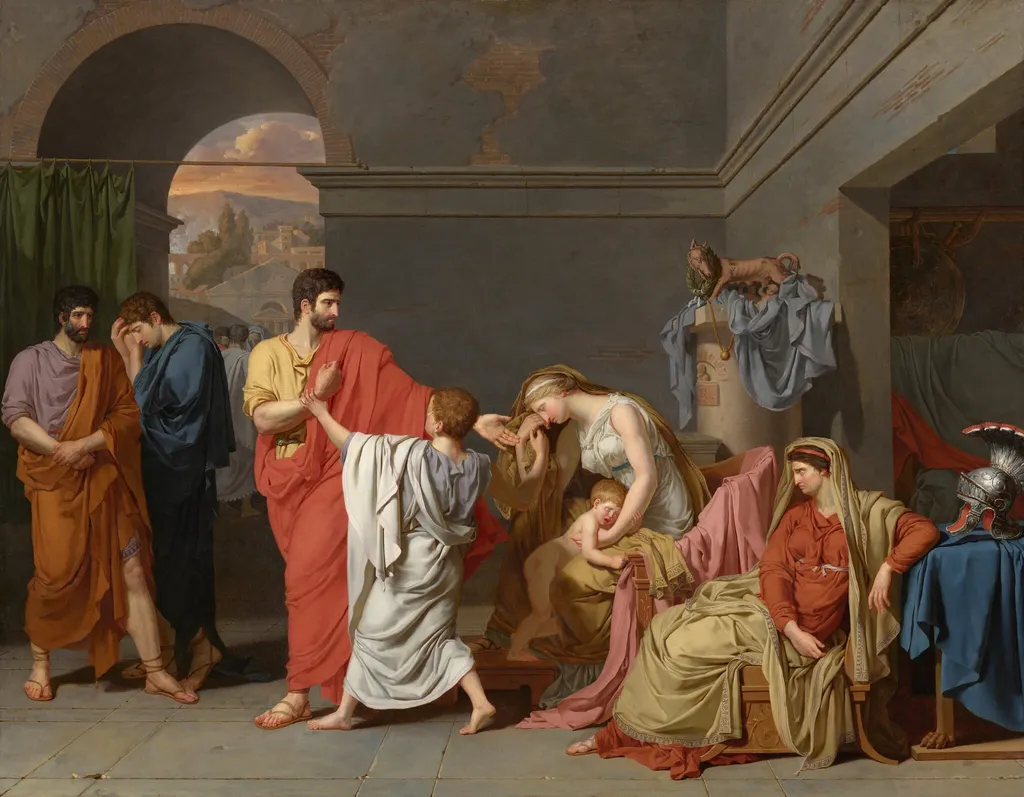
Coriolanus Taking Leave of his Family is an oil painting by the Neoclassicist artist Anne-Louis Girodet. It dates from 1786 and is held in the collection of the National Gallery of Art.
About this work
Subject & Meaning
This iconography underscores the conflict between public duty and private affection, symbolizing the sacrifice of personal happiness for the state (3).
The painting depicts the legendary Roman general Gnaeus Marcius Coriolanus taking leave of his family, specifically his mother Volumnia, as he departs into exile after being banished from Rome (3). The figures are rendered in a neoclassical manner, with Coriolanus shown in a heroic pose, his outstretched hand and solemn gaze contrasting with the grief-stricken gestures of Volumnia and other family members (1,2). This iconography underscores the conflict between public duty and private affection, symbolizing the sacrifice of personal happiness for the state (3).
The work thus represents the moral tension inherent in civic exile and the enduring power of familial bonds.
Technique & Style
Executed in oil on canvas in 1786, the work exhibits Girodet’s early Neoclassical handling, marked by clear contours, sculptural modeling, and a subdued palette of ochres, umbers, and muted blues. The composition is organized along a shallow, frieze-like plane, with Coriolanus’s raised right arm and outstretched cloak creating a diagonal counterpoint to the vertical figures of his wife and mother, whose grief is conveyed through rigid, almost statuesque postures. Subtle chiaroscuro defines the anatomy and drapery, while the subdued lighting and restrained palette emphasize classical restraint over dramatic contrast.
The original stretcher and remnants of the Académie royale seal on the reverse confirm its status as an official submission, aligning its technique with the academic standards of the period.
History & Provenance
Anne-Louis Girodet de Roussy-Trioson created Coriolanus Taking Leave of his Family in 1786 as his submission for the Prix de Rome competition. Although the painting was the sole surviving entry from that year's finalists, the prize was not awarded to any competitor. An original label on the stretcher confirms the date and the competition's outcome.
The work likely passed to chemist Antoine Laurent Lavoisier and his wife, Marie Anne Pierrette Paulze Lavoisier, before being seized by the French state in 1794 and returned to Mme Lavoisier in 1796. Following its time in a private French collection during the early 20th century, the canvas was sold at Christie's in New York on October 29, 2019, before being acquired by the National Gallery of Art in Washington, D.C.
The painting is held by the National Gallery of Art in Washington, D.C., having been purchased by the institution in 2019. Its documented provenance traces back to its creation as Girodet's entry in the 1786 Prix de Rome competition, in which it was the only finalist's work to survive; the prize was not awarded that year. The canvas bears an 18th-century inscription on the original stretcher recording those facts, along with a red wax seal of the French Académie royale de peinture et de sculpture.
The work was possibly given by the artist to Antoine Laurent Lavoisier and his wife Marie Anne Pierrette Paulze Lavoisier, Paris; it was seized by the French state in 1794 and returned to Mme Lavoisier in 1796. It subsequently entered a private collection in France by at least the early 20th century, before being sold at Christie's, Manson & Woods in New York on 29 October 2019 (lot 749) and acquired by the NGA.
Context
Coriolanus Taking Leave of his Family was painted in 1786 by the eighteen‑year‑old Anne‑Louis Girodet as his entry for the Prix de Rome competition; it is the sole surviving work from that year’s contest, for which no prize was awarded. Although unsuccessful then, Girodet, a student of Jacques‑Louis David, won the Prix de Rome in 1789 and lived in Rome until 1793, a period that saw his early neoclassical style begin to absorb romantic elements. The painting thus illustrates Girodet’s transition from strict neoclassicism toward the emerging romantic sensibility that would define his later career. Today it resides in the National Gallery of Art, Washington, acquired in 2019.
Overview
Anne-Louis Girodet de Roussy-Trioson created this oil on canvas, Coriolanus Taking Leave of his Family, in 1786. This history painting portrays a poignant moment from ancient Roman legend, as the exiled general Gnaeus Marcius Coriolanus bids farewell to his sorrowful family. The work reflects the artist's early engagement with classical narratives and emotional depth, characteristic of the period's academic traditions.
Own this work as a print
Artist & collection
Artist
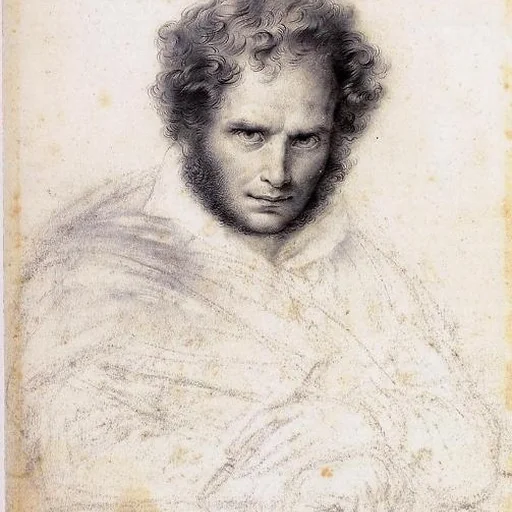
Anne-Louis Girodet de Roussy-Trioson (French pronunciation:; or de Roucy), also known as Anne-Louis Girodet-Trioson or simply Girodet (29 January 1767 – 9 December 1824), was a French painter and pupil of Jacques-Louis…

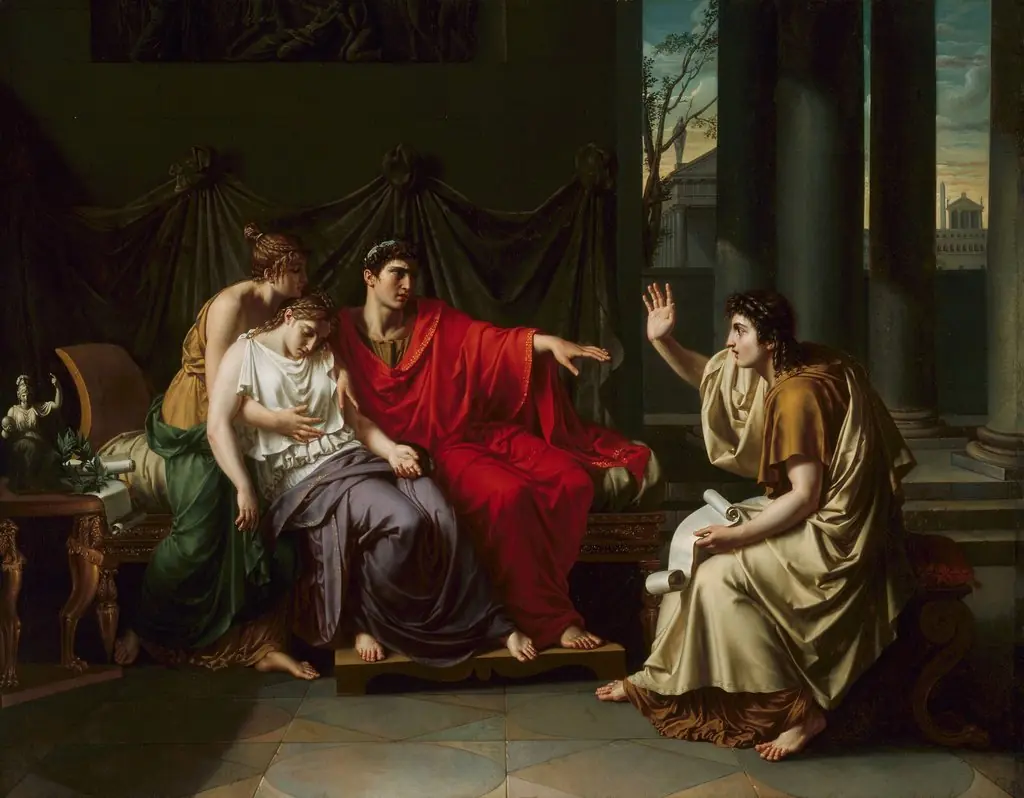
- Virgil Reading the "Aeneid" to Augustus, Octavia, and Livia
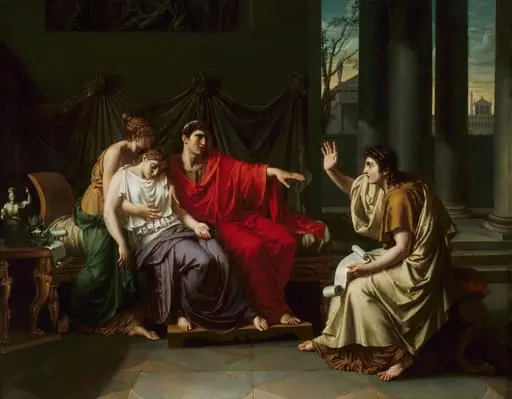 Virgil Reading the "Aeneid" to Augustus, Octavia, and Livia
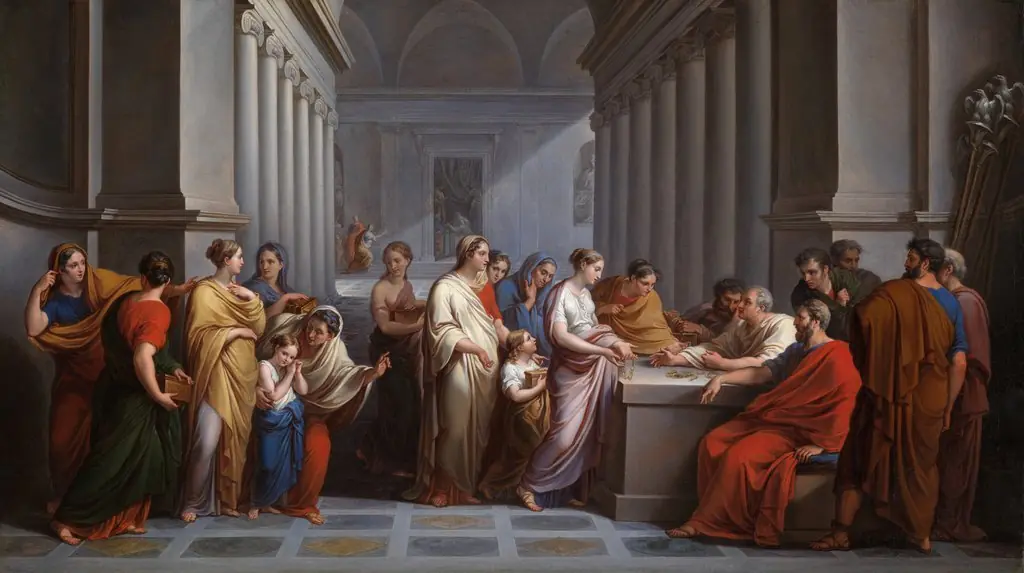 Roman Women Offering Their Jewellery in Defence of the State
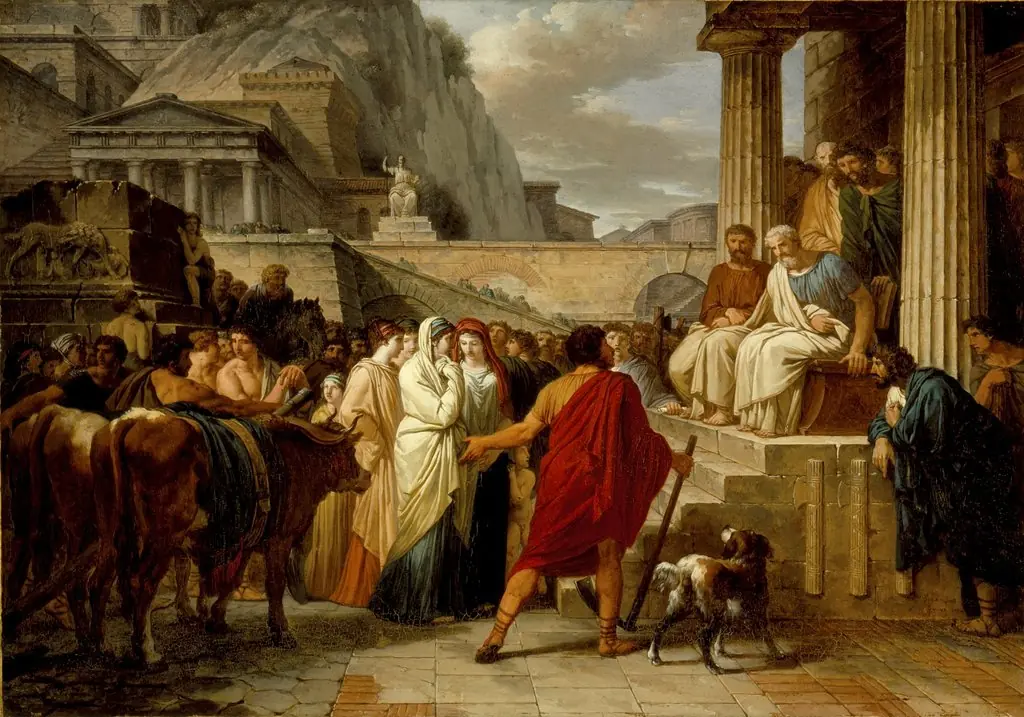 Caius Furius Cressinus Accused of Sorcery
 Cleombrotus Ordered into Banishment by Leonidas II, King of Sparta
 Berenice Reproaching Ptolemy
 Cincinnatus abandons the Plough to dictate Laws to Rome
 Helen Recognising Telemachus, Son of Odysseus
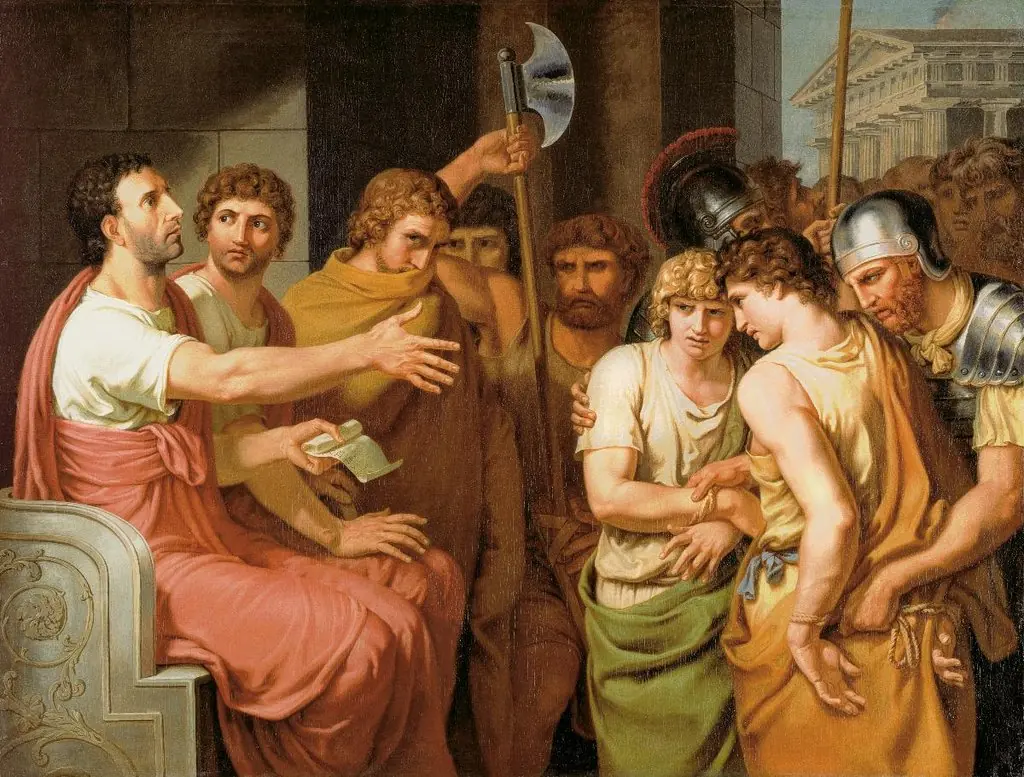 Brutus entdeckt die Namen seiner Söhne auf der Liste der Verschwörer und verurteilt sie zum Tode
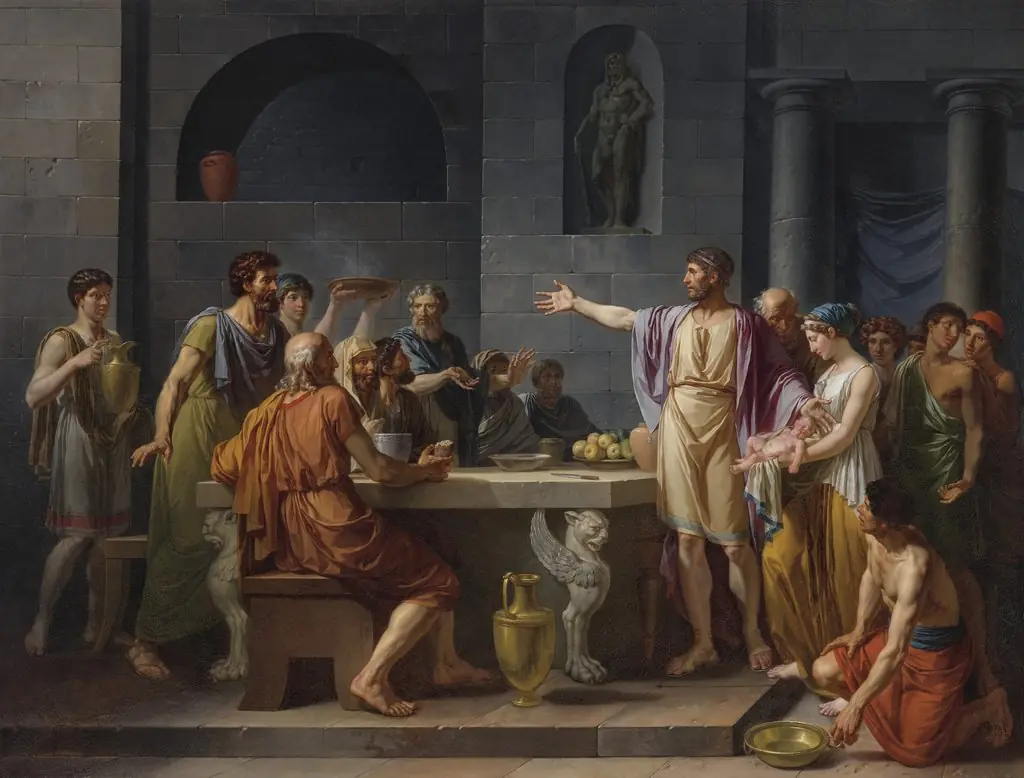 The Magnanimity of Lycurgus
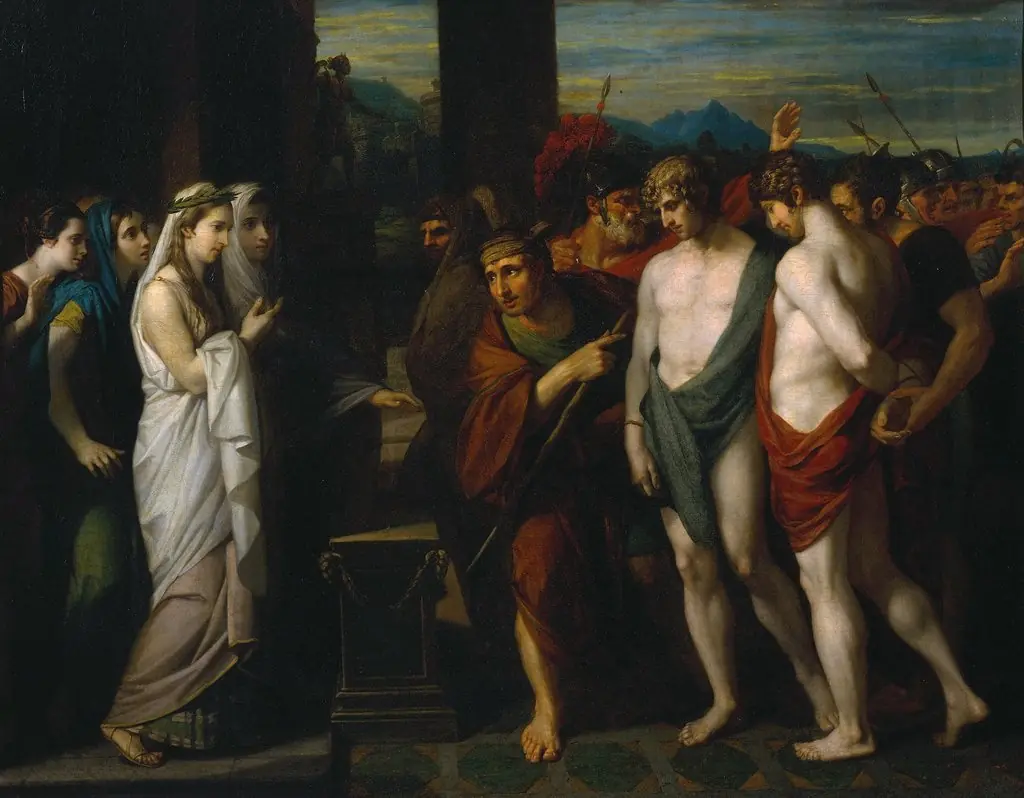 Pylades and Orestes Brought as Victims before Iphigenia
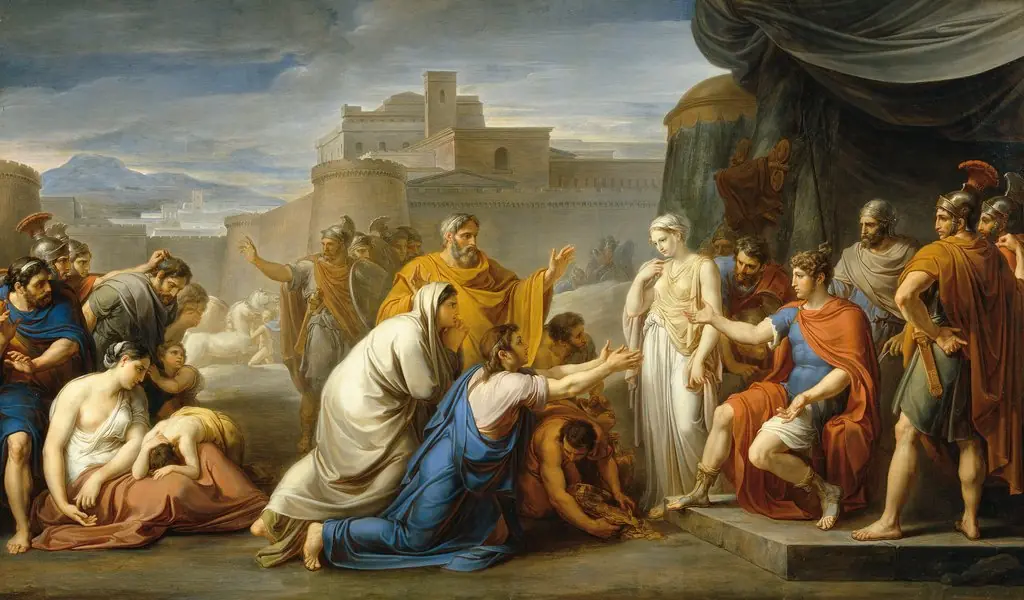 Scipios Mäßigung