Artwork
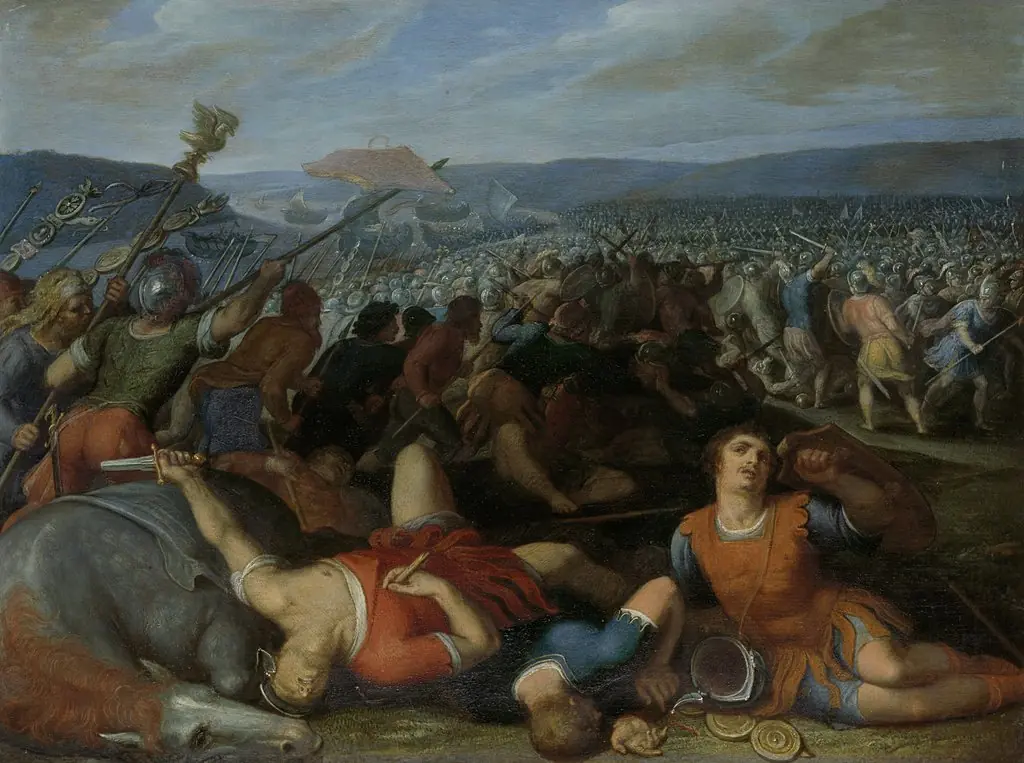
De Bataven verslaan de Romeinen bij de Rijn
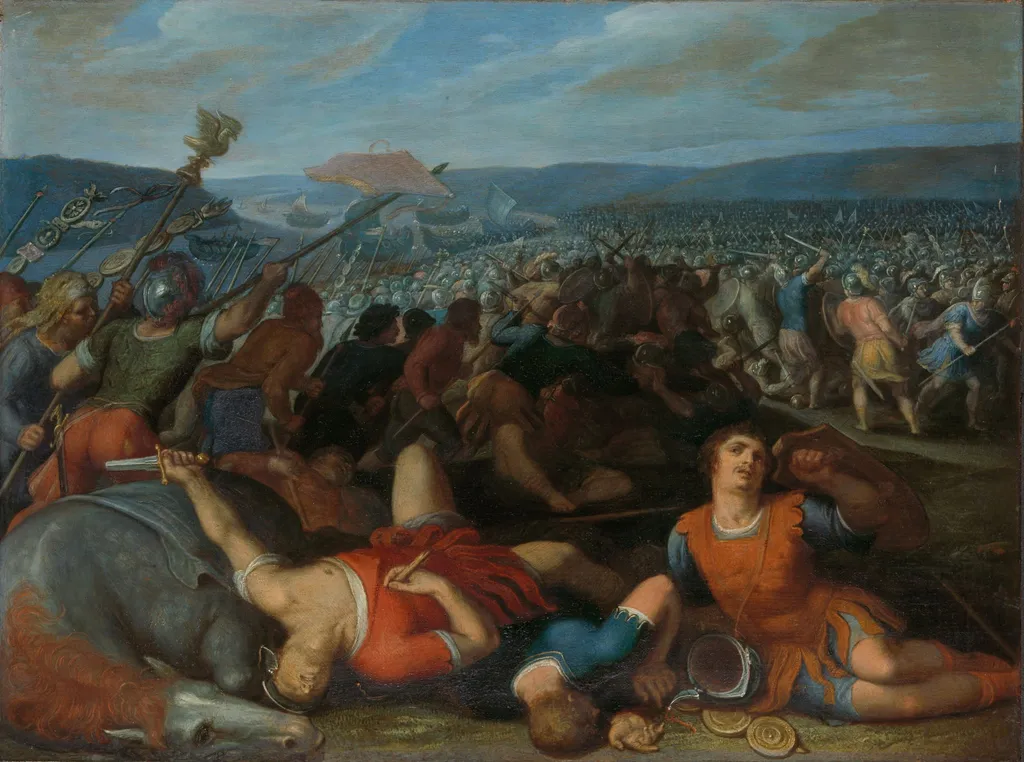
De Bataven verslaan de Romeinen bij de Rijn is an unspecified painting by the Dutch Golden Age artist Otto van Veen. It dates from 1606 and is held in the collection of the Rijksmuseum.
About this work
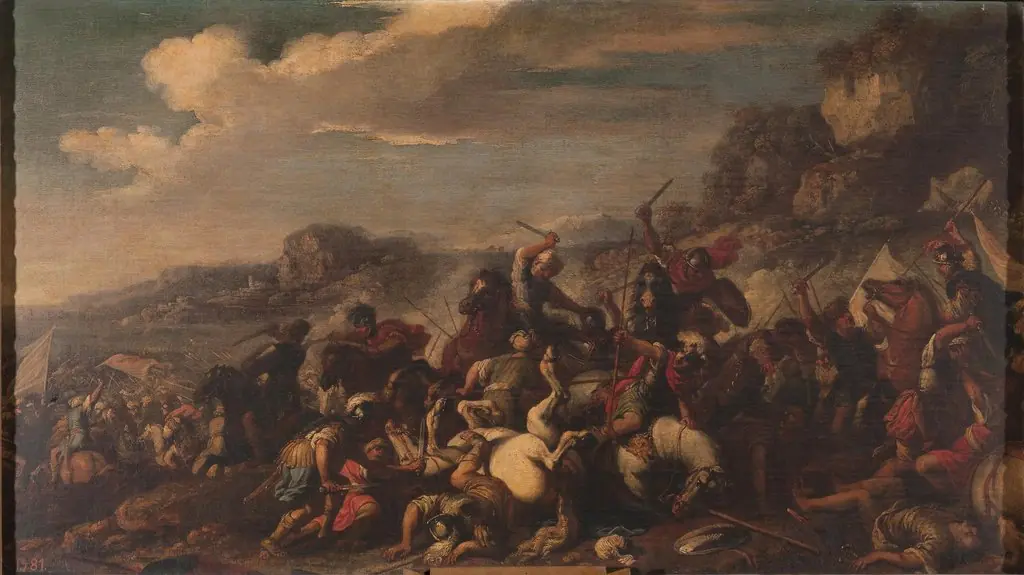
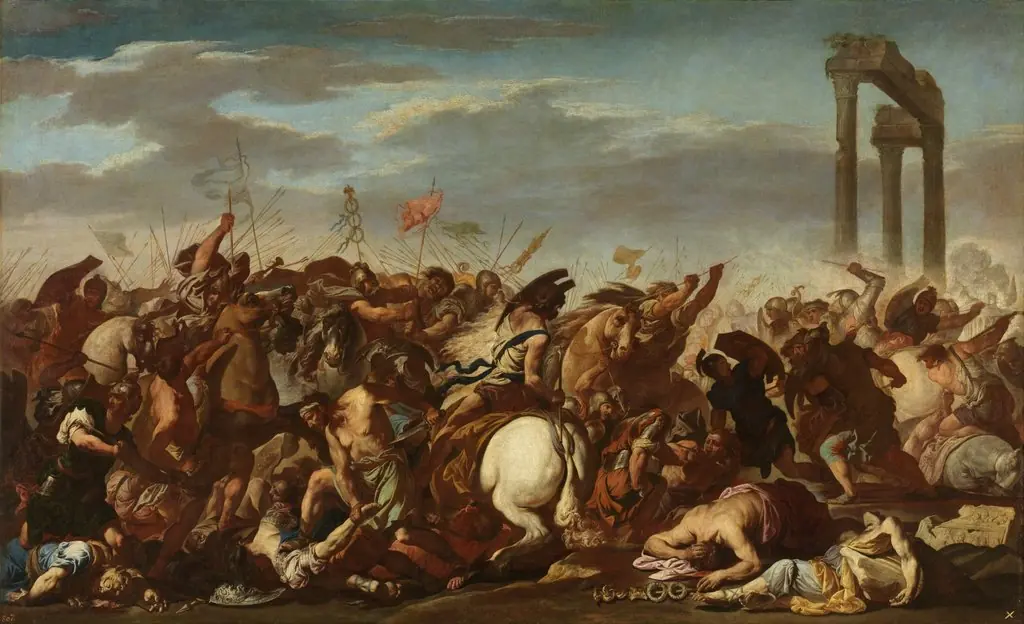
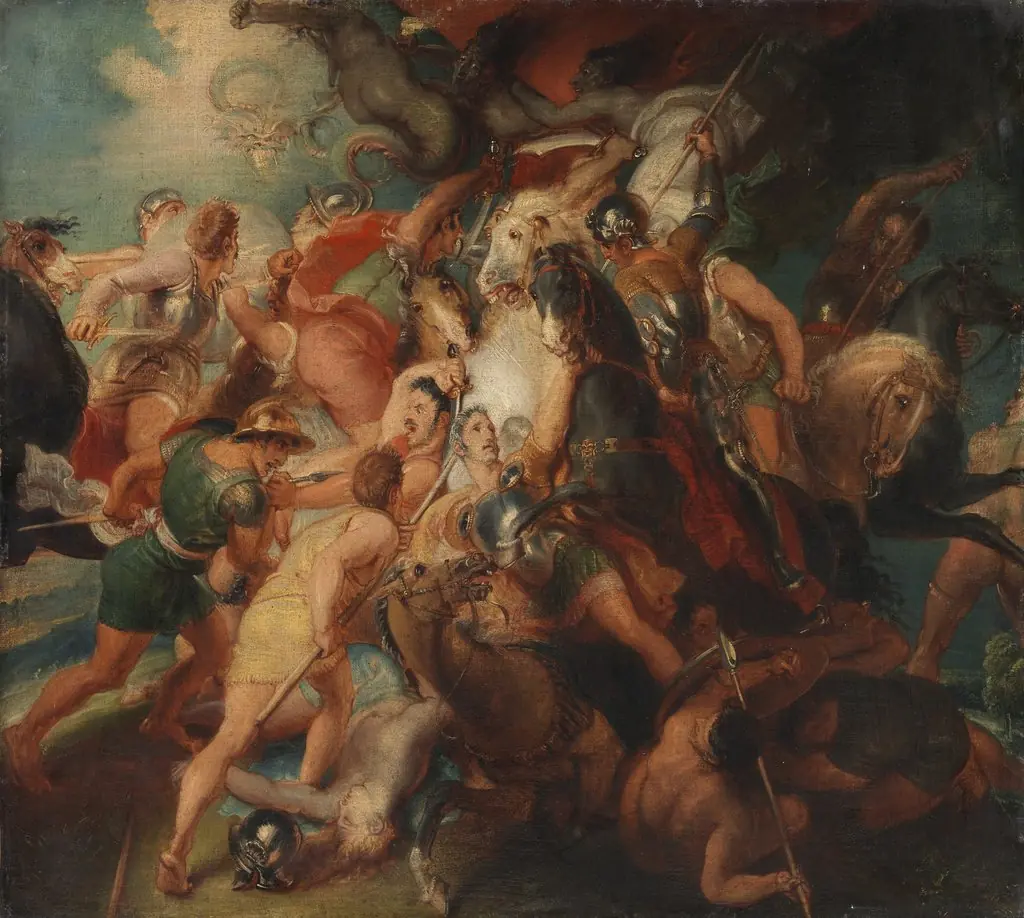
You see a battle: men in armor clash on a muddy riverbank, flags flying, horses rearing.
This painting was part of a set made for the Dutch government in 1613. The scene shows an old rebellion the Dutch liked to compare to their own fight for freedom. The artist is unknown, but the work hung in the same building where laws were made.
To see more paintings like this, visit the Rijksmuseum.
Subject & Meaning
The iconography thus belongs to a humanist revival of classical history, in which the Batavian struggle was framed as a kind of origin myth for the Dutch.
The painting depicts the Batavians defeating the Romans at the Rhine, a subject drawn from the ancient revolt of the Batavi against Roman rule as recounted by Tacitus. Otto van Veen treated the Batavian wars as a foundational narrative of the Low Countries, producing a series of twelve paintings on the topic dated 1613, of which this work is one, alongside a related 1612 print series. The iconography thus belongs to a humanist revival of classical history, in which the Batavian struggle was framed as a kind of origin myth for the Dutch.
For the States General of the Dutch Republic, which commissioned the painted series, the imagery carried patriotic resonance, evoking ancestral resistance against a foreign occupier. Van Veen's classically educated approach, shaped by his Italian training and his emblem-book practice, lent the battle scenes an allegorical dimension, presenting the Batavian victory as a moral exemplar of liberty triumphing over tyranny.
History & Provenance
Otto van Veen created De Bataven verslaan de Romeinen bij de Rijn between 1600 and 1613 as part of a series of twelve paintings depicting Batavian and Roman battles, commissioned by the States General of the Dutch Republic to commemorate historical conflicts. The work was painted in Antwerp during van Veen's active period as a court painter and workshop leader, before his move to Brussels in 1615. His involvement in this series aligns with his broader emblematographic practice, as evidenced by his publication of related emblem books like Amorum emblemata (1608) and the historical narrative cycles tied to Roman-Batavian warfare.
Context
Otto van Veen occupied a pivotal position in the transition from late Renaissance humanist painting to early Baroque workshop practice in the Southern Netherlands. His role as the preceptor who trained Peter Paul Rubens from 1594 to 1598 established a direct artistic lineage that shaped Flemish Baroque development, while his extensive output of emblem books such as Amorum emblemata (1608) and Emblemata Horatiana (1607) integrated textual allegory with visual composition, influencing both contemporaries and later artists like Rubens who adapted these motifs for broader dissemination. The Batavian versus Roman conflict series, commissioned by the Archdukes Albert and Isabella around 1613 and executed through workshop engravings after earlier publications, reflects deliberate political symbolism rooted in Roman historical narrative to reinforce Habsburg legitimacy in the Low Countries. Van Veen's humanist erudition, cultivated through studies in Rome and associations with figures like Federico Zuccari and Dominicus Lampsonius, informed his classically structured compositions and emblematic symbolism, positioning him as a key conduit for Counter-Reformation ideals within Northern Mannerism. His workshop in Antwerp served not only as a production site for altarpieces and portraits but also as a training ground that facilitated the transfer of stylistic innovations to Rubens, thereby anchoring his broader context within the emergence of Baroque narrative painting.
Legacy
Van Veen's legacy rests primarily on his role as the preceptor who shaped Peter Paul Rubens' artistic formation and on the dissemination of his emblem books, which influenced emblematic art and moralizing imagery throughout the 17th century. His workshop produced influential historical cycles such as the Batavian-Roman conflict series, and his designs were widely reproduced in emblem books like the Amorum Emblemata (1608) and Emblemata Horatiana (1607), shaping didactic art and emblematic illustration in the Low Countries and beyond. The continued scholarly attention to his workshop practices, as noted by Houbraken and later historians, underscores his enduring reputation as a pivotal figure bridging Northern Renaissance humanism and Baroque innovation.
Own this work as a print
Artist & collection

Artist
Otto van Veen, was a painter, draughtsman, and humanist active primarily in Antwerp and Brussels in the late 16th and early 17th centuries.

 Beheading of Julius Paulus and Imprisonment of Claudius Civilis
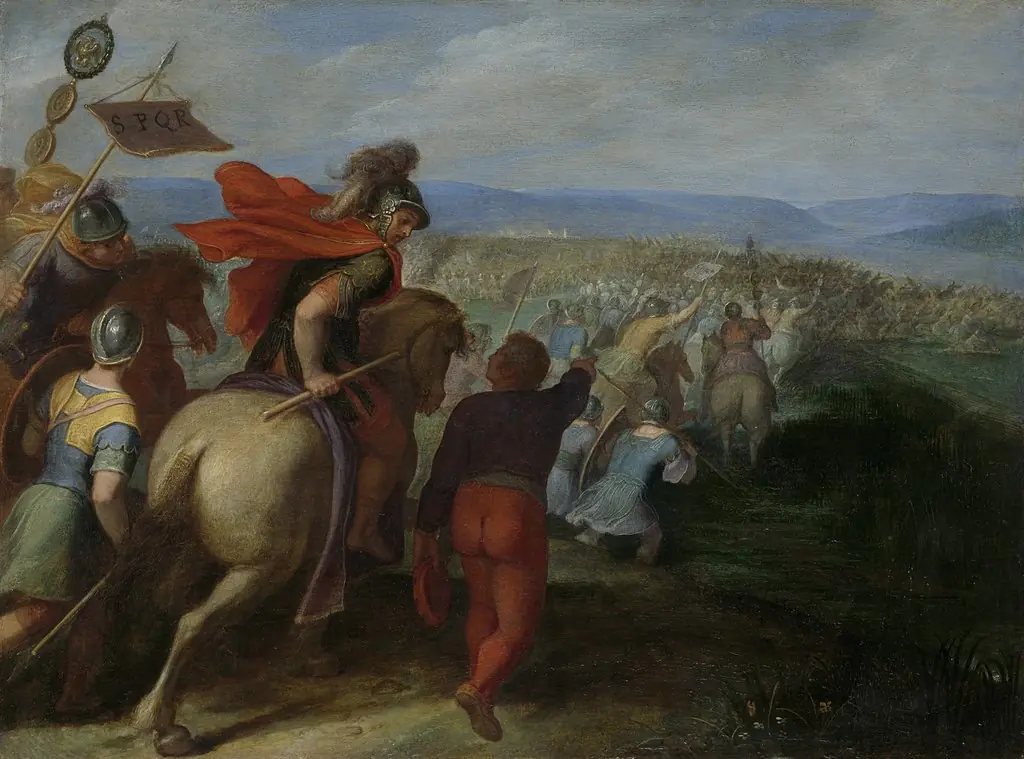 The Romans under Cerealis Defeat Claudius Civilis and the Batavians following betrayal from within
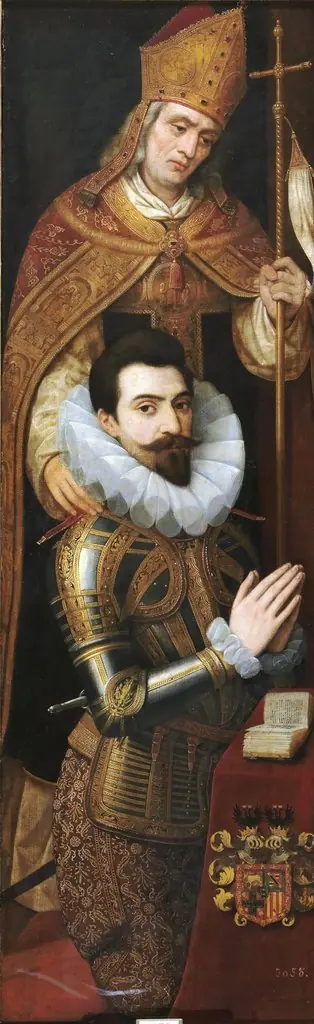 Alonso de Idiáquez duque de Ciudad Real (Cittá-Reale en Nápoles)
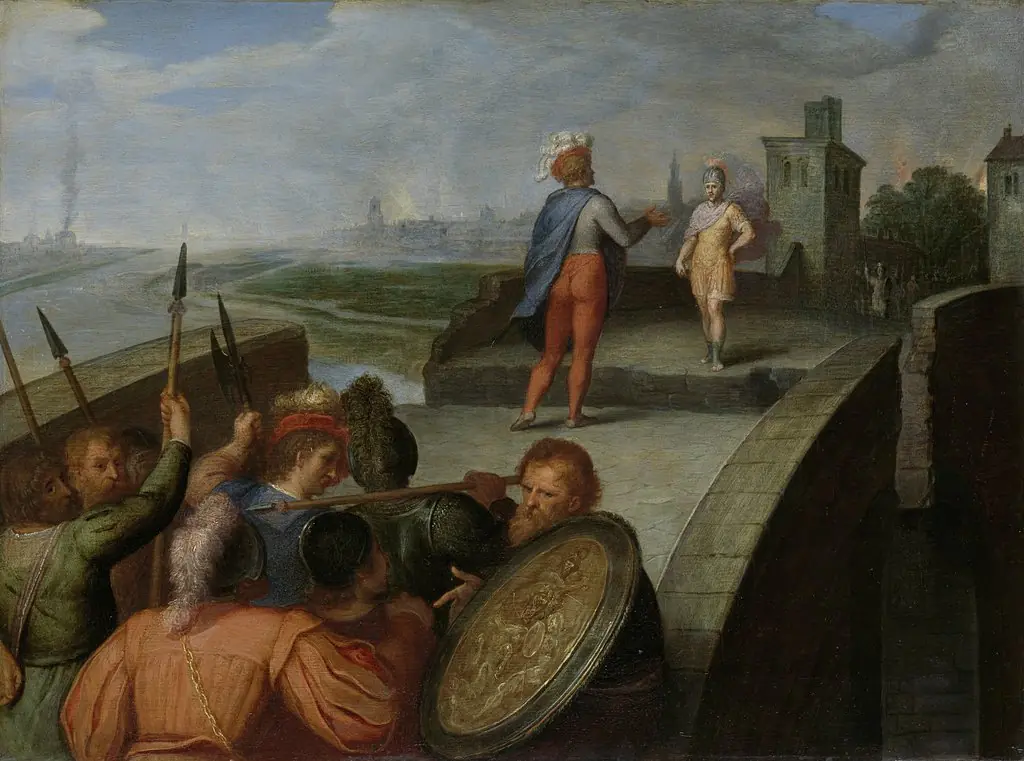 Peace Negotiations between Claudius Civilis and Cerealis
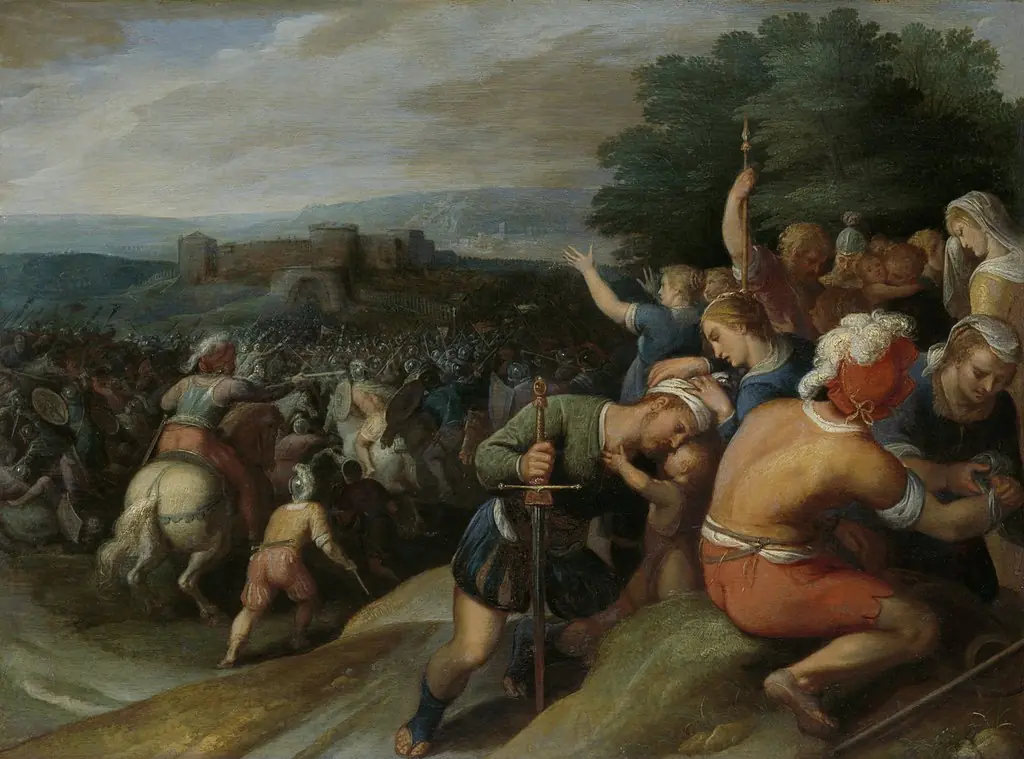 The Batavians Surround the Romans at Vetera
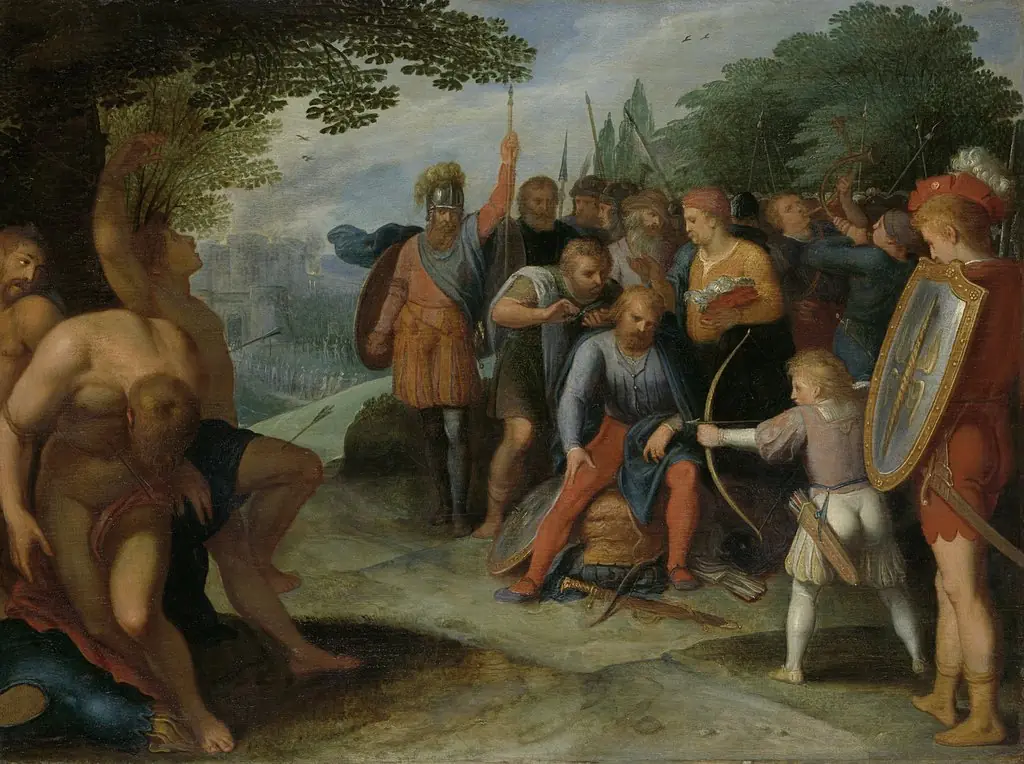 After the Fall of Vetera Castra Claudius Civilis has his hair cut while his son shoots some prisoners
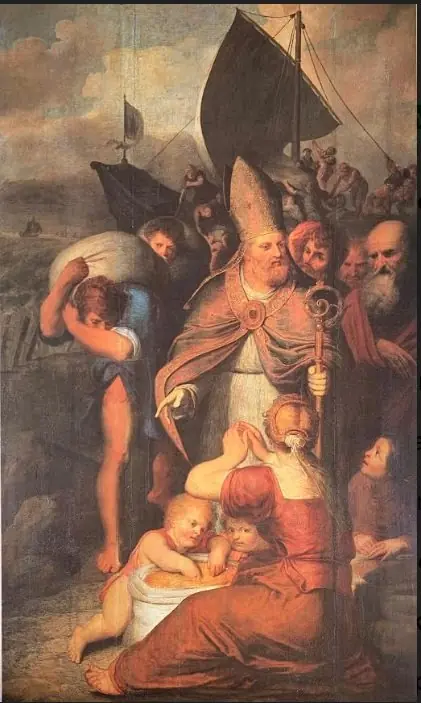 During a Famine in Myra Saint Nicholas Saves the People
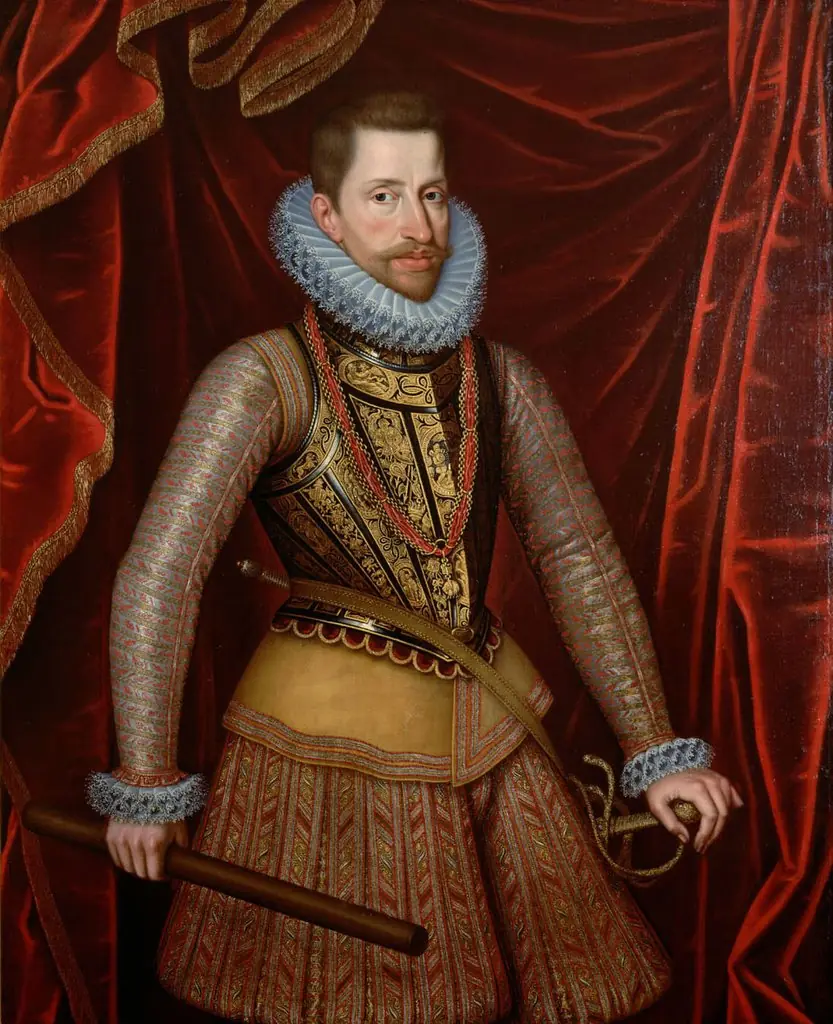 Portrait of Albrecht VII, Archduke of Austria (1559-1621)