Artwork
The Way to Calvary
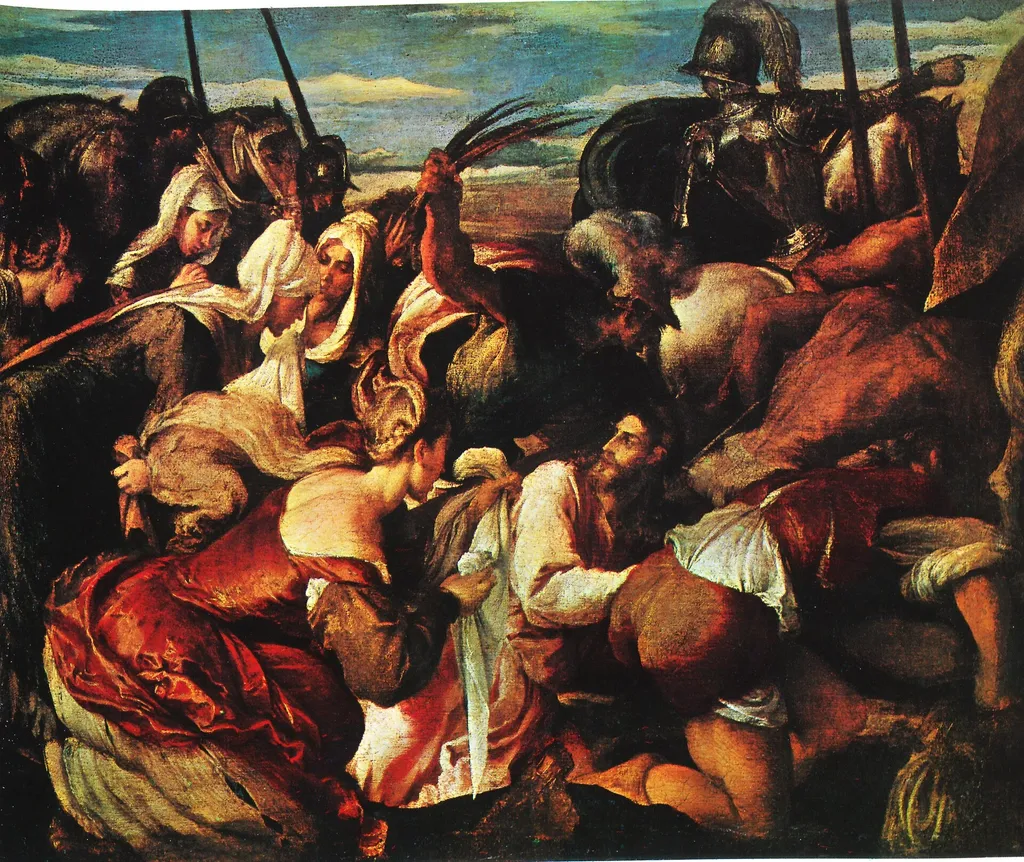
The Way to Calvary is an oil painting by the Early Baroque Italian artist Jacopo Bassano. It dates from 1552 and is held in the collection of the Museum of Fine Arts, Budapest.
About this work
Overview
The composition is characterized by a dynamic, crowded arrangement of figures that creates a sense of chaotic movement and emotional intensity.
Jacopo Bassano's The Way to Calvary, executed in 1552, depicts the Passion narrative of Christ carrying the cross toward Golgotha. The composition is characterized by a dynamic, crowded arrangement of figures that creates a sense of chaotic movement and emotional intensity. Christ, identifiable by his white robe, occupies the central axis, physically strained as he is pulled forward by a soldier on horseback.
Surrounding him is a dense throng of soldiers, onlookers, and mourners, many rendered in dramatic, contorted poses that emphasize the physical and psychological weight of the event. Bassano employs his signature tenebrist lighting, using strong contrasts between light and shadow to model the forms and heighten the theatricality of the scene. This work exemplifies the artist's mature style, bridging the High Renaissance and the emerging Baroque sensibility through its focus on naturalistic detail, rustic character types, and dramatic narrative pacing.
Painted during a period when Bassano was establishing his reputation beyond the Veneto region, the painting reflects his unique ability to infuse biblical subjects with a palpable, earthly immediacy.
Subject & Meaning
The painting illustrates the moment of Christ’s forced journey toward his crucifixion. Soldiers on horseback dominate the foreground, one gripping the arm of the central figure, while a captive is led away. Various onlookers kneel or lie prostrate, suggesting a mixture of reverence, fear, and chaos among the witnesses to the event.
Technique & Style
Bassano employs a restrained palette of browns, beiges and deep reds, allowing the white robe of Christ to stand out. The brushwork conveys a sense of movement, especially in the horses and the swirling crowd. Atmospheric perspective is achieved through a hazy blue sky, softening the background and focusing attention on the foreground drama.
History & Provenance
Created in the mid‑sixteenth century, The Way to Calvary entered the Museum of Fine Arts, Budapest, as part of its European painting collection. The work has remained in the museum’s holdings, where it is displayed among other religious works from the Venetian school, reflecting Bassano’s role within that artistic tradition.
Context
The composition reflects the Counter‑Reformation’s emphasis on vivid, emotionally charged depictions of Christ’s suffering. Bassano, active in the Veneto region, often blended biblical narratives with rustic, everyday details, a practice evident in the crowded, almost theatrical arrangement of figures that bridges sacred story and contemporary life.
Own this work as a print
Artist & collection
Artist
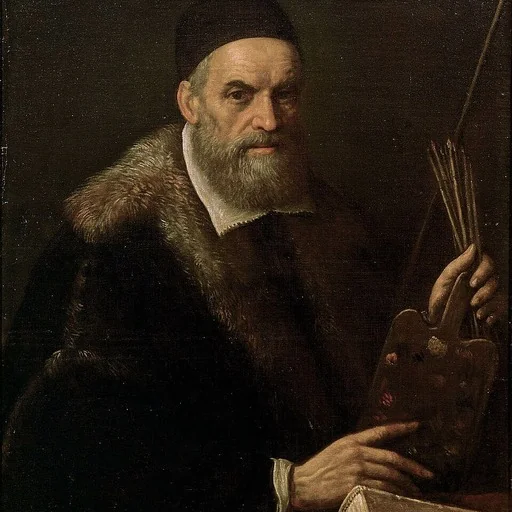
Jacopo Bassano was an Italian Renaissance painter of the Venetian school. He was born and died in Bassano del Grappa, and took the village as his surname. Having trained in the workshop of his father, Francesco the…

- De Bataven verslaan de Romeinen bij de Rijn
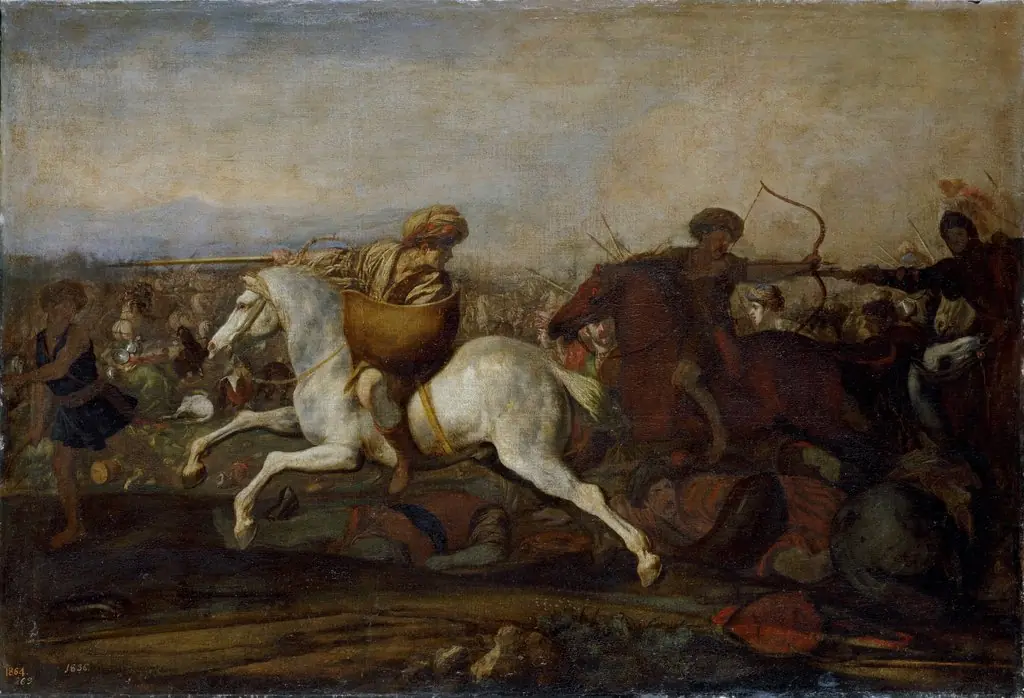 Combate entre turcos y cristianos
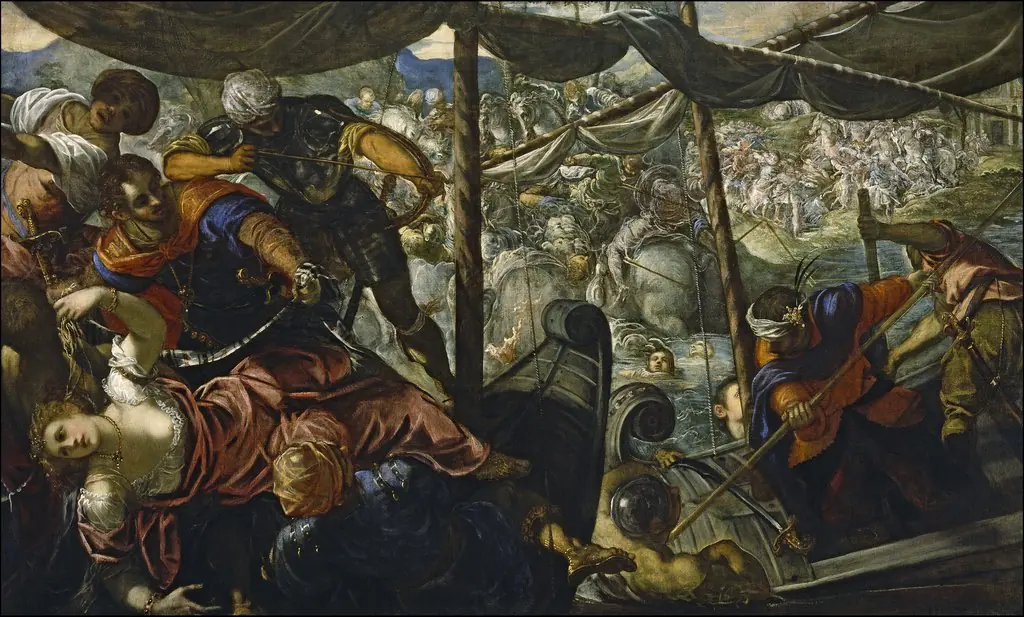 The Rape of Helen
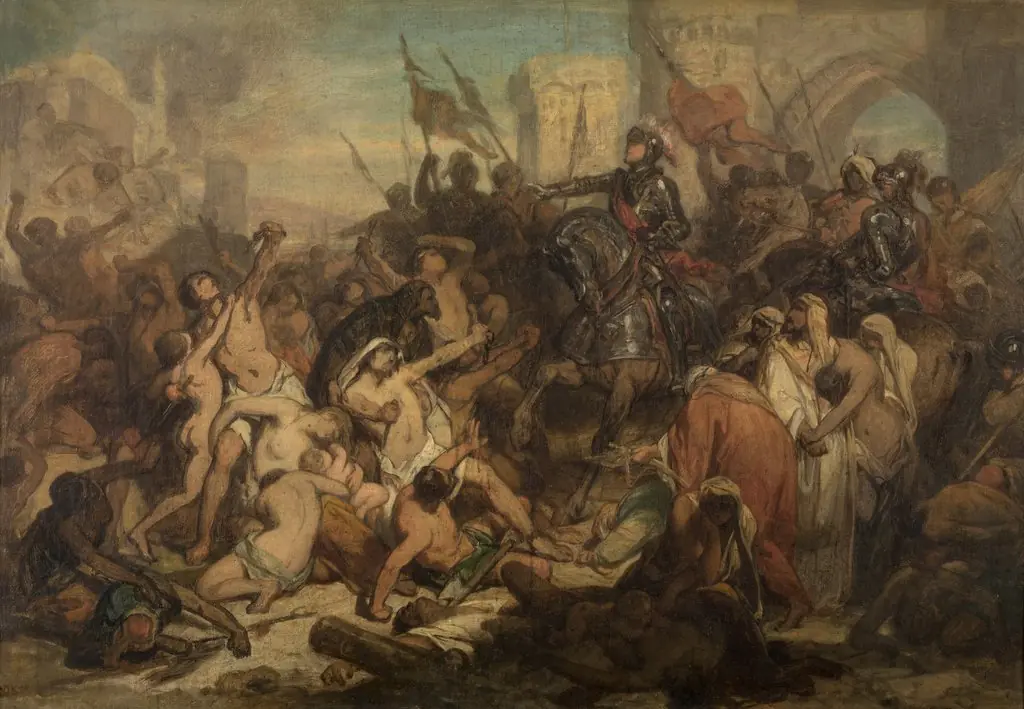 Charles V Frees the Slaves in Tunis
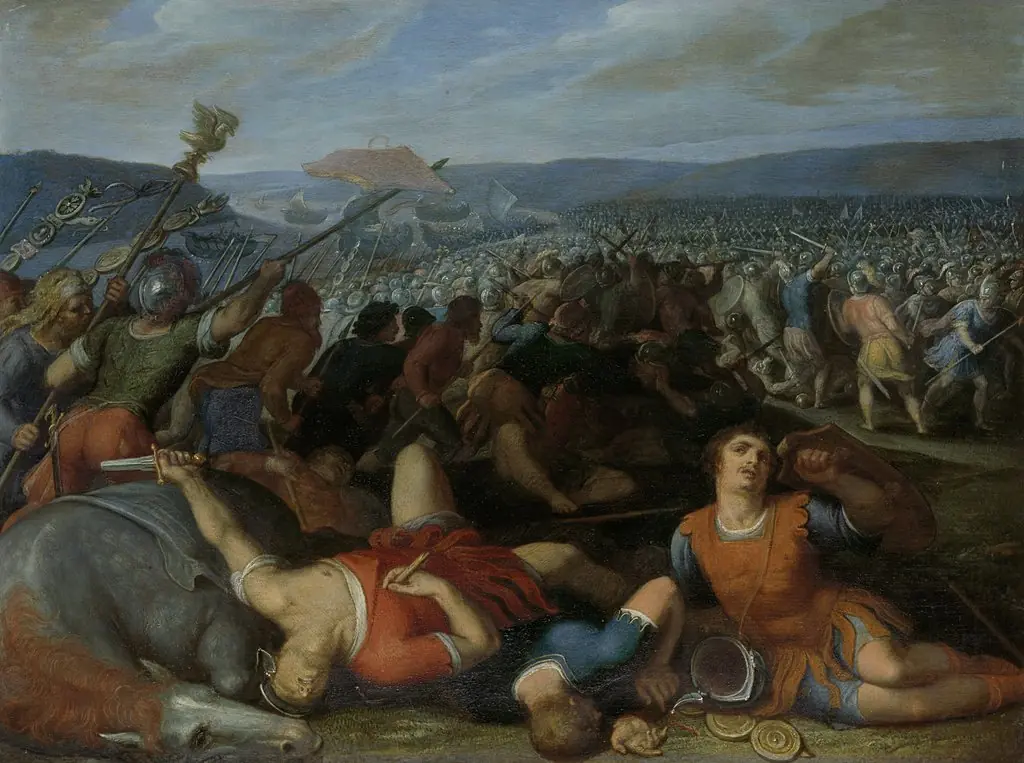 Claudius Civilis Defeats the Roman Troops near the Rhine in 69 AD
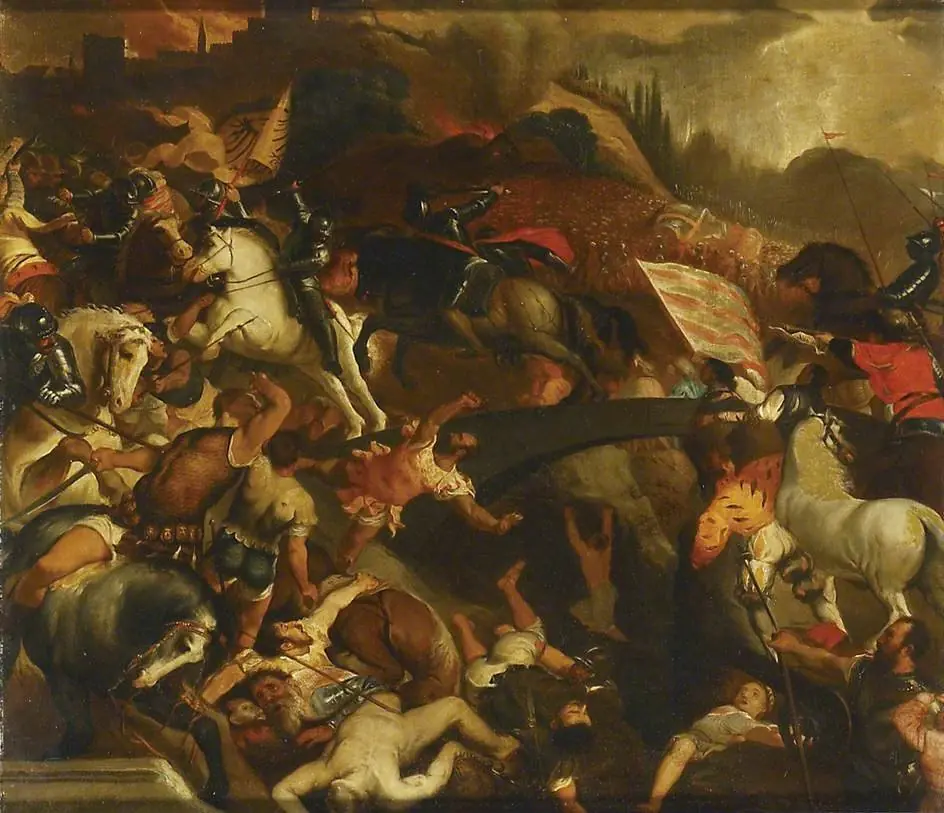 The Battle of Cadore
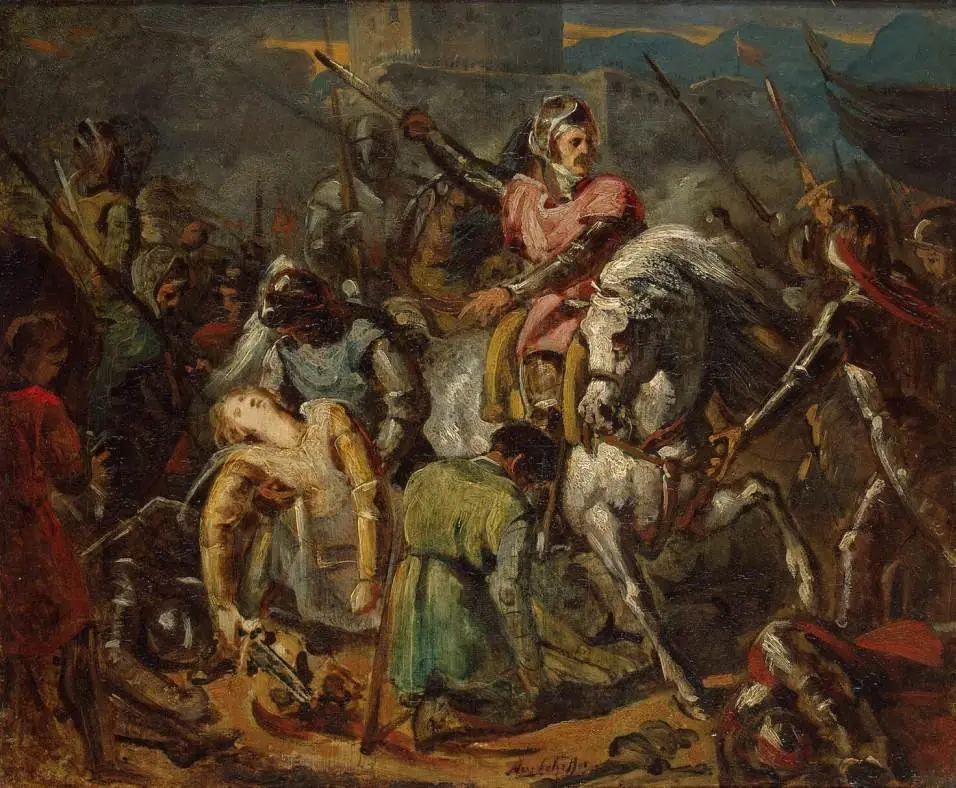 Death of Gaston de Foix in the Battle of Ravenna on 11 April 1512
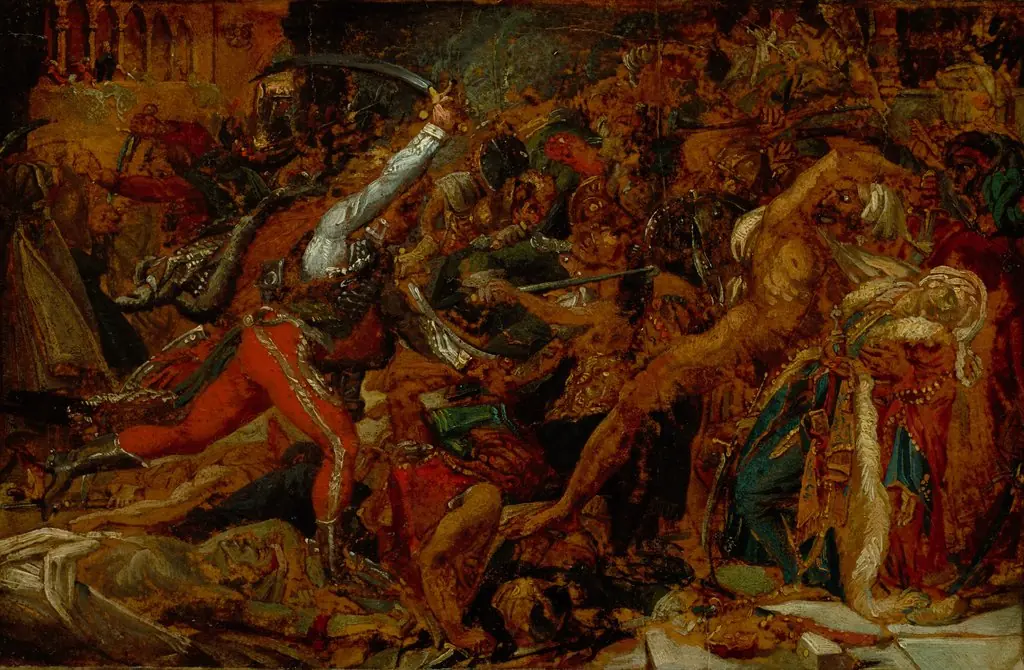 Sketch for "The Revolt at Cairo"
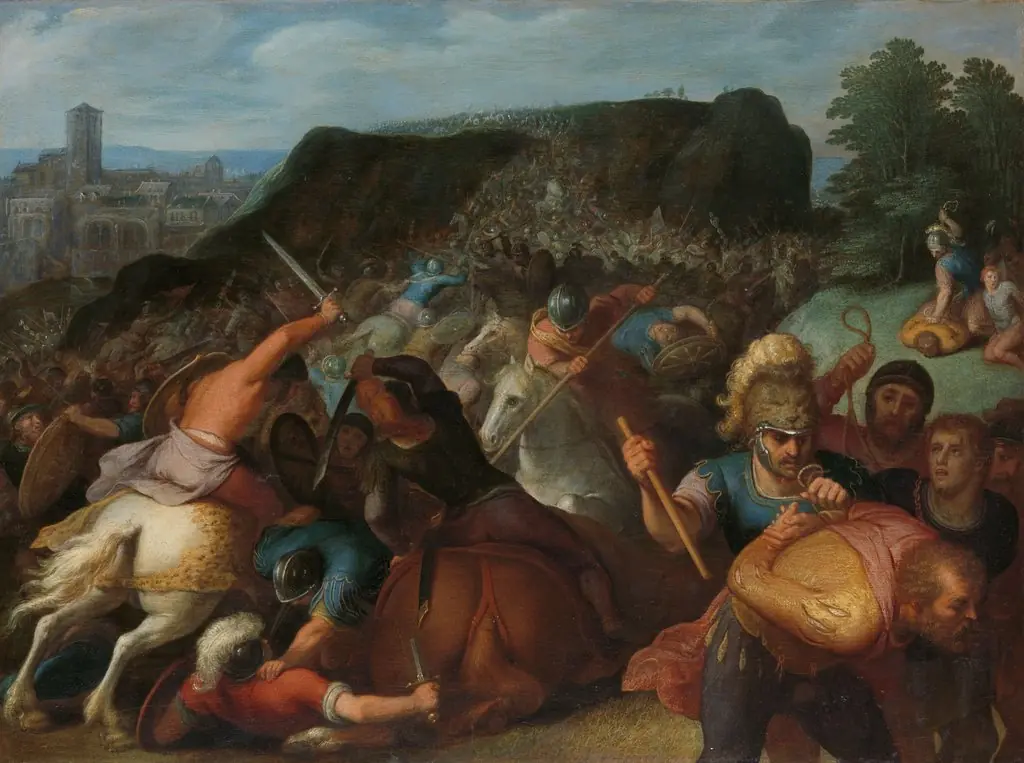 Valentinus Is Taken Prisoner
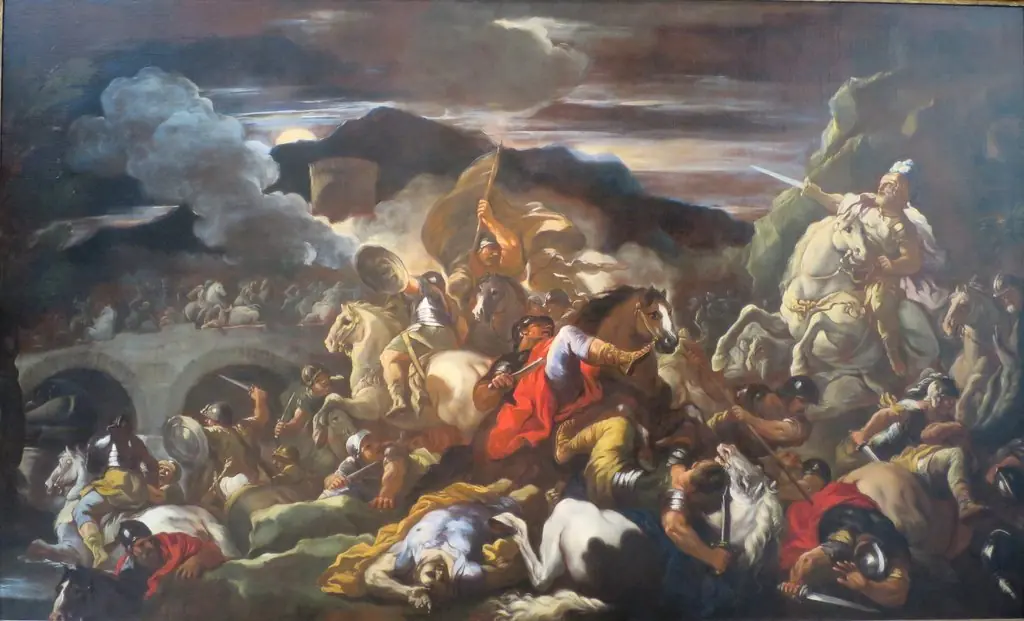 A Battle Scene
 Choque de caballería
 Battle