Artwork
Portrait of a Young Woman in White
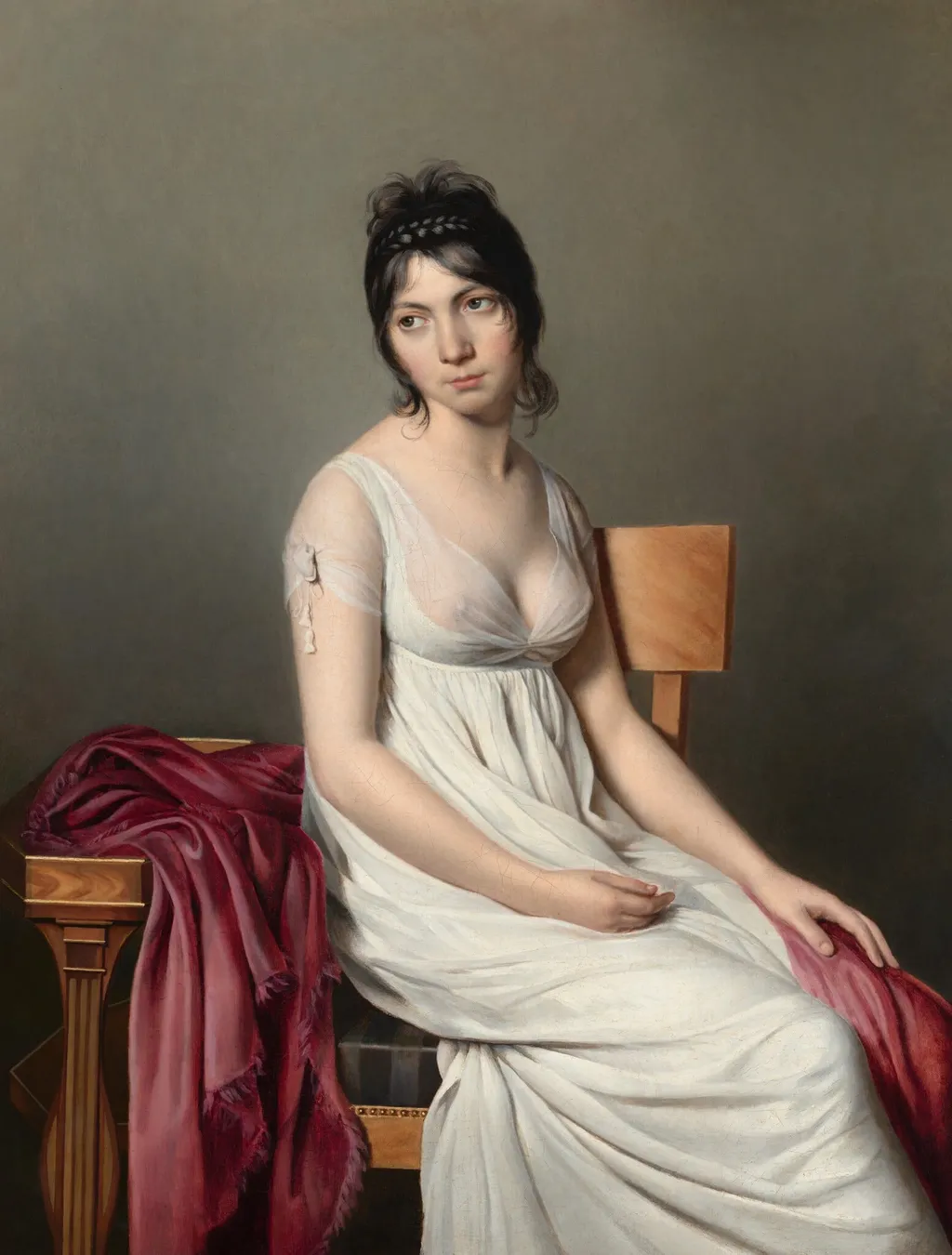
Portrait of a Young Woman in White is an oil painting by the Rococo painting artist Circle of Jacques-Louis David. It dates from 1798 and is held in the collection of the National Gallery of Art.
About this work
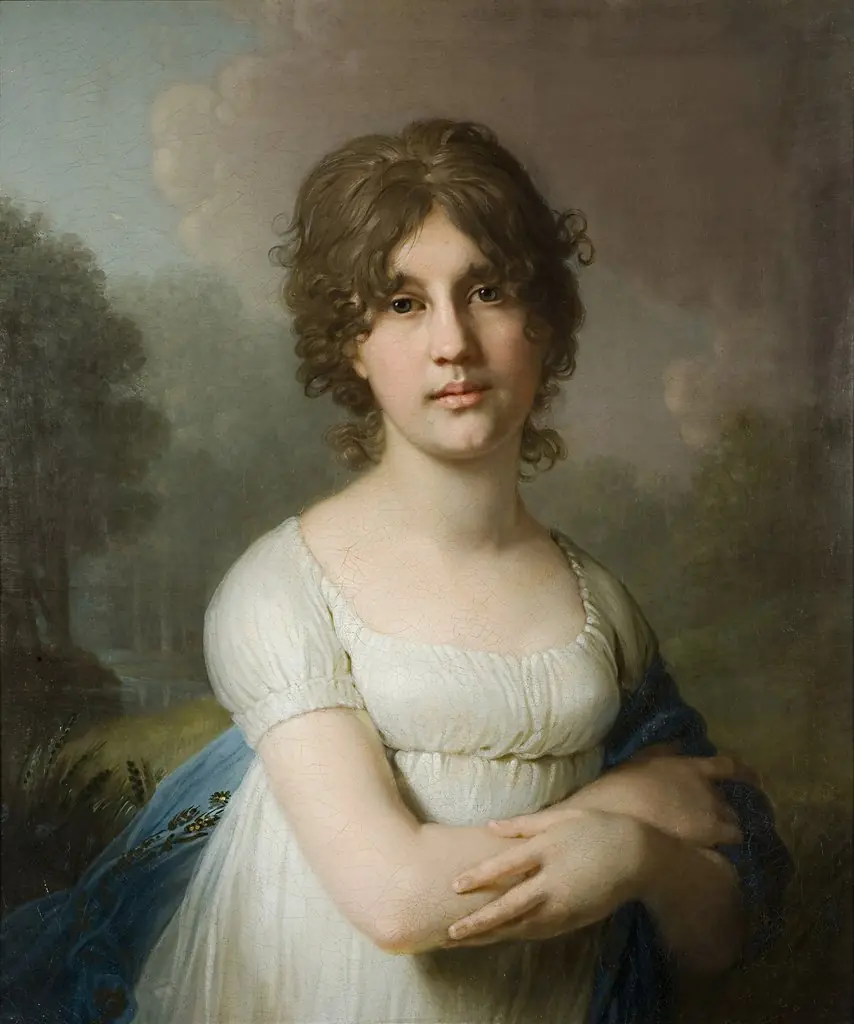
A woman in a white, high-collared dress stands against a dark ground, soft light shaping her face and hands. Painted around 1800 in a style that feels older, it went unsigned, so the maker stays unknown. The quiet detail makes her seem present and real.
Subject & Meaning
The painting presents a young woman rendered in white attire, identified in the documentary record as a portrait subject without named iconographic attributes; the work is catalogued as a portrait and is attributed to the circle of Jacques‑Louis David, suggesting a neoclassical context, though the sources do not elaborate on specific symbolic meanings beyond the depiction of a female sitter. The subject’s identity remains unspecified, and the composition functions primarily as a representational portrait rather than an allegorical or emblematic image.
Technique & Style
The composition focuses on a female figure dressed in white, a subject treatment consistent with the portraiture genre of the period.
Executed in 1798, this portrait is an oil painting on canvas support. The work measures 125.5 centimeters in height by 95 centimeters in width. Stylistically, the piece is attributed to an anonymous artist operating within the circle of Jacques-Louis David, suggesting a formal approach aligned with late eighteenth-century French Neoclassicism.
The composition focuses on a female figure dressed in white, a subject treatment consistent with the portraiture genre of the period. While the specific handling of the brushwork and the current physical condition of the paint layer are not detailed in the available records, the material construction remains standard for the era, utilizing traditional oil pigments applied to a woven textile ground.
History & Provenance
The work titled Portrait of a Young Woman in White, an oil on canvas painting dated 1798, is attributed to an anonymous artist within the circle of Jacques‑Louis David. Its recorded provenance begins with acquisition by the Paris dealers E. Gimpel & Wildenstein, who sold it in 1914 to Louisine Waldron Elder, later Mrs. Henry Osborne Havemeyer. Following her death, the portrait appeared in the estate sale of Mrs. Havemeyer at the American Art Association in New York on 10 April 1930 (lot 79) and was purchased by Chester Dale; Dale subsequently bequeathed the painting to the National Gallery of Art in 1963.
The early ownership history remains uncertain, with conflicting accounts involving Wildenstein, Miss Cassatt, and a Paris dealer, but no definitive commission record exists.
Portrait of a Young Woman in White is part of the National Gallery of Art’s collection in Washington, D.C., having entered the museum by bequest from Chester Dale in 1963. The painting’s provenance traces to E. Gimpel & Wildenstein, Paris, who sold it to Louisine Waldron Elder in 1914, and subsequently to the Havemeyer family; Dale acquired it from that estate sale in 1930. The work’s early history remains uncertain, with conflicting accounts documented in the Chester Dale papers.
The work was featured in the 1993 Metropolitan Museum of Art exhibition “Splendid Legacy: The Havemeyer Collection,” catalogue no. 180, providing one of the few public viewings of the piece.
Context
The painting has been attributed to the circle of Jacques-Louis David, placing it within the orbit of Neoclassicism at the close of the eighteenth century. Its early provenance is undocumented and contested: two divergent accounts preserved in the Chester Dale papers, one supplied by Wildenstein Inc. and another by the Paris dealer Etienne Bignou, offer incompatible histories involving the collectors Sigismond Bardac, Mr. Levy, and a Mr. Gardner, with Mary Cassatt reportedly advising Mrs. Havemeyer on the purchase. Scholars including Alice Cooney Frelinghuysen addressed the work in the 1993 exhibition catalogue Splendid Legacy: The Havemeyer Collection, cataloguing it as no. 180 and noting that Gimpel & Wildenstein acquired it from an unknown source in 1914 before selling it to Louisine Havemeyer.
The attribution to a follower of David rather than to David himself reflects ongoing uncertainty about authorship, and the painting's documented trajectory through Gimpel & Wildenstein, the Havemeyer estate, and Chester Dale situates it within major early-twentieth-century American collections.
Legacy
The portrait entered the National Gallery of Art in 1963 via the bequest of Chester Dale, having previously passed through the Havemeyer collection and a 1914 transaction with Gimpel & Wildenstein; its documented history was detailed in the Met’s 1993 exhibition catalogue Splendid Legacy, which highlighted its significance within the neoclassical tradition. The work is classified in Wikidata as a painting by an anonymous follower of Jacques‑Louis David, reflecting its stylistic alignment with early nineteenth‑century French portraiture. These provenance milestones and scholarly attention have contributed to the painting’s enduring reputation as a representative example of the period’s portrait genre.
Overview
This oil on canvas, titled Portrait of a Young Woman in White, dates to approximately 1800. It depicts a woman dressed in a simple white gown set against a dark, undefined background. The artist's approach emphasizes a sense of quiet realism, rendering the subject with a subdued elegance that transcends its period. The painting's unsigned status leaves the creator's identity unknown.
Artist & collection

- Portrait of Constance Pipelet
 Portrait of Constance Pipelet
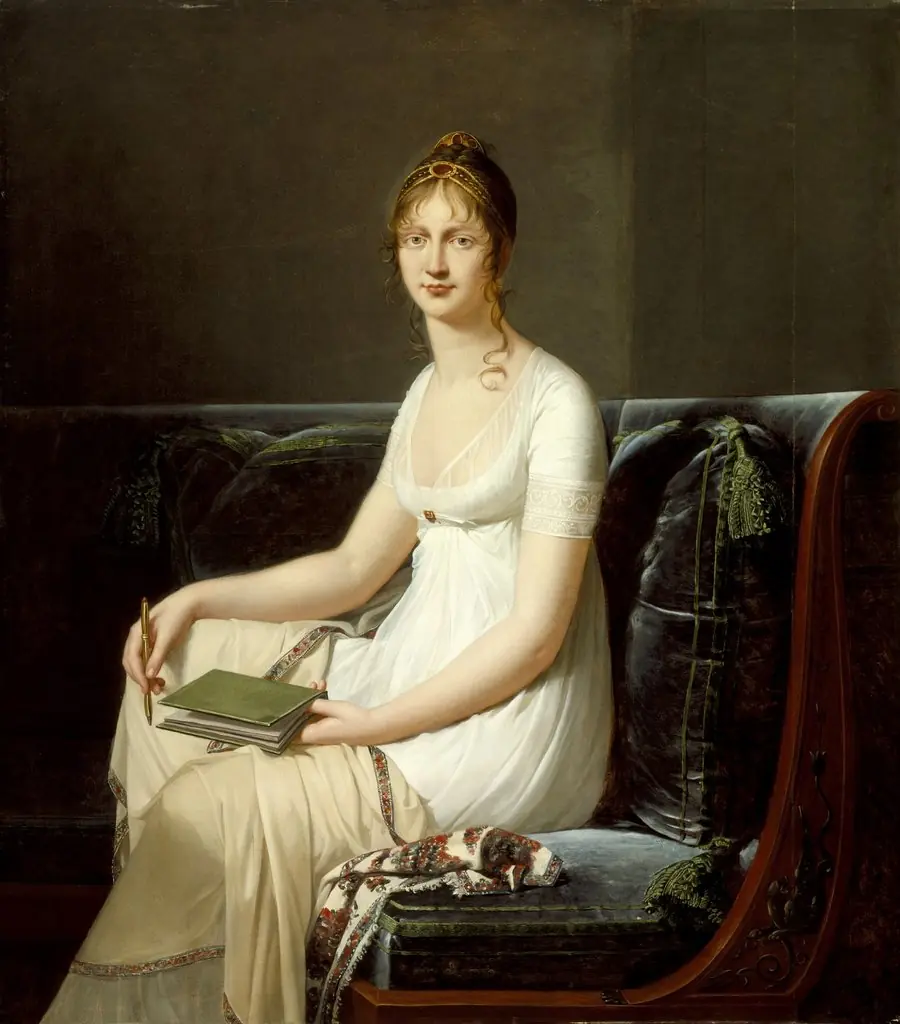 Portrait of a Woman Holding a Pencil and a Drawing Book
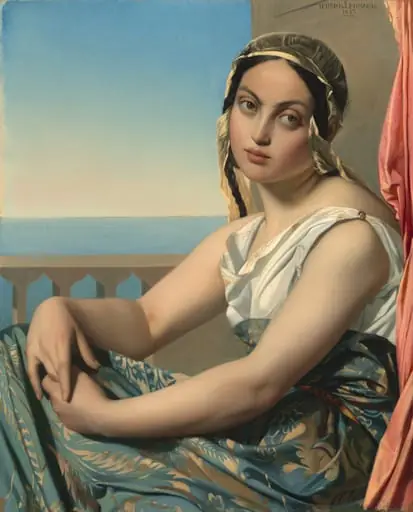 Woman of the "Orient"
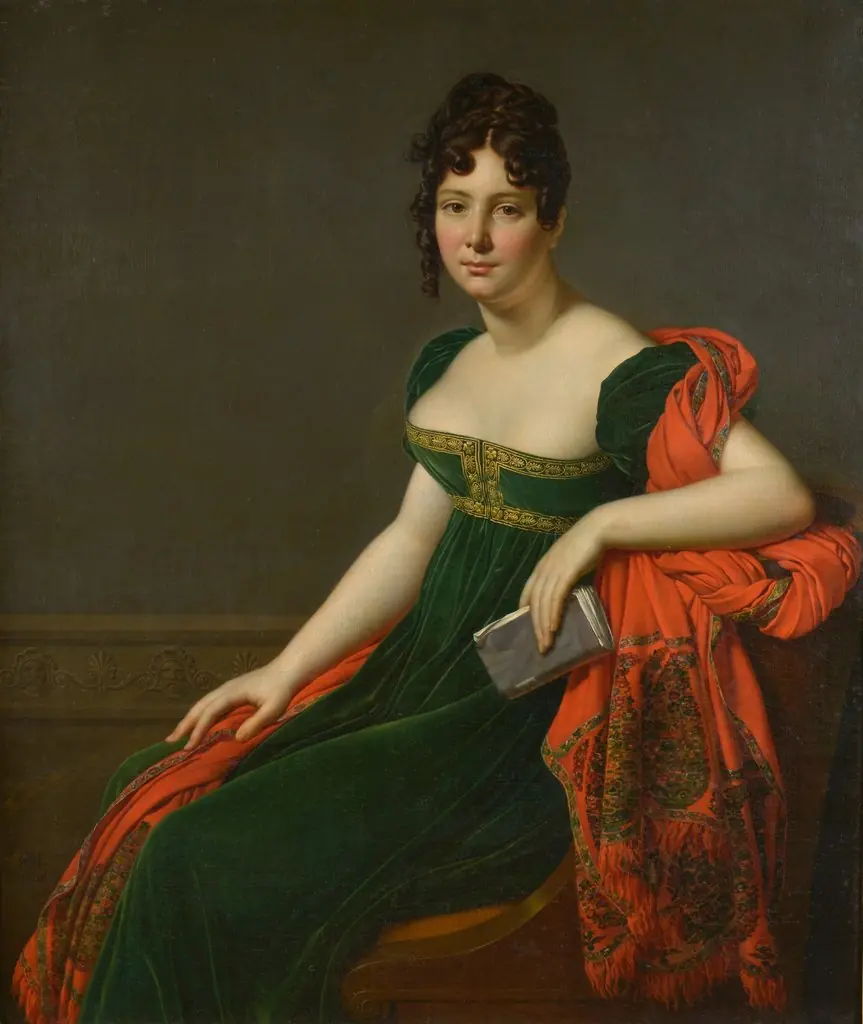 Portrait of Madame Augustine Bertin de Veaux
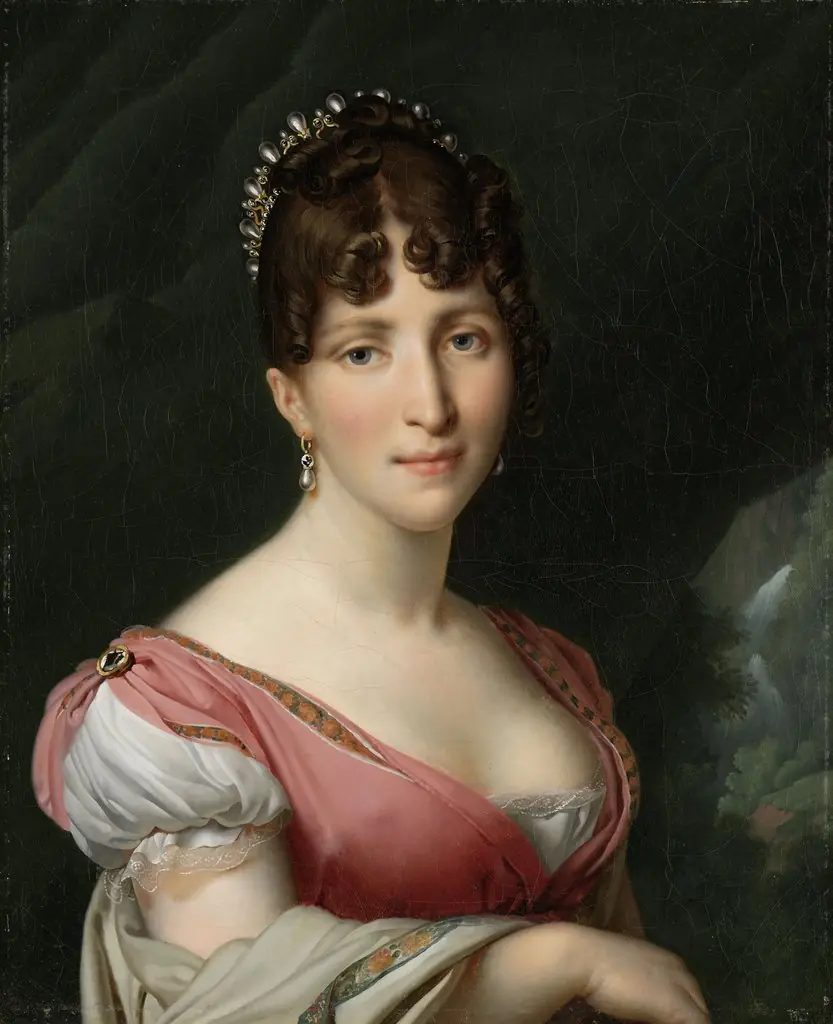 Portrait of Hortense de Beauharnais, Queen of Holland
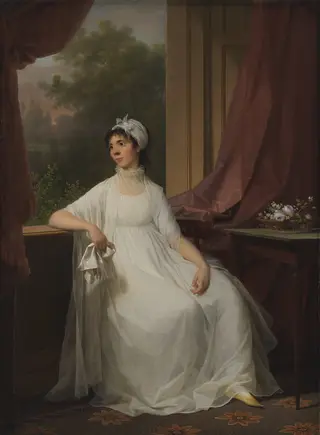 Portrait of Gertrud Hage, née Heitmann
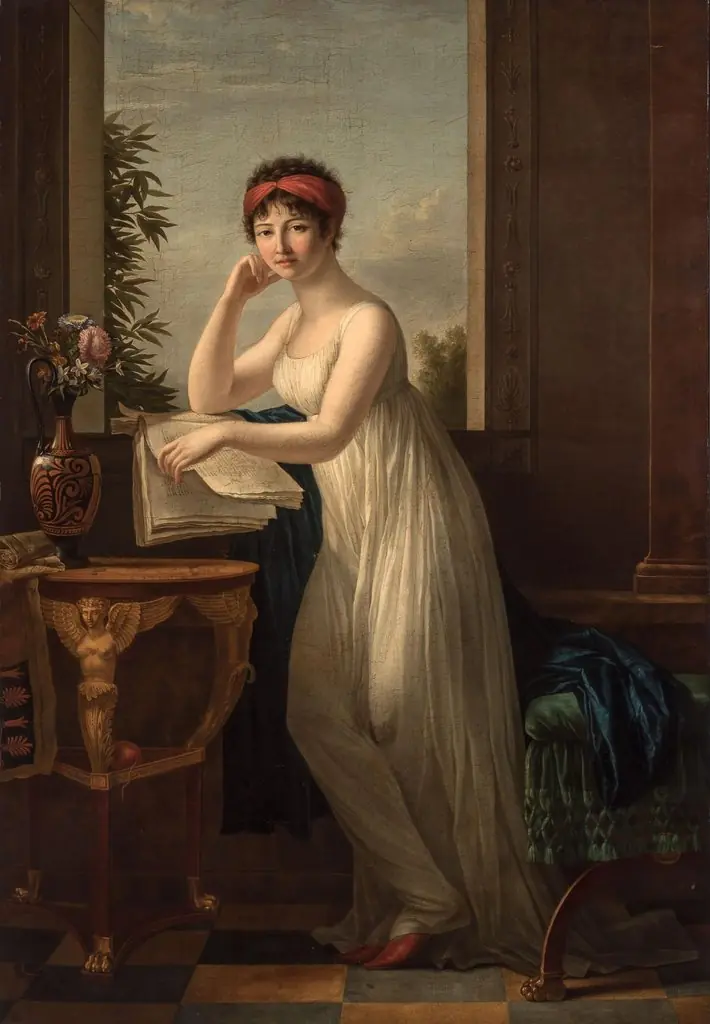 A Young Woman Leaning on the Edge of a Window
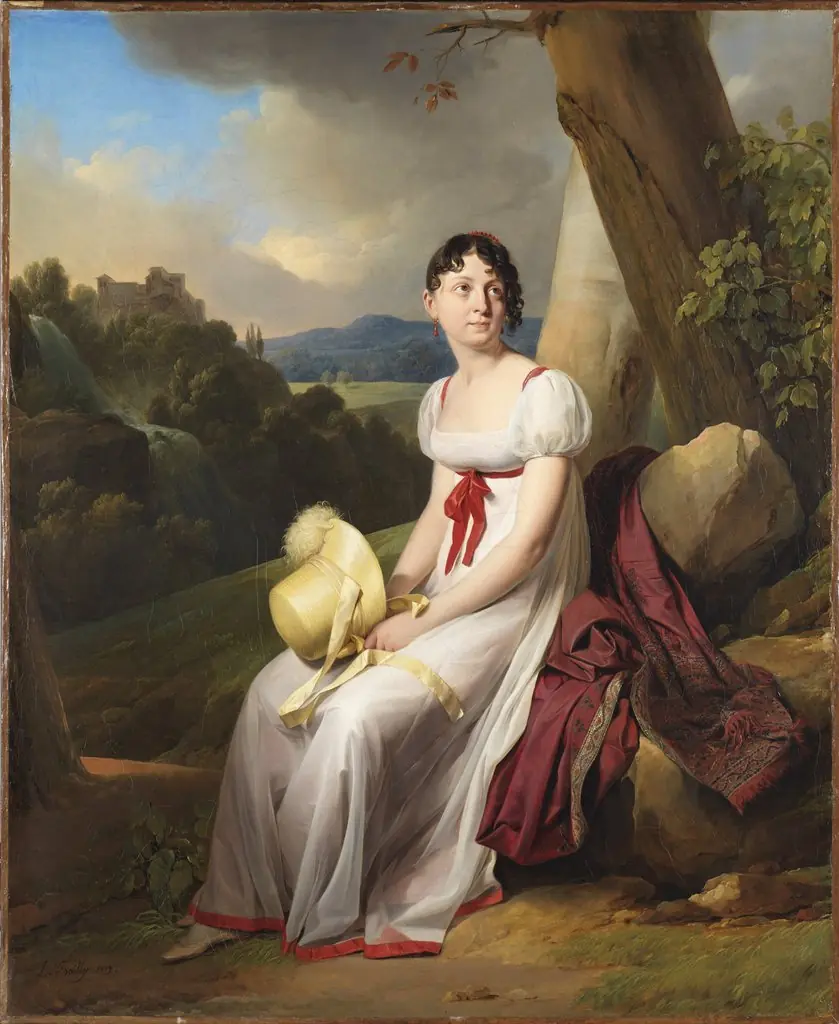 Madame Saint-Ange Chevrier
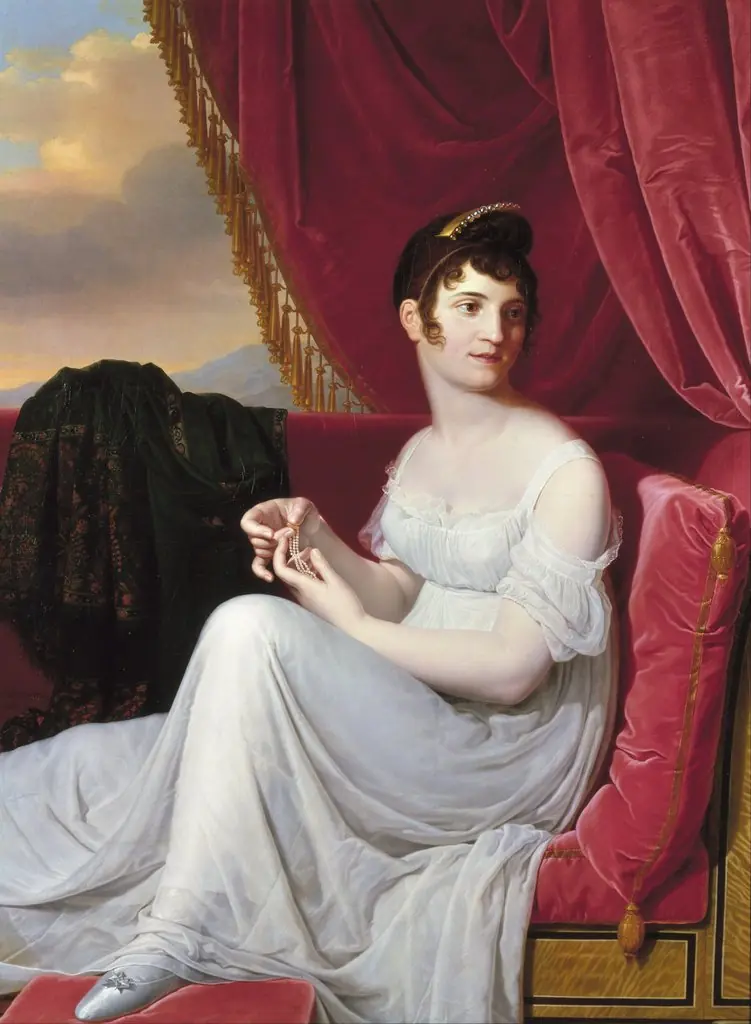 Portrait of Madame Tallien
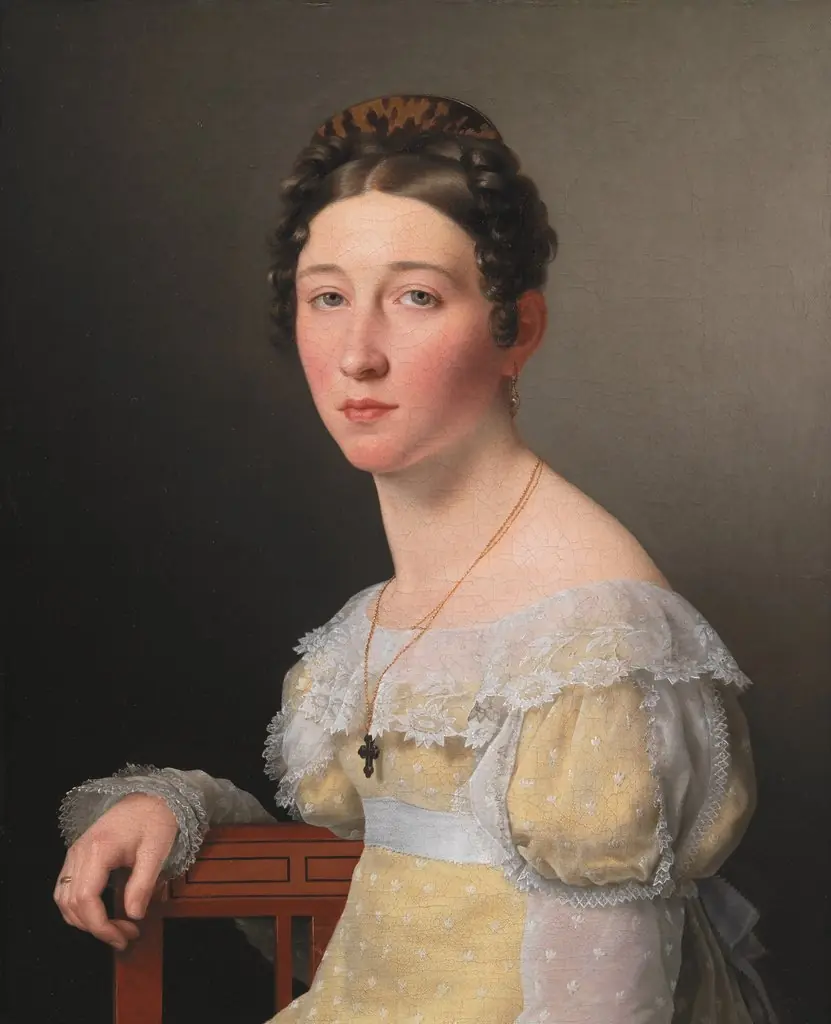 Emilie Henriette Massmann, gift 1824 med kammerjunker Frederik Wilhelm Caspar von Benzon
 La Princesse Catherine Gavrilowna Gagarine