Artwork
The Card Players
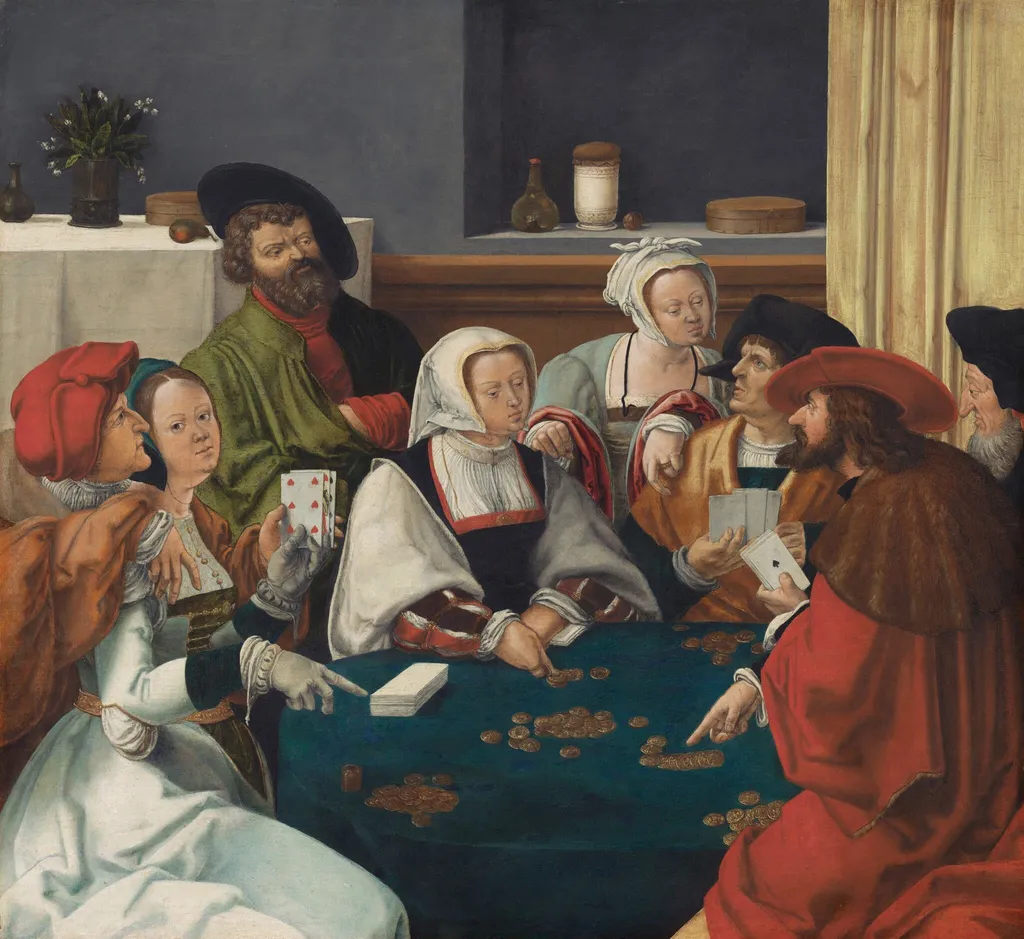
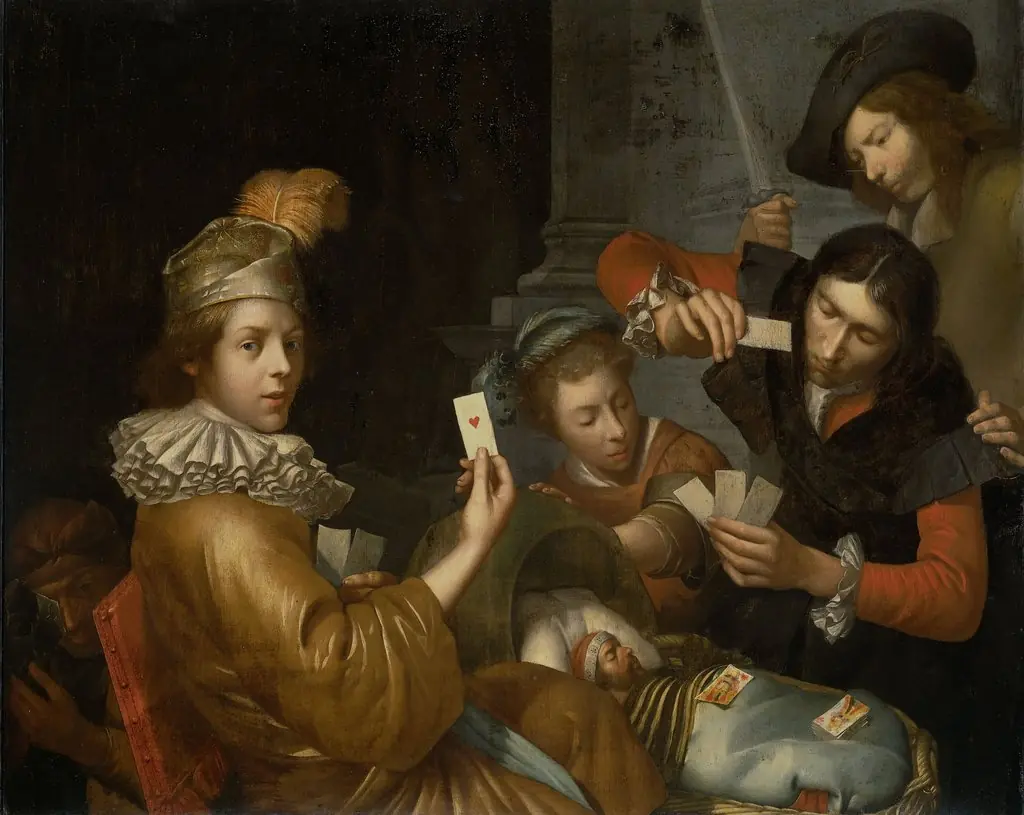
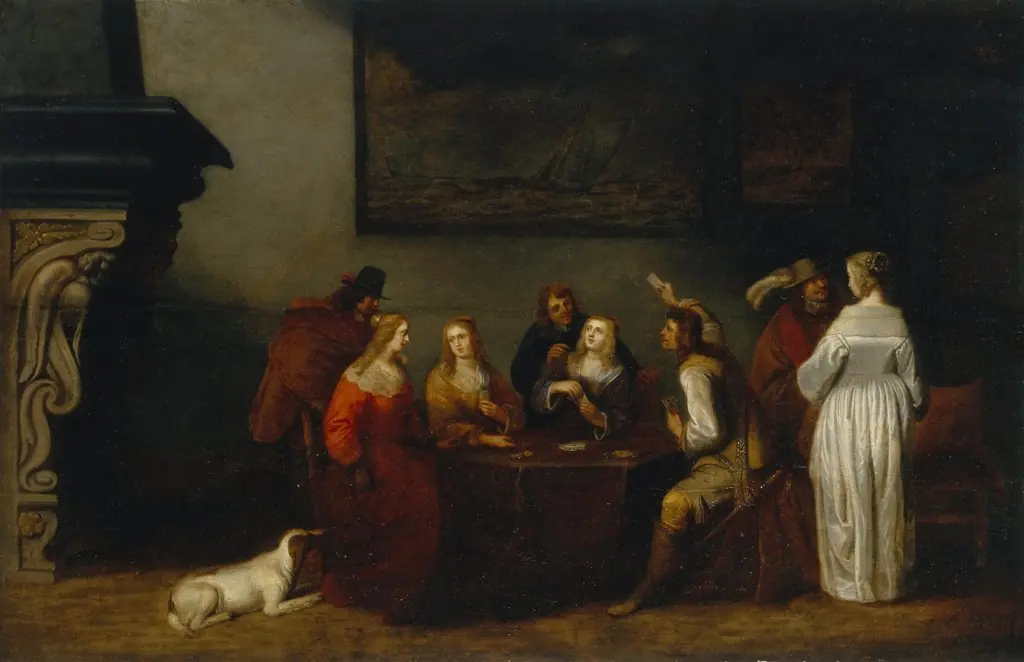
The Card Players is an oil painting by the Mannerist artist after Lucas van Leyden. It dates from 1574 and is held in the collection of the National Gallery of Art.
About this work
Technique & Style
Kress Collection, and its recorded history reflects a long-standing attribution to Lucas van Leyden before the work was reclassified as by an anonymous artist.
The Card Players is executed in oil on panel, a support typical of Northern European painting of the period. The composition is contained within a modest format measuring 55.2 cm in height by 60.9 cm in width. The work is classified as a genre scene, depicting figures engaged in card play in a manner consistent with Netherlandish traditions of the sixteenth century.
The painting has entered the collection of the National Gallery of Art in Washington, D.C., as part of the Samuel H. Kress Collection, and its recorded history reflects a long-standing attribution to Lucas van Leyden before the work was reclassified as by an anonymous artist.
History & Provenance
The painting, dated 1574, passed through a succession of dealers and private owners before entering the National Gallery of Art. Recorded with the Van Diemen Gallery in Berlin by 1923, it was offered at Christie's in London on 20 May 1926 (lot 269), catalogued as a work by Lucas van Leyden, and purchased by the firm of Asscher and Welker. Galerie Julius Bohler in Munich acquired the panel on 19 November 1928.
By 1935 it was consigned to the Tomas Harris Gallery in London, which exhibited it in that year's Exhibition of Early Flemish Paintings. It subsequently entered a private Swiss collection by 1945, when it was lent to the Kunstmuseum Basel. Frederick Mont of New York handled the work in 1951, selling it on 18 October to the Samuel H. Kress Foundation, which in 1961 donated it to the National Gallery of Art in Washington, D.C., as part of the Kress Collection. It is recorded there under accession number 1961.5.1.
Context
The 1574 oil on panel genre scene known as The Card Players was long attributed to Lucas van Leyden in early twentieth-century scholarship, though its authorship remains debated and it is now catalogued as the work of an anonymous artist. After passing through a series of dealers and private collections in Berlin, London, Munich, and Switzerland, it entered the Samuel H. Kress Collection in 1951 and was gifted to the National Gallery of Art, Washington, D.C., in 1961, where it is now held.
Legacy
The Card Players has been recognized as an influential early genre painting that shaped later depictions of peasant life and domestic scenes. Its composition and rendering informed subsequent artists in the Netherlands and beyond, contributing to the development of genre painting in the 17th century. The work's attribution history, including early misattributions to Lucas van Leyden, underscores its significance in art historical scholarship.
The painting's presence in major collections and exhibitions has reinforced its reputation as a key example of Dutch Renaissance art.
Overview
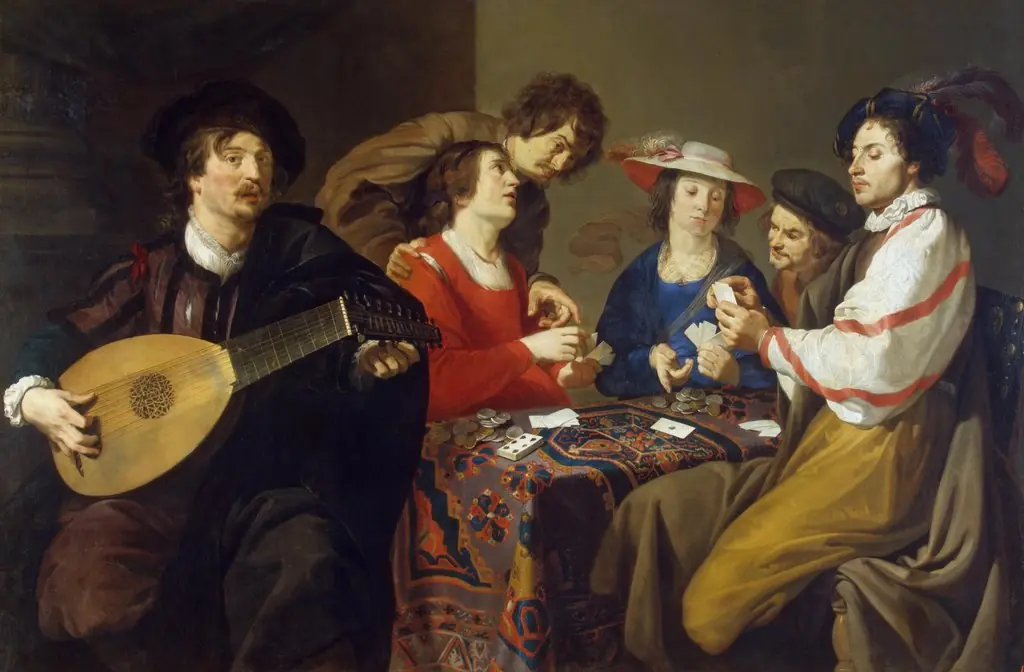
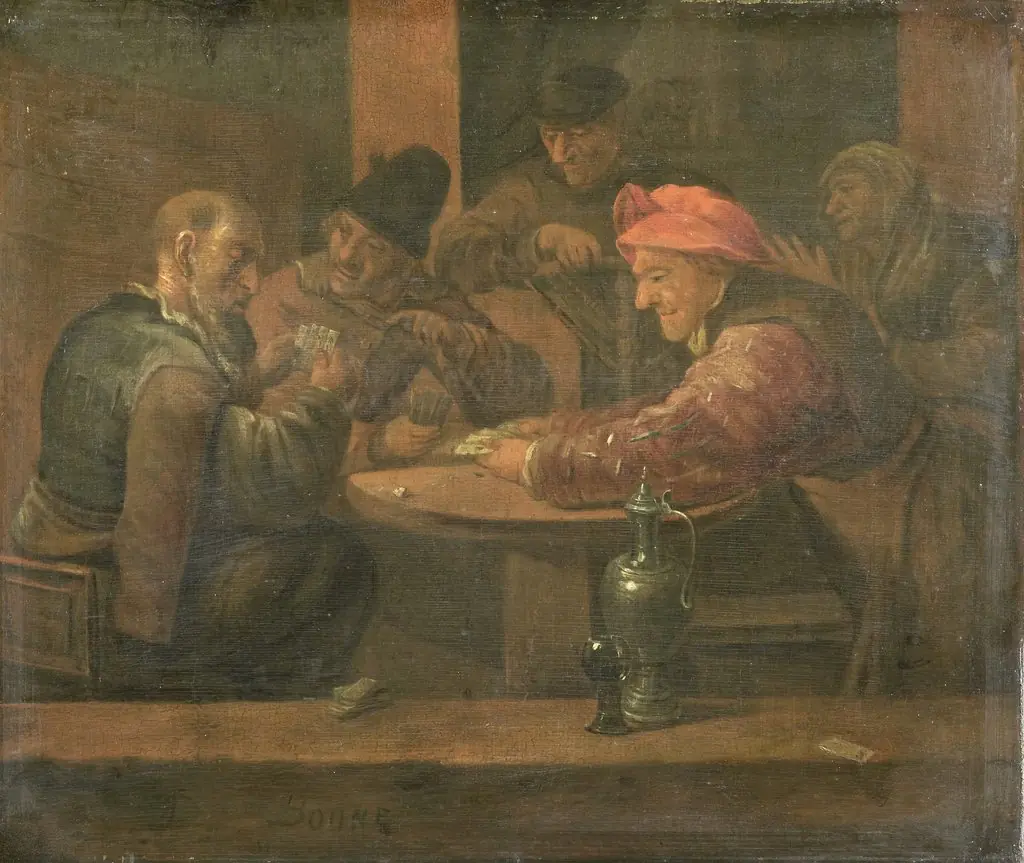
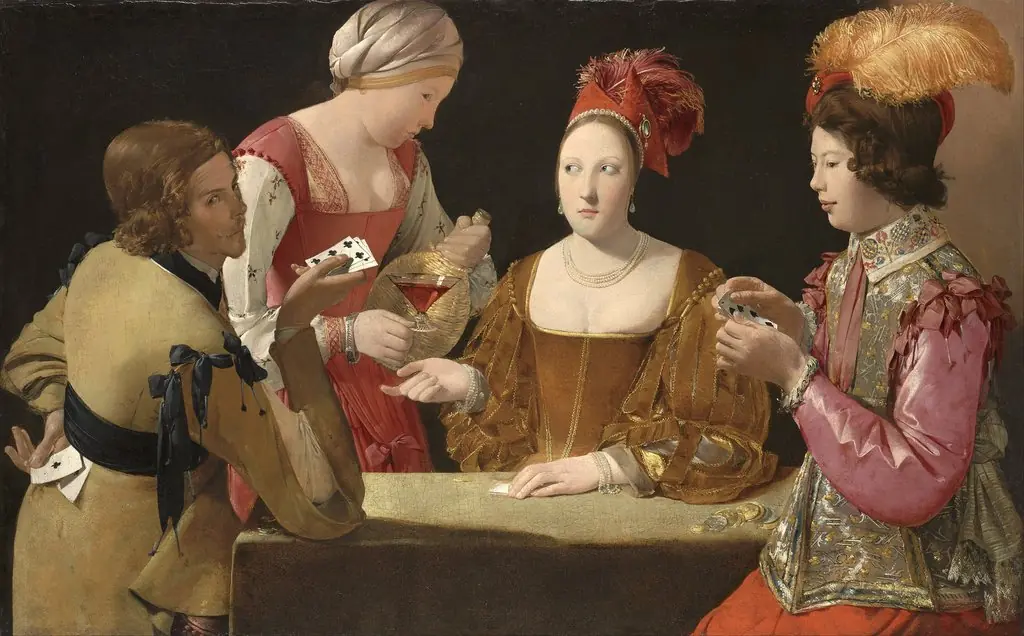
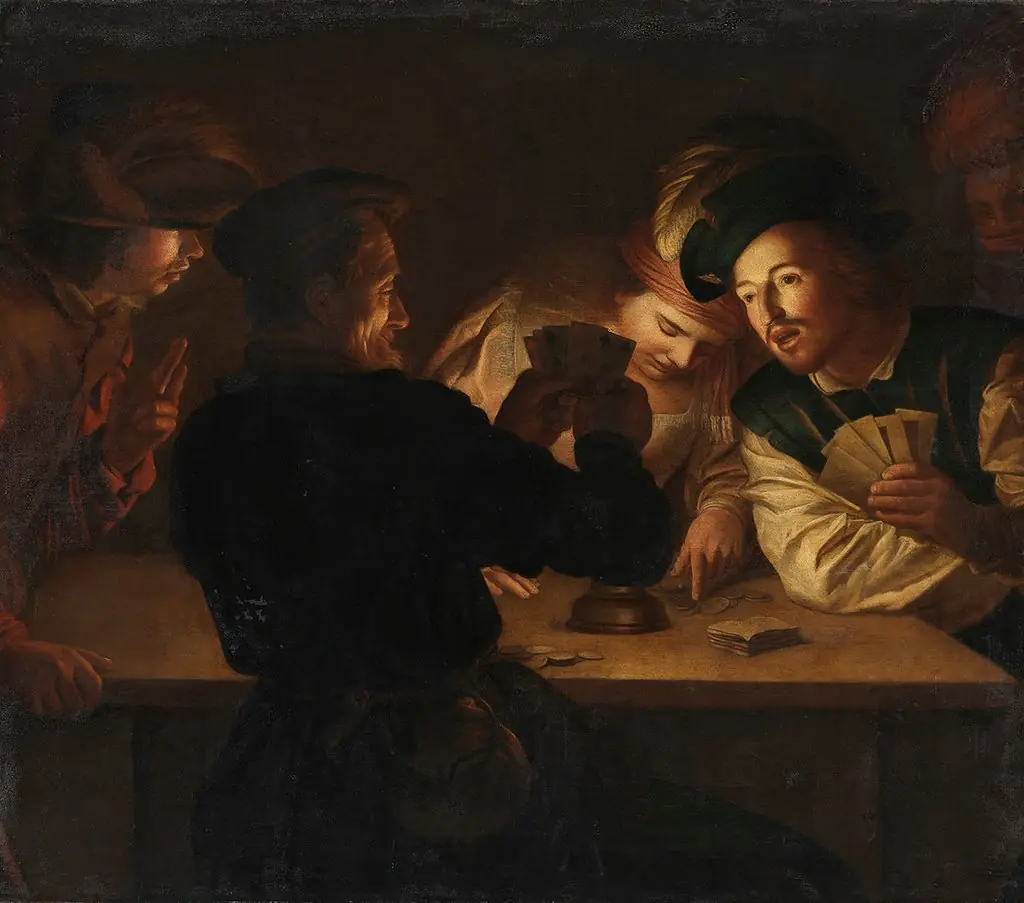
The work titled The Card Players is an oil painting executed on a wooden panel. The composition shows several figures gathered around a low table, engaged in a card game while exchanging glances. On the tabletop lie a spread of coins and a deck of cards, and a shelf in the background holds assorted bottles and containers.
Subject & Meaning
The scene captures a moment of leisure and social interaction among individuals dressed in period attire, complete with hats and head coverings. The focus on the cards and the shared attention among the players suggests themes of chance, camaraderie, and perhaps the subtle tension of competition.
Artist & collection
Artist