Artwork
The Study of Art in Rome
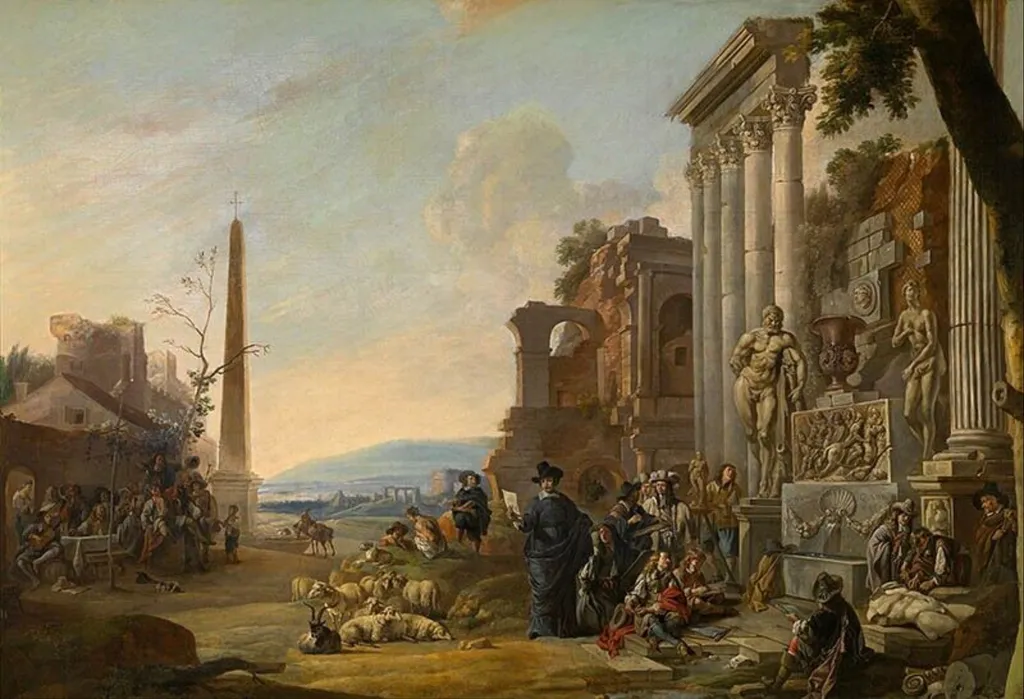
The Study of Art in Rome is an oil painting by the Flemish Baroque painting artist Anton Goubau. It dates from 1662 and is held in the collection of the Royal Museum of Fine Arts Antwerp.
About this work
Subject & Meaning
The work is part of the Royal Museum of Fine Arts Antwerp collection.
The Study of Art in Rome, painted by Anton Goubau in 1662, presents a capriccio landscape that assembles a group of Roman antiquities and contemporary artistic symbols. The canvas includes the Bentvueghels' emblematic gathering, the Farnese Hercules, the Capitoline Venus, an obelisk, a fountain, a vase, relief sculpture, a sketchbook, and a column, all rendered in oil on canvas. These elements reference the fellowship of the Bentvueghels, a society of Dutch and Flemish artists in Rome, and underscore the painter's celebration of drawing and artistic education. The work is part of the Royal Museum of Fine Arts Antwerp collection.
Technique & Style
Created in 1662, The Study of Art in Rome is executed in oil paint on a canvas support. The work measures 113.2 cm in height and 165 cm in width. Stylistically, the painting is classified as a landscape and specifically a capriccio, a genre characterized by the imaginative arrangement of architectural elements.
The composition integrates numerous classical motifs, including the Farnese Hercules, Capitoline Venus, an obelisk, a fountain, and various columns and relief sculptures. These formal elements are depicted alongside figures of the Bentvueghels, artists, and an art educator with a sketchbook, reflecting the painting's thematic focus on art education and the study of antiquity within a Roman setting.
History & Provenance
Anton Goubau painted The Study of Art in Rome in 1662, an oil on canvas work measuring 113.2 × 165 cm. The painting entered the collection of the Royal Museum of Fine Arts Antwerp, listed under the museum's Vlaamse Kunstcollectie and historically associated with the Antwerp Guild of Saint Luke. Its provenance traces from creation in Rome to acquisition by the Antwerp institution. The work's subject matter includes classical ruins and antiquities, reflecting the capriccio genre popular among 17th-century Dutch and Flemish painters active in Rome.
The painting's exhibition record includes a showing in the exhibition "The Bentvueghels. A Notorious Art Society in Rome."
Overview
Anton Goubau, a Flemish Baroque painter, completed The Study of Art in Rome in 1662. This oil painting presents an Italianate landscape populated by artists and students engaged in the study of classical antiquity. The scene captures a moment of artistic education amidst ancient ruins, reflecting the importance of Rome as a center for art historical learning during the 17th century. The work is a significant example of Goubau's genre and landscape painting.
Context
Goubau's own experiences in Rome heavily influenced this work. While in the city, he was associated with the Bamboccianti, a group of Dutch and Flemish artists known for their depictions of ordinary Roman life. The Study of Art in Rome exemplifies how Goubau integrated these genre elements, such as the casual grouping of figures and the presence of sheep, into a more formalized Italianate landscape, reflecting both local customs and the classical environment.
Own this work as a print
Artist & collection
Artist
Anton Goubau or Anton Goebouw (May 1616 – 11 March 1698) was a Flemish Baroque painter.

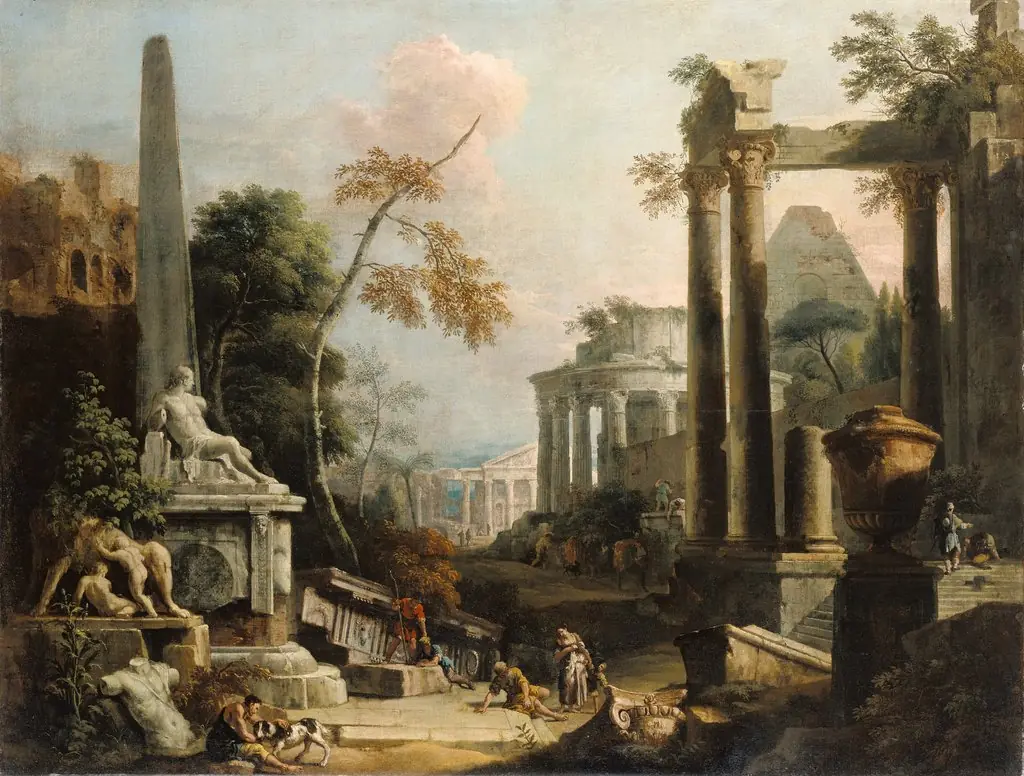 Landscape with Classical Ruins and Figures
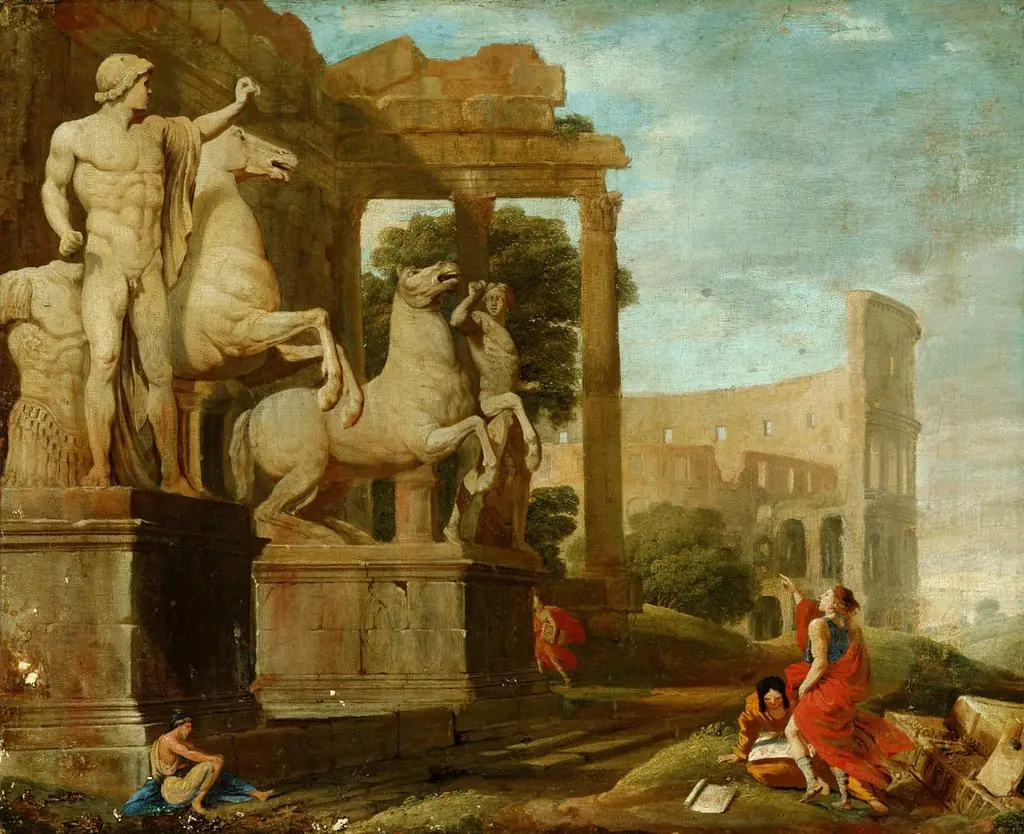 Ruinenlandschaft mit Dioskuren und Kolosseum
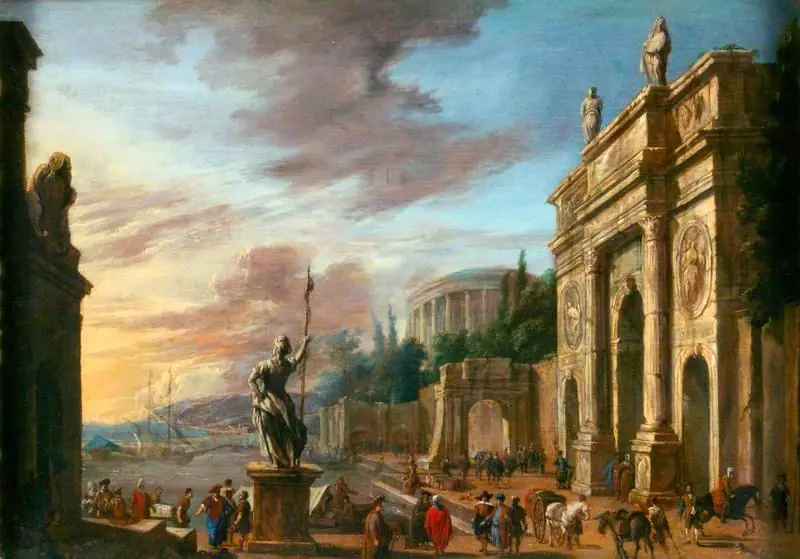 Seaport and Triumphal Arch
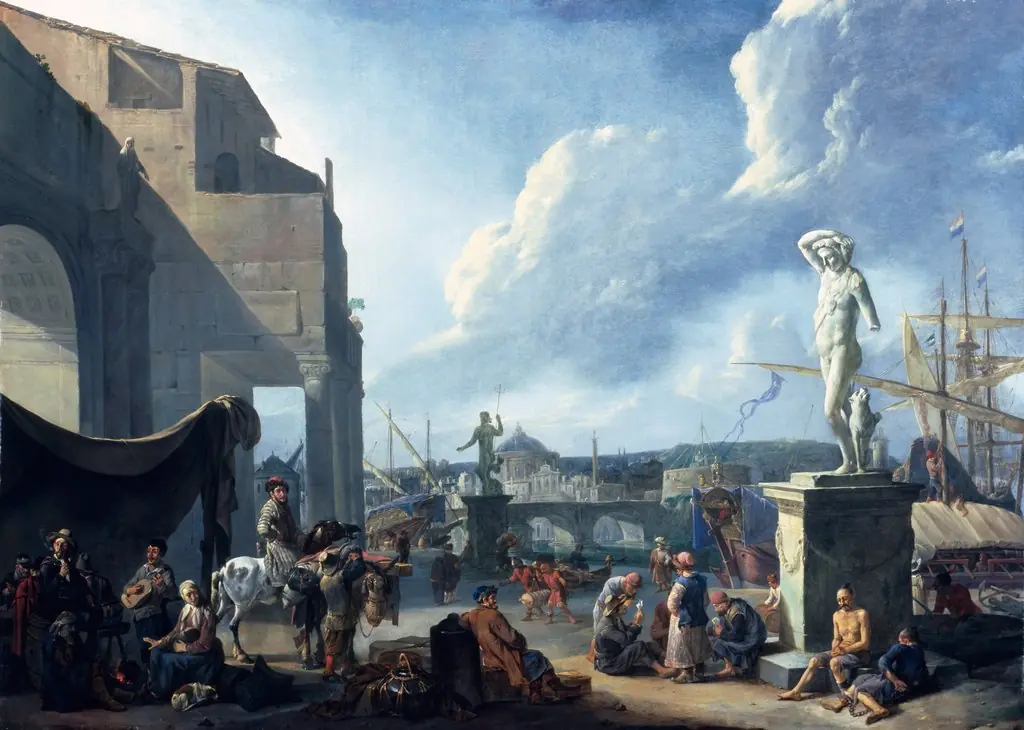 A Capriccio View of Rome with the Castel Sant'Angelo
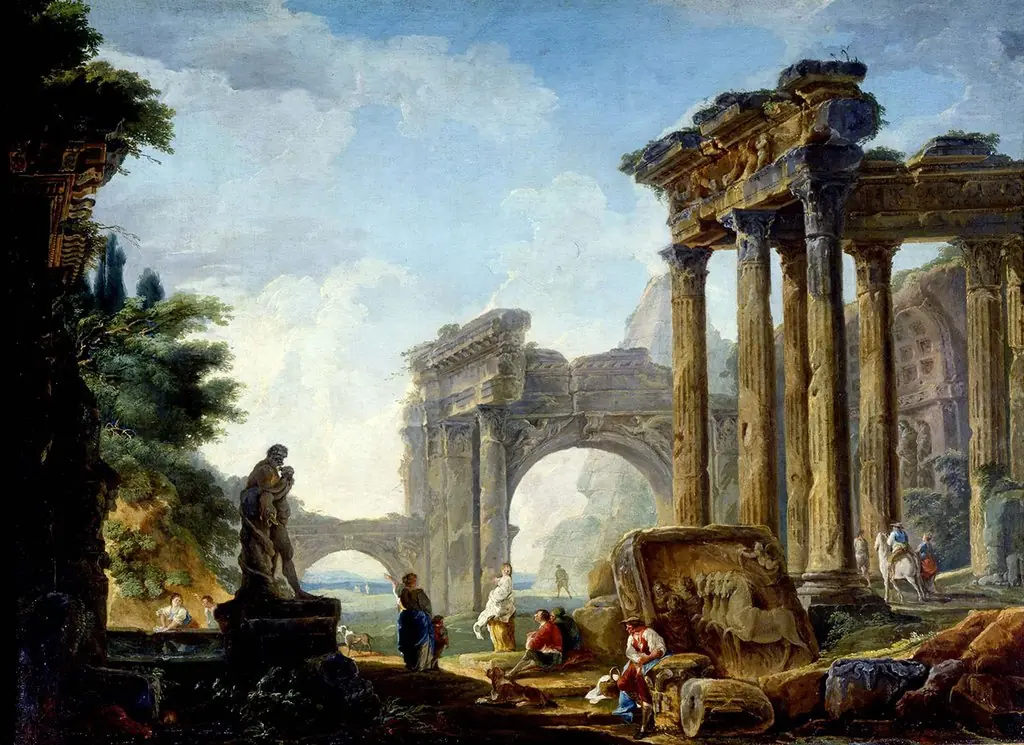 Paysage avec ruines romaines
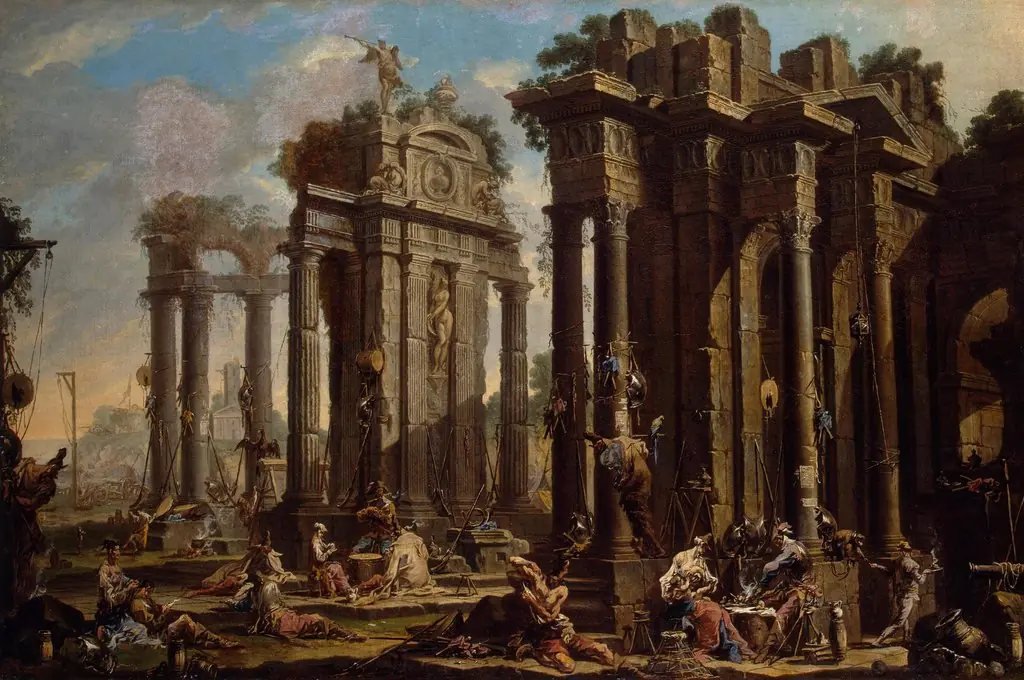 Halt of the Brigands
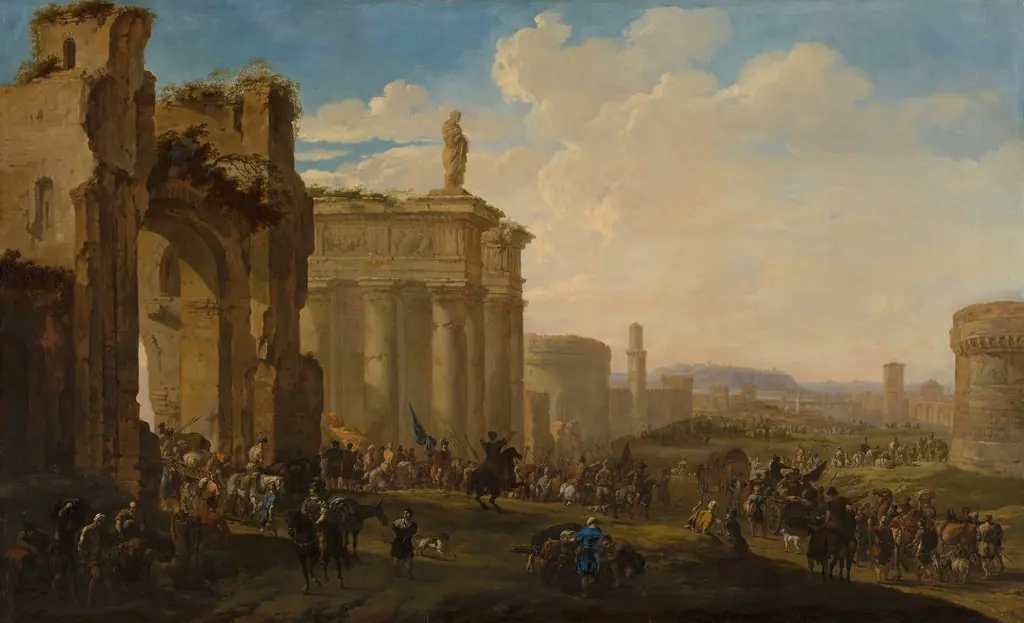 Army Advancing among Roman Ruins
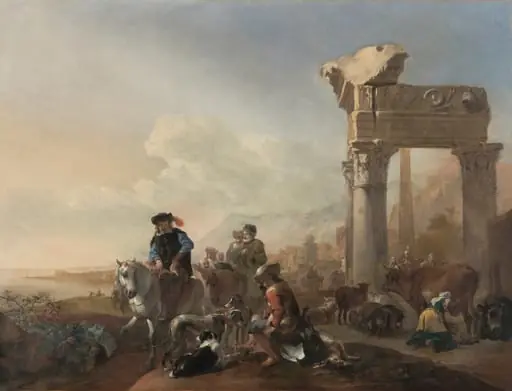 Hunters Near Ruins
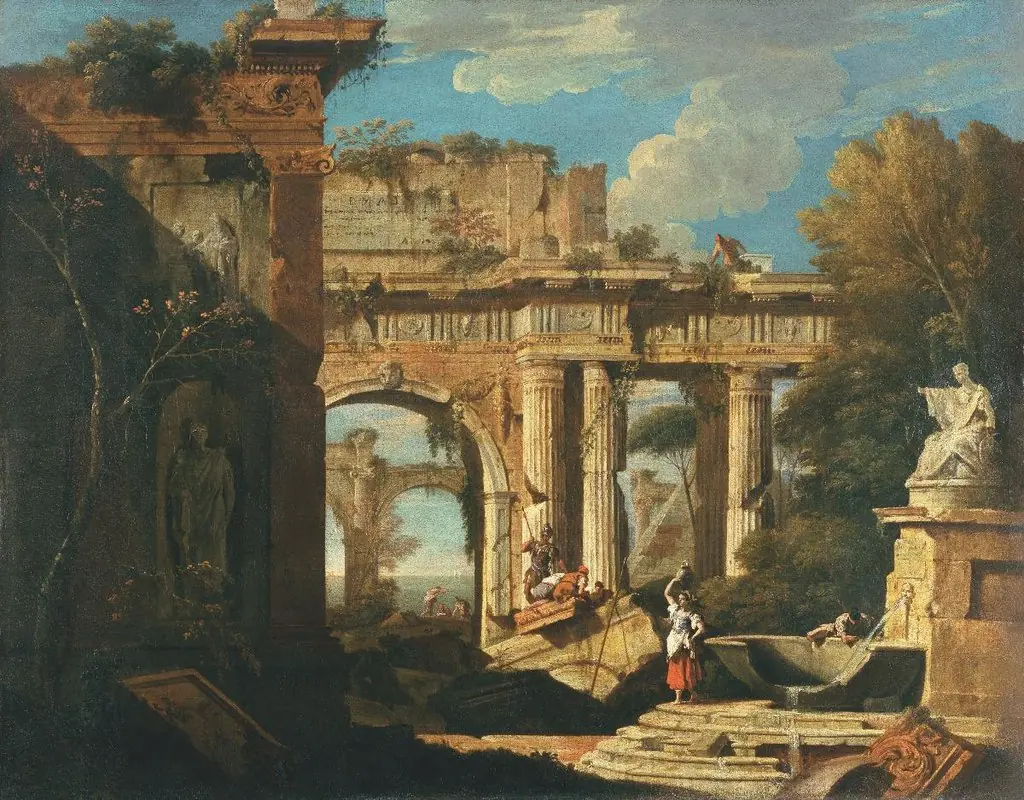 Capriccio con rovine romane
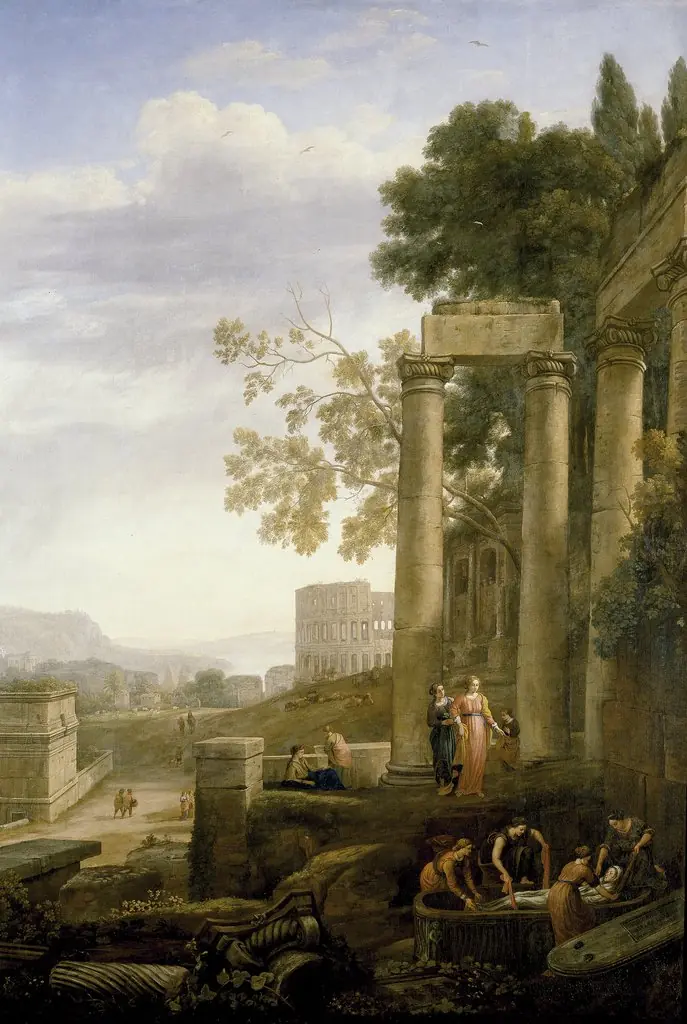 Landscape with the Burial of Saint Serapia
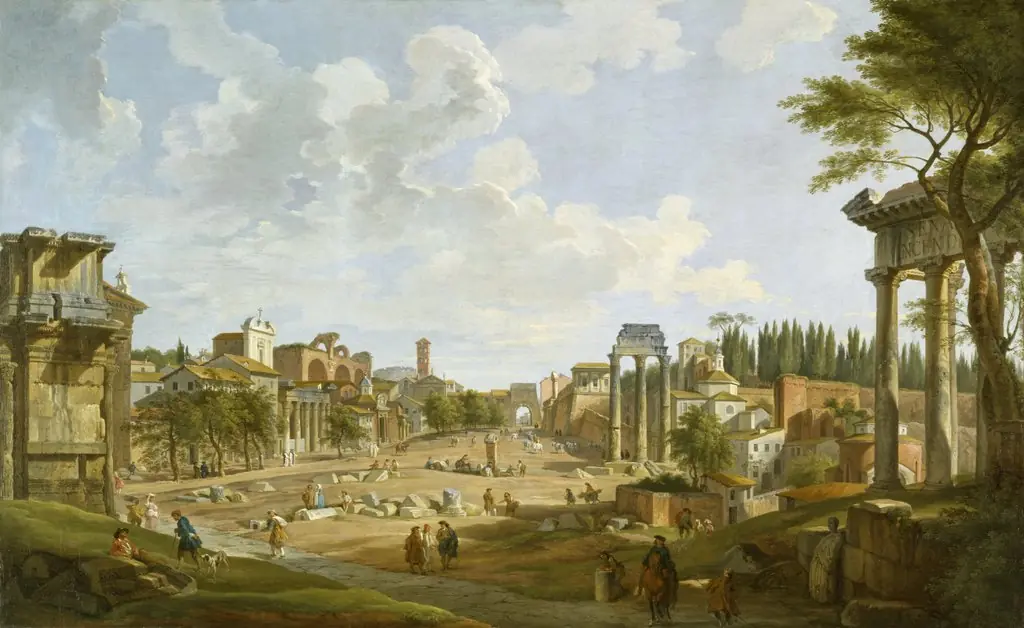 View of the Roman Forum
- View of Rome