Artwork
Landscape with the Burial of Saint Serapia
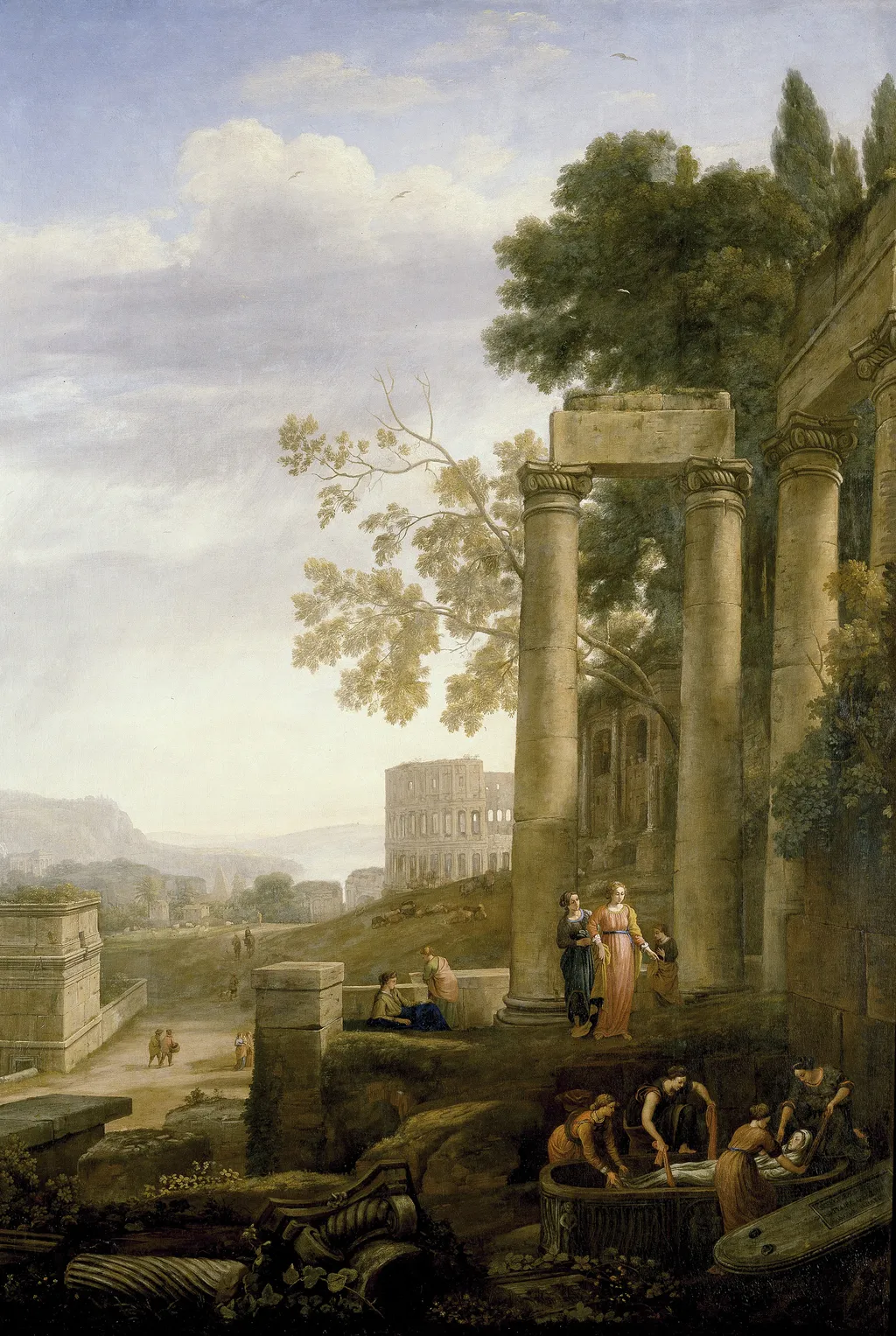
Landscape with the Burial of Saint Serapia is an oil painting by the Barbizon school artist Claude Lorrain. It dates from 1639 and is held in the collection of the Museo del Prado.
About this work
Landscape with the Burial of Saint Serapia is a painting by Claude Lorrain. It's an oil painting created in 1639.
The painting was commissioned on behalf of King Philip IV of Spain. This was one of several paintings the artist worked on for the king.
To learn more about the artist's style and techniques, look up the artist: Claude Lorrain.
Subject & Meaning
It forms a pendant to Landscape with Moses Saved from the Waters of the Nile in the Prado, the pair symbolising birth and death and the passage of time.
The painting shows the funeral of Saint Serapia, a servant of Saint Sabina, who was martyred near Terni and later associated with the Aventine Hill in Rome, where the Basilica of Santa Sabina was built. The work includes an inscription on the sarcophagus lid reading SEPVLTVRA.S.SABIN(a)... SEPELIR(e) IVBET.C.SANCTAE SERAPI(ae).
It forms a pendant to Landscape with Moses Saved from the Waters of the Nile in the Prado, the pair symbolising birth and death and the passage of time. Claude Lorrain uses his typical composition in which the human figures are reduced to a pretext, while the expansive classical landscape dominates, featuring ruins contemporary to the artist, the Colosseum, and the Tiber River.
Technique & Style
Executed between 1639 and 1640, this work is an oil painting on canvas measuring 212 cm in height and 145 cm in width. The composition exemplifies Claude Lorrain's characteristic approach, in which human figures are minimized to serve merely as a narrative pretext, allowing the landscape to dominate as a vast, majestic, and bucolic panorama. The scene is set amidst classical ruins, including the Colosseum and the Tiber River in the distance, evoking a splendid past through intense chromaticism and sophisticated atmospheric light effects.
Recorded as number 48 in the artist's Liber Veritatis, the painting functions as a pendant to a work depicting Moses, together symbolizing the passage of time through the contrasting themes of death and birth.
History & Provenance
The work was commissioned by King Philip IV of Spain to decorate the Hall of Landscapes at the Buen Retiro Palace, part of a series of landscapes produced in the late 1630s by Claude Lorrain alongside artists such as Nicolas Poussin, Gaspard Dughet, and Herman van Swanevelt. Painted in 1639–40, it remained in the Spanish royal collection before entering the Museo del Prado in Madrid, where it is catalogued as number 2252. The composition is recorded as number 48 in Lorrain's Liber Veritatis.
It measures 212 cm in height and 145 cm in width and is executed in oil on canvas. No exhibition history outside its permanent display is documented in the available sources.
Context
Commissioned by King Philip IV of Spain for the Buen Retiro Palace's Gallery of Landscapes, this work forms part of a significant series involving contemporaries such as Nicolas Poussin, Herman van Swanevelt, and Gaspard Dughet. Executed between 1639 and 1640, the painting serves as a vertical pendant to Landscape with Moses Saved from the Waters of the Nile; together, they symbolize the passage of time through the contrasting themes of birth and death. The iconographic program, selected from biblical and hagiographic sources, reflects the ideals of the French classical movement.
Art historically, the piece is recorded as number 48 in the artist's Liber Veritatis, a sketchbook used to guard against forgery. Scholars note that while the subject depicts a martyrdom near Terni, the setting anachronistically features seventeenth-century Roman ruins such as the Colosseum. This approach exemplifies the artist's typical composition, in which human figures are minimized to emphasize a majestic, atmospheric landscape that evokes a splendid past.
Overview
Claude Lorrain’s oil on canvas, completed between 1639 and 1640, presents a burial scene set within an expansive landscape. The work was executed for King Philip IV of Spain, who commissioned a series of paintings from the French artist. Today the canvas belongs to the Prado Museum in Madrid.
Own this work as a print
Artist & collection
Artist
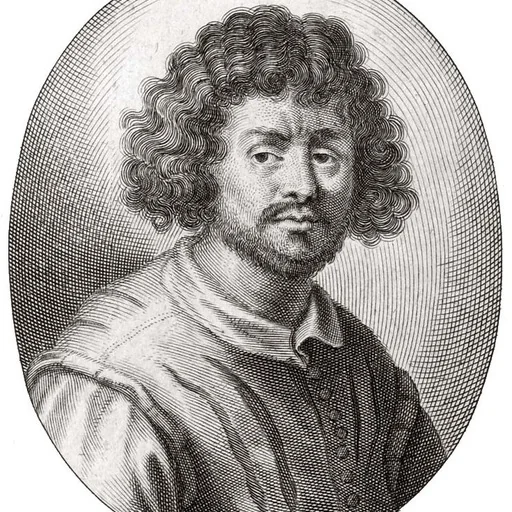
Claude Lorrain (French:; born Claude Gellée, called le Lorrain in French; traditionally just Claude in English; c.

 Ruinenlandschaft mit Hirten
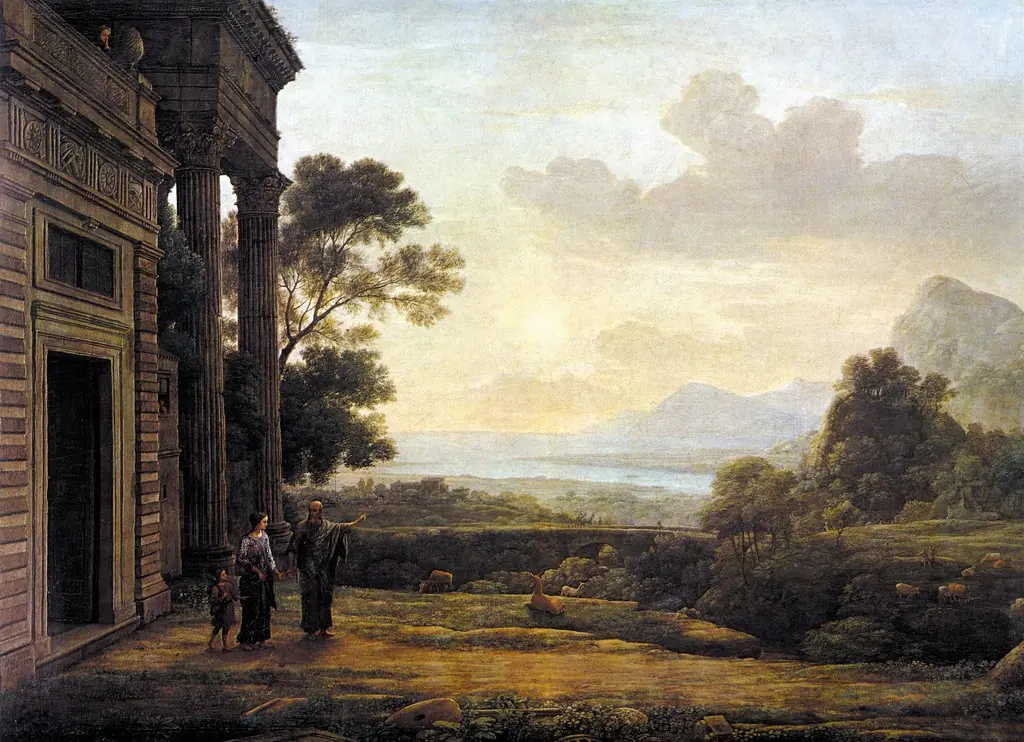 The Banishment of Hagar
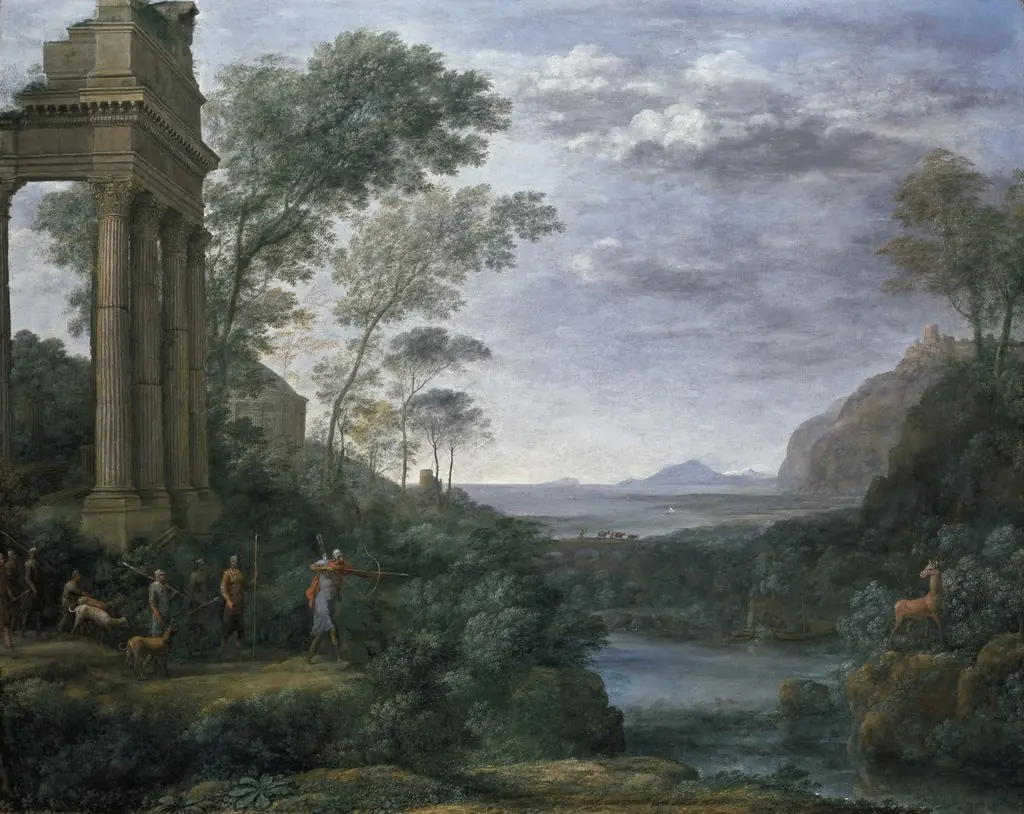 Ascanius Shooting the Stag of Sylvia
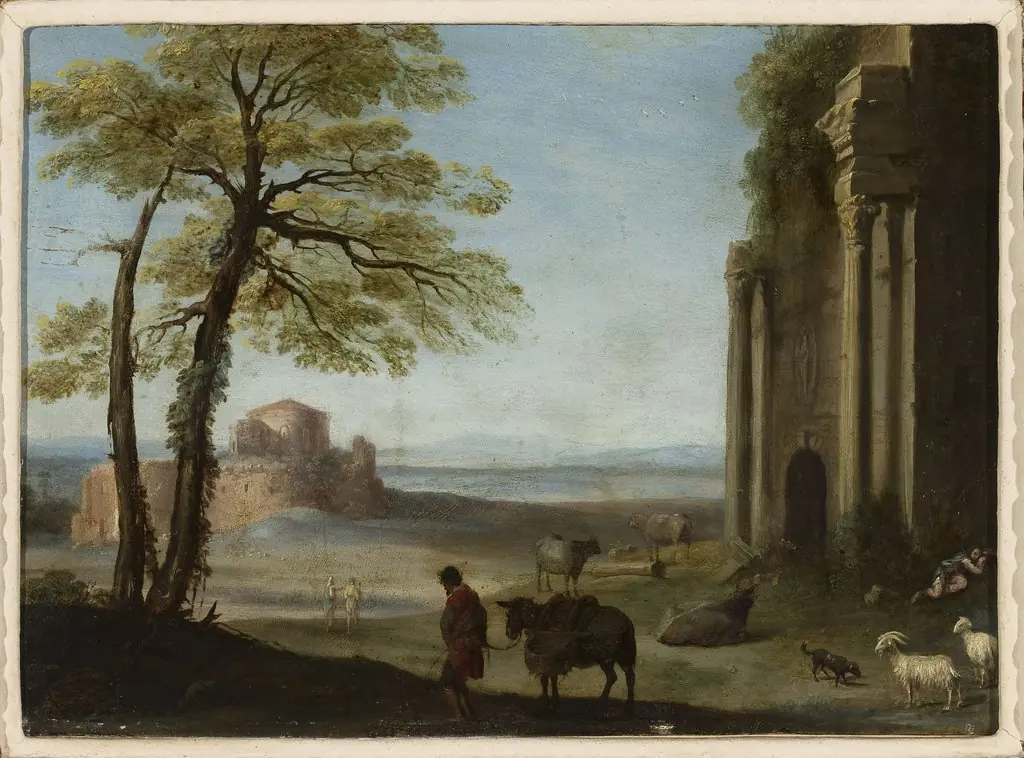 Pastoral landscape
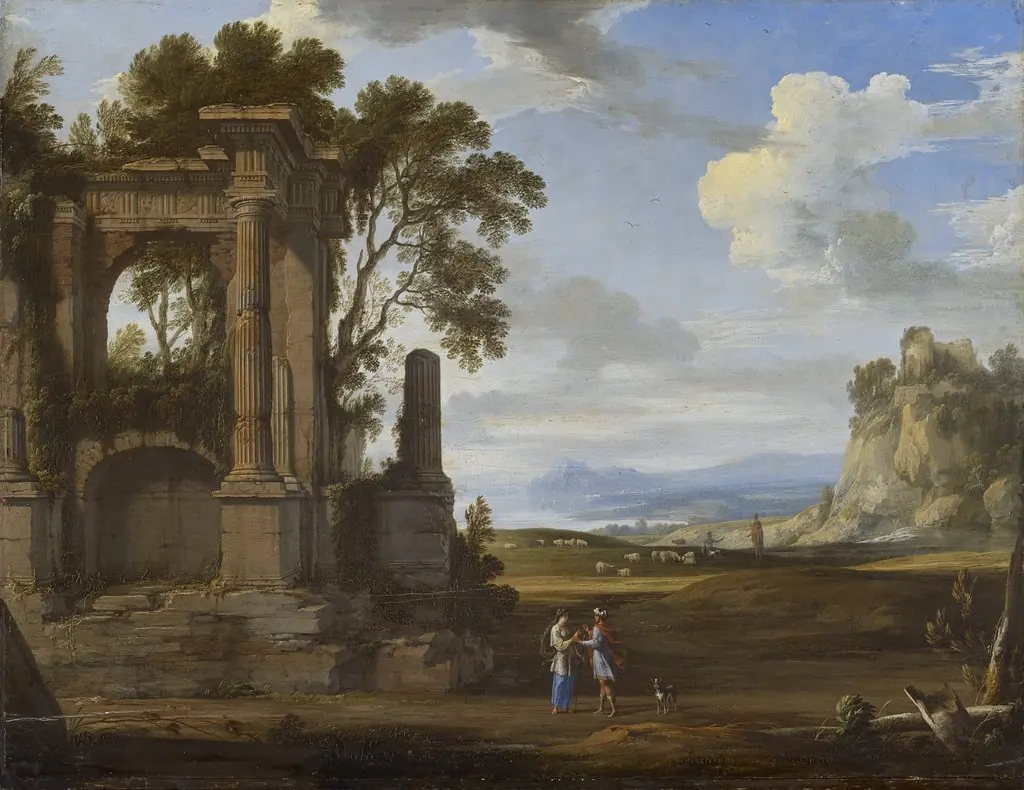 A Classical Landscape with Judah and Tamar
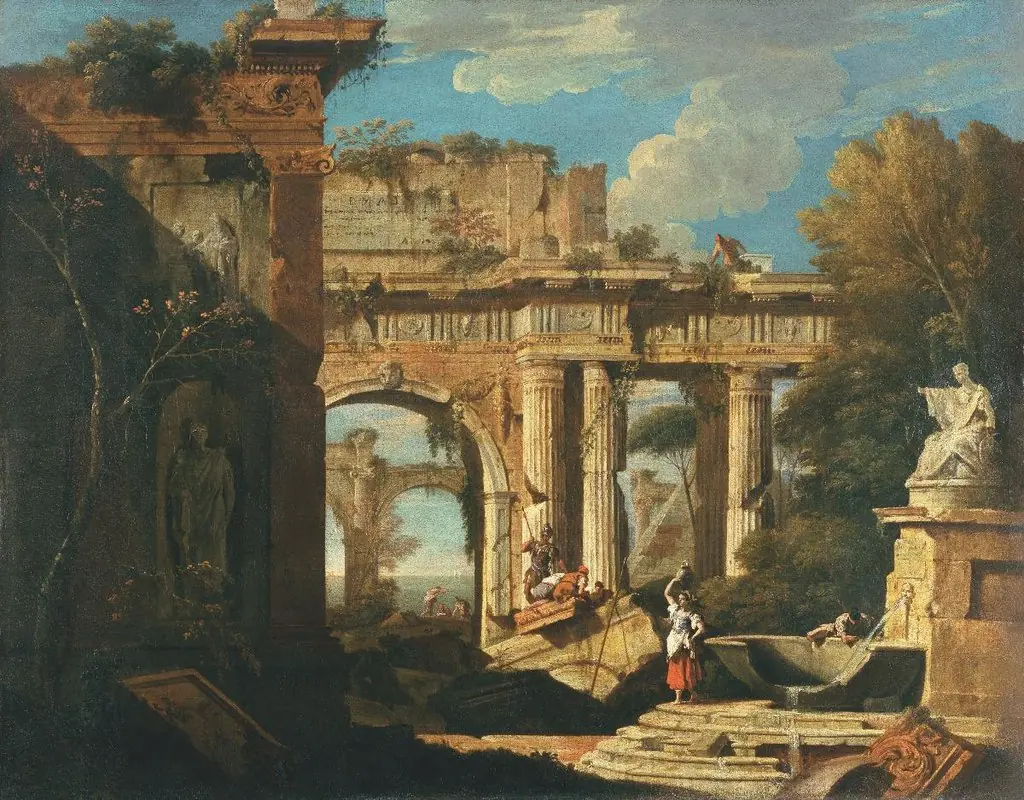 Capriccio con rovine romane
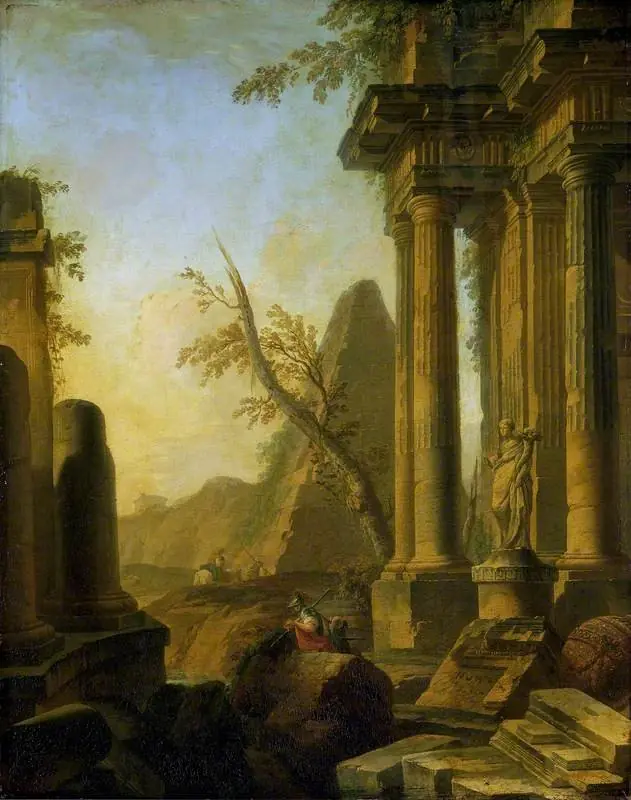 Classical Ruins with Soldiers
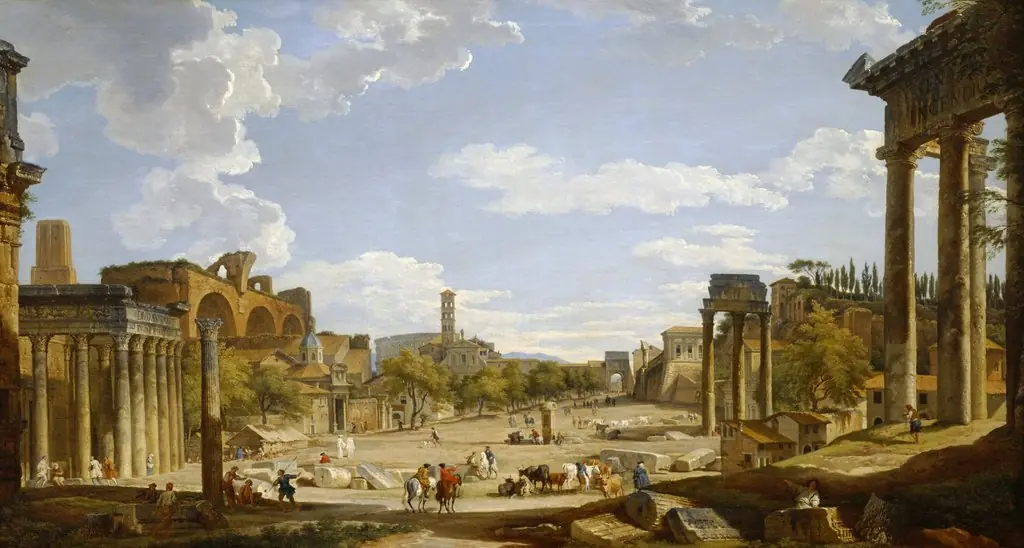 View of the Roman Forum
 Landscape with Saint John on Patmos
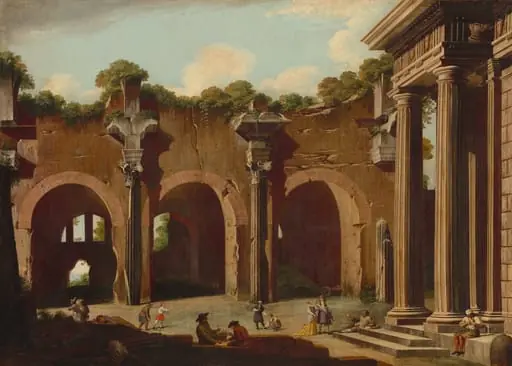 The Basilica of Constantine with a Doric Colonnade