Artwork
Imaginary View with a Tomb by the Lagoon
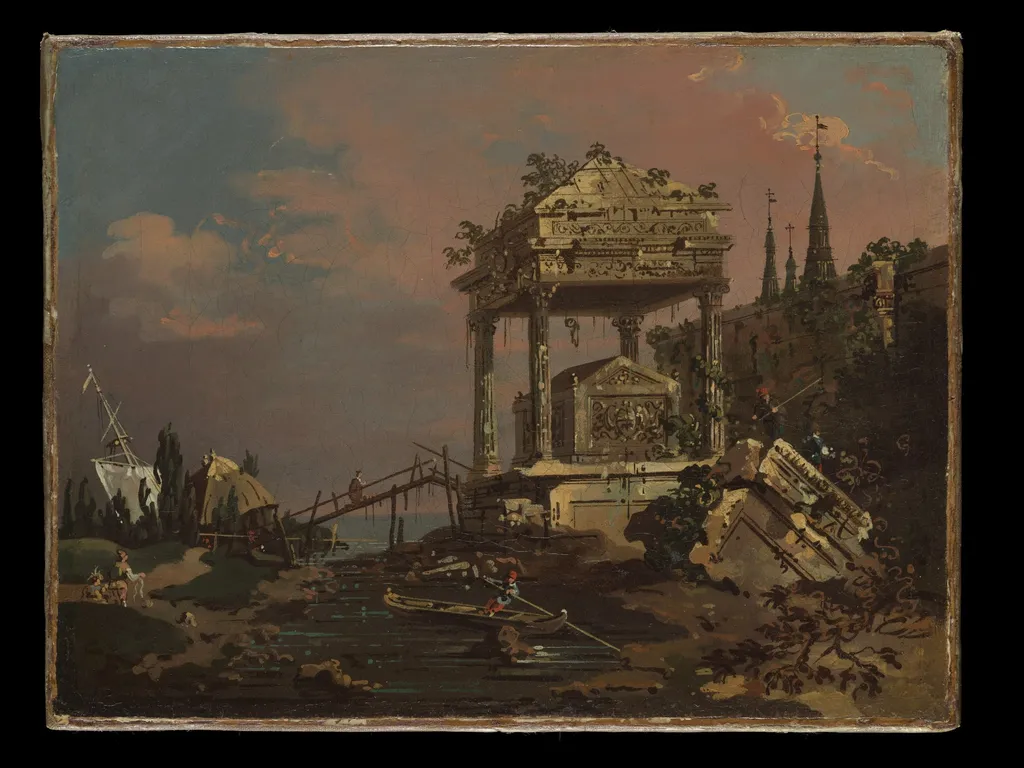
Imaginary View with a Tomb by the Lagoon is an oil painting by the Rococo painting artist Canaletto. It dates from 1741 and is held in the collection of the Metropolitan Museum of Art.
About this work
A grand white building with columns stands half-collapsed under ivy beside a shallow lagoon, where small boats drift and a tall-masted ship sits near shore. Dark clouds break into patches of light over distant spires and trees. Canaletto painted this imagined ruin in 1741, moody and a little mysterious.
Subject & Meaning
As a capriccio, the piece juxtaposes real and invented elements to evoke the poetic resonance of memory and the impermanence of built forms.
The painting shows an imagined lagoon scene centered on a modest tomb surrounded by crumbling ruins and a small boat, elements that Canaletto combines in a capriccio-like fantasy. Executed in oil on canvas in 1741, the work belongs to the Metropolitan Museum of Art collection. The inclusion of ancient architectural fragments and a funerary monument serves as iconographic references to antiquity and the passage of time, while the tranquil water and modest vessel suggest a fleeting, contemplative mood.
As a capriccio, the piece juxtaposes real and invented elements to evoke the poetic resonance of memory and the impermanence of built forms.
Technique & Style
Imaginary View with a Tomb by the Lagoon is an oil painting on canvas executed in 1741 by Canaletto. The work belongs to the capriccio genre, combining realistically rendered architectural fragments with imagined lagoon scenery and a solitary tomb. Executed in oil paint, the piece demonstrates the precise architectural detail and luminous atmospheric treatment characteristic of Venetian vedute, while the capriccio format permits fantastical composition.
The Metropolitan Museum of Art holds the painting, preserving its condition as a well‑maintained example of 18th‑century Venetian technique.
History & Provenance
Imaginary View with a Tomb by the Lagoon is an oil‑on‑canvas painting by Canaletto executed in 1741. The work belongs to the collection of the Metropolitan Museum of Art, which lists it as part of its holdings. It is classified as a capriccio, a genre of imaginary architectural scenes.
The painting portrays a tomb alongside a boat and ruinous structures within a lagoon setting. Its creation date is recorded as 1741, confirming it was produced during Canaletto’s Venetian period.
Imaginary View with a Tomb by the Lagoon, an oil-on-canvas capriccio painted by Canaletto in 1741, is held in the collection of the Metropolitan Museum of Art in New York. The work forms part of the museum's holdings of European paintings, where it is maintained as a permanent collection piece. No specific inventory or accession number is recorded in the available documentation, and no exhibition history beyond its inclusion in the Metropolitan Museum of Art's collection is documented in the provided sources.
Overview
Canaletto's Imaginary View with a Tomb by the Lagoon, an oil painting from 1741, presents a fictional landscape. This Rococo-era work combines architectural decay with a serene waterscape, featuring a prominent ruined structure and various boats. It is currently housed at The Metropolitan Museum of Art, showcasing the artist's imaginative approach beyond his typical urban scenes.
Context
Canaletto, celebrated for his detailed vedute (views) of Venice, also produced numerous capricci, which allowed him greater artistic freedom. These imaginary landscapes, often featuring classical ruins and picturesque settings, were popular among Grand Tour travelers and collectors. Imaginary View with a Tomb by the Lagoon demonstrates his versatility in constructing compelling, evocative scenes that blend topographical accuracy with imaginative invention.
Own this work as a print
Artist & collection
Artist
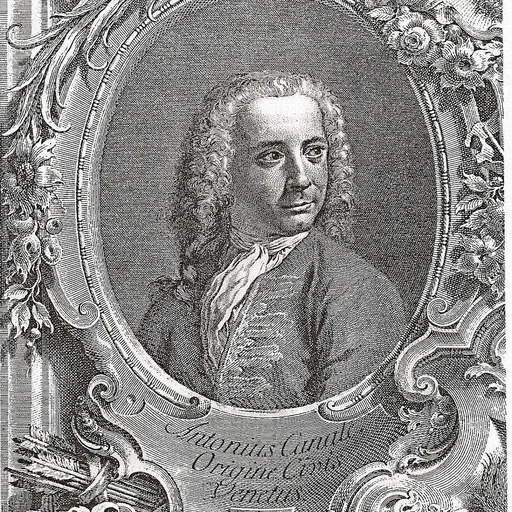
Giovanni Antonio Canal (18 October 1697 – 19 April 1768), commonly known as Canaletto (Italian: ), was an Italian painter from the Republic of Venice, considered an important member of the 18th-century Venetian school.

 Venetian View
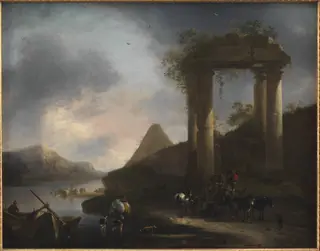 Italian Landscape with Classical Ruins
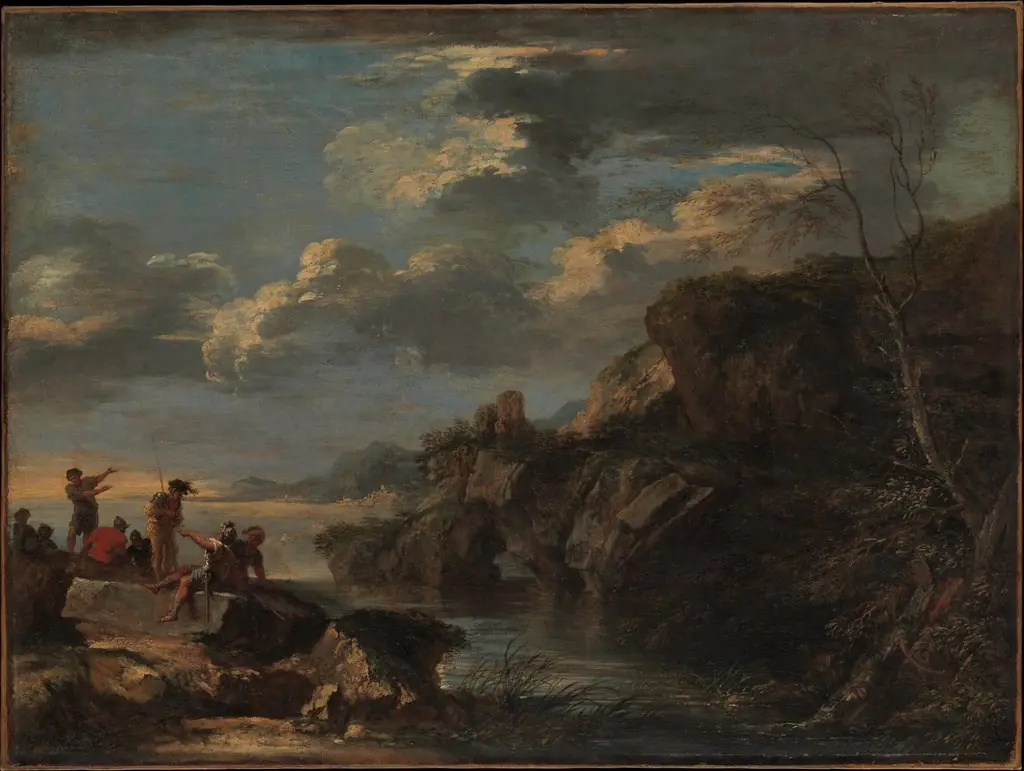 Bandits on a Rocky Coast
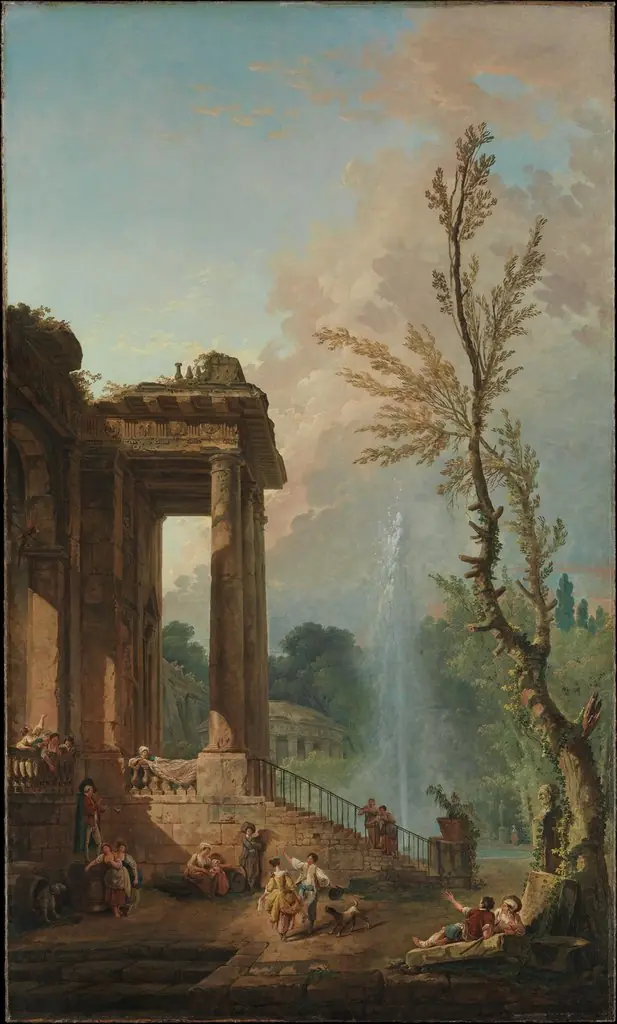 The Portico of a Country Mansion
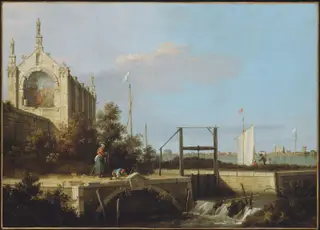 Capriccio: A Sluice on a River with a Chapel
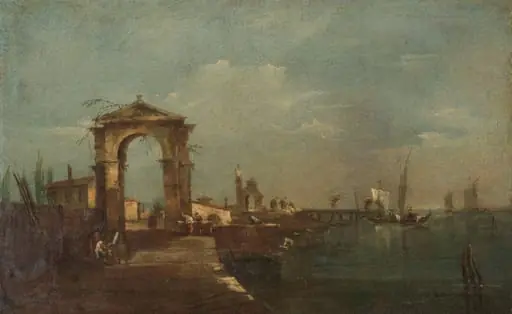 Landscape with a Quay and Ships on a Lake
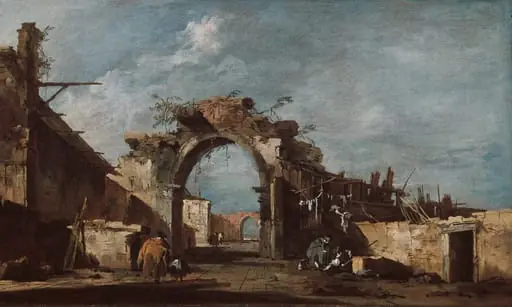 Ruined Archway
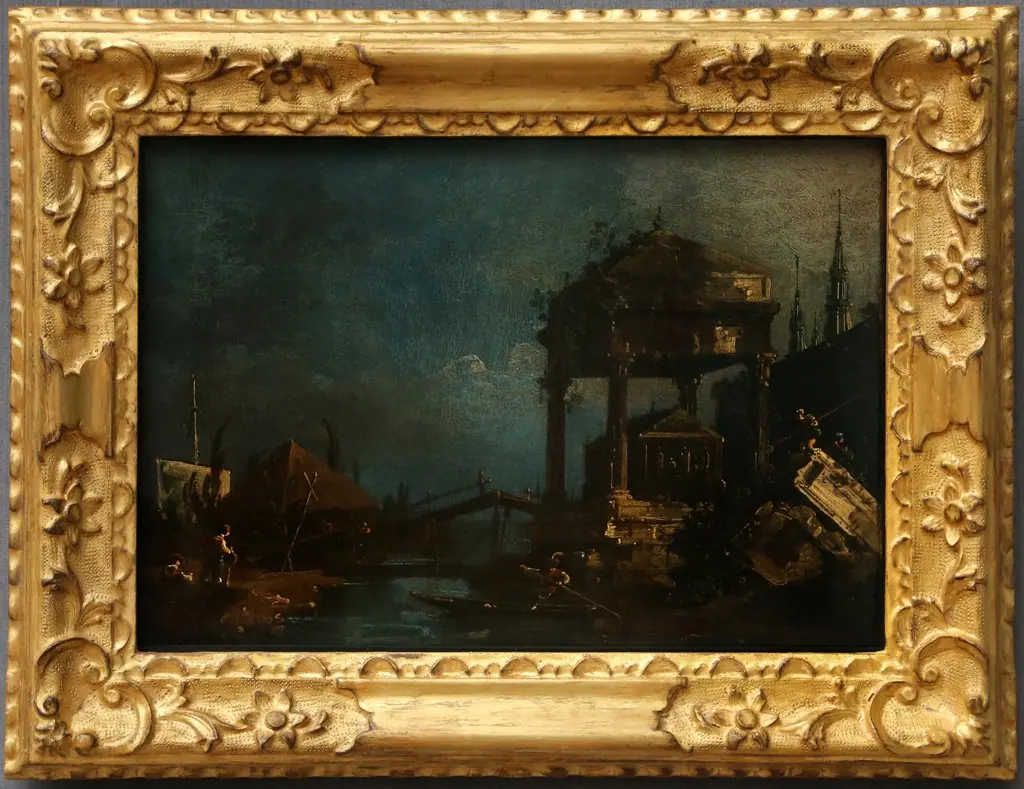 Fantasy Landscape with Sarcophagus under a Canopy
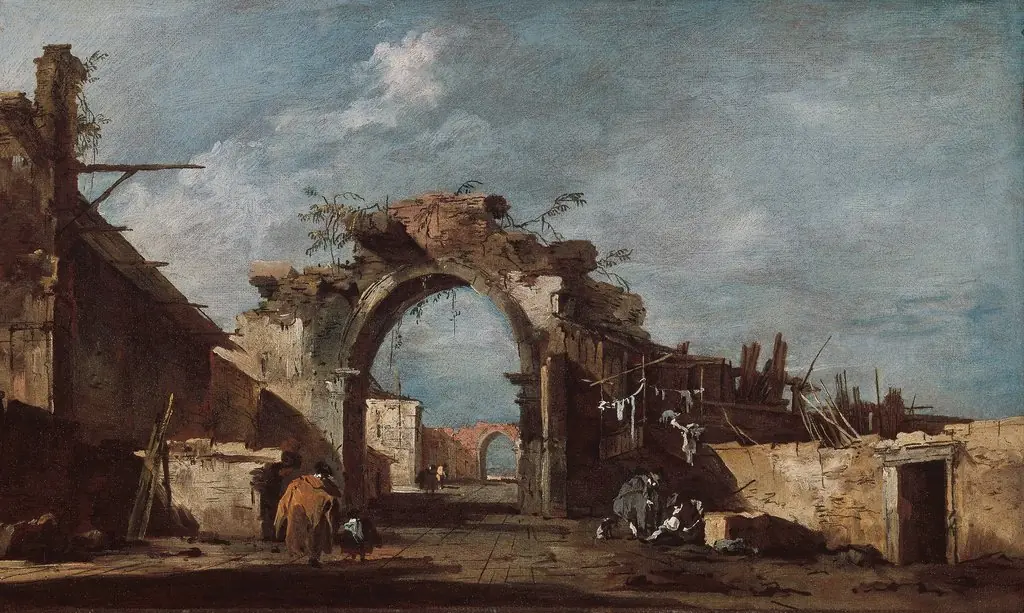 Ruined Archway
 Shepherds Resting by a Stream
 Seaport with a Castle
- Lagoon Landscape