Artwork
Cottage on the dirt road
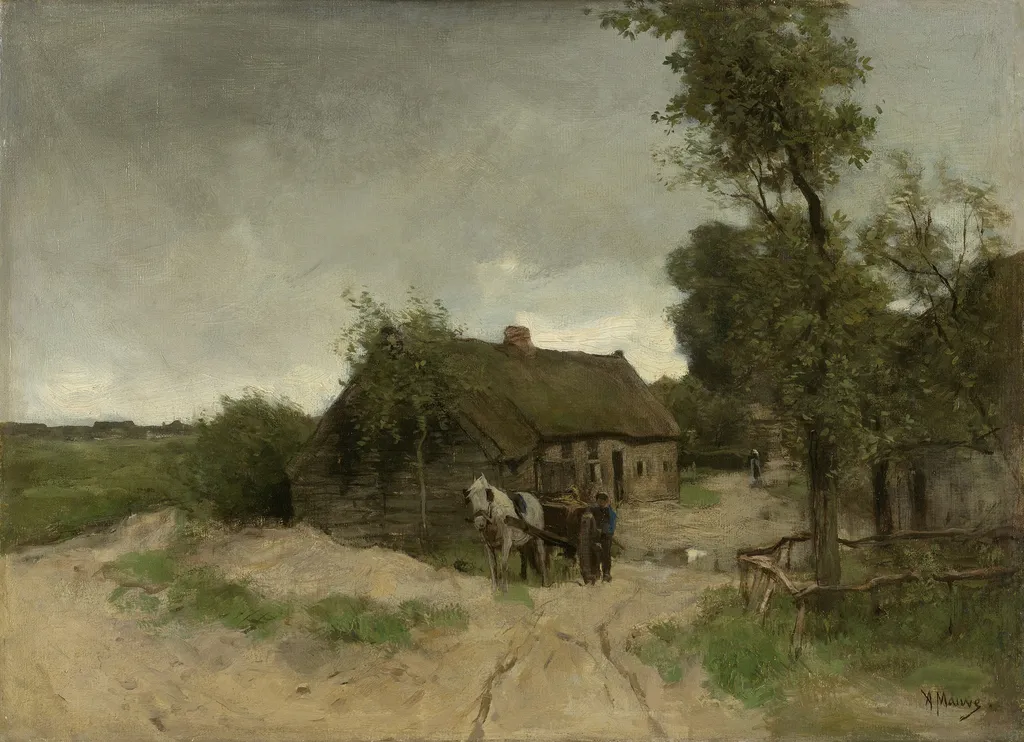
Cottage on the dirt road is an oil painting by the Plein Air artist Anton Mauve. It is held in the collection of the Rijksmuseum.
About this work
Subject & Meaning
The cottage’s modest form and the surrounding cultivated fields suggest themes of everyday labor and the Dutch countryside during the late nineteenth century.
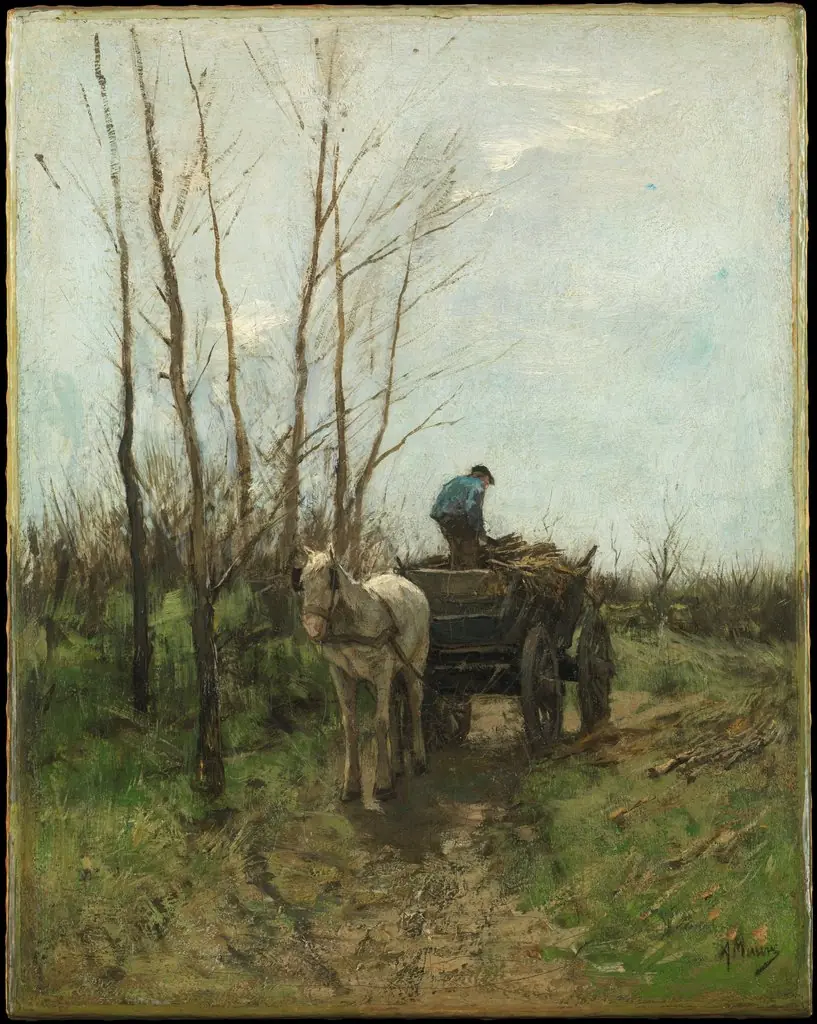
The painting depicts a rural lane centered on a small thatched cottage, flanked by leafy trees and a low horizon under a clouded sky. A single horse-drawn cart moves along the sunlit dirt road, anchoring the scene in quiet agricultural routine. The cottage’s modest form and the surrounding cultivated fields suggest themes of everyday labor and the Dutch countryside during the late nineteenth century.
The muted palette and diffuse light evoke a calm, unidealized moment rather than a symbolic program, emphasizing the ordinary life of the rural poor.
Technique & Style
Executed in 1879, Cottage on the Dirt Road is painted in oil on canvas, a medium Mauve employed throughout his career to achieve luminous, blended effects. The handling is fluid, with softly modulated strokes that model form and light rather than delineate contours, characteristic of the Hague School’s plein-air practice. The composition organizes a rural lane receding into space, framed by trees and a low horizon, while the cottage occupies a quiet repoussoir position.
Subtle glazes articulate the weathered surfaces of the house and road, and the sky is rendered with vaporous cloud forms that modulate from warm to cool tones. The relatively small scale (37 × 50.5 cm) and intimate viewpoint underscore Mauve’s focus on quiet, domestic landscape rather than dramatic incident.
History & Provenance
Created in 1879, Cottage on the dirt road is an oil-on-canvas landscape painting by the Dutch artist Anton Mauve. The work measures 37 by 50.5 centimeters and depicts a rural scene featuring a cottage, dirt road, horse, cart, and broad-leaved trees under a cloudy sky. Historical records indicate that the painting was once owned by Jean Charles Joseph Drucker.
It is currently held in the collection of the Rijksmuseum in Amsterdam. The specific commission details or the exact sequence of ownership transfers between its creation and its current institutional home are not detailed in the available records, though the work remains a documented example of Mauve's landscape output from the late 1870s.
Cottage on the dirt road, an 1879 oil on canvas landscape by Anton Mauve, is part of the Rijksmuseum collection and is recorded as having been owned by Jean Charles Joseph Drucker. The work measures 37 cm in height and 50.5 cm in width and is classified as a painting within the landscape genre. Its provenance links the artist, the original private owner, and the museum’s acquisition, establishing its current custodianship.
Exhibition records specific to this piece are not detailed in the provided sources, so no exhibition history can be asserted beyond its inclusion in the Rijksmuseum’s holdings.
Context
Anton Mauve painted Cottage on the dirt road in 1879, an oil on canvas work classified as a landscape within the Dutch 19th‑century genre tradition. The painting depicts a rural scene with a cottage, horse, and cart set on a dirt road, rendered in detailed naturalistic style typical of Mauve’s oeuvre. It entered the collection of Jean Charles Joseph Drucker before being acquired by the Rijksmuseum, where it remains on public view.
As a representative example of Dutch rural genre painting, the work illustrates the period’s interest in everyday countryside life and reflects Mauve’s role in popularizing such subjects.
Overview
Anton Mauve's Cottage on the Dirt Road, painted in 1890, is an oil painting that captures a tranquil rural scene. This work exemplifies the Dutch artist's dedication to depicting the quiet dignity of country life and his skill in rendering atmospheric landscapes. The painting is part of the esteemed collection at the Rijksmuseum, representing a significant example of the Hague School's output.
Legacy
Mauve's artistic vision and technical prowess left a notable mark on his contemporaries and subsequent generations. His sensitive portrayal of rural subjects and his nuanced use of color were particularly influential. Among those he impacted was his cousin-in-law, Vincent van Gogh, who admired Mauve's dedication to depicting the lives of ordinary people and his ability to capture the essence of the Dutch landscape.
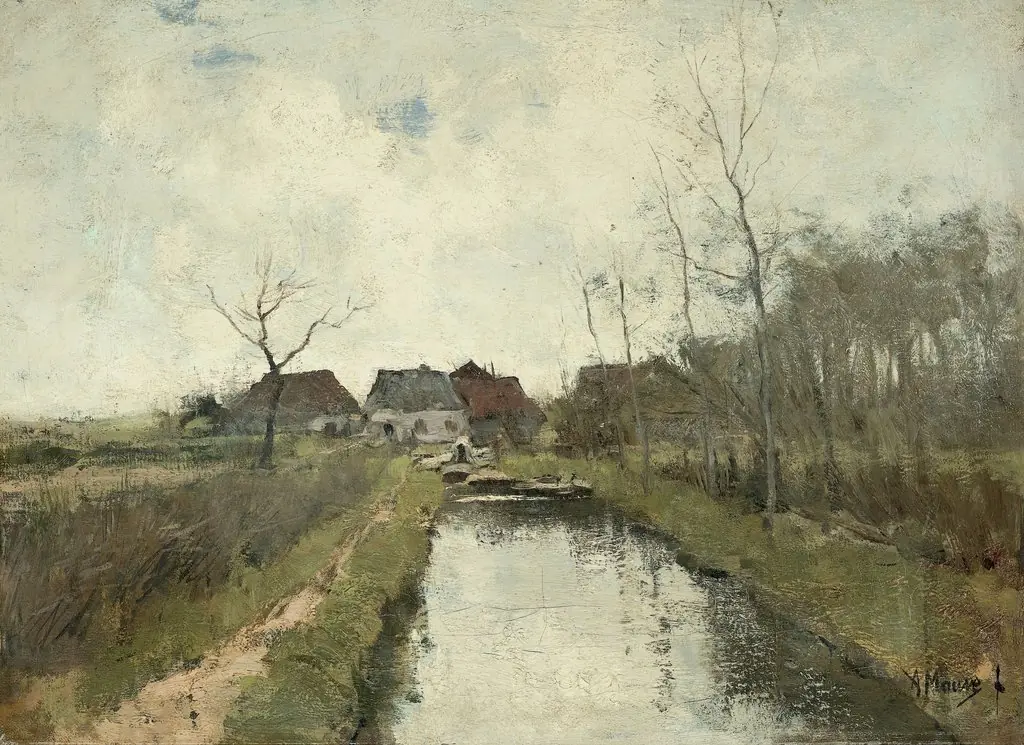
Own this work as a print
Artist & collection
Artist
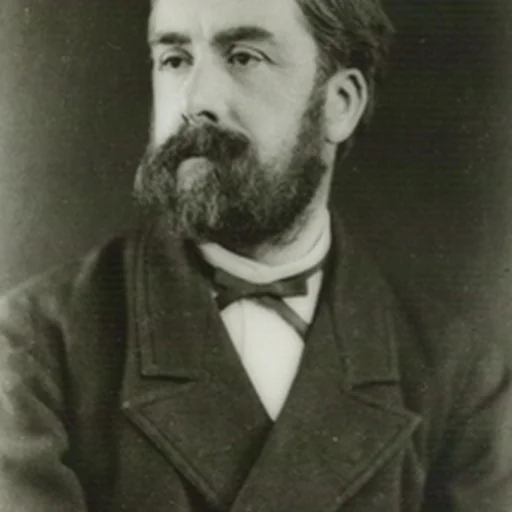
Anthonij "Anton" Rudolf Mauve (Dutch pronunciation:; 18 September 1838 – 5 February 1888) was a Dutch realist painter who was a leading member of the Hague School.

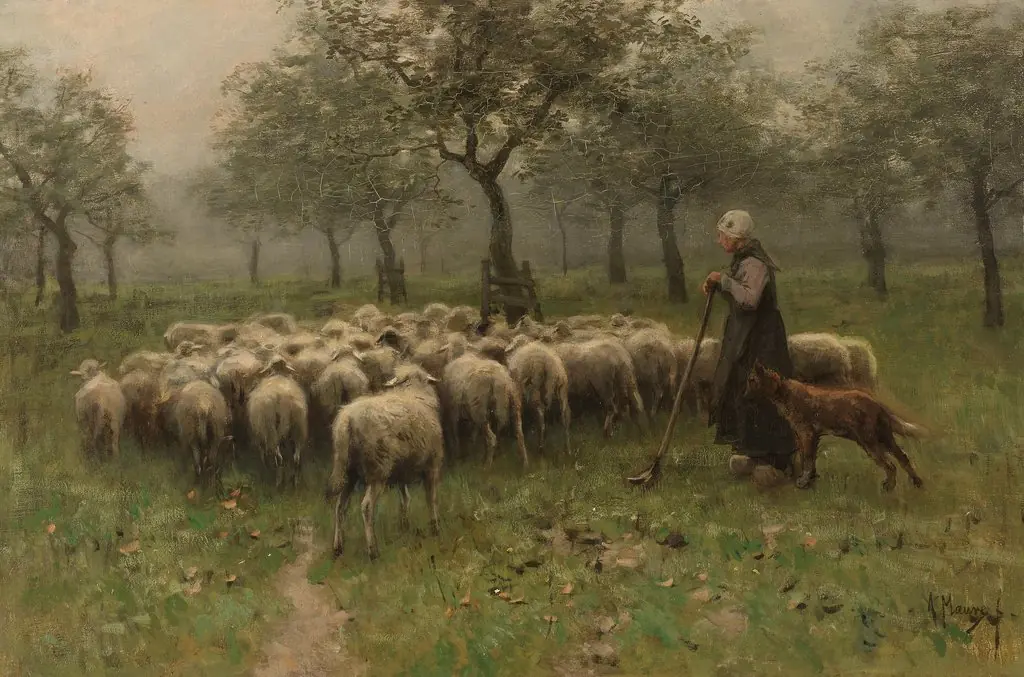
- Cottages by a ditch
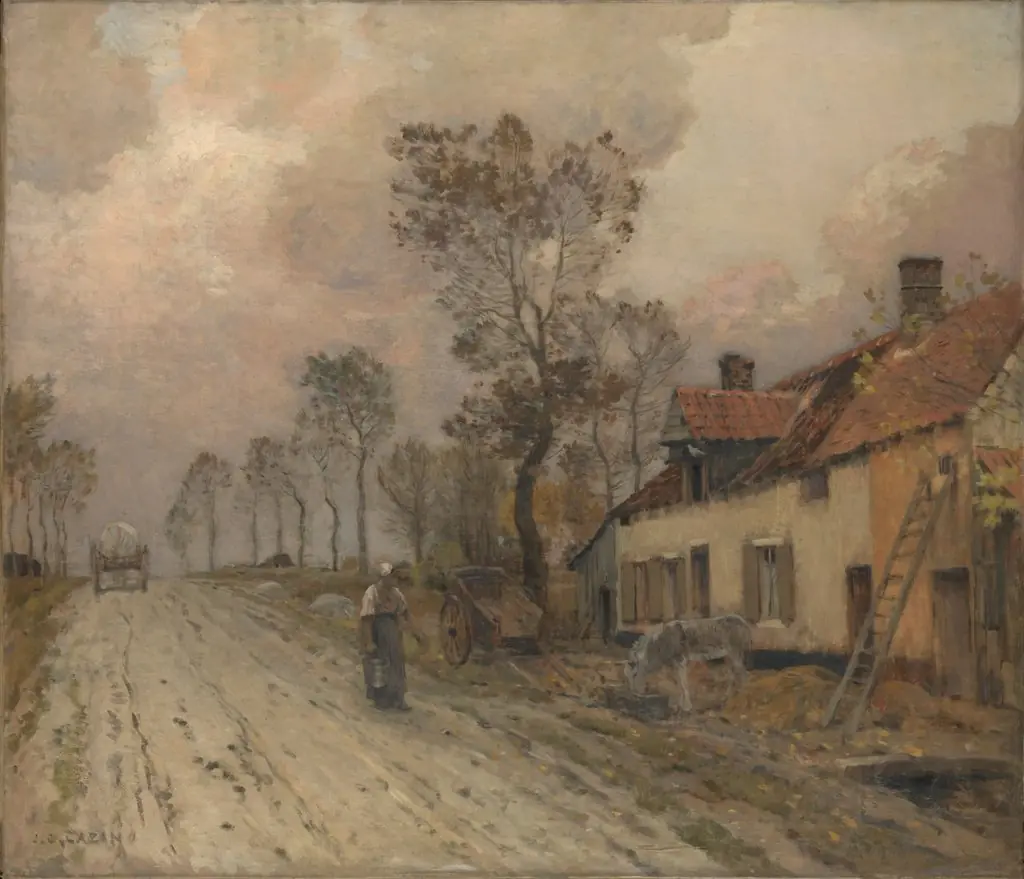 The Route Nationale at Samer
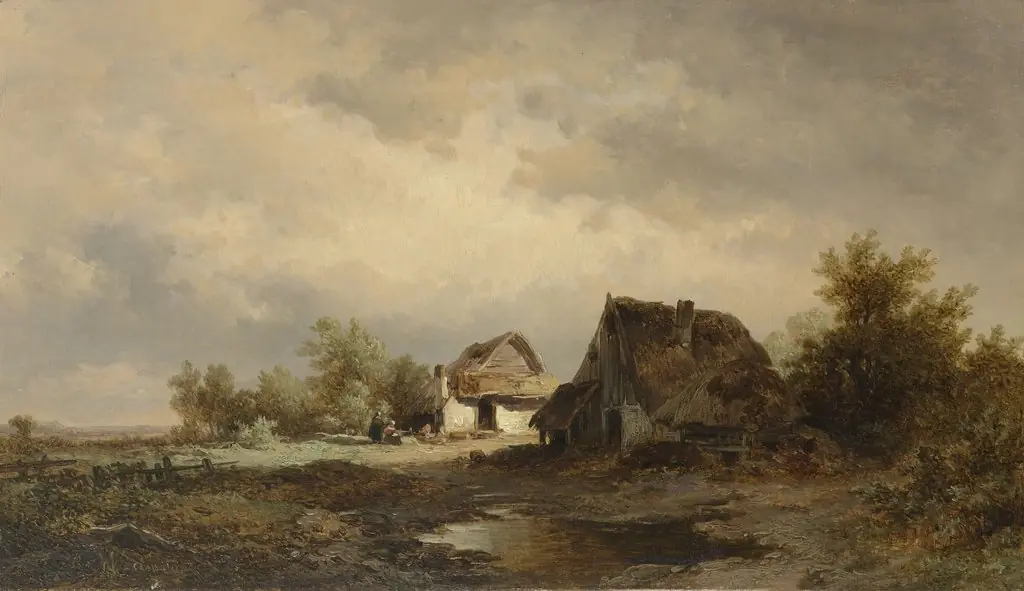 Landscape with Cottages on the Heath
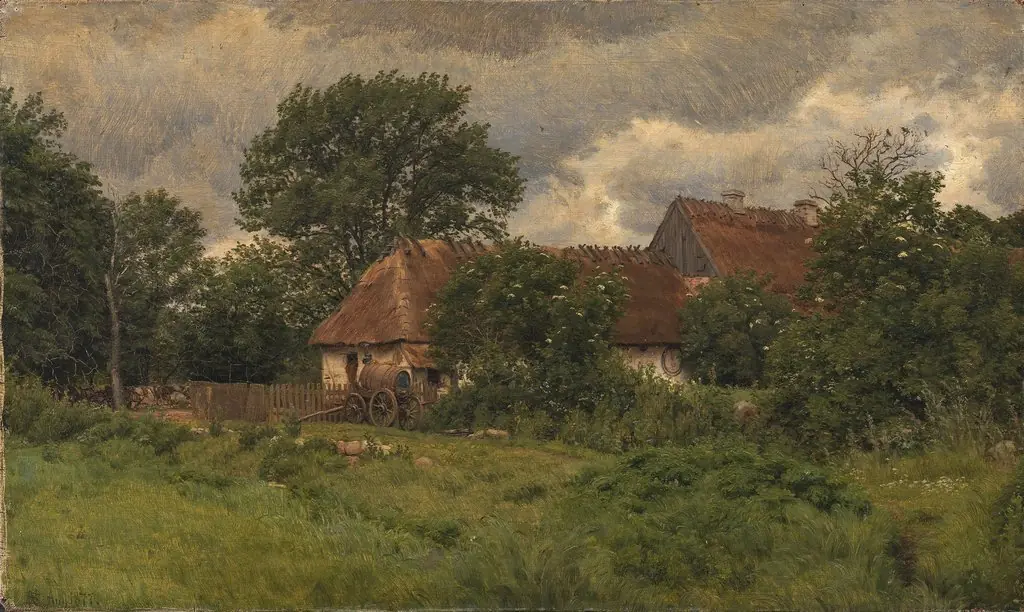 Gamle udbygninger ved en herregård
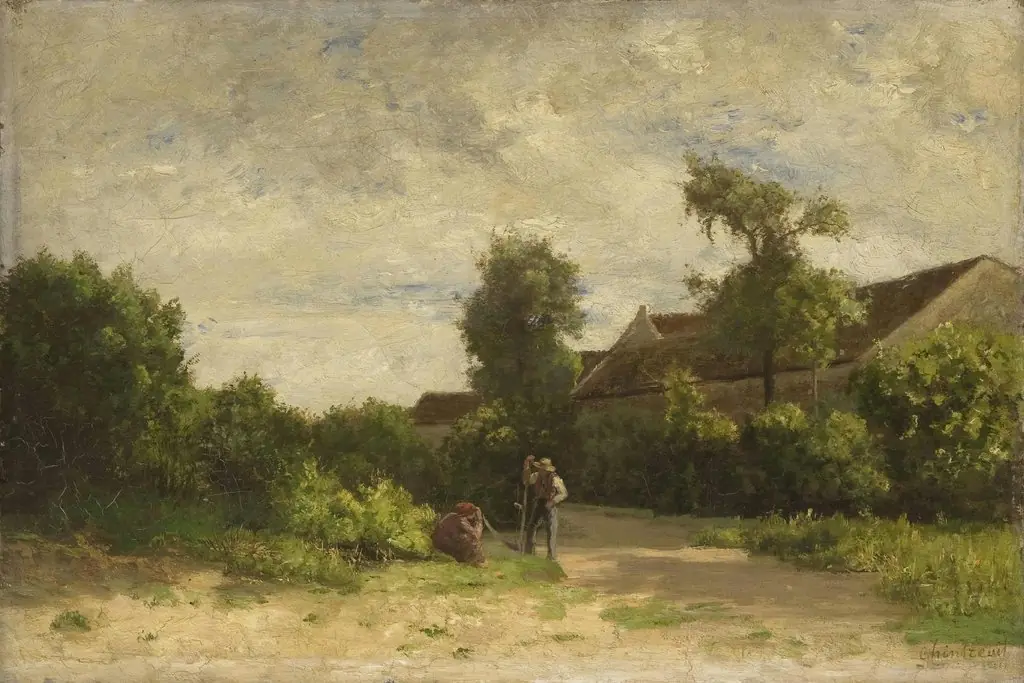 Village Road and Two Figures
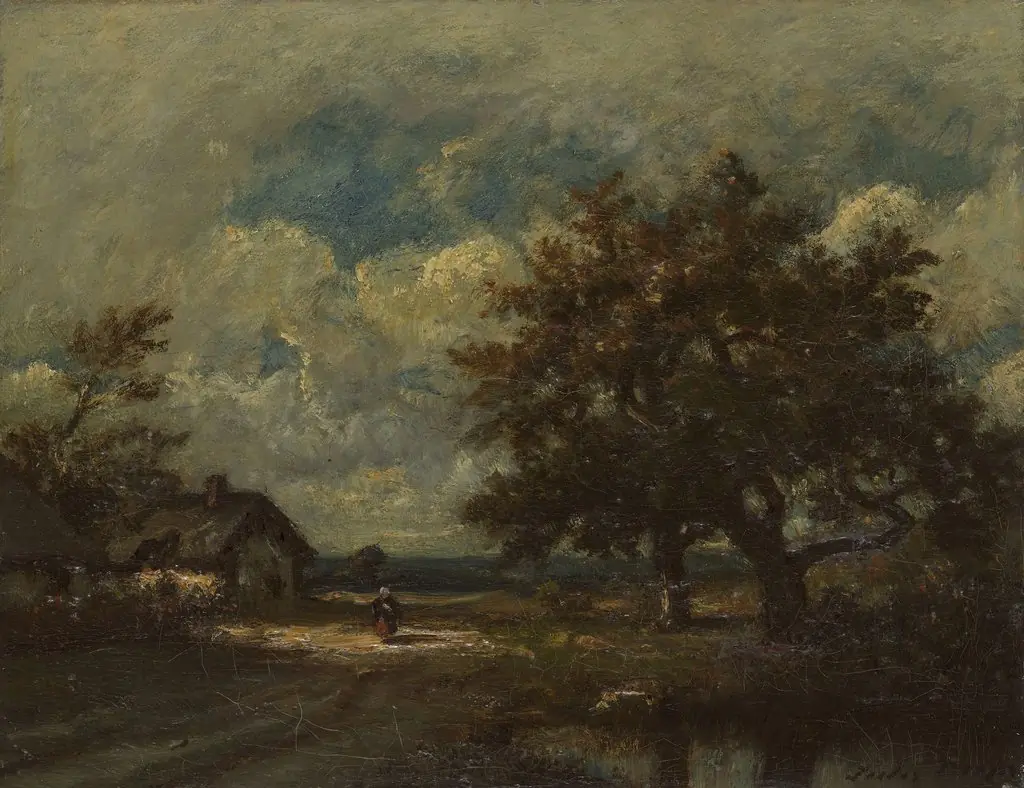 The Cottage by the Roadside, Stormy Sky
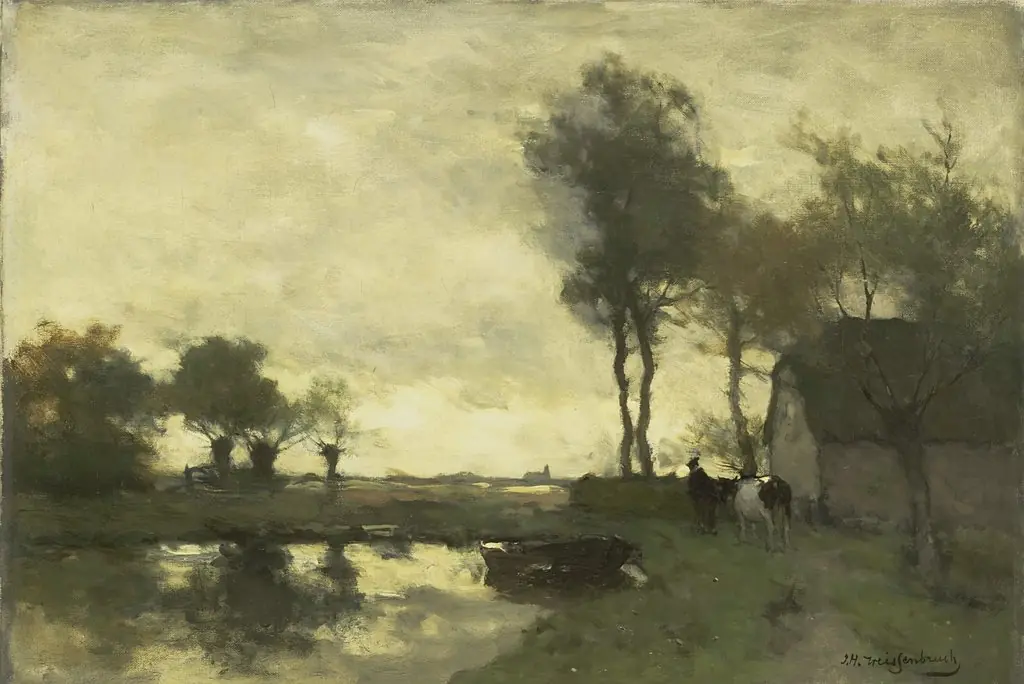 Landschap met boerderij bij een plas
 Autumn Landscape
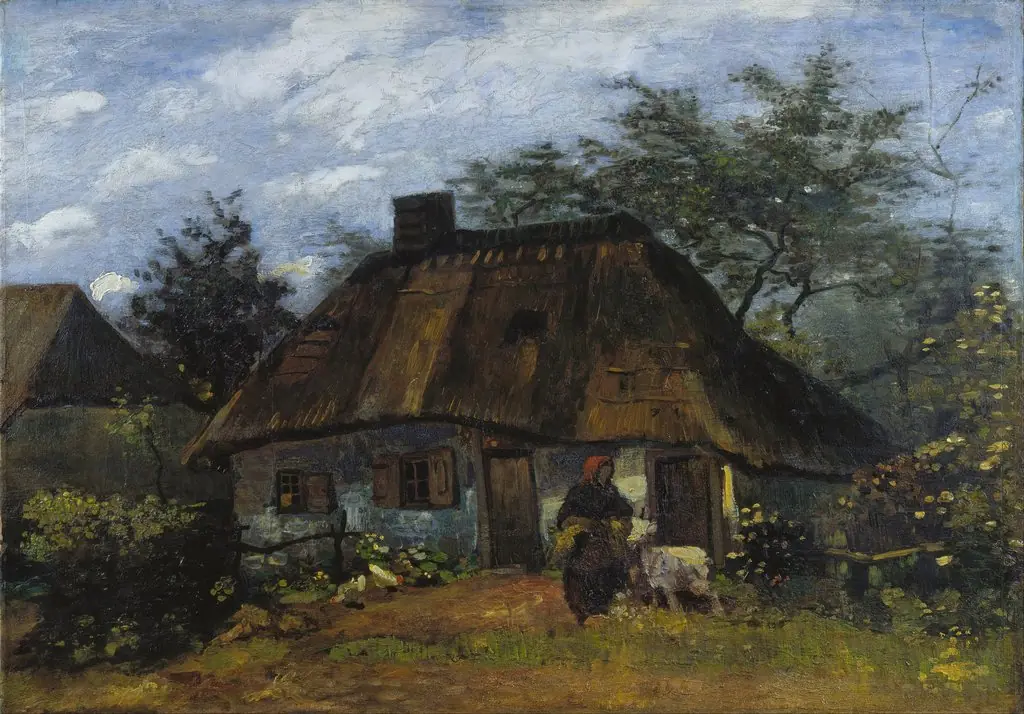 Cottage and Woman with Goat
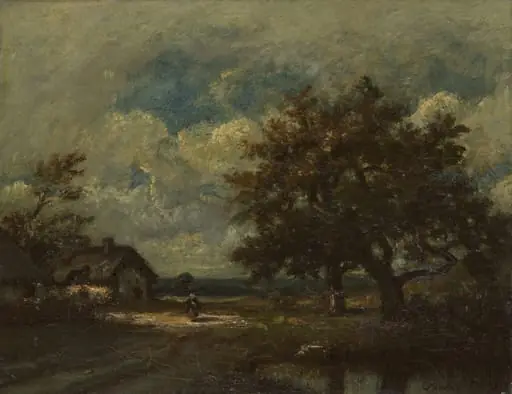 The Cottage by the Roadside, Stormy Sky
 Wooden Bridge across a Canal at Rijswijk
 A Sheepfold at Nightfall