Artwork
Samson and Delilah
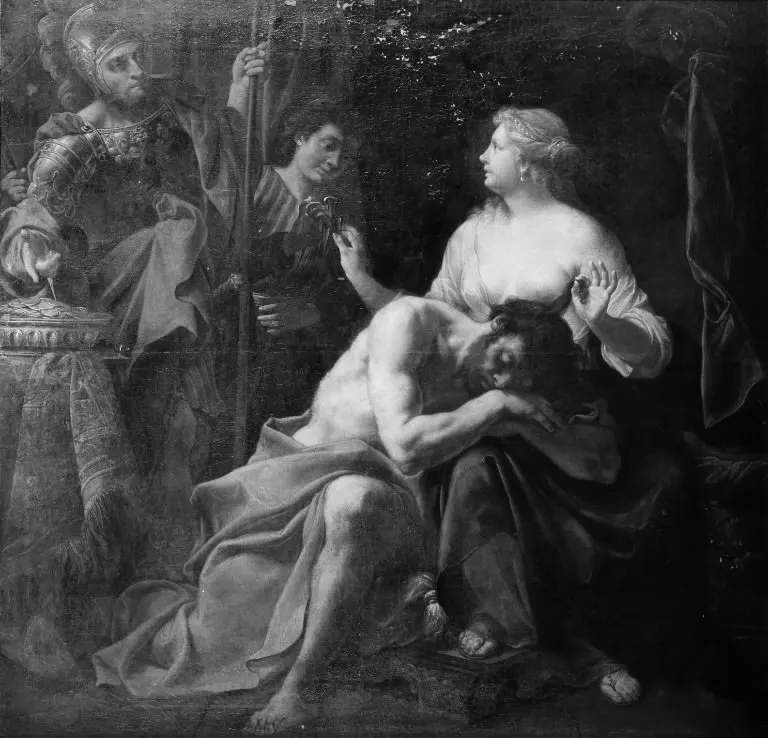
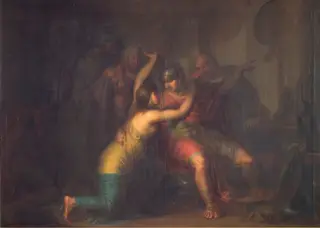
Samson and Delilah is an oil painting by the High Baroque Italian artist Antonio Franchi. It dates from 1690 and is held in the collection of the Statens Museum for Kunst.
About this work
Subject & Meaning
The subdued palette and tenebrist lighting heighten the scene’s moral tension, underscoring themes of treachery and lost invincibility.
The painting depicts the biblical episode in which Delilah, having learned that Samson’s strength lies in his uncut hair, cuts it while he sleeps, thereby enabling his capture by the Philistines. Franchi’s composition emphasizes the moment of betrayal: the soft light models Delilah’s focused expression and the knife’s glint, while Samson’s limp body conveys vulnerability. The subdued palette and tenebrist lighting heighten the scene’s moral tension, underscoring themes of treachery and lost invincibility.
Technique & Style
The work is an oil painting executed on canvas, reflecting Baroque religious art conventions of dramatic narrative and chiaroscuro. Antonio Franchi rendered Samson and Delilah with precise brushwork that emphasizes the tension in the moment of betrayal, while the handling of light underscores the theatricality characteristic of late 17th‑century Italian religious painting.
History & Provenance
Antonio Franchi painted Samson and Delilah in 1679 as an oil on canvas work depicting the biblical scene of Samson and Delilah. The painting is part of the collection of the Statens Museum for Kunst, where it remains on display.
The painting Samson and Delilah by Antonio Franchi is held in the collection of the Statens Museum for Kunst. Created in 1679, the work is executed in oil on canvas and depicts the biblical figures of Samson and Delilah. The provided sources confirm its location at this institution but do not list a specific inventory or accession number, nor do they detail any past or current exhibition history for the piece.
Overview
Antonio Franchi’s 1690 oil painting titled Samson and Delilah presents a nocturnal scene in which the biblical heroine Delilah cradles the head of the weakened Samson. The composition is dominated by a dark backdrop pierced by a narrow shaft of light from the left, highlighting the intimate yet tension‑filled encounter between the two figures.
Context
Franchi, both a painter and an art theorist, often engaged with biblical subjects, aligning his practice with the Counter‑Reformation’s demand for didactic yet emotionally resonant imagery. Samson and Delilah exemplifies this agenda, using a familiar scriptural episode to explore themes of trust, betrayal, and moral consequence.
Artist & collection
Artist
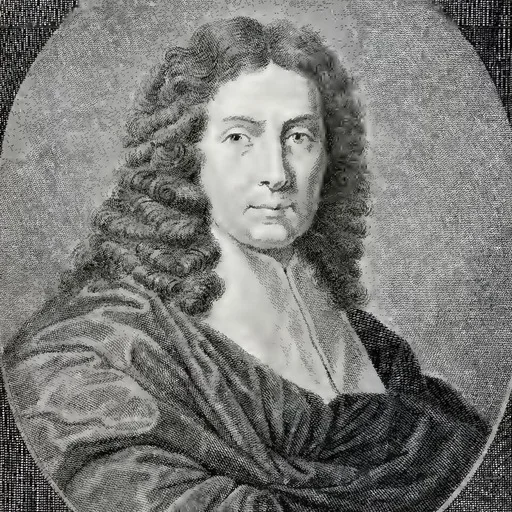
Antonio Franchi (14 July 1638 – 18 July 1709) was an Italian painter and art theorist of the 17th century, active mainly in Florence and Lucca.

 Hiobs Leiden
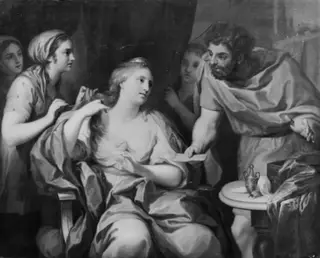 Dronning Semiramis som sværger ikke at ville rede sit hår før hun har underkuet et oprør
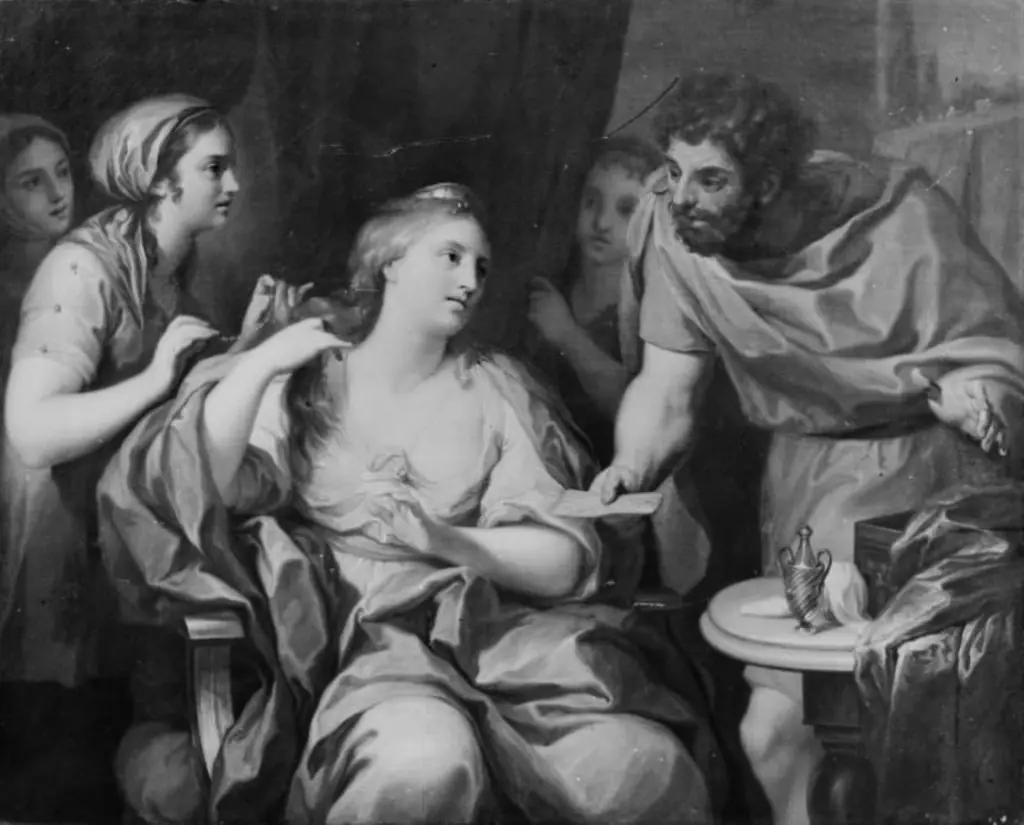 Dronning Semiramis som sværger ikke at ville rede sit hår før hun har underkuet et oprør
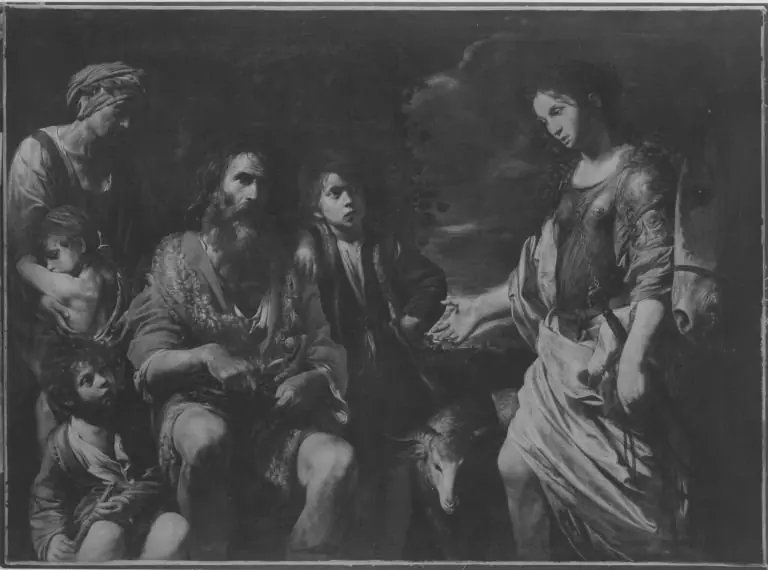 Erminia bei den Hirten
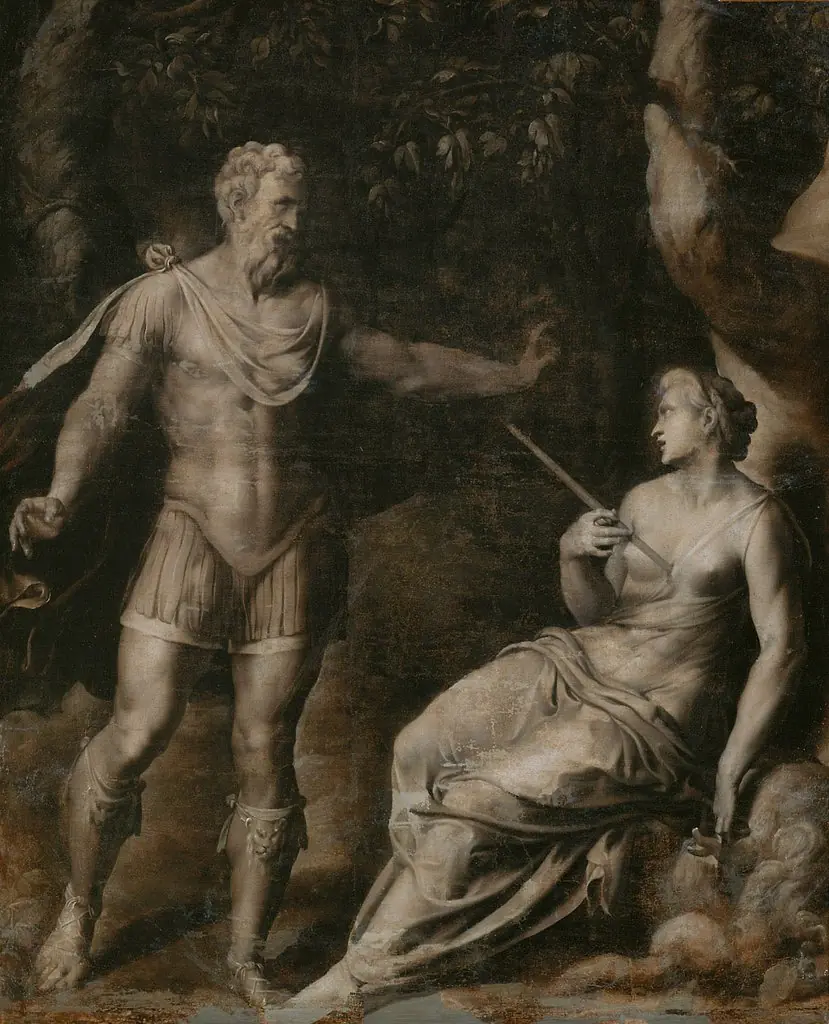 Cephalus und Procris
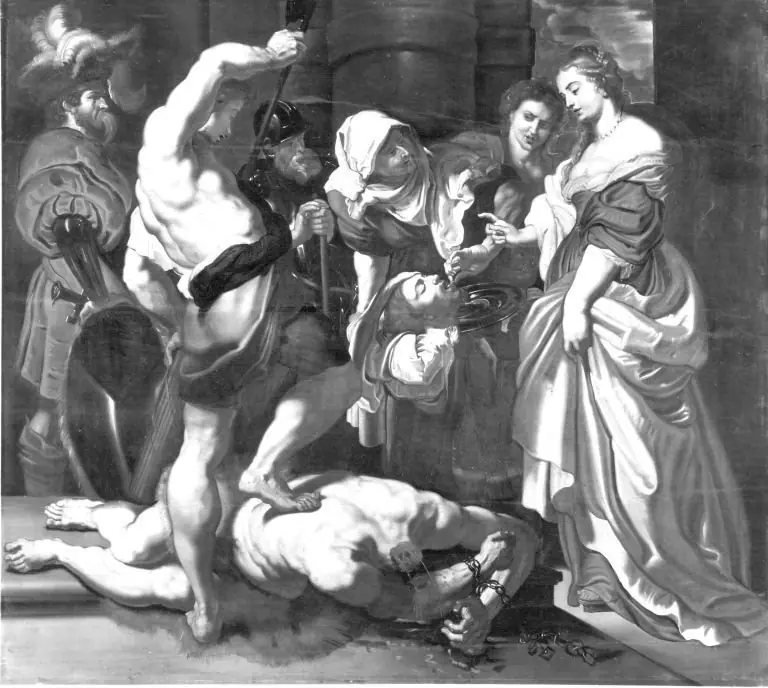 Salome is given the head of John the Baptist by the executioner
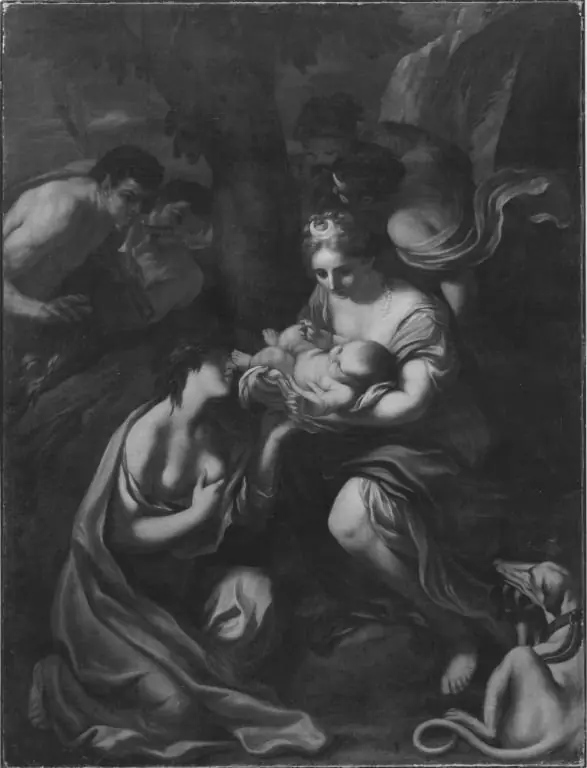 Geburt des Adonis
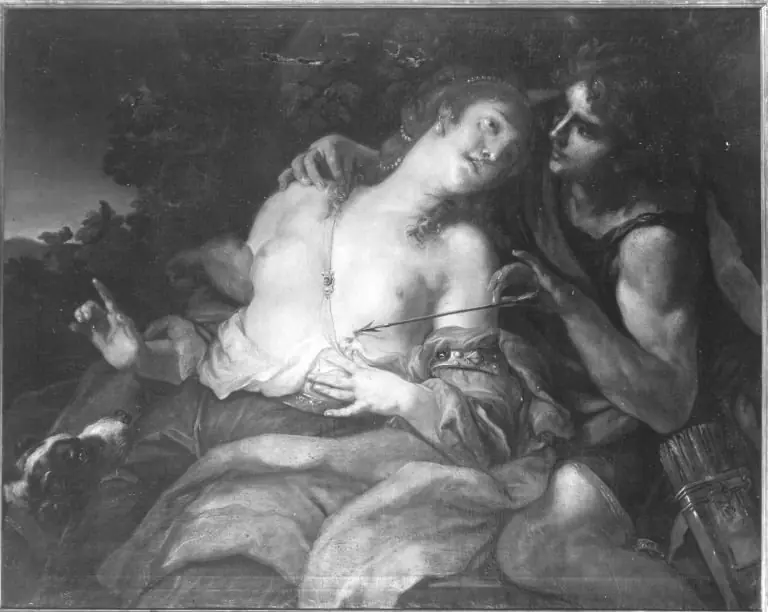 Cephalus und Procris
 The Sacrifice of Isaac
 Et historisk stykke