Artwork
Liuva I
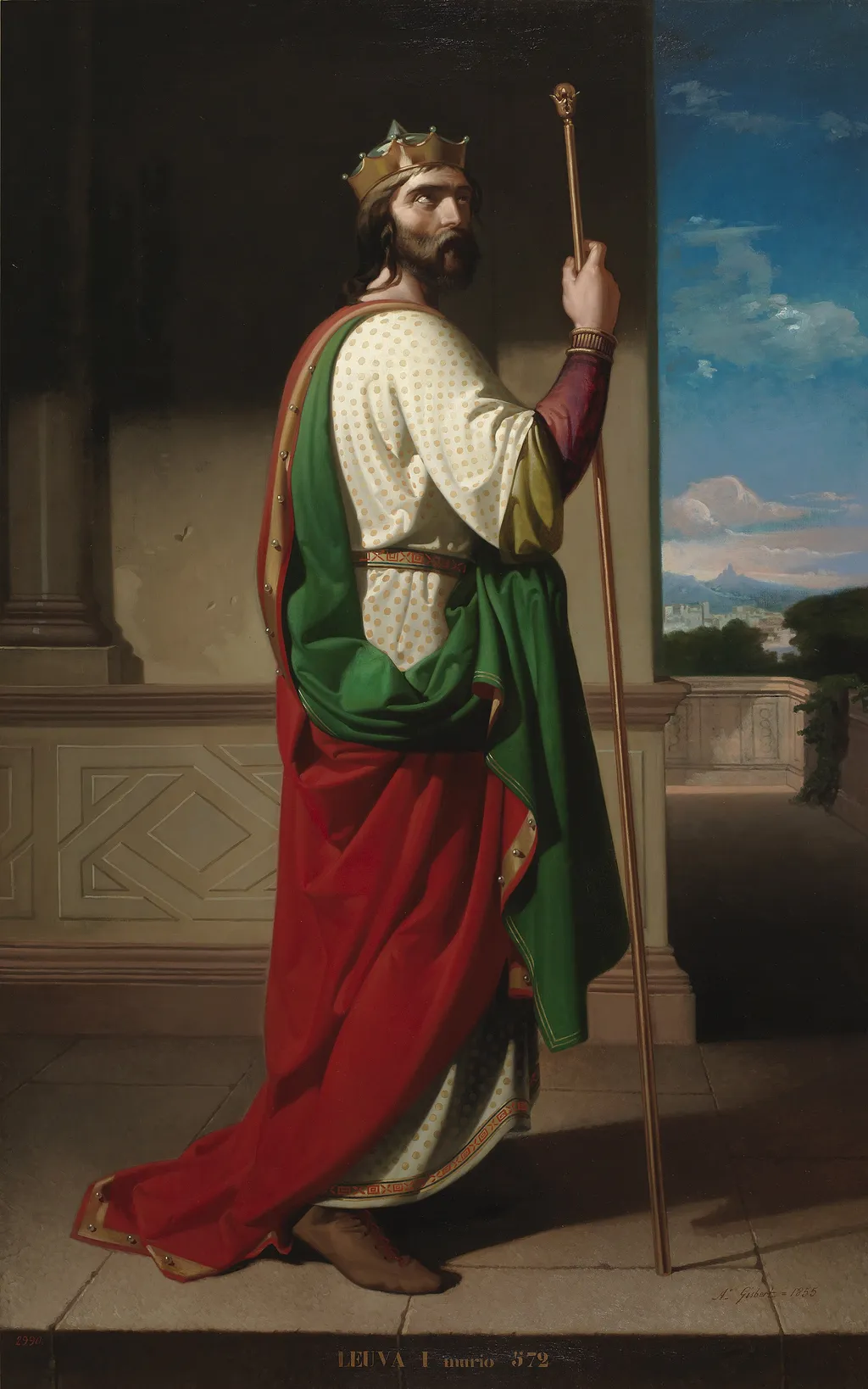
Liuva I is an oil painting by Antonio Gisbert. It dates from 1855 and is held in the collection of the Museo del Prado.
About this work
Subject & Meaning
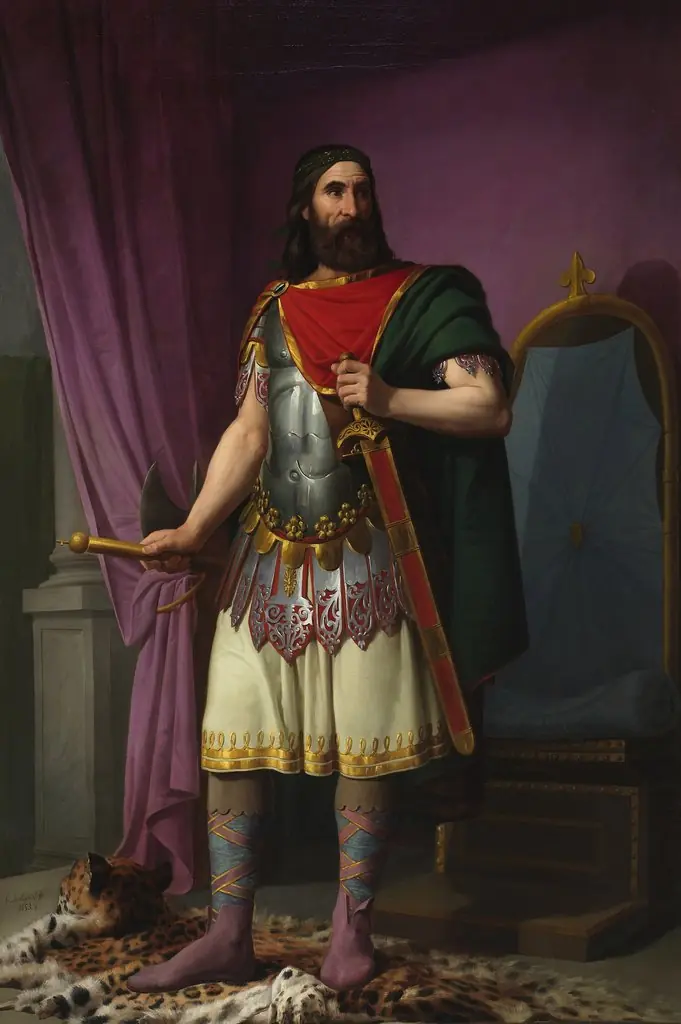
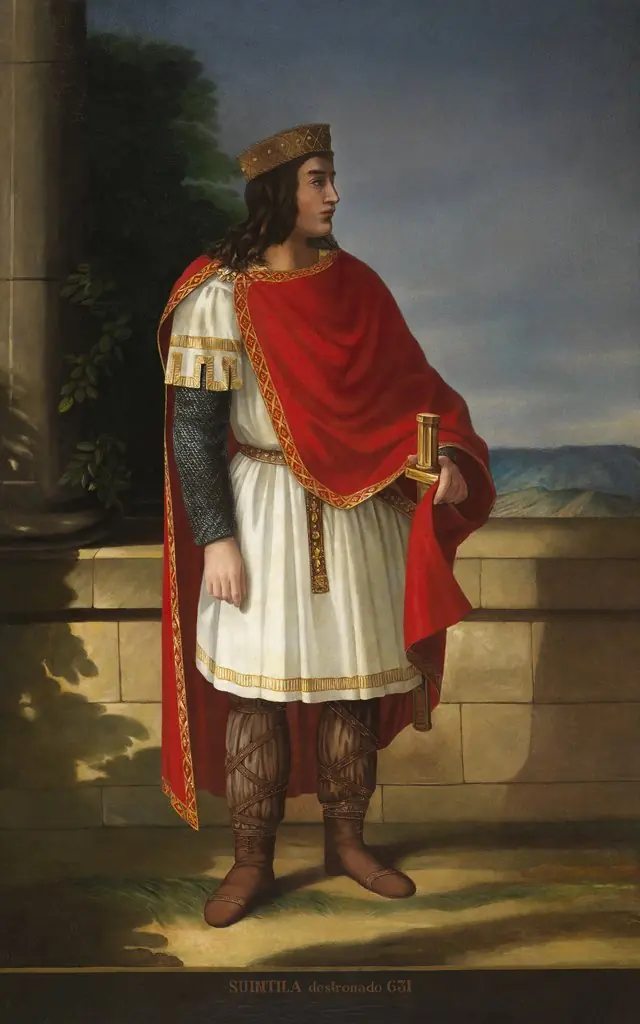
Antonio Gisbert's 1855 oil painting, Liuva I, focuses on the regalia associated with the Visigothic king rather than a narrative scene of the monarch himself.
Antonio Gisbert's 1855 oil painting, Liuva I, focuses on the regalia associated with the Visigothic king rather than a narrative scene of the monarch himself. The work depicts specific royal symbols, including a crown, a sceptre, and a weapon, which serve as the primary visual elements of the composition. These objects function as iconographic markers of sovereignty and martial authority, representing the transfer or assertion of power within the Visigothic kingdom.
By isolating these artifacts, the artist emphasizes the weight of the crown and the instruments of rule as the central subject matter.
Technique & Style
Antonio Gisbert executed Liuva I using oil paint on canvas. The painting measures 224 by 140 centimeters. Stylistically, the work aligns with 19th-century historical painting, and its formal composition incorporates specific regal attributes, depicting a weapon, a sceptre, and a crown to convey the subject's royal authority.
History & Provenance
Liuva I is an oil painting on canvas created by Antonio Gisbert in 1855. The work is held in the collection of the Museo del Prado, where it remains located. The sources do not document a prior ownership chain, commission details, or intermediate provenance prior to its entry into the museum's holdings, nor do they provide information on the circumstances of its creation beyond the artist and date.
Measuring 224 cm in height and 140 cm in width, the canvas was produced in the same year as the painting's inception date of 1855.
Overview
Liuva I, an 1855 oil painting by Antonio Gisbert Pérez, portrays the Visigothic king Liuva I in a symbolic pose, combining realistic and romantic elements to convey political themes.
Context
Within the broader artistic landscape, Liuva I sits at the intersection of 19th-century realism and romanticism, characteristic of the Spanish eclectic movement. Its political undertones resonate with the liberal ideologies of the time.
Legacy
As one of Gisbert's historical pieces with a political edge, Liuva I contributes to the artist's legacy of blending art with progressive thought, influencing subsequent generations of Spanish artists exploring national identity and social commentary.
Own this work as a print
Artist & collection
Artist
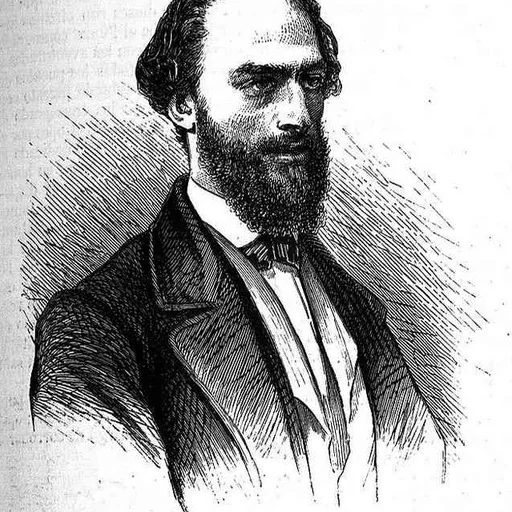
Antonio Gisbert Pérez (19 December 1834 – 27 November 1901) was a Spanish artist situated on the cusp between the realist and romantic movements in art.