Artwork
Wittiza, visigothic's king
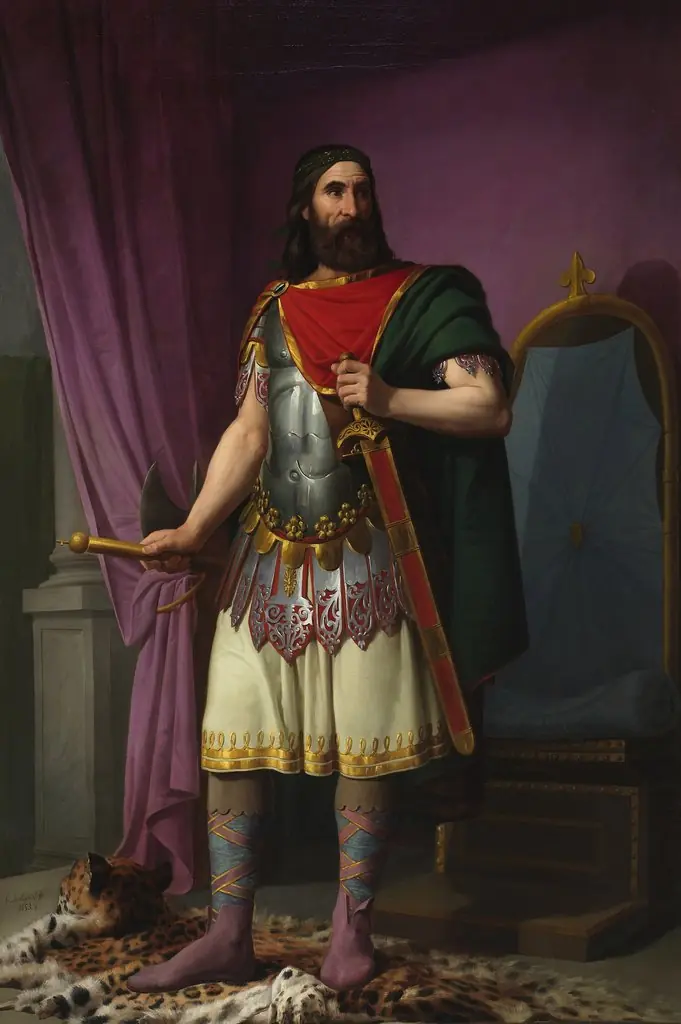
Wittiza, visigothic's king is an oil painting by Manuel Iglesias y Domínguez. It dates from 1853 and is held in the collection of the Museo del Prado.
About this work
Subject & Meaning
The painting portrays King Wittiza in royal attire, marked by a crown and weapon that signify his monarchical authority and martial power. A gemstone held in his hand functions as a symbolic attribute, underscoring his status and divine right. Created by Manuel Iglesias y Domínguez in 1853, the work is housed in the Museo del Prado, where it remains part of the institution's collection.
Technique & Style
Manuel Iglesias y Domínguez rendered Wittiza, visigothic's king as an oil painting on canvas, measuring 222 cm in height and 140 cm in width.
Manuel Iglesias y Domínguez rendered Wittiza, visigothic's king as an oil painting on canvas, measuring 222 cm in height and 140 cm in width. The work depicts a crown, weapon, and gemstone, reflecting formal elements characteristic of 19th-century Spanish portraiture. Executed in 1853, the piece is housed in the Museo del Prado, where it remains part of the permanent collection.
The painting's handling emphasizes precise brushwork to render regal iconography, while the stylistic treatment combines naturalistic detail with symbolic motifs associated with Visigothic authority. The canvas support and oil medium contribute to a durable surface with layered translucency in rendering crowns and gemstones.
History & Provenance
The painting Wittiza, visigothic’s king was created by Manuel Iglesias y Domínguez in 1853. It is an oil-on-canvas work measuring 222 cm in height and 140 cm in width. The work entered the collection of the Museo del Prado in Madrid, where it remains held. The painting was produced in 1853, as indicated by both the artist’s date and the Prado’s records.
Manuel Iglesias y Domínguez's 1853 oil painting, Wittiza, visigothic's king, is held in the collection of the Museo del Prado in Madrid. The work is cataloged within the museum's inventory as a canvas painting depicting the Visigothic king alongside regalia such as a crown and gemstone. While the specific accession number is not provided in the available records, the artwork has been attributed to the Prado's holdings since its creation in the mid-19th century.
No specific exhibition history or loan records beyond its permanent location at the Museo del Prado are documented in the provided sources.
Overview
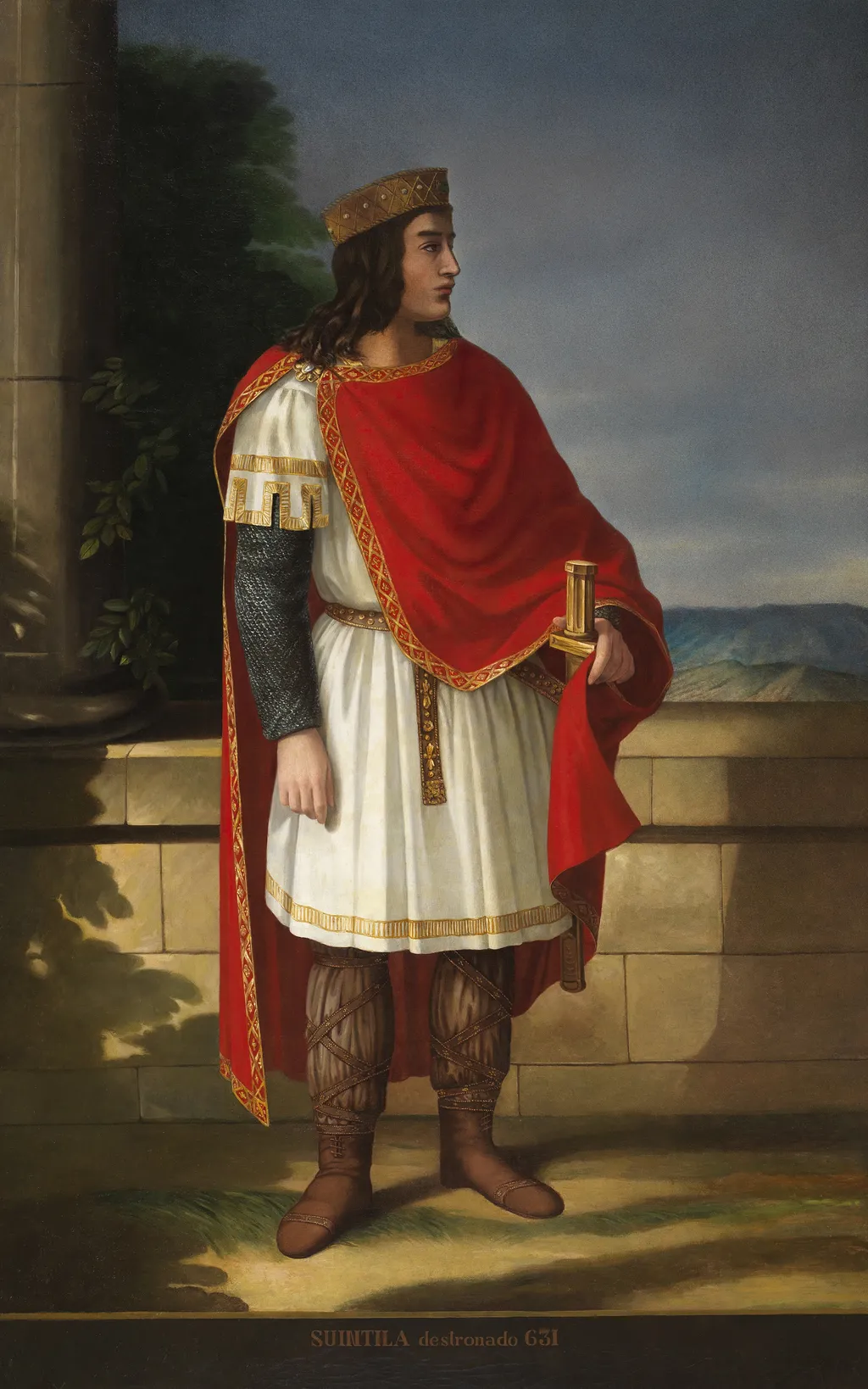
Manuel Iglesias y Domínguez painted Wittiza, Visigothic king in 1853 using oil on canvas. The work is part of the collection at the Museo del Prado and presents a solitary figure against a stone wall, with a column and foliage to the left.
Context
Created in the mid‑19th century, the painting reflects the period’s interest in historic and national subjects, aligning with Romantic historicism that sought to revive Spain’s early medieval past.
Own this work as a print
Artist & collection
Artist
Manuel Iglesias y Domínguez painted scenes from Spain’s past in the mid-1800s. He worked in oils, often showing figures from medieval history. One of his works here, Wittiza, visigothic's king, shows that Visigoth ruler…