Artwork
Egica
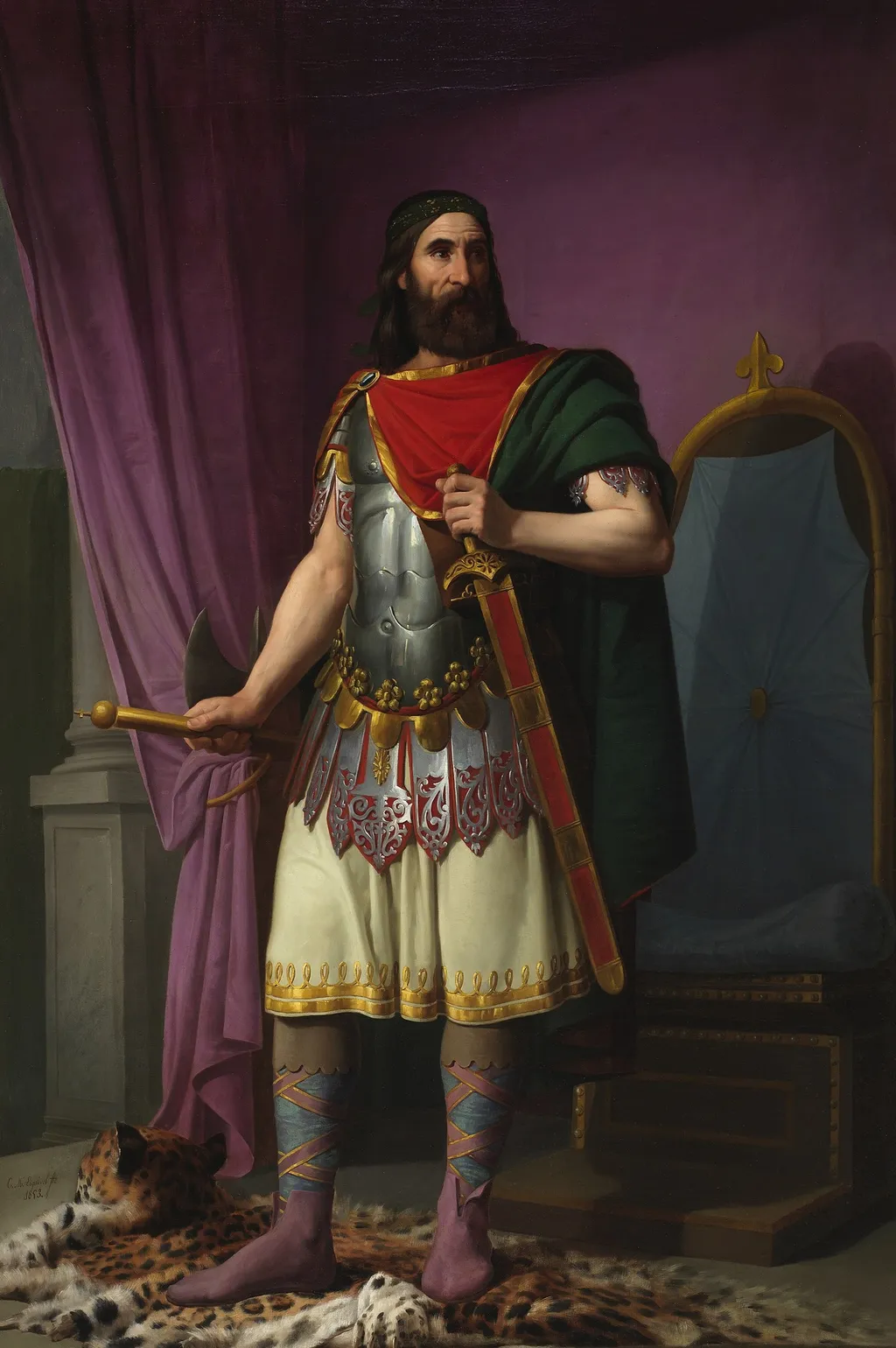
Egica is an oil painting by the Biedermeier artist Carlos Esquivel y Rivas. It dates from 1853 and is held in the collection of the Museo del Prado.
About this work
Subject & Meaning
The portrait presents Egica clad in body armor, a visual reference that underscores his military stature and authority. The armor functions symbolically to convey power and protectiveness, aligning the sitter with heroic ideals of the period. Rendered in oil on canvas, the work measures 224 cm by 141 cm and is housed in the Museo del Prado, where it remains on public view.
Technique & Style
The handling is consistent with mid-19th-century academic portraiture, emphasizing smooth modeling of the face and metallic highlights on the armor.
The painting is executed in oil on canvas. The handling is consistent with mid-19th-century academic portraiture, emphasizing smooth modeling of the face and metallic highlights on the armor. The figure is depicted frontally, seated, with carefully rendered details of the cuirass and regalia that convey status and historical gravitas.
The composition is stable, with subdued lighting that defines the contours of the sitter’s features while maintaining a restrained palette.
History & Provenance
The portrait of Egica was created in 1853 by the Spanish artist Carlos Esquivel y Rivas. Executed in oil paint on canvas, the work measures 224 cm in height and 141 cm in width. It depicts the historical figure Egica wearing body armor. The painting is currently held in the collection of the Museo del Prado.
Egica, an 1853 oil painting on canvas measuring 224 cm by 141 cm, is housed in the Museo del Prado under inventory number P009686. The work has been displayed in the museum’s permanent collection galleries and featured in the Prado’s retrospective exhibitions of Carlos Esquivel y Rivas.
Legacy
Egica, painted by Carlos Esquivel y Rivas in 1853, entered the collection of the Museo del Prado and is documented as a portrait depicting a figure in body armor. The work's significance was reaffirmed in later scholarship, including its inclusion in the 2001 retrospective of Spanish nineteenth-century portraiture at the Museo Nacional de Arte de Cataluña, where curators highlighted its role in bridging academic realism with emerging naturalist tendencies. Contemporary assessments of Esquivel y Rivas's career consistently cite Egica as one of his most technically accomplished and symbolically resonant portraits, noted for its meticulous rendering of fabric and armor.
The painting remains on public view at the Museo del Prado, where it is studied as a representative example of elite Spanish portraiture just prior to the political and artistic shifts of the mid-nineteenth century.
Overview
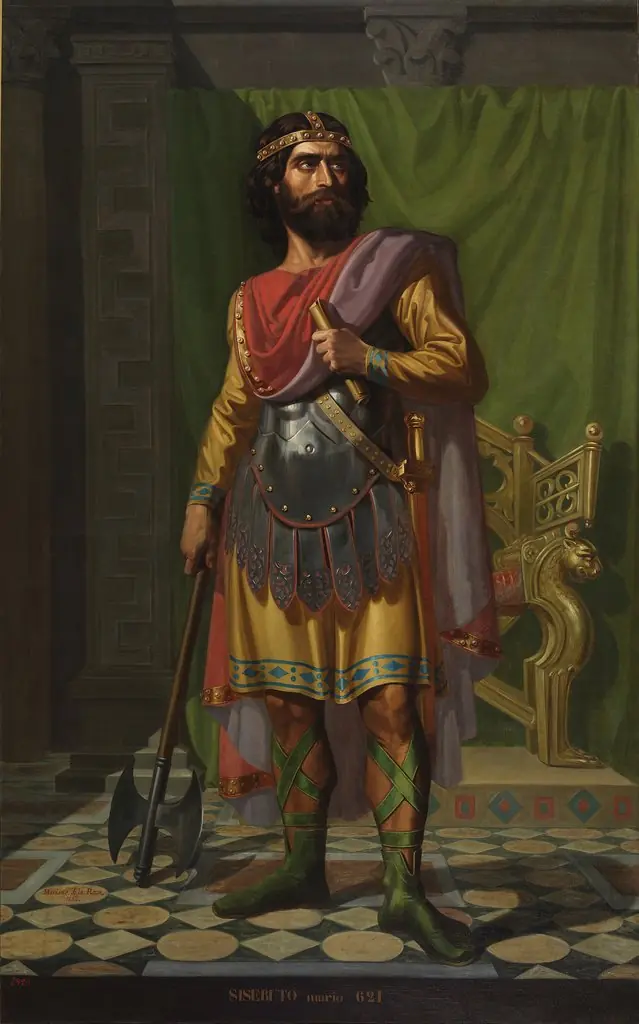
Created in 1853, this oil painting by Carlos Esquivel y Rivas portrays a bearded figure named Egica, clad in elaborate armor and standing within an interior setting. The work is part of the collection of the Museo del Prado, where it is displayed among other 19th‑century Spanish portraits.
Context
Egica reflects the period’s fascination with historical and chivalric themes, aligning with Romantic‑era interests in medieval pageantry. The inclusion of opulent armor and regal accessories situates the work within a broader trend of portraying contemporary figures as embodiments of historic virtues.
Own this work as a print
Artist & collection