Artwork
A Circus Boy
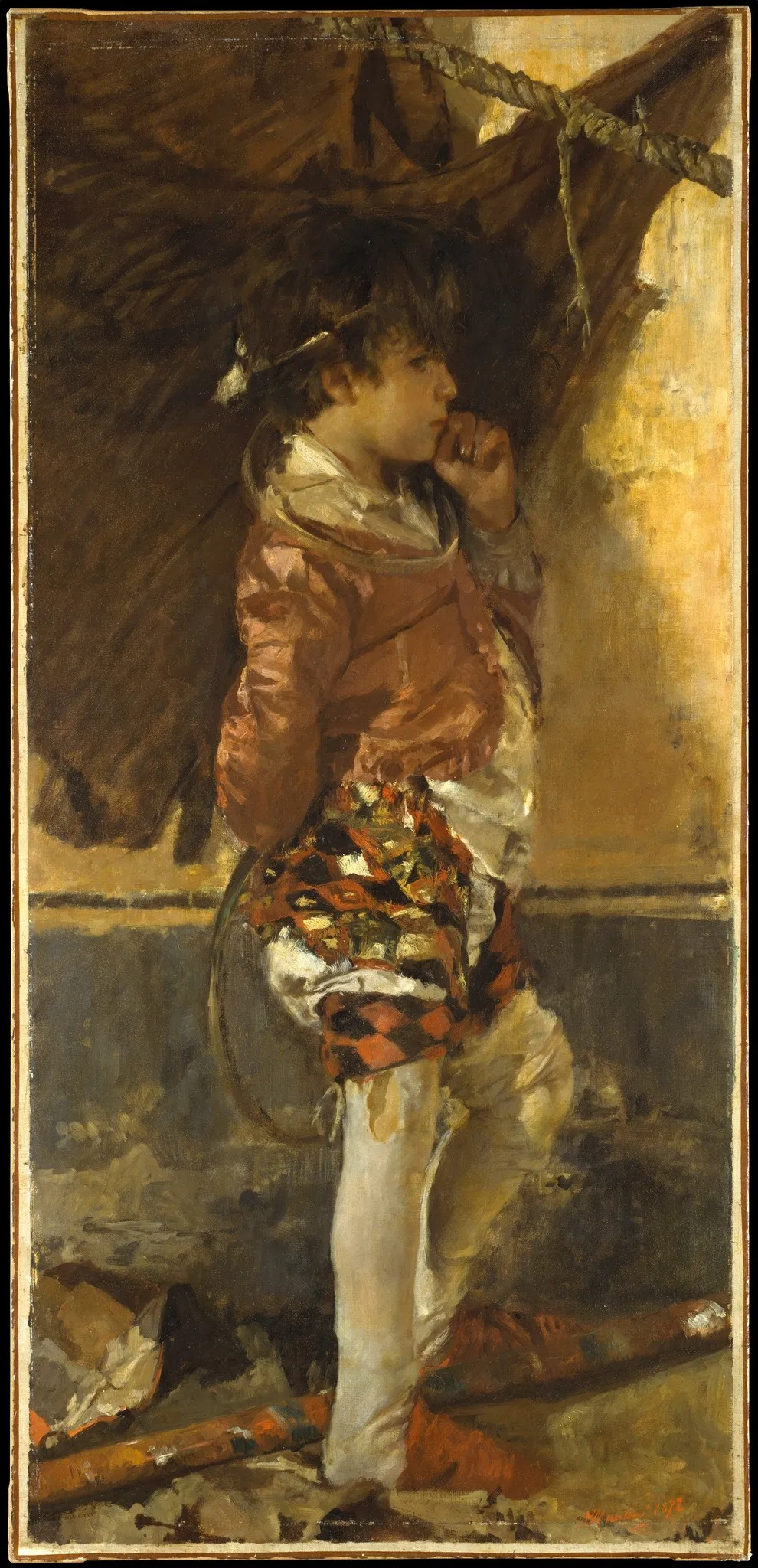
A Circus Boy is an oil painting by the Realist artist Antonio Mancini. It dates from 1872 and is held in the collection of the Metropolitan Museum of Art.
About this work
Technique & Style
The composition’s vertical format emphasizes the solitary, upward-turning pose of the boy, whose costume and props are rendered with crisp delineation.
Executed in 1872, A Circus Boy is painted in oil on canvas, a combination supported by both institutional records and technical descriptions. The handling is characterized by a precise, linear clarity that defines the profile figure against a neutral ground, a stylistic choice aligned with Mancini’s academic training and realist aims. The composition’s vertical format emphasizes the solitary, upward-turning pose of the boy, whose costume and props are rendered with crisp delineation.
The work’s condition, as maintained by the Metropolitan Museum of Art, remains stable, with no reported structural or pigmentary issues affecting the paint layer or canvas support.
History & Provenance
Painted in 1872, A Circus Boy is documented as an early work by Antonio Mancini, executed in oil on canvas. The painting entered the collection of the Metropolitan Museum of Art, where it remains held; the Museum’s records list the work’s dimensions as 151.4 cm in height and 72.4 cm in width. No provenance prior to its acquisition by the Metropolitan is provided in the Museum’s documentation, and the circumstances of commission or early ownership are not specified.
The painting A Circus Boy, executed by Antonio Mancini in 1872, is held in the collection of the Metropolitan Museum of Art in New York. Created using oil paint on canvas, the work depicts a circus boy in profile. While the artwork's physical dimensions and medium are documented, the provided sources do not list a specific inventory or accession number, nor do they detail any past or current exhibition history for the piece.
Context
Antonio Mancini's 1872 oil painting A Circus Boy, housed in the Metropolitan Museum of Art, portrays a young circus performer in profile, rendered in oil on canvas (151.4 × 72.4 cm). The work exemplifies the artist’s focus on everyday subjects and his adept handling of light and texture, situating it within his broader oeuvre of genre scenes that capture marginalized figures of the period. Its inclusion in a major museum collection underscores its significance in 19th‑century European painting and reflects Mancini’s contribution to the realist tradition through intimate, narrative-driven compositions.
Overview
Painted in 1872, A Circus Boy is an early oil on canvas by the Italian artist Antonio Mancini. The work portrays a young male subject, likely a child performer, dressed in a costume featuring a red jacket and shorts with a distinct harlequin pattern. The figure stands against a dark, indistinct background dominated by a heavy draped curtain, which isolates the subject and emphasizes the texture of his clothing.
Mancini renders the boy's face in three-quarter profile, turned slightly to the right, capturing a moment of quiet introspection rather than theatrical action. This piece exemplifies Mancini's precocious talent, created when he was only twenty years old and still a student at the Naples Academy. It demonstrates his early mastery of light and his ability to convey psychological depth in portraiture, foreshadowing the sophisticated realism and expressive brushwork that would define his later career.
The painting marks a significant moment in the development of Italian realism, bridging academic tradition with a more direct, empathetic observation of contemporary life.
Subject & Meaning
The painting portrays a young boy, possibly a performer, dressed in a striking red jacket and harlequin-patterned shorts. He stands within a dimly lit space, a large curtain or fabric draped behind him. His profile is turned to the right, conveying a sense of introspection or quiet contemplation rather than a direct engagement with the viewer.
Artist & collection

- Portrait of a Child
 Musketeer
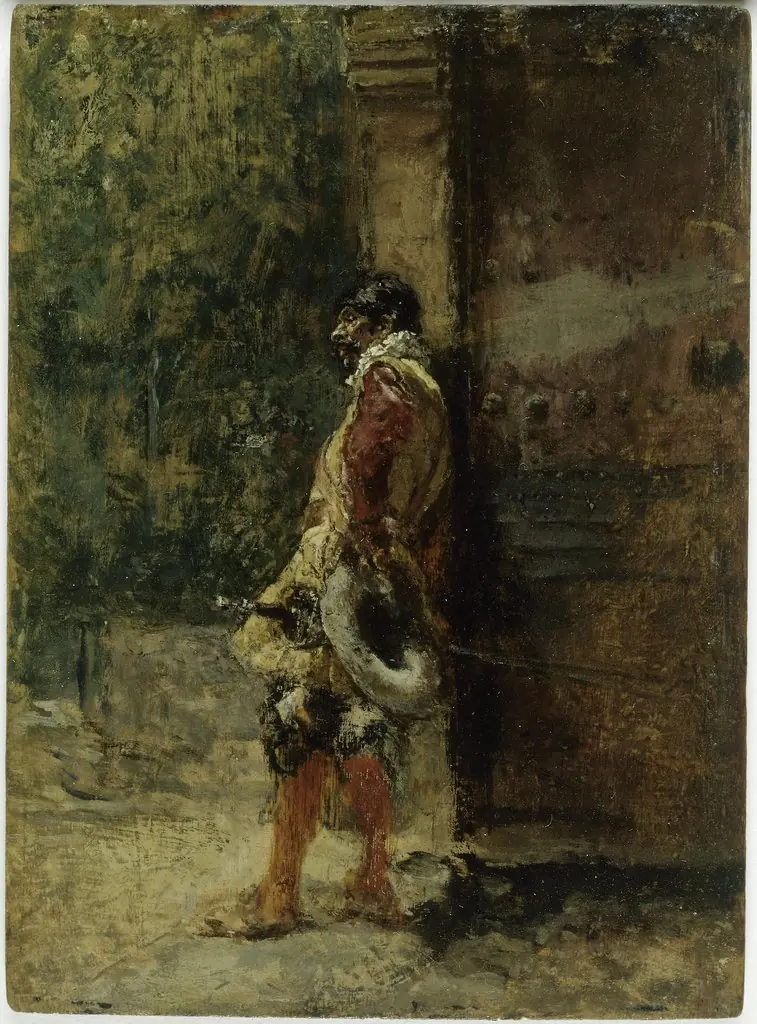 Cavalier
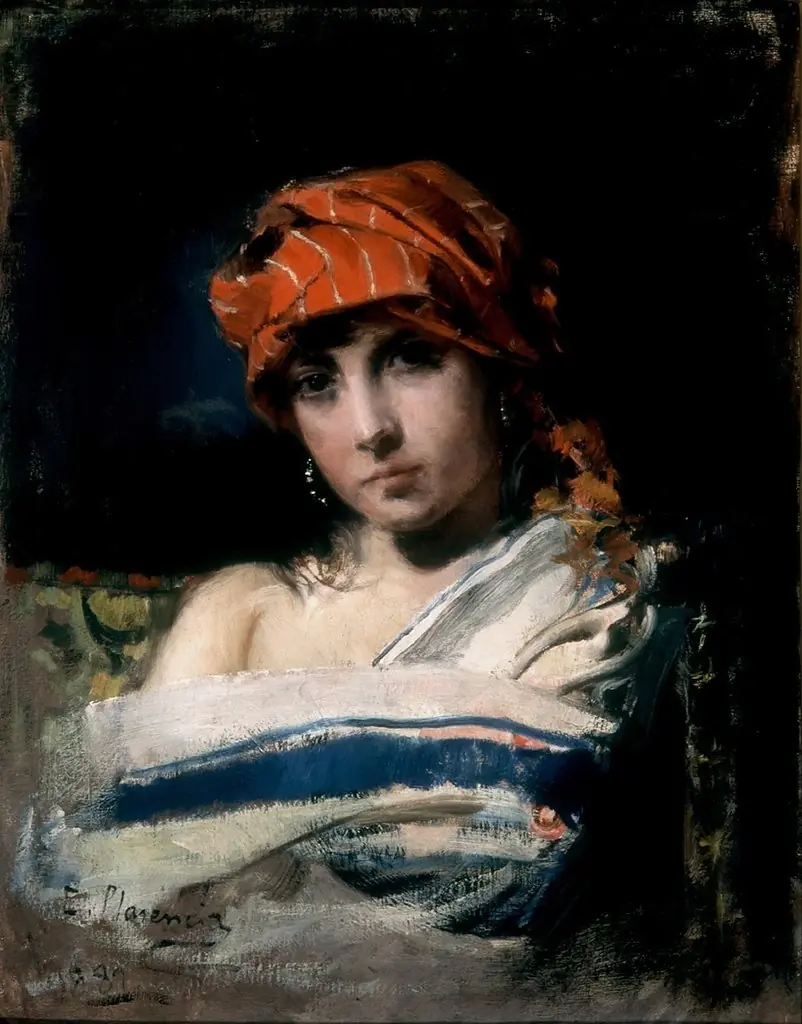 La joven del pañuelo rojo
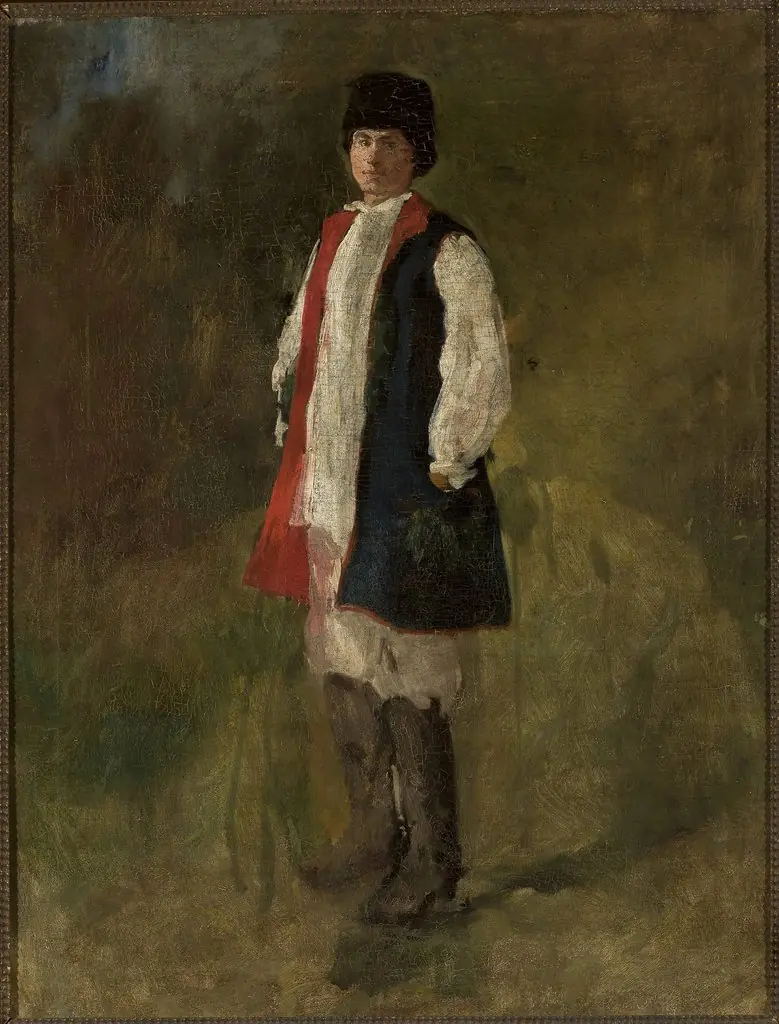 Peasant in the “sukmana” overcoat
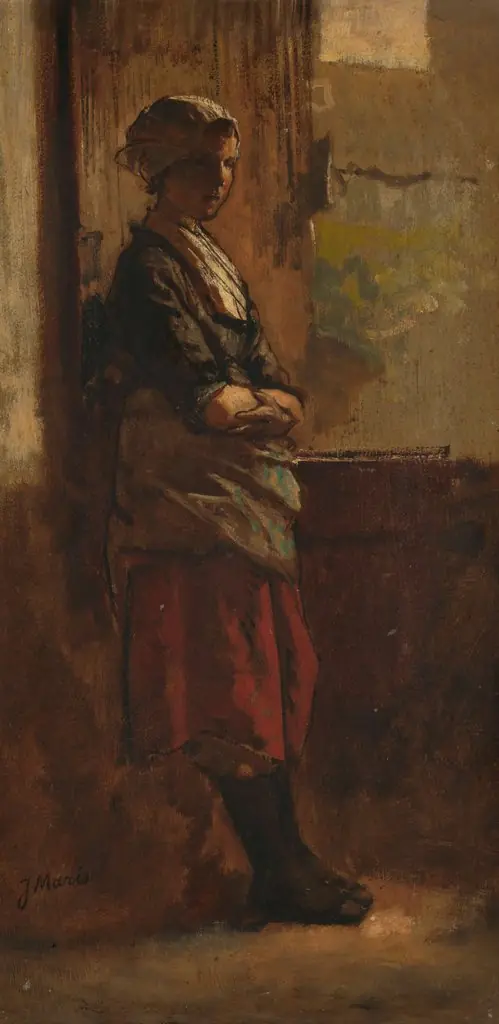 Meisje bij een deuropening.
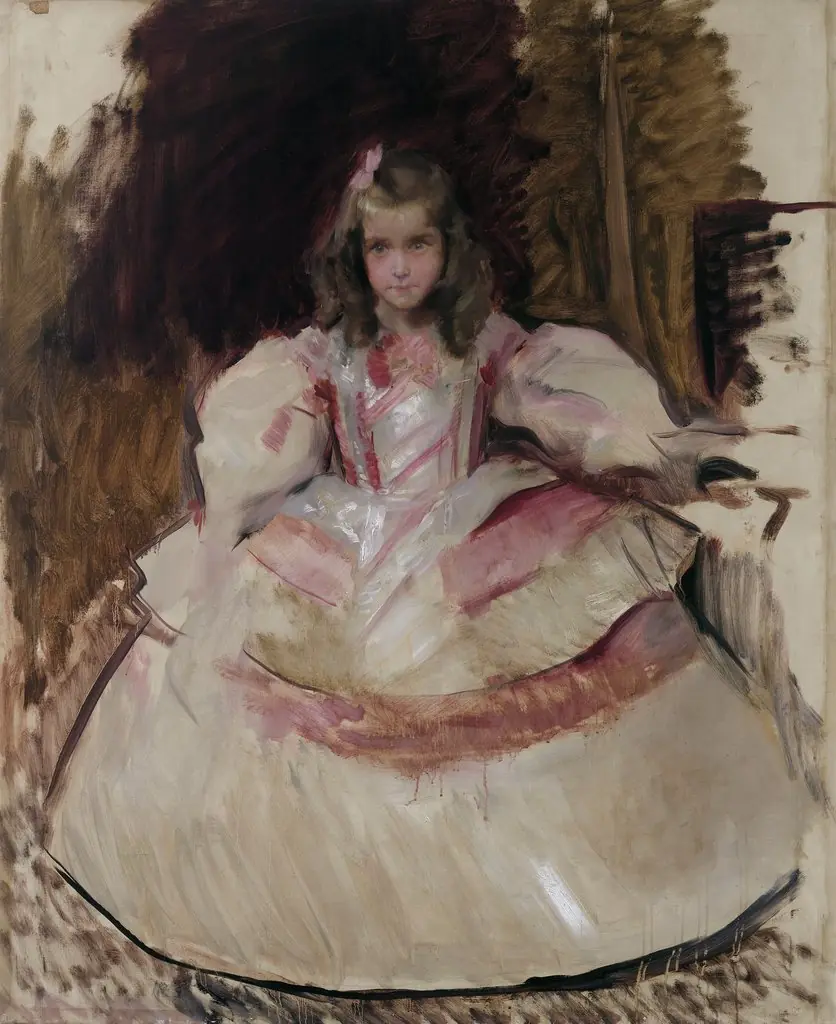 La niña María Figueroa vestida de menina
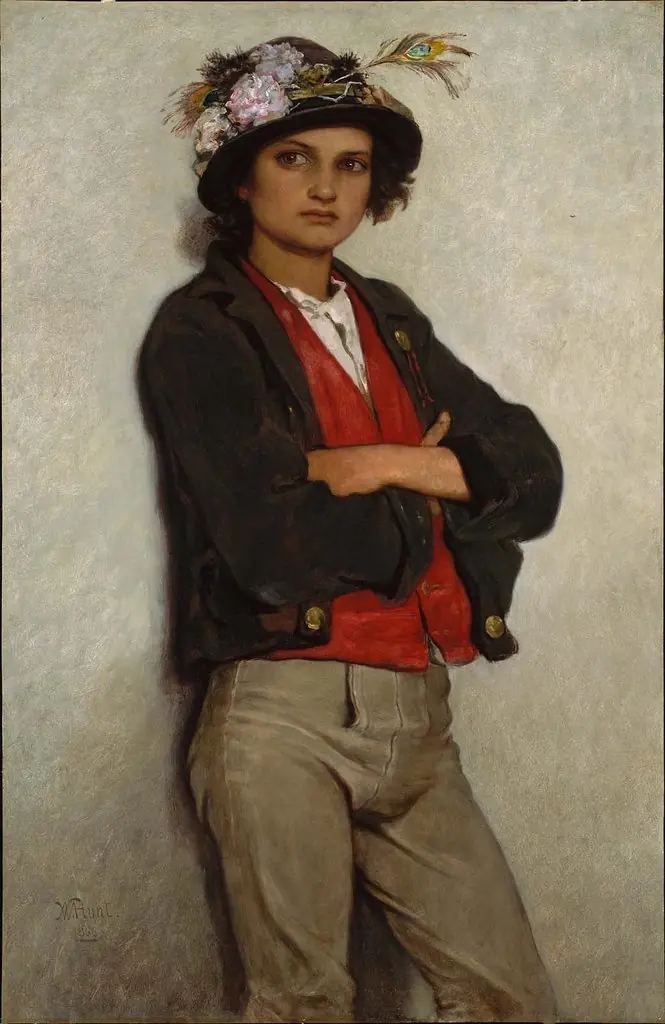 Italian Peasant Boy
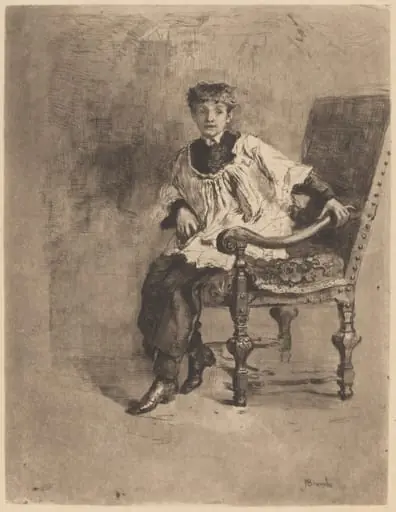 Seated Acolyte
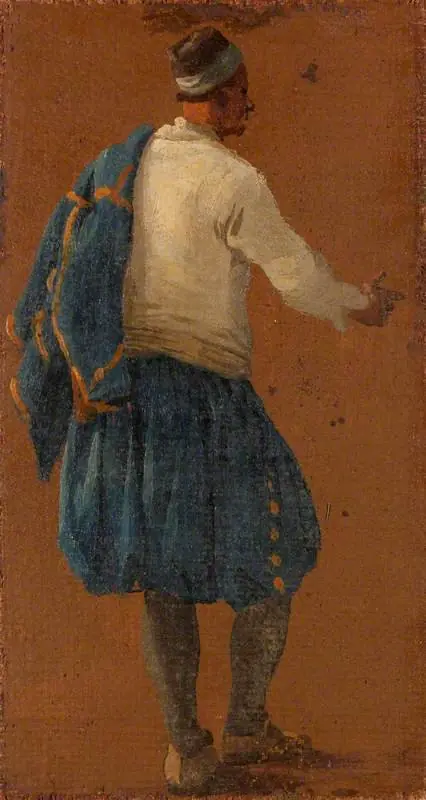 A Man Seen from Behind
 Marguerite
 Portrait of Olga Wassiljewna Surikowa, the artist's daughter (Girl with Doll)