Artwork
Flora
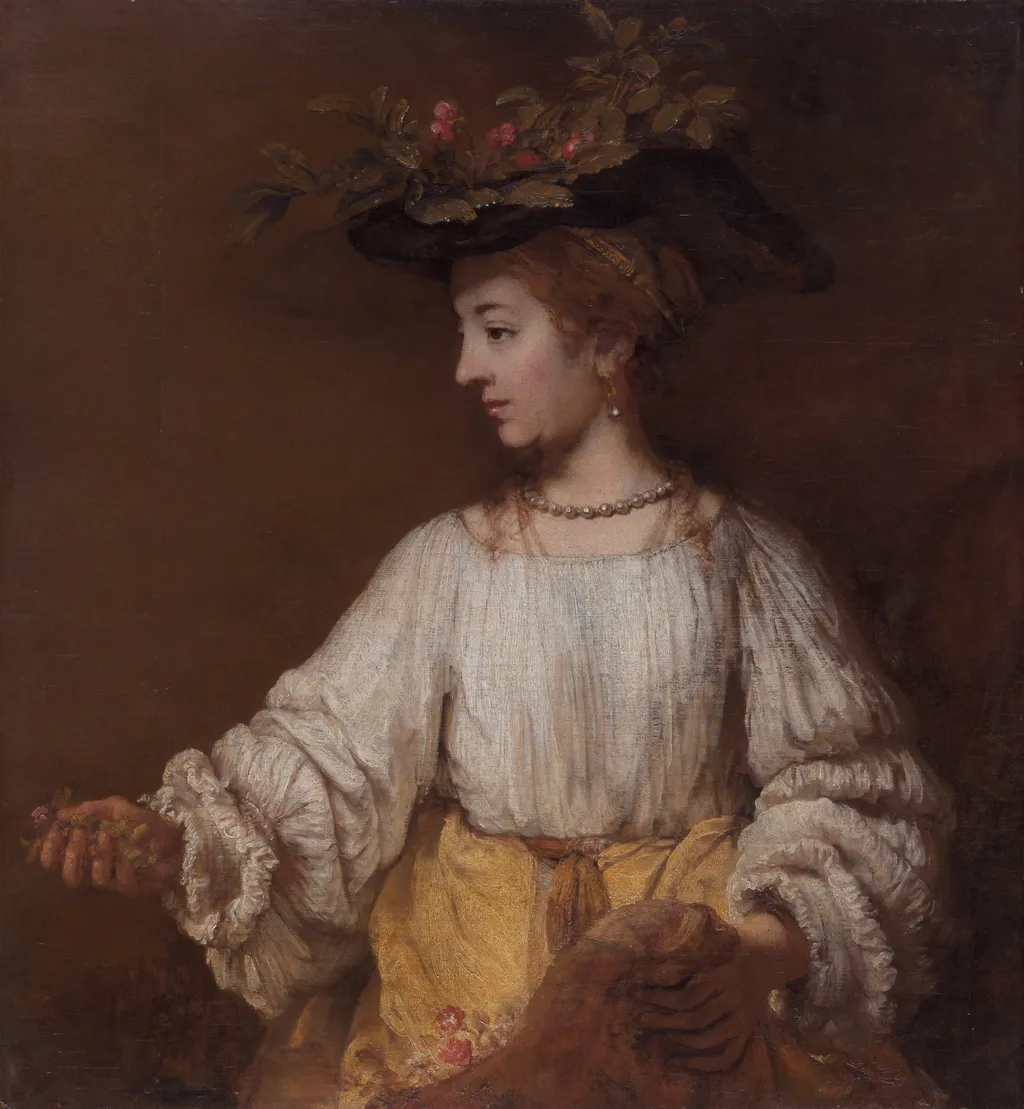
Flora is an oil painting by the Dutch Golden Age artist Rembrandt van Rijn. It dates from 1654 and is held in the collection of the Metropolitan Museum of Art.
About this work
A Roman goddess of spring stands in a muted palette of browns and golds, her gaze remote. Rembrandt painted the canvas around 1654 in Amsterdam, responding to Titian's Venetian example while using the rough handling and somber color that mark his own hand. Some scholars see in the figure a memory of Saskia, his late wife.
Subject & Meaning
The painting depicts the Roman goddess Flora, the embodiment of spring and flowers, likely modeled on Rembrandt's companion Hendrickje Stoffels (though the identification is not confirmed). The subject is shown in profile facing left, wearing a hat adorned with cherry branches and scattering flower petals from her lap, traditional attributes of Flora that symbolize renewal, fertility, and the bounty of spring. The choice to portray a contemporary woman as a mythological figure imbues the work with a personal dimension, possibly linking the goddess's associations with love and life to Rembrandt's relationship with Hendrickje or the memory of his late wife Saskia.
The iconography thus merges classical allegory with intimate portraiture, giving the painting layers of meaning about nature, transience, and personal affection.
Technique & Style
She wears a loose blouse and a yellow skirt, a hat adorned with cherry branches, and scatters flower petals from her lap with her right hand.
Flora is executed in oil on canvas, a medium and support typical of Rembrandt's mature period. The painting measures 100 by 91.8 centimetres. Stylistically, it belongs to the Dutch Golden Age, blending mythological portraiture with genre-like intimacy.
The sitter, likely posed as the goddess Flora, is shown with her bust facing the viewer while her head is in profile. She wears a loose blouse and a yellow skirt, a hat adorned with cherry branches, and scatters flower petals from her lap with her right hand. Rembrandt's handling of paint is characteristically rich, with broad, visible brushwork in the costume and softer modeling in the face. The composition emphasizes a quiet, naturalistic elegance typical of the artist's work from around 1654.
History & Provenance
Painted by Rembrandt in 1654, Flora entered the collection of George Spencer, 2nd Earl Spencer, and descended through successive Earls Spencer. The work was later acquired by the art dealer Joseph Duveen, 1st Baron Duveen, and subsequently owned by Archer Milton Huntington and his wife Arabella Huntington. It is now held at the Metropolitan Museum of Art, New York.
No commission details are recorded; the painting is believed to depict Rembrandt's companion Hendrickje Stoffels as the goddess Flora, though this identification remains unconfirmed.
Overview
Rembrandt van Rijn's Flora, painted around 1654, depicts the Roman goddess of spring. This oil on canvas, measuring approximately 100 by 91.8 cm, is housed at the Metropolitan Museum of Art. The artwork exemplifies Rembrandt's mature style, blending a classical subject with his distinctive use of impasto and muted colors. It also reflects his engagement with Italian masters while maintaining a deeply personal and introspective quality.
Context
Though Rembrandt never traveled to Italy, he engaged deeply with Italian artistic traditions. In Flora, he responded to the mythological works of the Venetian master Titian, whose compositions were disseminated through prints and imported canvases across Europe. Rembrandt assimilated these influences while maintaining his unique artistic voice, transforming classical themes through his characteristic handling of light, shadow, and texture, rather than adopting a purely Italianate style.
Own this work as a print
Artist & collection

Artist
Rembrandt Harmenszoon van Rijn, known mononymously as Rembrandt, was a Dutch Golden Age painter, printmaker, and draughtsman.


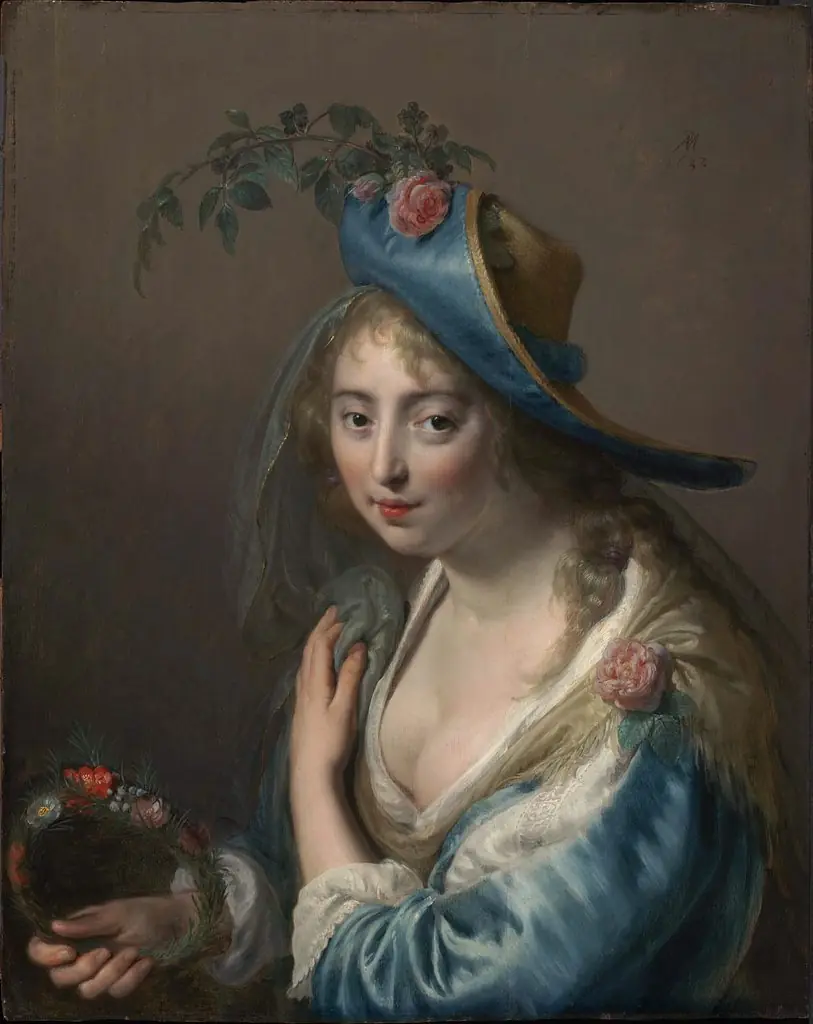 Portrait of a Young Woman as Flora
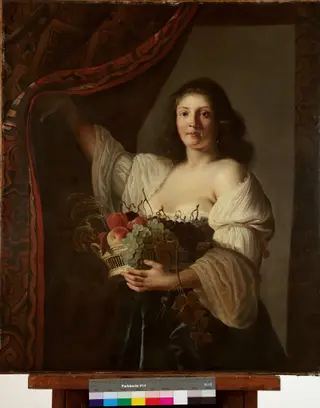 Junge Frau mit Früchtekorb
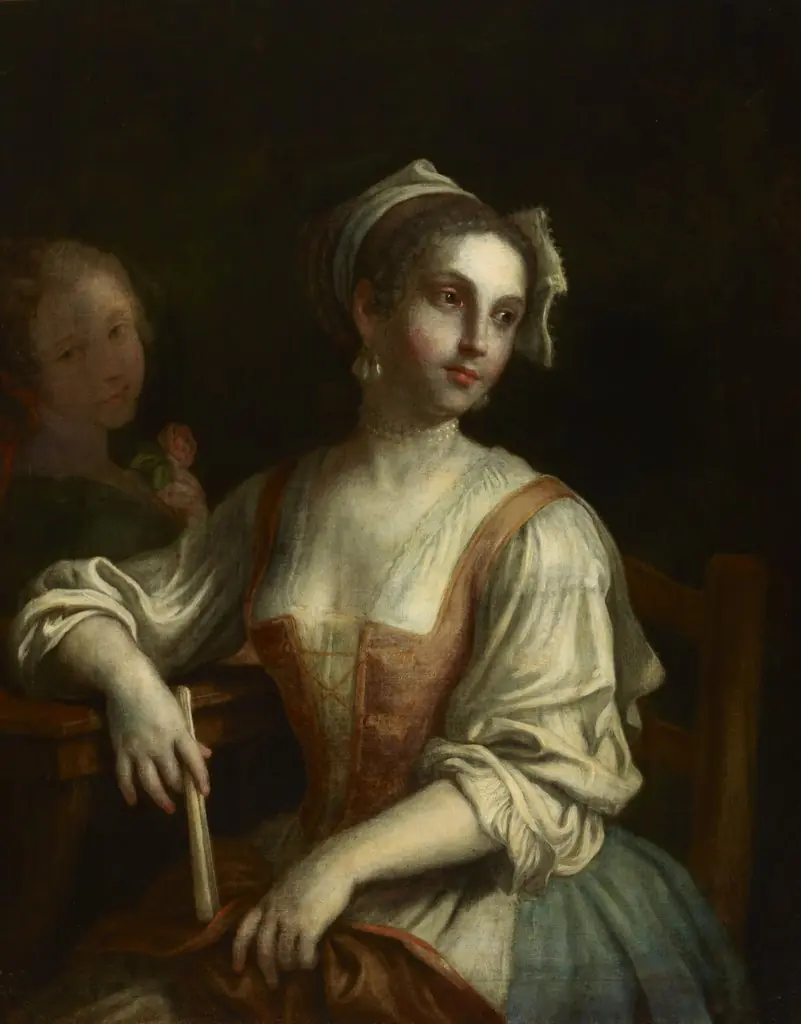 Woman with a Fan and a Woman with a Rose
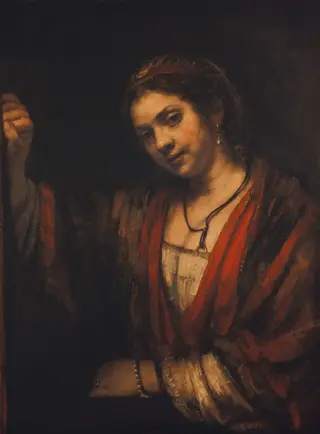 Hendrickje Stoffels by a Door
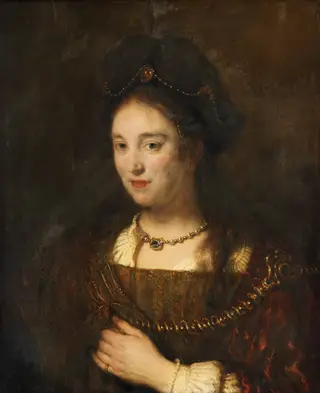 Half-figure of a woman with a beret
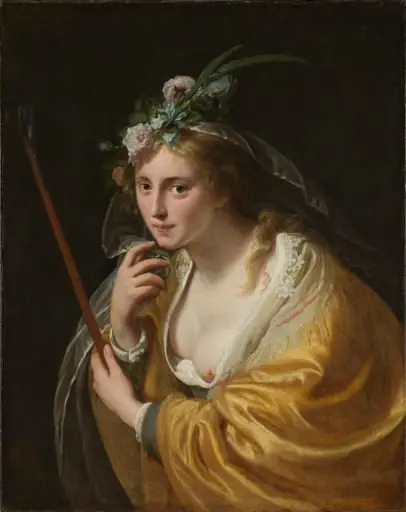 A Shepherdess
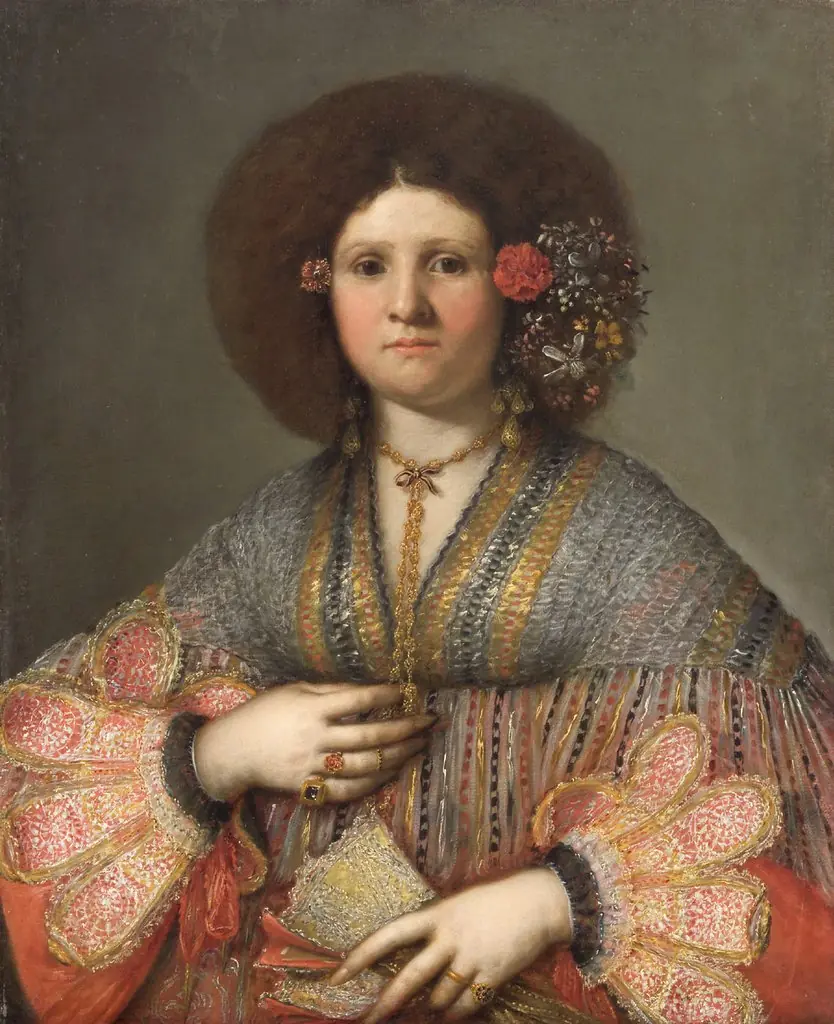 Bildnis einer Venezianerin
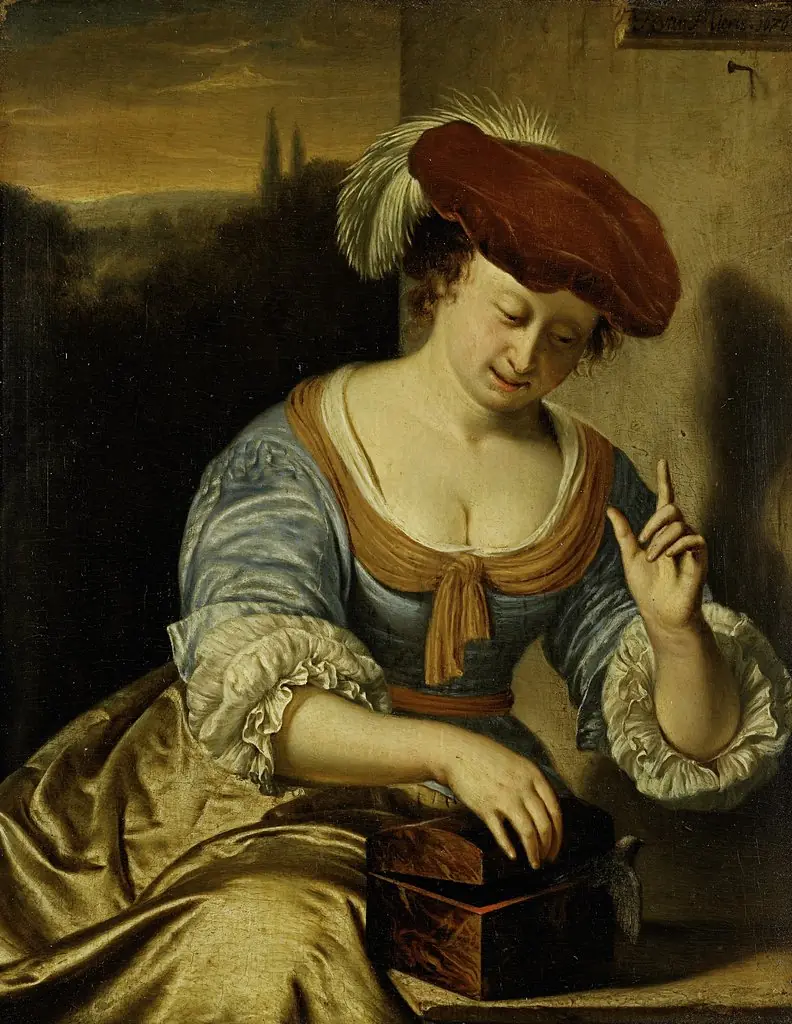 The flown bird: allegory on the loss of virginity
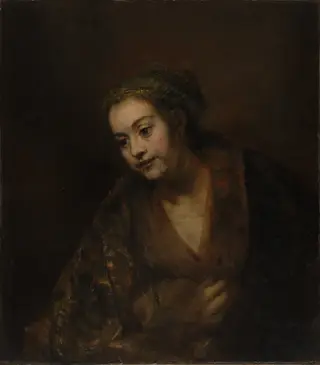 Hendrickje Stoffels (1626–1663)
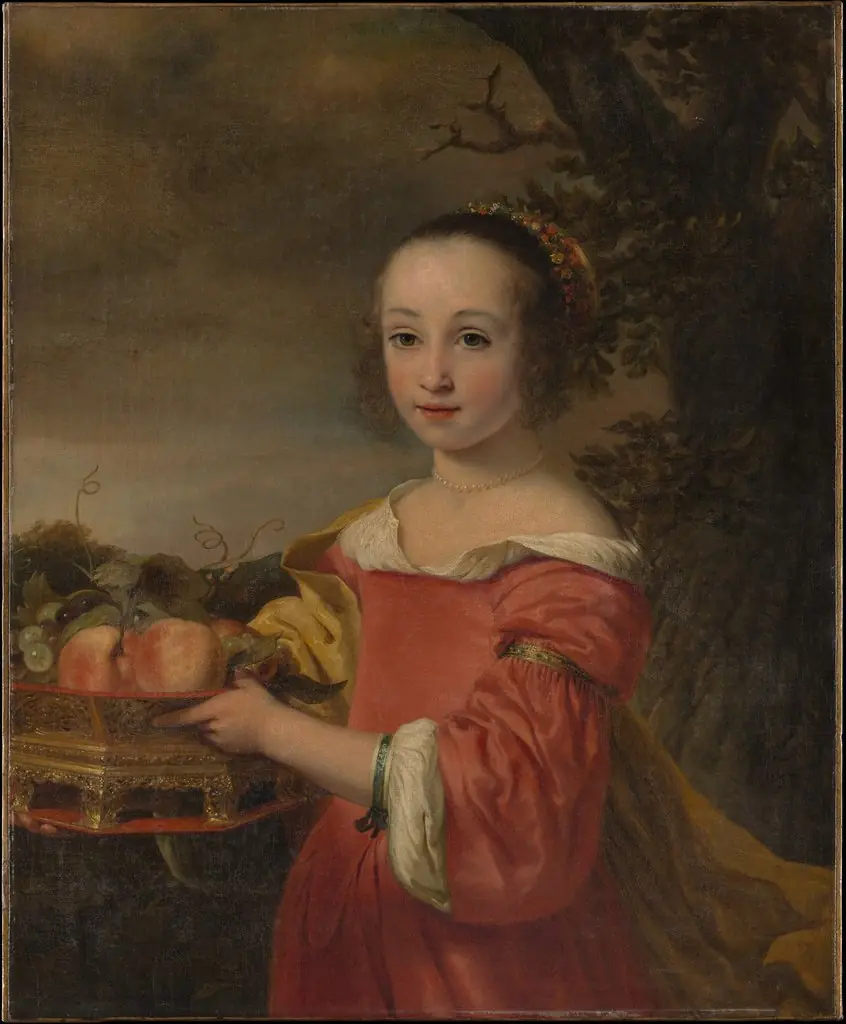 Petronella Elias (1648–1667) with a Basket of Fruit
 Studied in the Dutch Golden Age course