Artwork
The Assassination and Funeral of Julius Caesar
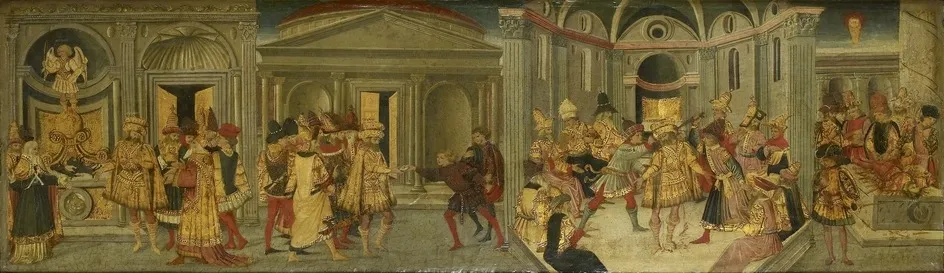
The Assassination and Funeral of Julius Caesar is an unspecified painting by the Early Renaissance artist Apollonio di Giovanni. It dates from 1457 and is held in the collection of the Ashmolean Museum.
About this work
Overview
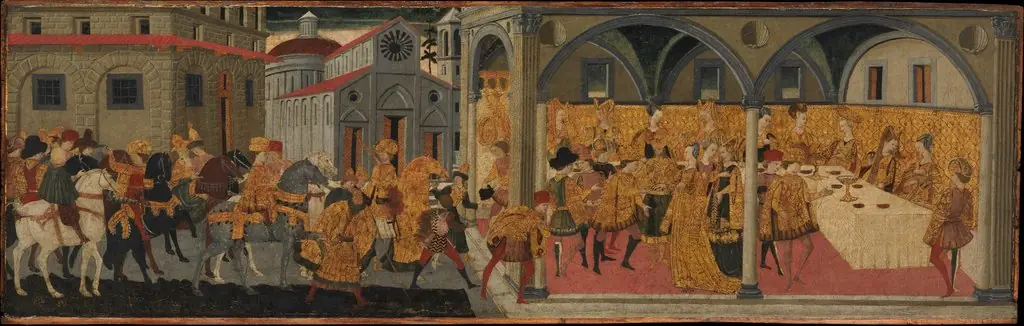
Created in 1457 by the Florentine cassone painter Apollonio di Giovanni, The Assassination and Funeral of Julius Caesar is a narrative panel painting that condenses two pivotal moments from Roman history into a single continuous composition. The work depicts the Ides of March, showing the murder of Caesar on the left, where conspirators surround the fallen dictator, and his subsequent funeral procession on the right, characterized by mourners and soldiers in contemporary 15th-century attire. Apollonio organizes the scene across a unified architectural landscape, utilizing a high horizon line to accommodate the crowd and the classical buildings that frame the action.
The figures are rendered with the distinct style of the Florentine workshop, featuring elongated forms and vibrant, patterned textiles that reflect Renaissance fashion rather than strict historical accuracy. This piece exemplifies the artist's mastery of the cassone tradition, where mythological and historical subjects were used to decorate marriage chests for wealthy patrons. By merging distinct chronological events into one visual field, the painting serves both as a moral lesson on political betrayal and as a display of humanist learning popular in mid-15th century Florence.
Subject & Meaning
The painting juxtaposes the violent climax of Caesar’s murder with the orderly rites that follow, reflecting Renaissance interest in classical history and moral exempla. By arranging the assassination, the funeral procession, and a courtly assembly within a single frame, the artist invites contemplation of power, loyalty, and the transition from chaos to civic order.
Technique & Style
Executed in tempera on panel, the scene is distinguished by meticulous rendering of fabrics and architectural details. The figures wear contemporary Renaissance attire, allowing the viewer to relate ancient events to 15th‑century society. A restrained palette of browns and grays unifies the composition, while fine brushwork delineates intricate patterns on garments and stonework.
History & Provenance
Created in 1457, the panel entered the Ashmolean Museum’s holdings through a 19th‑century acquisition of a Florentine collection. Its attribution to Apollonio di Giovanni rests on stylistic parallels with other works from his workshop, confirming its place within the artist’s mature period.
Artist & collection

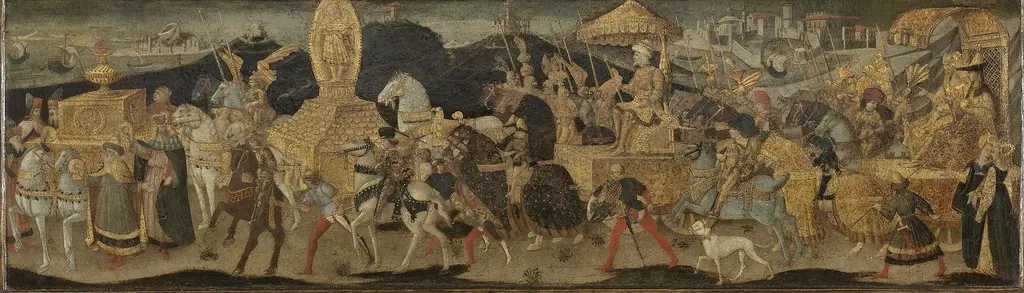 Darius Marching to the Battle of Issus
 The Adventures of Ulysses
 Journey of the Queen of Sheba
 Meeting of Solomon and the Queen of Sheba
 Virgin and Child Enthroned with Saint Benedict and a Bishop Saint
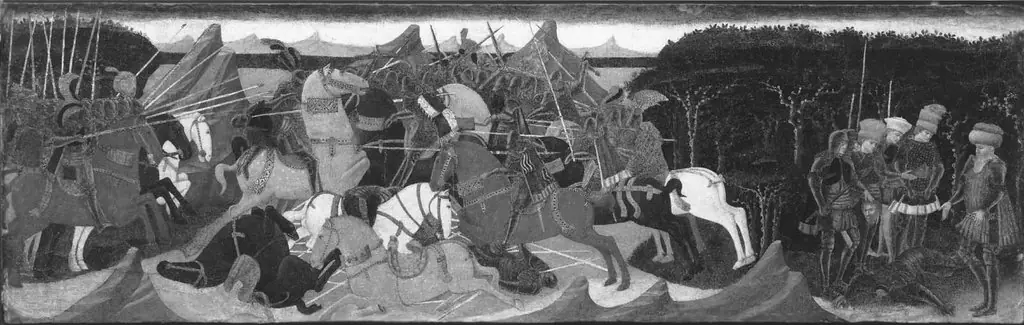 Battle of Pharsalus and the Beheading of Pompey
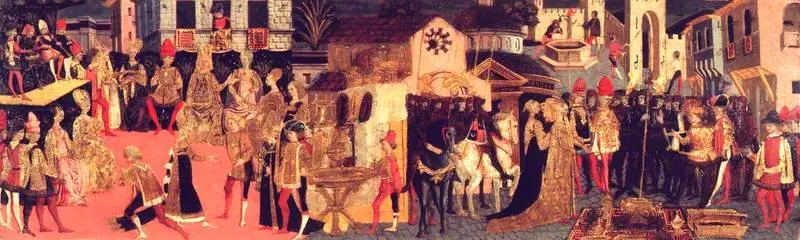 The Continence of Scipio
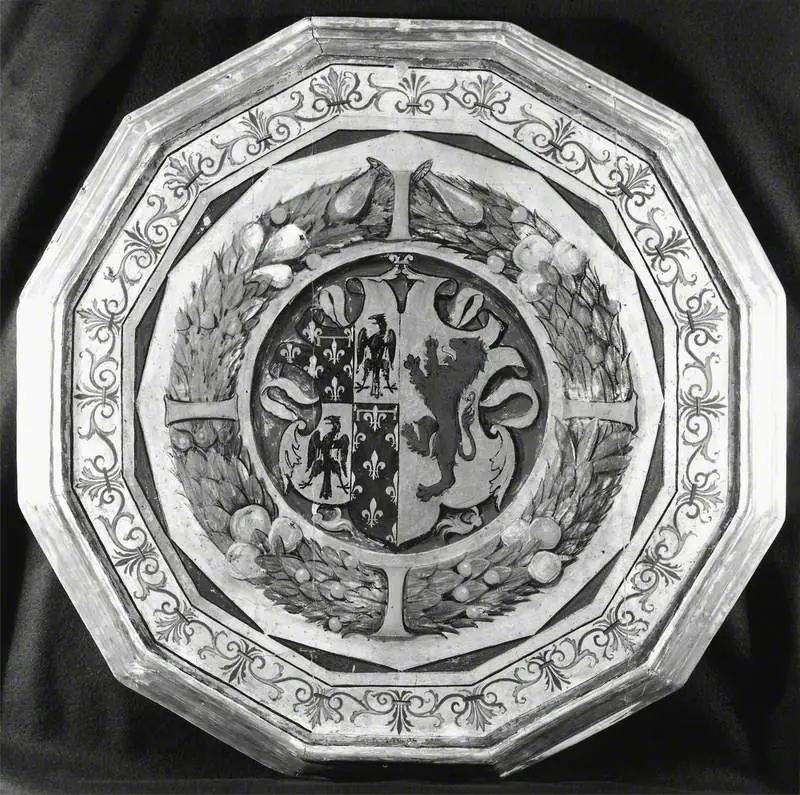 Shield with Two Arms Framed by a Garland (birth tray, back)