Artwork
The Triumph of Aemilius Paulus after the Battle of Pydna
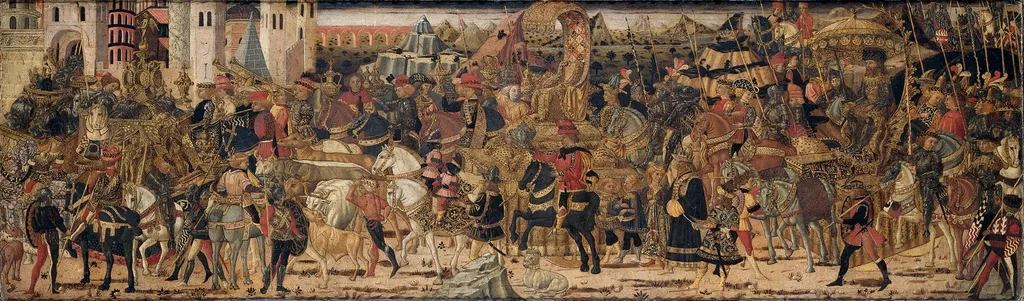
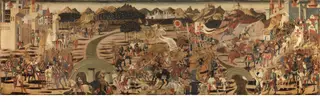
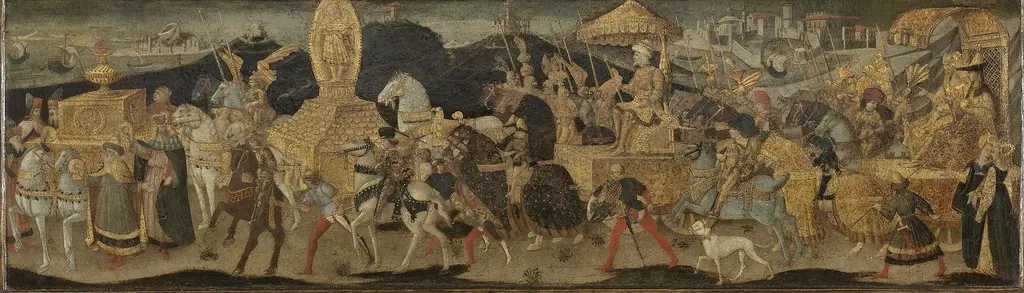
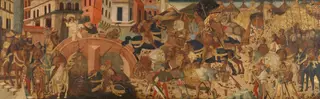
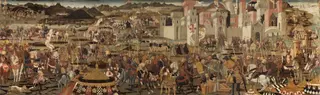
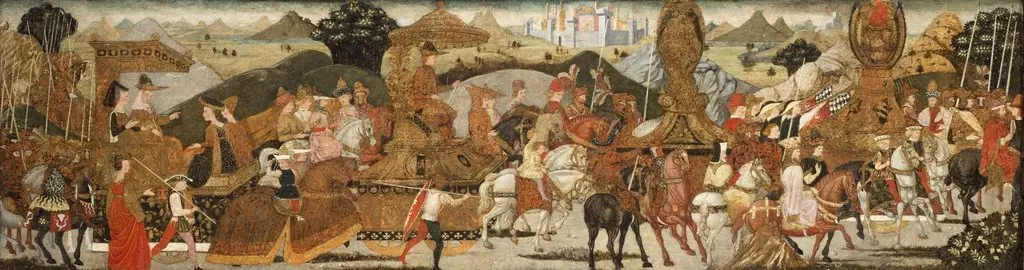
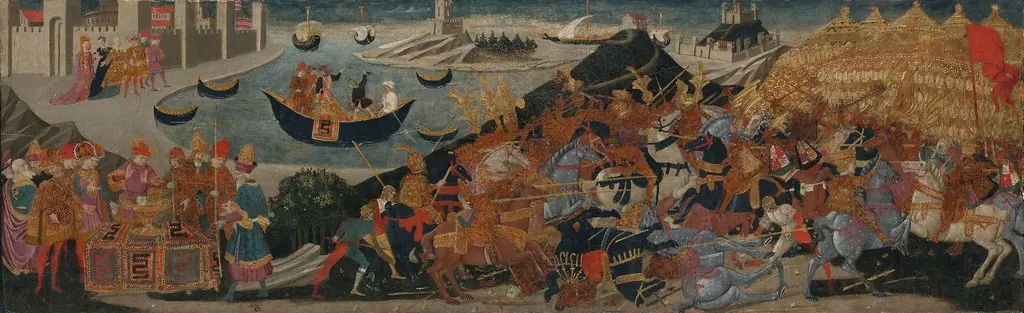
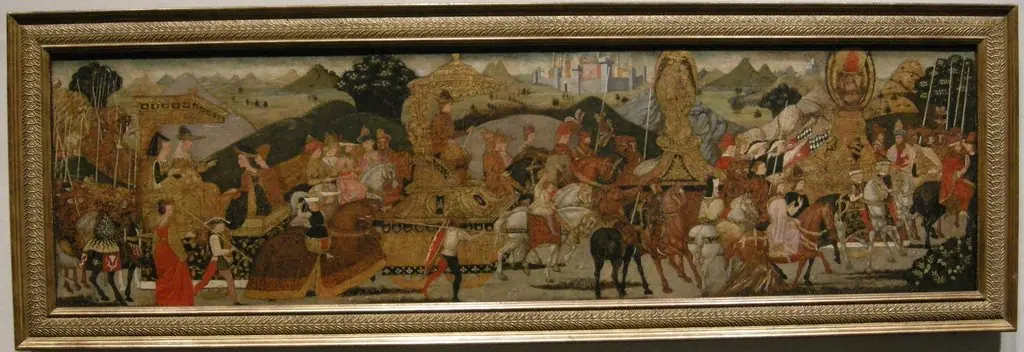
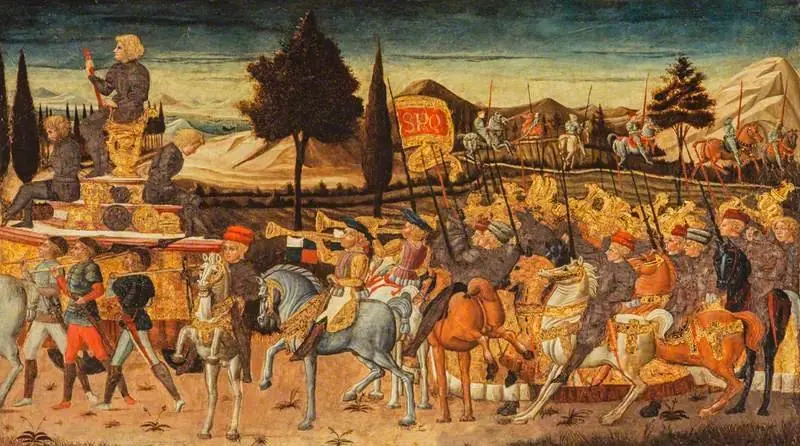
The Triumph of Aemilius Paulus after the Battle of Pydna is a tempera painting by the Early Renaissance artist Master of the Battle of Anghiari. It dates from 1450 and is held in the collection of the Rijksmuseum. Created around 1450, this tempera panel portrays the Roman general Lucius Aemilius Paullus celebrating his victory at the Battle of Pydna.
About this work
Technique & Style
The piece measures 58 centimeters in height and 150 centimeters in width, presenting a substantial horizontal format typical for narrative scenes of its era.
Created around 1450 by the Master of the Battle of Anghiari, this work is a history painting executed in tempera on a panel support. The piece measures 58 centimeters in height and 150 centimeters in width, presenting a substantial horizontal format typical for narrative scenes of its era. Stylistically, it functions as a history painting that also incorporates landscape elements to depict the triumph of Lucius Aemilius Paullus following the Battle of Pydna.
The use of tempera on wood reflects the standard artistic practices of mid-15th-century Italy for such commemorative subjects.
History & Provenance
The painting was created in 1450 by the Master of the Battle of Anghiari, executed in tempera on panel, and depicts the Roman triumph of Lucius Aemilius Paullus following the Battle of Pydna. Its early ownership history prior to the modern era is not documented in the available sources.
The work later passed through several twentieth-century collections. It was part of the Jacques Goudstikker collection and subsequently entered the holdings of the Stichting Nederlands Kunstbezit and the Collection Goudstikker heirs. During the Nazi period the painting was absorbed into the Hermann Göring Collection and was afterward held at the Munich Central Collecting Point. It is now located at the Rijksmuseum.
The painting is held in the collection of the Rijksmuseum. Its provenance history includes ownership by Jacques Goudstikker and subsequent inclusion in the Hermann Göring Collection. Following World War II, the work was located at the Munich Central Collecting Point before entering the holdings of the Stichting Nederlands Kunstbezit and the Collection Goudstikker heirs.
The provided sources do not contain specific inventory numbers, accession codes, or a chronological list of public exhibitions for this artwork.
Legacy
The Triumph of Aemilius Paulus after the Battle of Pydna was attributed to the Master of the Battle of Anghiari and painted in tempera around 1450, establishing his reputation as a leading exponent of narrative history painting. The work's dramatic portrayal of Roman triumph and its compositional vigor influenced subsequent European battle scenes, cited in art historical surveys of Renaissance art. Its provenance across prominent collections, including the Rijksmuseum and Munich Central Collecting Point, underscored its recognized cultural significance.
Overview
Created around 1450, this tempera panel portrays the Roman general Lucius Aemilius Paullus celebrating his victory at the Battle of Pydna. Executed by the anonymous painter known as the Master of the Battle of Anghiari, the work now belongs to the collection of the Rijksmuseum in Amsterdam.
Subject & Meaning
The composition commemorates the Roman triumph, a ceremonial procession that highlighted military success and civic pride. By focusing on Paullus and the aftermath of the Macedonian clash, the painting underscores themes of conquest, order emerging from chaos, and the glorification of Roman authority in the early Renaissance imagination.
Artist & collection
Artist
Master of the Battle of Anghiari
Master of the Battle of Anghiari is a conventional name used for an unidentified artist, applied because no documented identity survives.