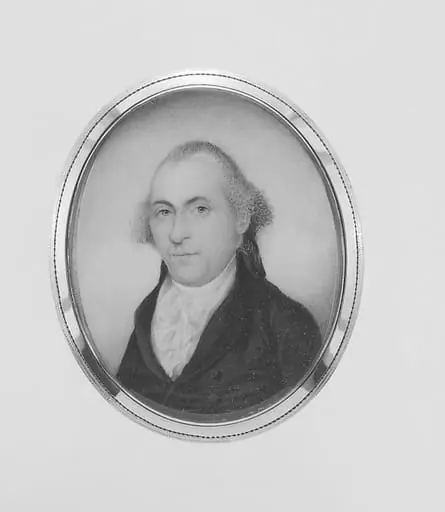
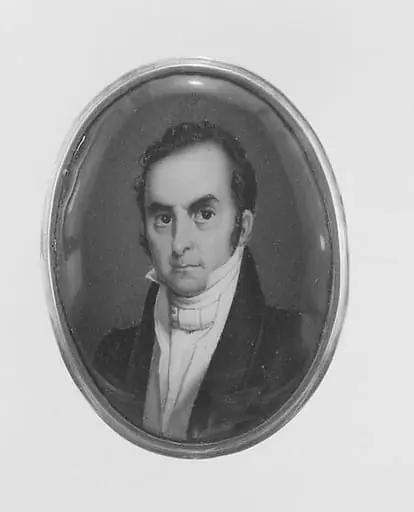
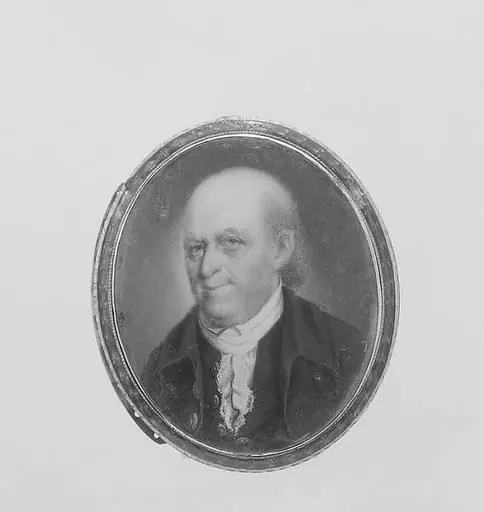
Artwork
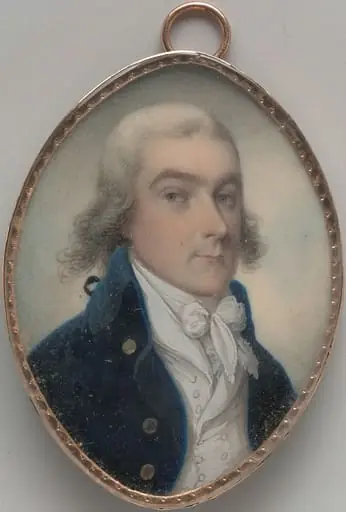
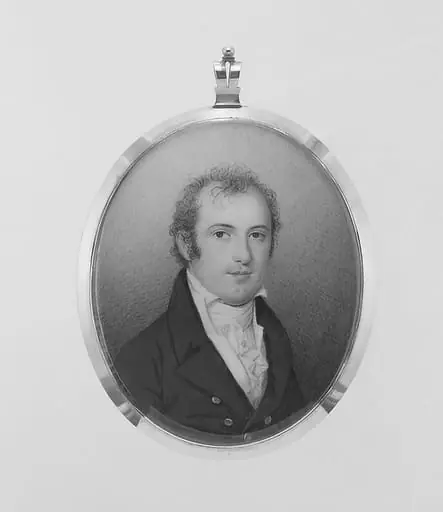
Portrait of a Gentleman
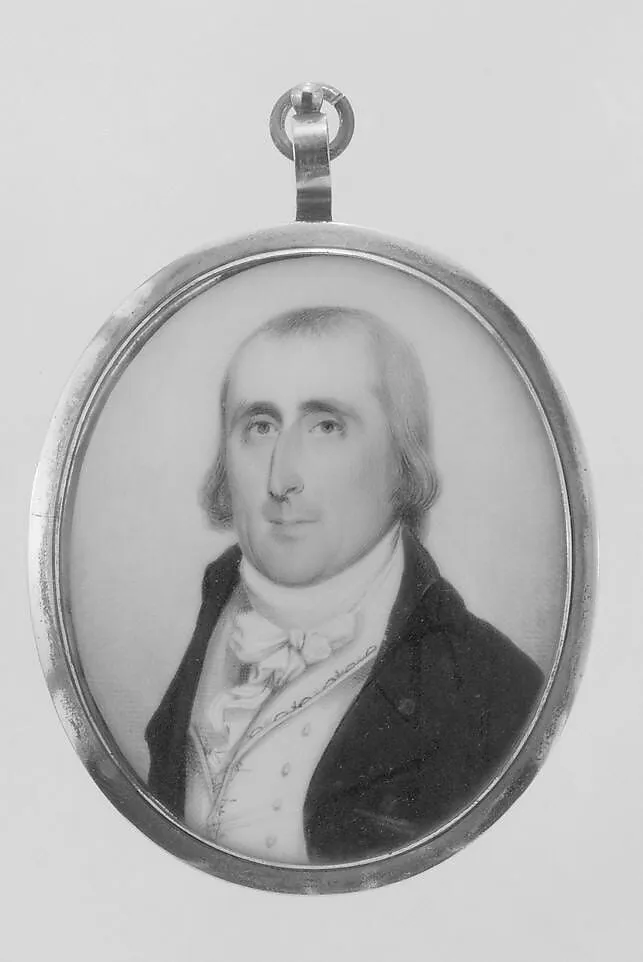
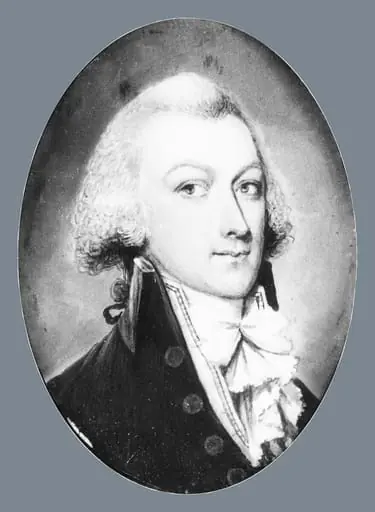
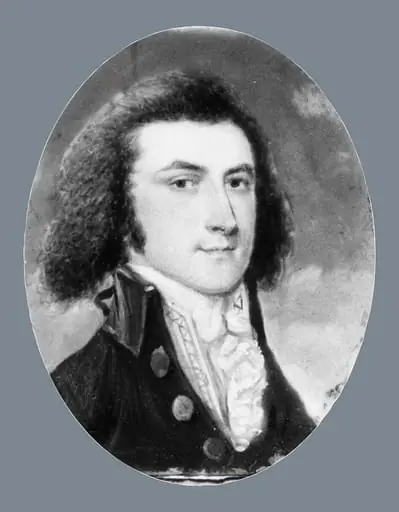
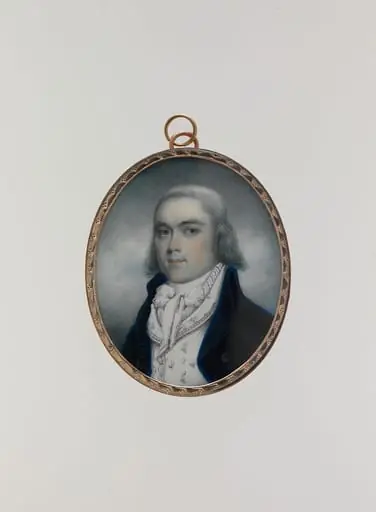
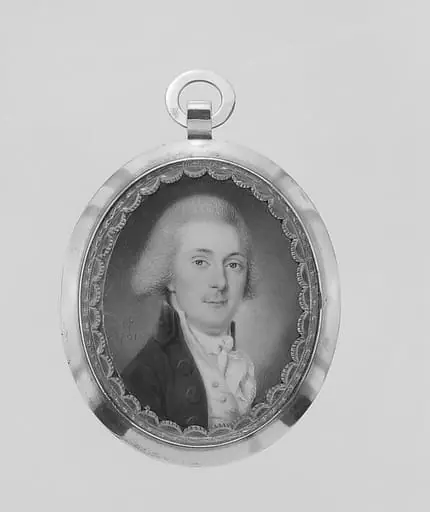
Portrait of a Gentleman is a watercolor painting by the American Folk Art artist Archibald Robertson. It dates from 1795 and is held in the collection of the Metropolitan Museum of Art.
- Accession no.
- 2006.235.158
- Credit line
- Gift of Gloria Manney, 2006
About this work
Subject & Meaning
The subject’s status as a gentleman is suggested by the portrait genre, which in this period typically signified social standing and personal identity.
The work titled Portrait of a Gentleman, executed by Archibald Robertson in 1795 as a watercolor on ivory, portrays an unidentified adult male. Both the classification in The American Wing and the Wikidata entry identify the piece as a portrait, with the main subject recorded as a man. The subject’s status as a gentleman is suggested by the portrait genre, which in this period typically signified social standing and personal identity.
No additional iconographic symbols or allegorical attributes are noted in the source descriptions, leaving the meaning centered on the realistic representation of a contemporary gentleman within the collection of the Metropolitan Museum of Art.
Technique & Style
Portrait of a Gentleman is executed in watercolor on ivory, a miniature format that demanded a precise and delicate handling of the brush. The small support, measuring approximately 5.5 by 4.4 inches, conditioned the artist's approach, requiring controlled washes and fine detail rather than broad strokes. Robertson's choice of ivory as a ground lent the work a luminous, smooth surface characteristic of late eighteenth-century portrait miniatures, allowing translucent pigments to sit evenly and produce refined tonal gradations suited to the depiction of a sitter's features.
The compact scale and intimate medium align the work stylistically with the broader tradition of keepsake portraiture practiced in America during the 1790s, in which likenesses were designed for private handling and close inspection rather than public display.
Overview
Archibald Robertson, a Scottish-born artist who emigrated to the United States, created this Portrait of a Gentleman around 1795. Executed in watercolor on ivory, this miniature painting exemplifies the American folk art tradition. It captures a man's likeness with a direct gaze, reflecting the common practice of creating small, intimate portraits during the late 18th century for personal or commemorative purposes.
Context
Archibald Robertson was a notable figure in early American art, recognized for his miniature portraits. He contributed significantly to the nascent art scene in New York, co-founding the Columbian Academy of Painting with his brother. His later publication, Elements of the Graphic Arts (1802), further cemented his role as an educator and theorist. This particular portrait is considered an example of American folk art from the period.
Artist & collection

Artist
Archibald Robertson (May 8, 1765 – December 6, 1835) was a Scottish born painter who operated the Columbian Academy of Painting in New York with his brother Alexander.