Artwork
Portrait of a Gentleman
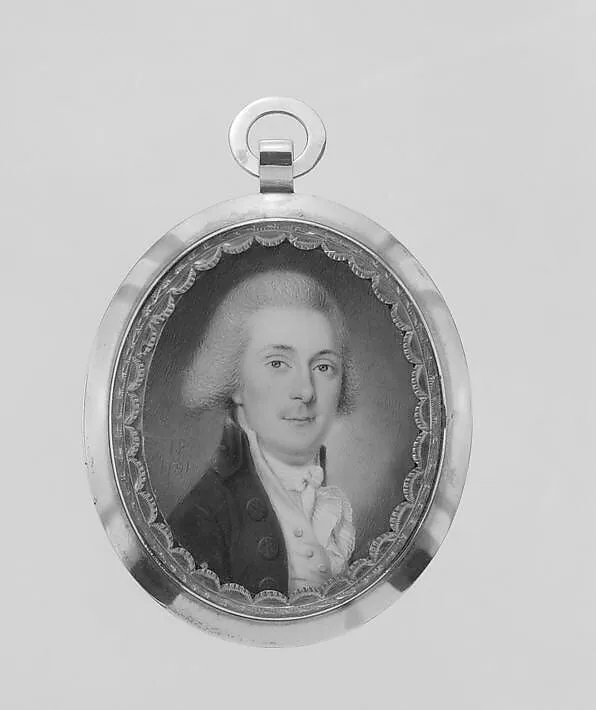
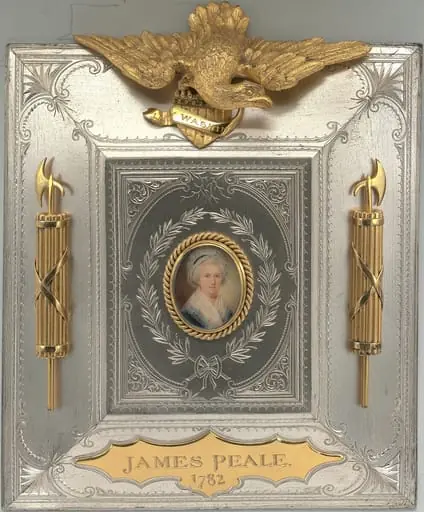
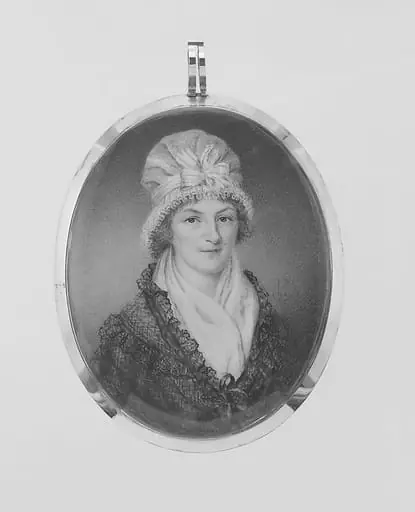
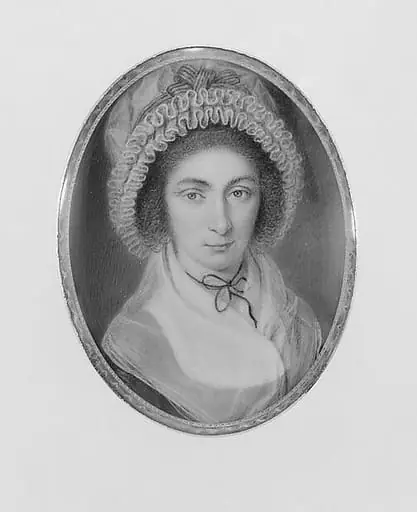
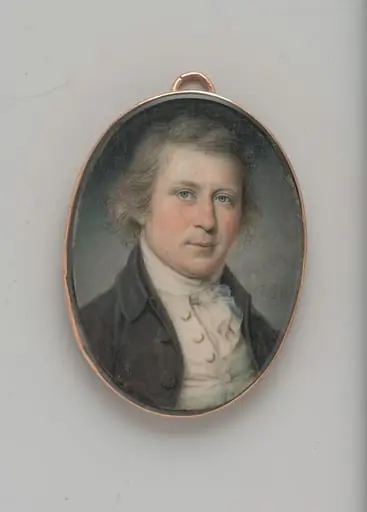
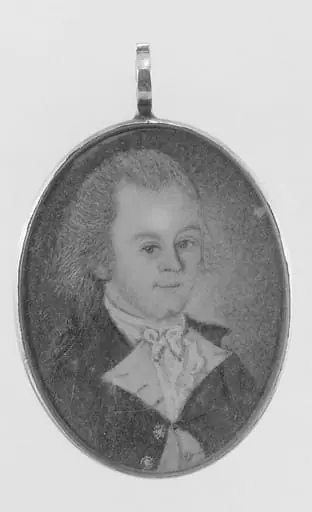
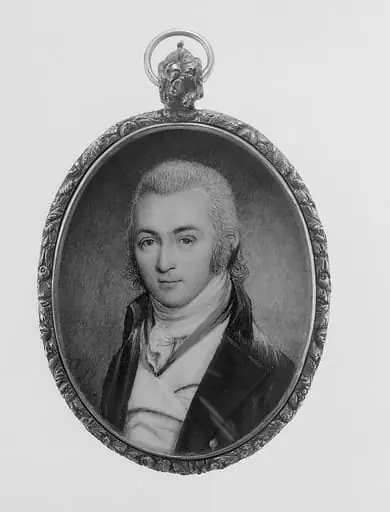
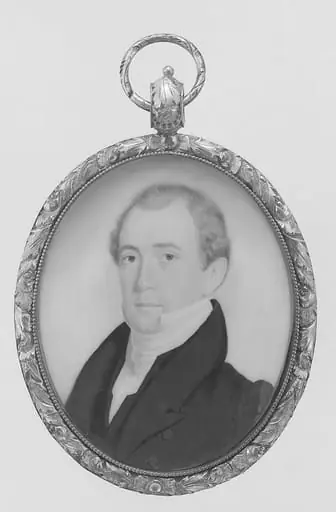
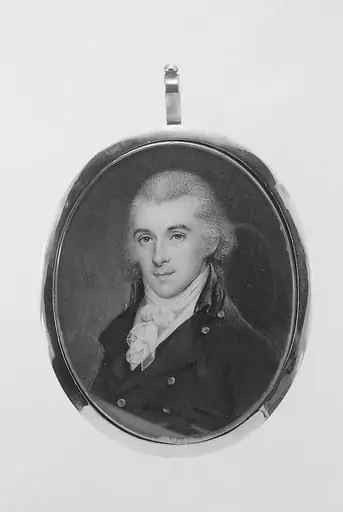
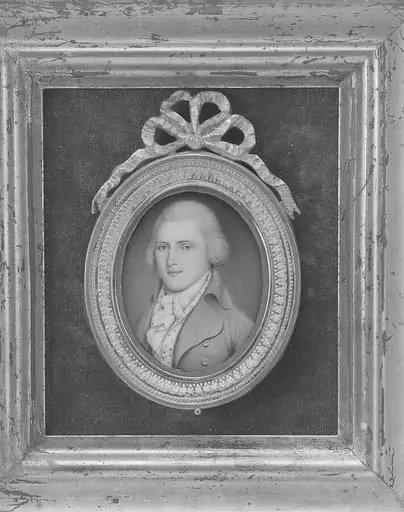
Portrait of a Gentleman is a watercolor painting by the American Folk Art artist James Peale. It dates from 1791 and is held in the collection of the Metropolitan Museum of Art.
About this work
Subject & Meaning
As a portrait, it serves to record the sitter’s appearance and suggest his social standing, a common purpose of early American portraiture.
The work is a 1791 watercolor on ivory portrait of an unidentified gentleman, created by James Peale. Executed in the miniature genre, it measures 4.8 × 3.8 cm and is housed in the Metropolitan Museum of Art’s The American Wing. As a portrait, it serves to record the sitter’s appearance and suggest his social standing, a common purpose of early American portraiture.
The depiction of a solitary male sitter without additional attributes focuses attention on the individual’s presence, reflecting contemporary conventions of dignified representation.
Technique & Style
Executed in 1791, this miniature portrait by James Peale utilizes watercolor applied to an ivory support. The work exemplifies the delicate handling characteristic of the genre, with the translucent medium allowing the luminous quality of the ivory to enhance the flesh tones. Measuring approximately 4.8 by 3.8 units, the composition focuses tightly on the male sitter, adhering to the intimate scale required for personal portraiture of the late eighteenth century.
The classification of the object as a miniature underscores the artist's precision in rendering facial features within a constrained format. While specific details regarding its current physical condition or conservation history are not provided in the available records, the selection of ivory and watercolor remains a definitive stylistic marker of Peale's approach to portraiture during this period.
History & Provenance
The Portrait of a Gentleman was created by James Peale in 1791. Executed as a watercolor on ivory, this miniature work measures 4.8 by 3.8 centimeters. The piece entered the collection of the Metropolitan Museum of Art in New York, where it is currently housed within the American Wing.
While the specific commission details and original ownership chain prior to the museum's acquisition are not detailed in the available records, the work is cataloged under the accession number 2006.235.141. The dating is firmly established as 1791, aligning with Peale's active period as a miniaturist. The artwork depicts an unidentified man and stands as a representative example of late 18th-century American portraiture held by the institution.
Overview
Created by American artist James Peale in 1791, Portrait of a Gentleman is a watercolor miniature on ivory. This work exemplifies Peale's contribution to early American portraiture, particularly his skill in crafting intimate, detailed compositions. The painting depicts an unidentified man, rendered with precision on a small, delicate surface, reflecting the artistic trends of its period.
Context
James Peale was a notable American painter, recognized for his expertise in both miniature portraits and still lifes. As the younger sibling of the influential artist Charles Willson Peale, James played a distinct role in the development of early American art. His works, including this portrait, are valued for their precise execution and their representation of individual identity during the nascent years of the United States.
Artist & collection

Artist
James Peale (1749 – May 24, 1831) was an American painter, best known for his miniature and still life paintings, and a younger brother of noted painter Charles Willson Peale.