Artwork
Landscape with Ruth and Boaz
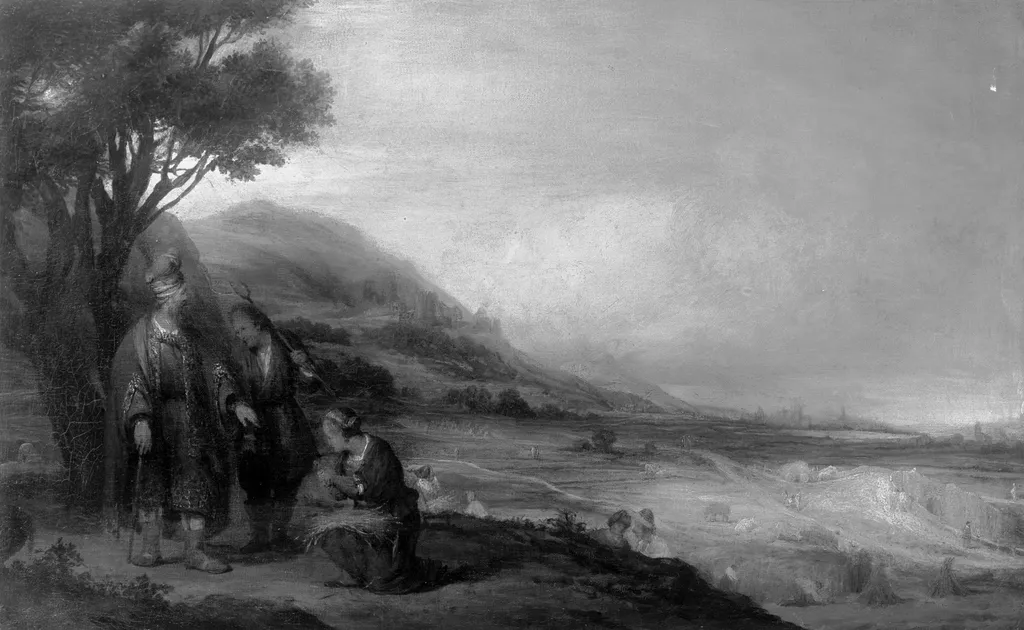
Landscape with Ruth and Boaz is an oil painting by Arent de Gelder. It dates from 1698 and is held in the collection of the Gemäldegalerie Berlin.
About this work
Subject & Meaning
Landscape with Ruth and Boaz takes its subject from the Book of Ruth, an Old Testament narrative that was a popular theme in Dutch religious art.
Landscape with Ruth and Boaz takes its subject from the Book of Ruth, an Old Testament narrative that was a popular theme in Dutch religious art. The painting depicts the biblical figures Ruth and Boaz, identified as the principal subjects of the composition. By framing the encounter within a landscape setting, Arent de Gelder merges a history and religious subject with the conventions of landscape painting, a hybrid genre treatment characteristic of late seventeenth-century Dutch biblical scenes.
The work's main subject is explicitly recorded as the Book of Ruth, situating the image within the tradition of Old Testament history painting. The landscape format, rather than a conventional narrative interior, suggests an emphasis on the rural, agricultural context of the Ruth and Boaz story, in which the two figures meet in the fields during the barley harvest.
Technique & Style
The work is an oil painting on canvas executed by Arent de Gelder in 1696, as indicated by the artist and date recorded in the painting’s documentation.
The composition centers on the biblical figures of Ruth and Boaz set within a rural landscape, aligning with the history and religious subject matter noted in the source. Stylistically, the handling reflects de Gelder’s late-career approach, integrating narrative detail with atmospheric landscape elements typical of Dutch Golden Age painting.
History & Provenance
Landscape with Ruth and Boaz is an oil painting on canvas created by Arent de Gelder in 1696. The work, which depicts the biblical figures Boaz and Ruth from the Book of Ruth, is classified as a landscape and history painting. Although the Gemäldegalerie in Berlin has historically been associated with the piece, the artwork is currently considered lost.
The creation date is firmly established as 1696, with some records noting a potential range extending to 1706, though the primary inception year remains 1696. The painting measures 4.1 cm in height and 6.7 cm in width.
The painting is held by the Gemäldegalerie Berlin at the Bode Museum. Its inventory number is not specified in the available sources.
The work was included in the museum’s holdings by at least 2022, as documented by Wikidata. No exhibition history is recorded in the provided sources.
Context
Arent de Gelder's 'Landscape with Ruth and Boaz' (1696) exemplifies Dutch Golden Age history painting through its biblical narrative rendered in a classical landscape, reflecting the era's fascination with Old Testament stories as moral allegories. The work demonstrates de Gelder's synthesis of Rembrandt's chiaroscuro and Italianate compositional ideals, situating it within his broader output of religious scenes that bridged 17th-century Dutch painting and emerging Neoclassical sensibilities. Its thematic focus on Ruth and Boaz, figures symbolizing loyalty and redemption, resonates with contemporary theological interpretations, while its technical execution in oil on canvas aligns with Amsterdam workshop practices of the late 1600s.
The painting's subject matter directly engages with the Book of Ruth's narrative of divine providence, a motif frequently explored in Dutch biblical art to underscore themes of faith and social virtue.
Legacy
Arent de Gelder's 'Landscape with Ruth and Boaz' (1696), now regarded as a lost work, was housed in the Gemäldegalerie Berlin at the Bode Museum and featured in the museum's collection catalogues as a landscape painting with religious and historical themes drawn from the Book of Ruth. Although no longer extant, its documented presence in a major German institution contributed to scholarly attention on Dutch Golden Age biblical scenes, influencing later interpretations of narrative landscape painting in 18th-century European art. The work's stylistic elements, particularly its handling of light and compositional clarity, are cited in art historical surveys as exemplars of late Baroque religious imagery, shaping discourse on biblical subjects in Dutch art.
Despite its current status as a lost painting, archival references in Gemäldegalerie records confirm its exhibition history and provenance, ensuring its continued mention in studies of Dutch biblical art and 17th-century landscape development.
Overview
Created in 1698, this oil painting presents a pastoral scene in which two biblical characters, Boaz and Ruth, occupy the foreground of a gently rolling countryside. The composition balances the figures with a muted landscape of hills and sparse trees, emphasizing a quiet, everyday moment drawn from the Old Testament narrative.
Own this work as a print
Artist & collection
Artist
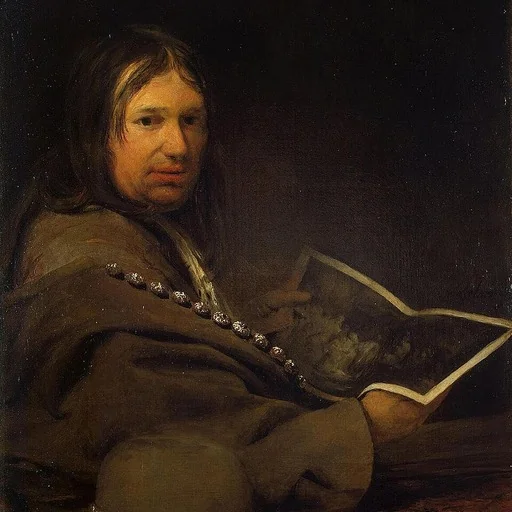
Aert de Gelder (Dutch:; October 26, 1645 – August 27, 1727) was a Dutch painter, the only Dutch artist to paint in the tradition of Rembrandt's late style into the 18th century.

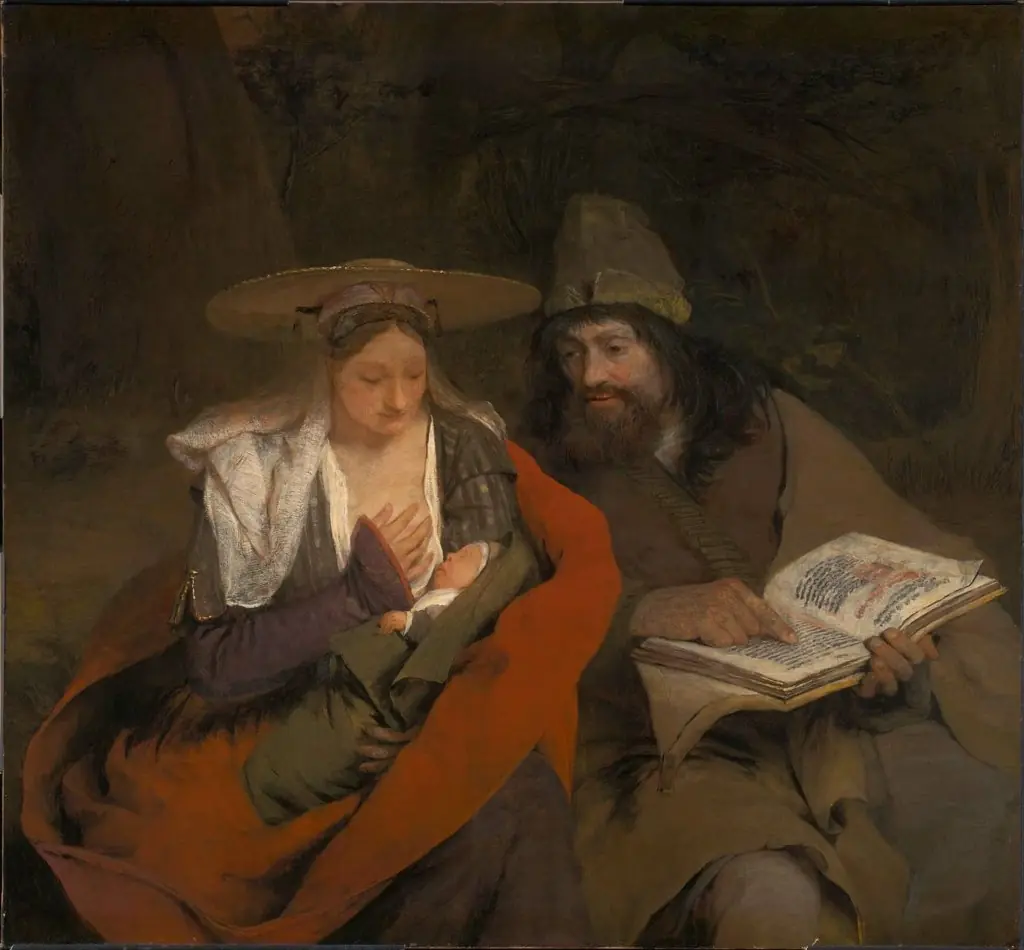 Rest on the Flight into Egypt
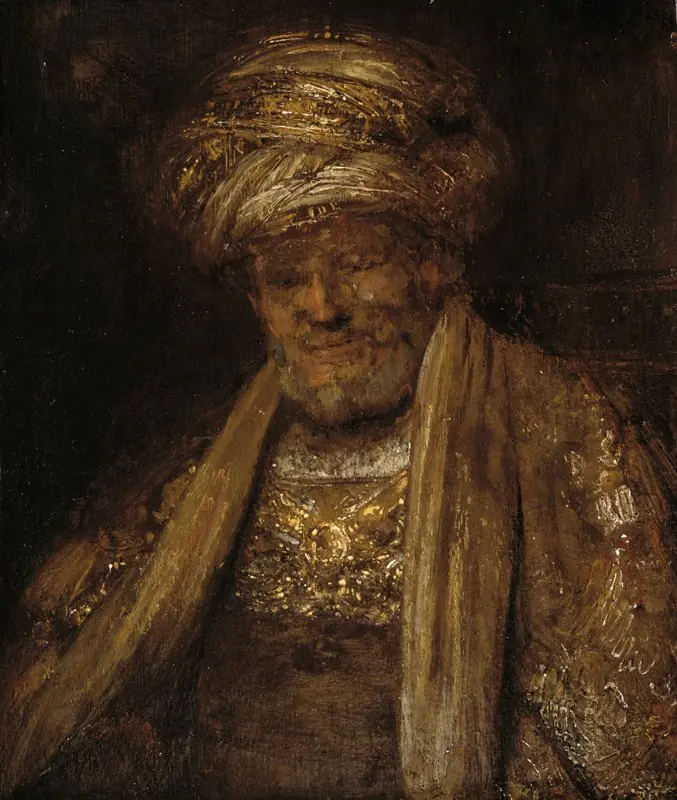 Portrait of an Oriental Man
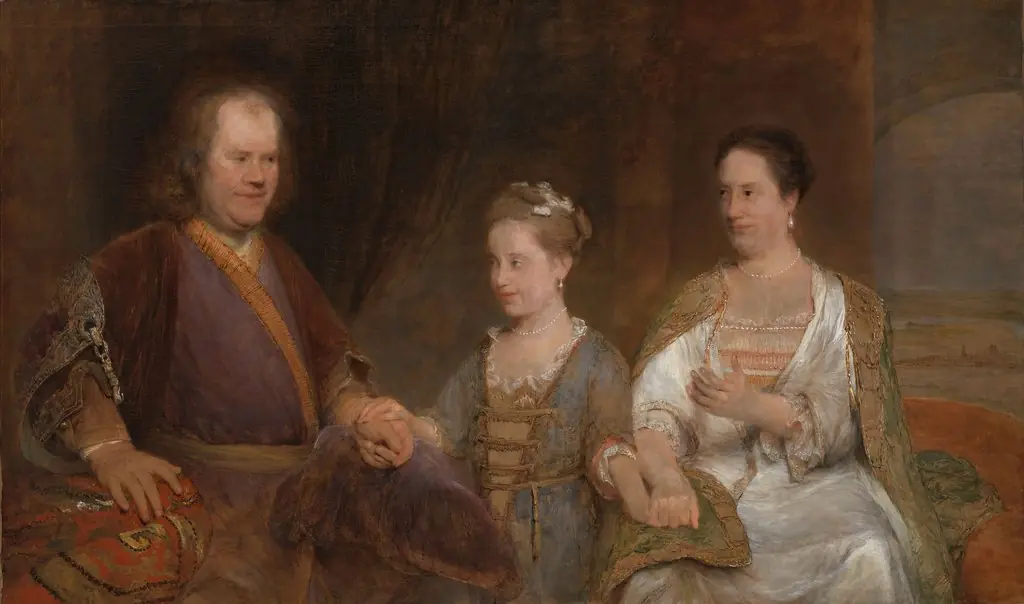 Portrait of Hermanus Boerhave (1668-1738), professor of medecine at the university of Leiden, with his wife Maria Drolenvaux (1686-1746) and their daughter Johanna Maria (1712-91)
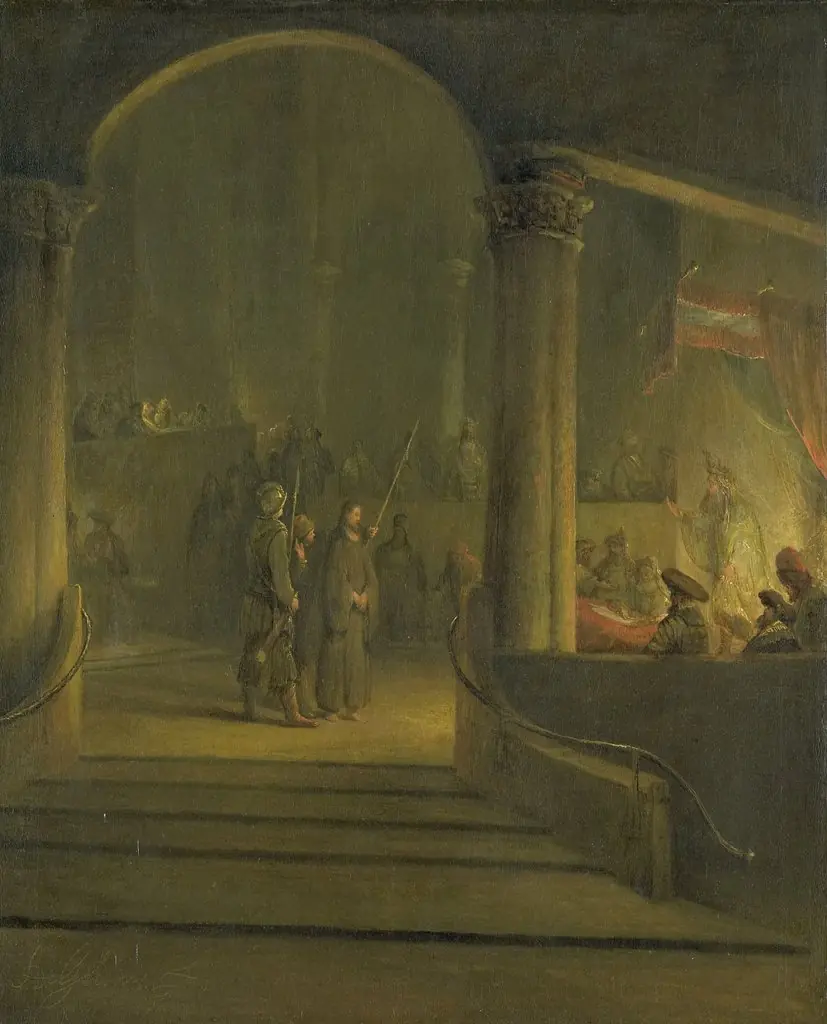 Christ before Caiphas
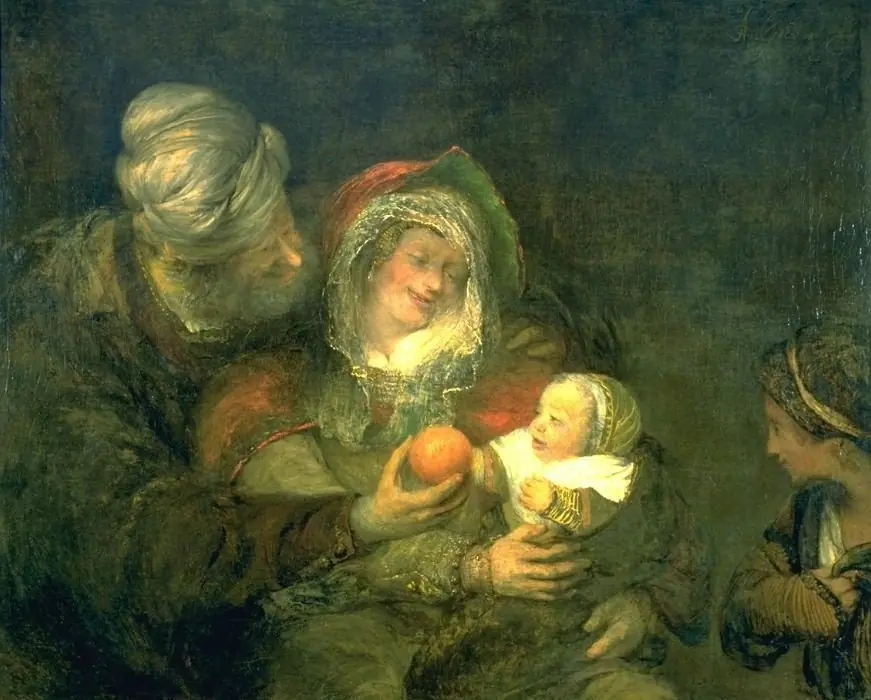 Holy Family
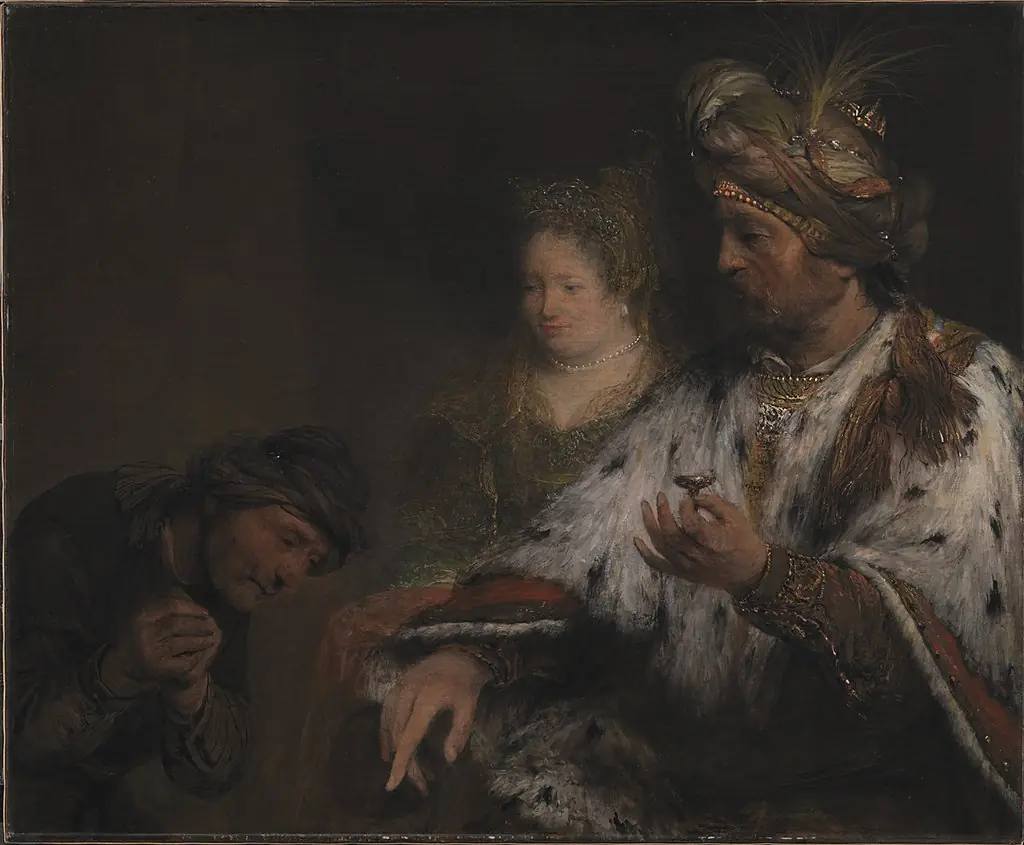 Den persiske kong Ahasverus giver Mordokaj ringen
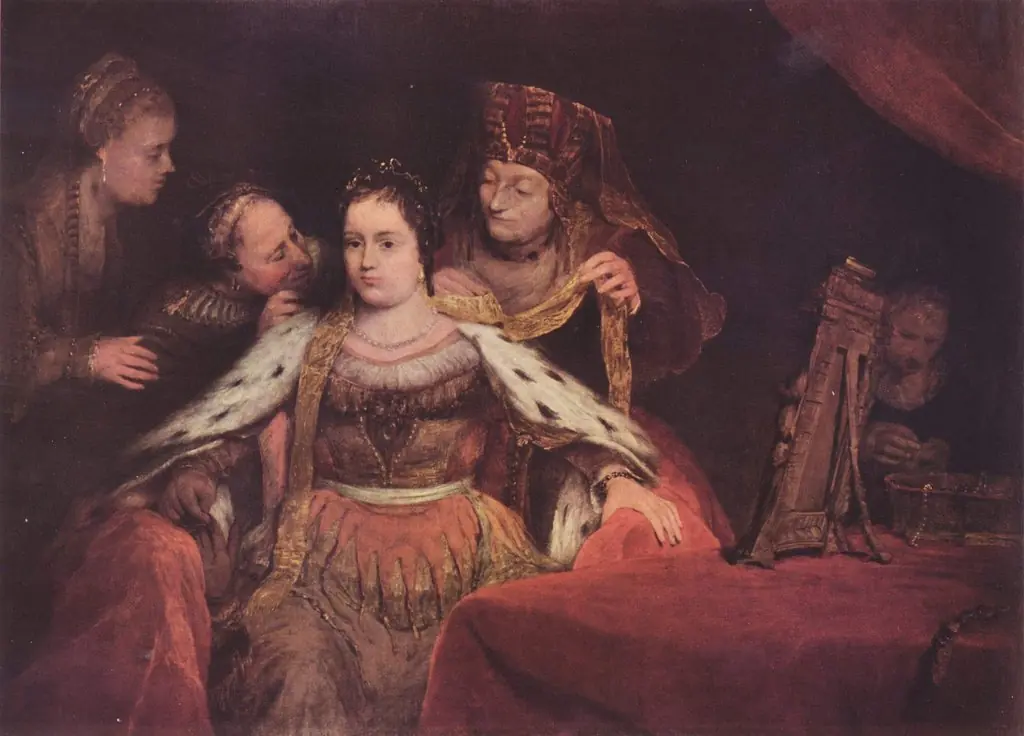 Esther's toilet
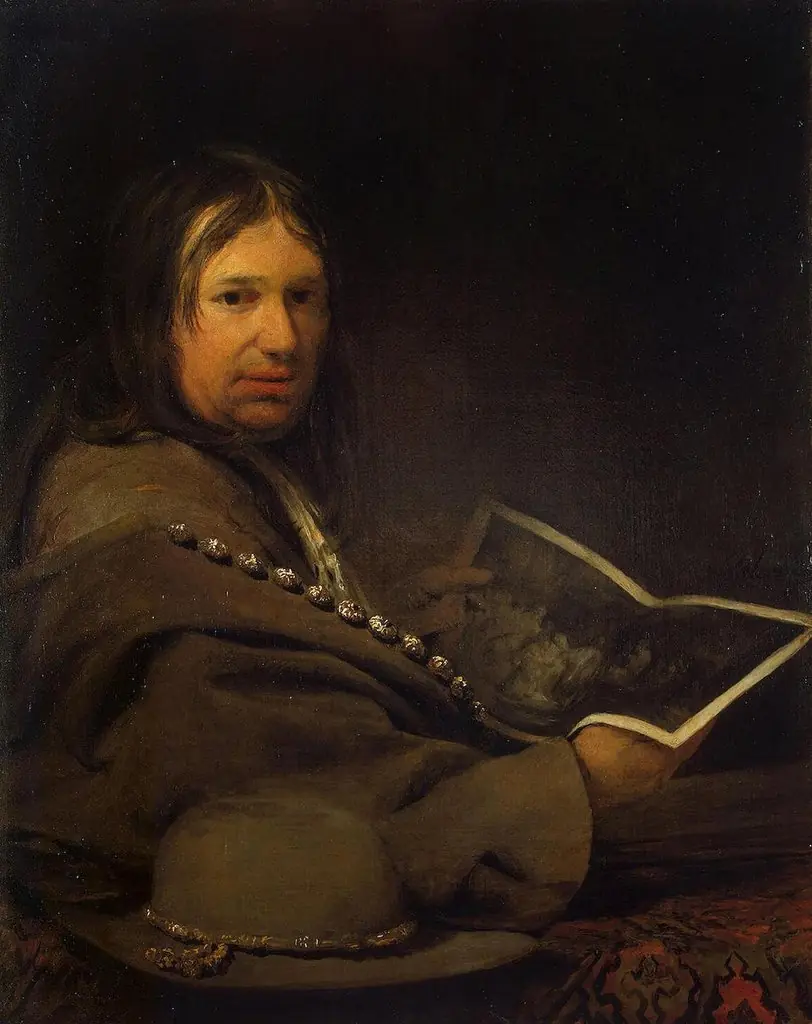 Portrait of a Collector
- Landscape with the devil who sows weeds
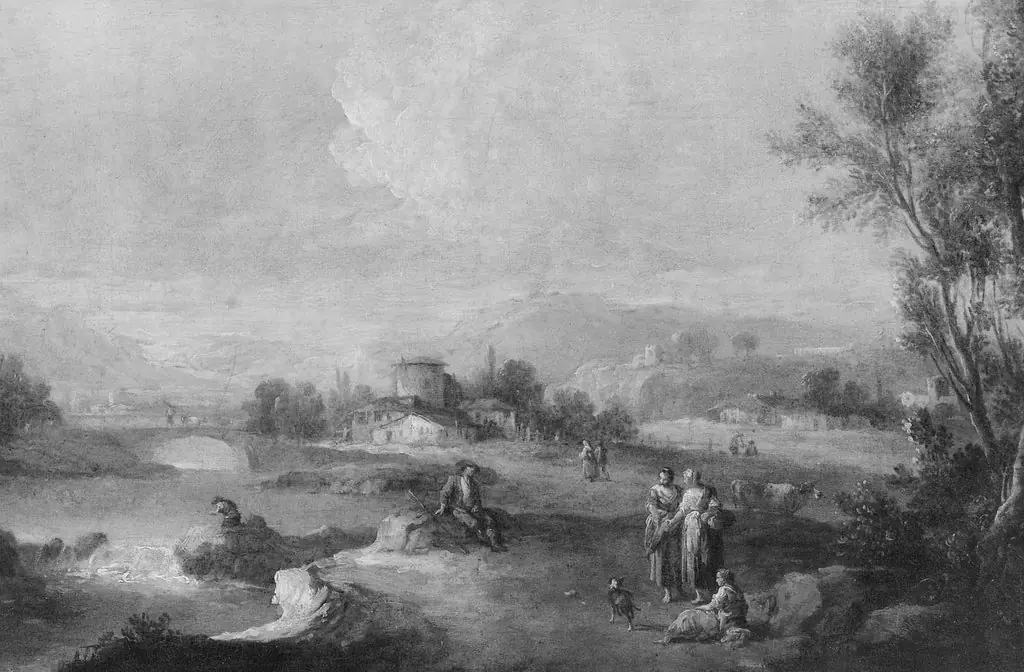 River Landscape with Figures
 Wooded river landscape with shepherds
 Italian Landscape with Shepherds
 Italian Landscape with Shepherds
 Waldlandschaft
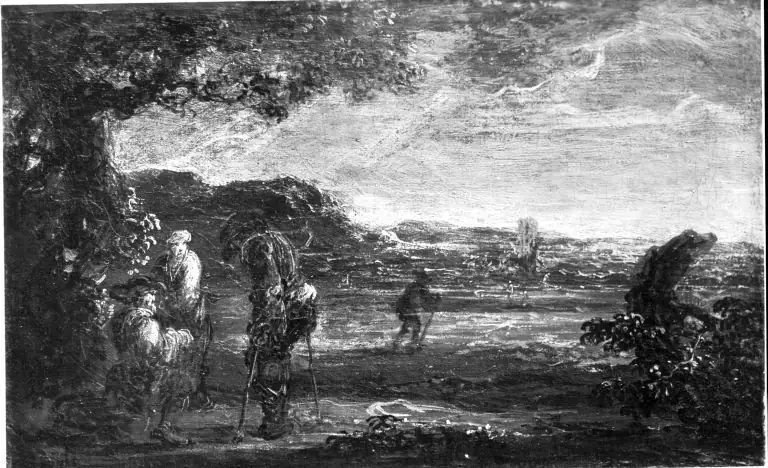 Bucht bei bewegter See
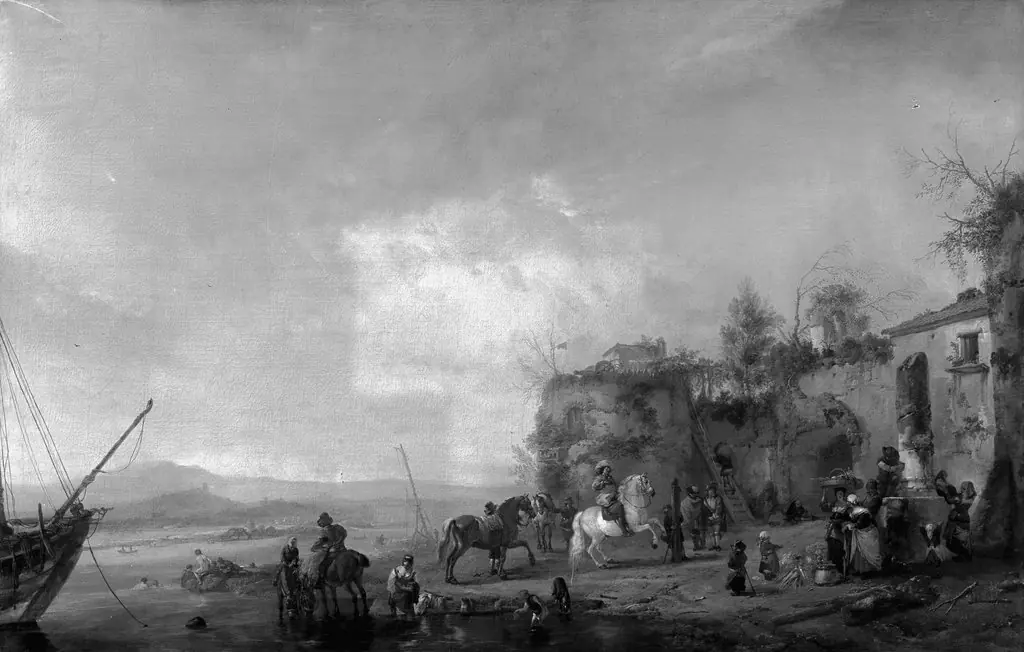 Riding school at the river bank
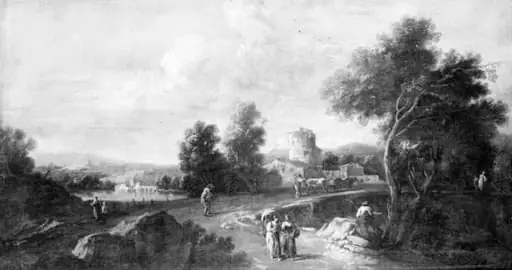 An Italian Landscape with Figures and Cattle
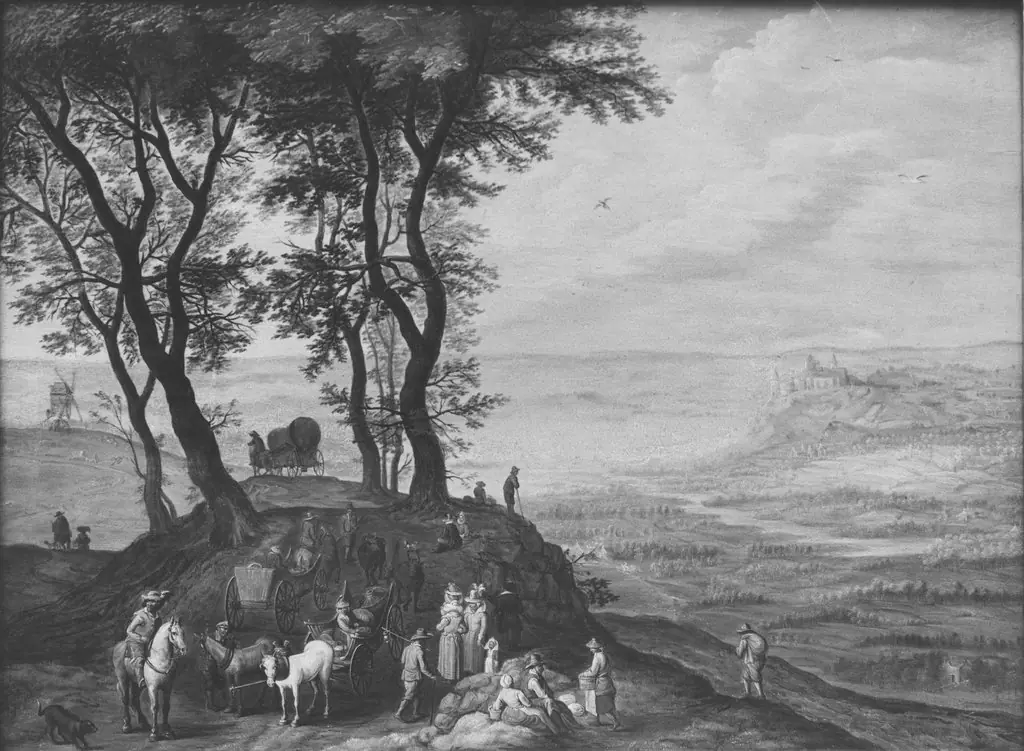 The Road to the Market
 Evening Scenery with Resting Hunters
 Erminia blandt hyrderne