Artwork
Portrait of James I Stuart (1566-1625)
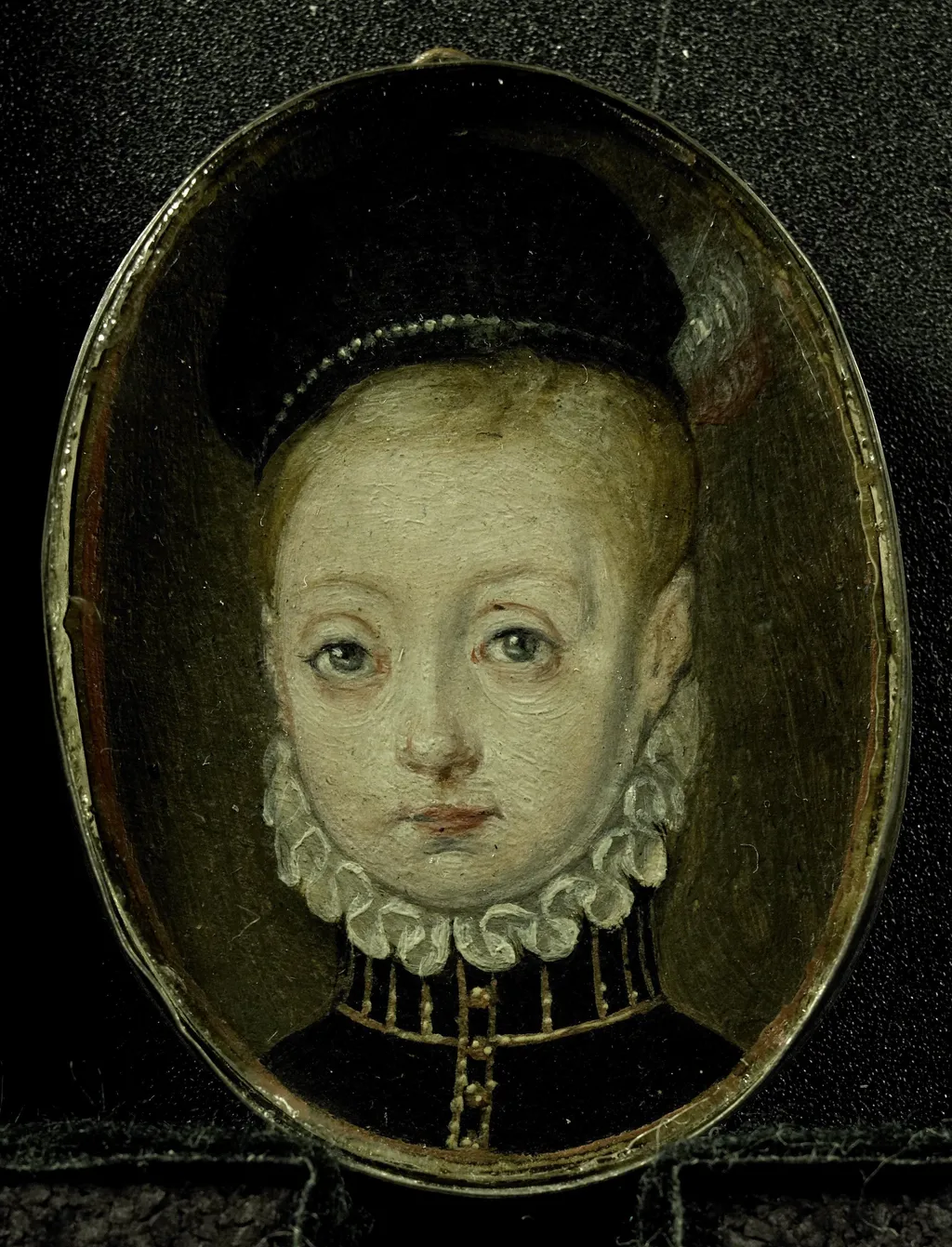
Portrait of James I Stuart (1566-1625) is an unspecified painting by the Early Baroque Italian artist Arnold Bronckorst. It is held in the collection of the Rijksmuseum. The work is a small, circular portrait executed on cardboard, dating from 1594.
About this work
Subject & Meaning
The painting shows James VI of Scotland, later also James I of England, rendered as a youthful monarch, emphasizing his royal authority and lineage.
The painting shows James VI of Scotland, later also James I of England, rendered as a youthful monarch, emphasizing his royal authority and lineage. The miniature format and cardboard support underscore its function as a portable emblem of dynastic power, while the careful rendering of clothing and regalia conveys status and legitimacy within early modern court culture. The work thus symbolizes the union of the Scottish and English thrones and the continuity of the Stuart dynasty.
Technique & Style
This portrait of James I Stuart by Arnold Bronckorst is executed as a miniature on cardboard, a small-scale support suited to portable, intimate portraiture. The work measures 5 cm in height by 3.8 cm in width, placing it firmly within the miniature tradition of the period. Both the classification as a painting and its genre designation as a miniature or portrait confirm its character as a finely handled, small-format likeness rather than a large-scale panel composition.
History & Provenance
The portrait of James I Stuart was created in 1586 by the artist Arnold Bronckorst. Executed as a miniature on cardboard, it depicts James VI and I. According to the sources, the work is presently part of the Rijksmuseum collection in Amsterdam. No further details regarding its commission, earlier ownership, or provenance are provided in the available references.
Overview
The work is a small, circular portrait executed on cardboard, dating from 1594. It presents a youthful James VI of Scotland, who later became James I of England, rendered with a stark contrast between his pale complexion and a dark, unadorned background. The composition emphasizes the sitter’s face, offering a clear, intimate view of the monarch at an early stage of his reign.
Context
At the time of its production, portraiture was increasingly used to assert dynastic legitimacy across Europe. The choice of a modest support such as cardboard may indicate a work intended for private use or rapid distribution among courtiers, contrasting with the more lavish oil paintings reserved for public display in palaces.
Own this work as a print
Artist & collection
Artist
Arnold Bronckhorst, or Bronckorst or Van Bronckhorst (fl. 1565–1583) was a Flemish or Dutch painter who was court painter to James VI of Scotland. Arnold's origins are unknown, and it is unclear if he was a member of…

 Portrait of an Unknown Woman
 Henry Stewart (1546-67), Lord Darnley. Echtgenoot van Maria Stuart
 Portrait of Jadwiga Jagiellon (1513–1573), Daughter of Sigismund I (1467–1548)
 Anna de Austria, a IV-a soție a lui Felipe II, regele Spaniei
 Portrait of Infante Ferdinand of Spain
 Bildnis der Anna Schellenberger
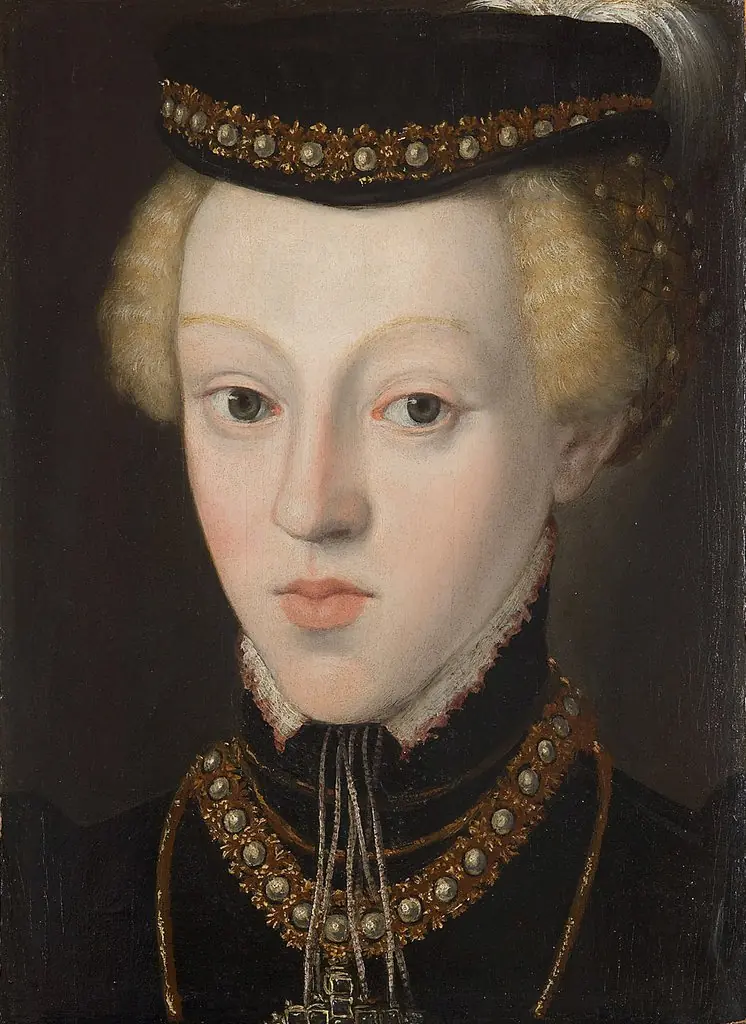 Archduchess Johanna
 Portrait of Don Juan of Austria
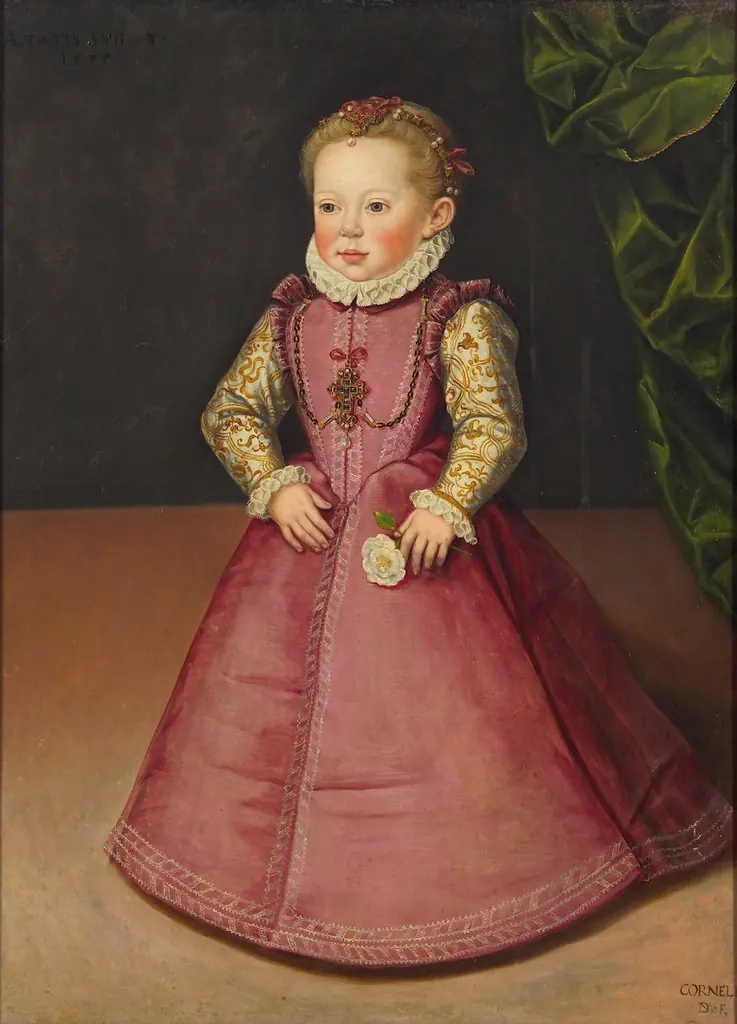 Erzherzogin Maria Christierna (1574-1621) im Alter von drei Jahren, in ganzer Figur
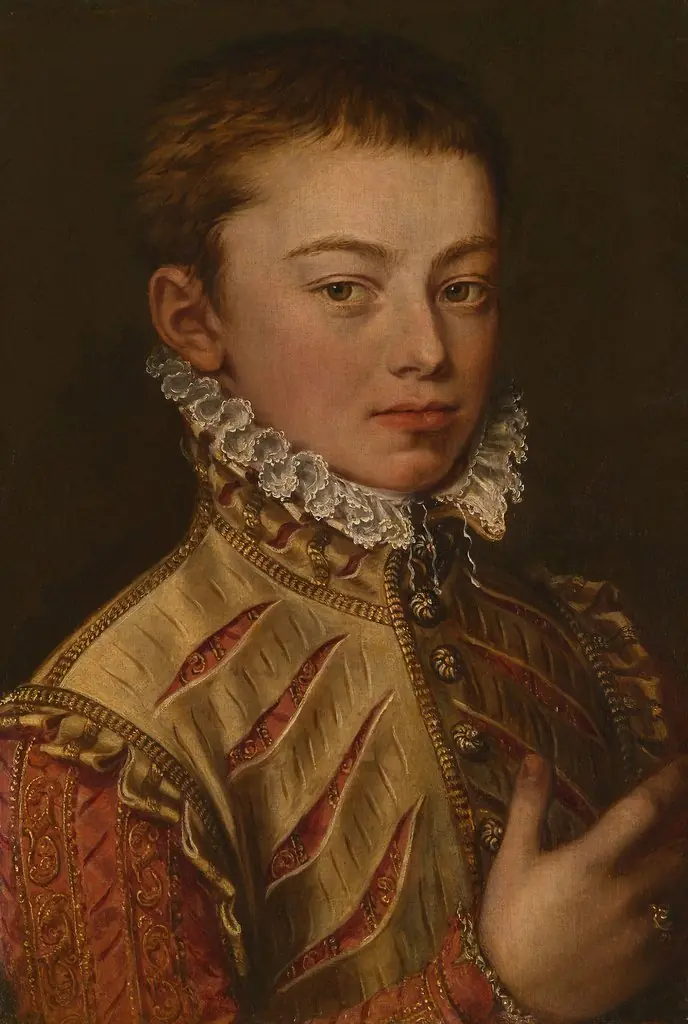 Portrait of Don Juan of Austria