Artwork
Apparition
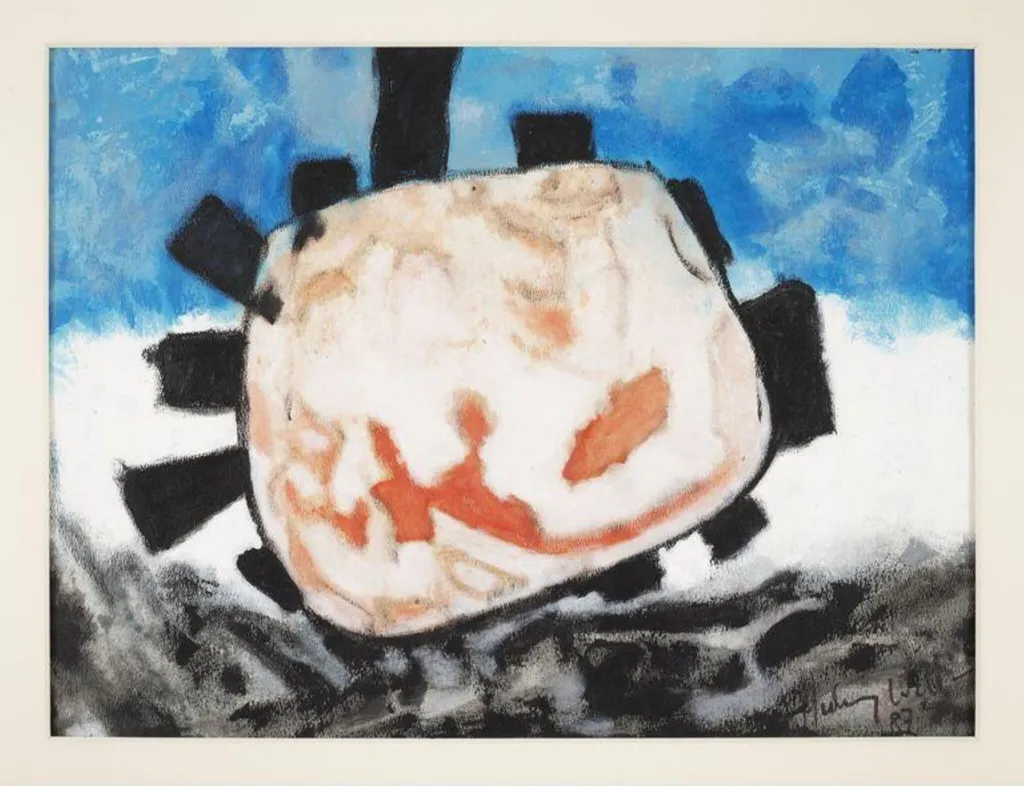
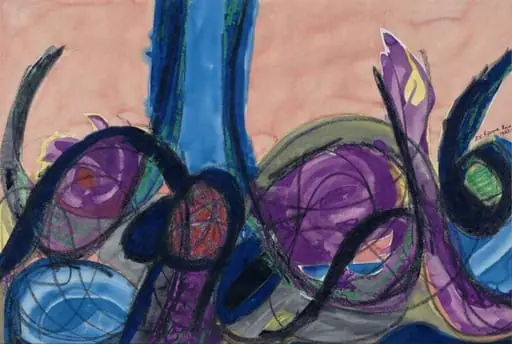
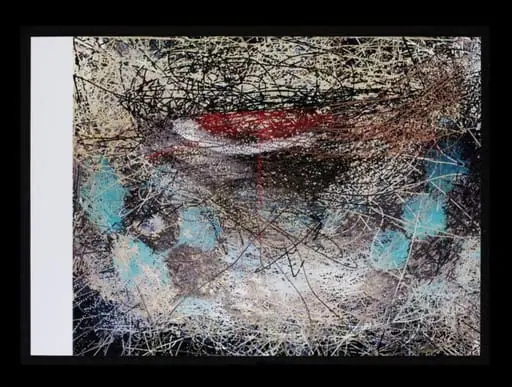
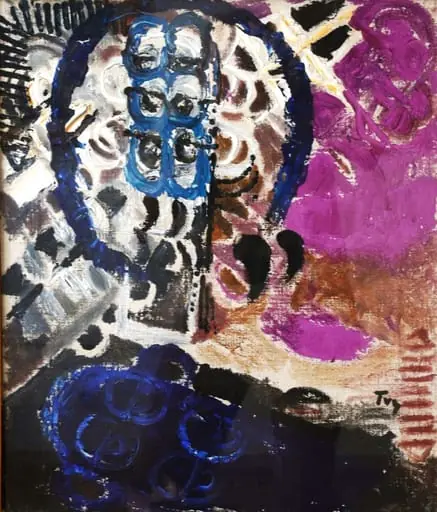
Apparition is a paint painting by the Contemporary Abstract artist Aubrey Williams. It dates from 1987 and is held in the collection of the Victoria and Albert Museum.
About this work
Sharp black lines cut through the chaos, making shapes that almost look like faces or flames.
This painting bursts with wild colors. Swirling blues, reds, and yellows cover the paper like an explosion. Sharp black lines cut through the chaos, making shapes that almost look like faces or flames.
Williams painted this in 1987. It’s made with gouache, a thick paint that dries fast. The style feels alive, full of movement and energy.
If you like this wild mix of colors, check out Aubrey Williams.
Overview
Apparition is a 1987 gouache on paper by Aubrey Williams, part of his later series inspired by ancient Mesoamerican symbols. The work channels dynamic energy through layered pigments and abrupt linear contrasts, reflecting Williams’ sustained engagement with cosmological imagery and non-Western visual traditions. Its material simplicity, gouache on paper, belies the complexity of its conceptual underpinnings.
Subject & Meaning
The painting draws from pre-Columbian iconography, particularly the Olmec and Maya traditions, reinterpreting solar discs and ritual glyphs as abstract forces rather than literal representations. Williams sought to evoke the spiritual undercurrents of these lost civilizations, transforming their symbols into visceral, emotive forms. The imagery suggests ancestral memory, not historical reconstruction, aligning with his broader interest in universal elemental energies.
Technique & Style
Williams employed gouache for its opacity and rapid drying time, enabling bold, layered applications that build texture and intensity. Swirling hues of blue, red, and yellow collide with sharp black contours, creating a sense of motion and tension. The composition resists clear focal points, instead guiding the eye through rhythmic disruptions that mimic natural phenomena or ritual gestures.
History & Provenance
Apparition emerged from Williams’ Olmec-Maya series, developed during the 1980s after decades of engagement with both Caribbean and British cultural landscapes. Though he settled in England in the early 1950s, his work consistently bridged transatlantic influences, including British megalithic sites and Guyanese indigenous narratives. The painting reflects this dual heritage without being confined by either label.
Context
Williams’ work in the 1980s coincided with broader reevaluations of non-European art histories in Britain. His synthesis of indigenous Mesoamerican motifs with abstract expressionist techniques challenged prevailing categorizations of Caribbean or postcolonial art. The painting’s emergence followed his earlier studies of Neolithic stone circles, suggesting a parallel between ancient European and American sacred landscapes.
Legacy
Apparition exemplifies Williams’ refusal to be bound by geographic or stylistic labels. His integration of ancestral symbols into abstract form influenced later generations of artists exploring diasporic identity and pre-colonial memory. The work remains a quiet testament to his belief that visual language could bridge temporal and cultural divides through emotional resonance rather than literal representation.
Artist & collection
Artist
Aubrey Williams (8 May 1926 – 27 April 1990) was a Guyanese artist. He was best known for his large, oil-on-canvas paintings, which combine elements of abstract expressionism with forms, images and symbols inspired by…