Artwork
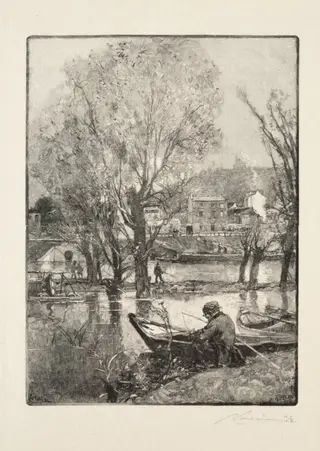
Le garage des bateaux-omnibus
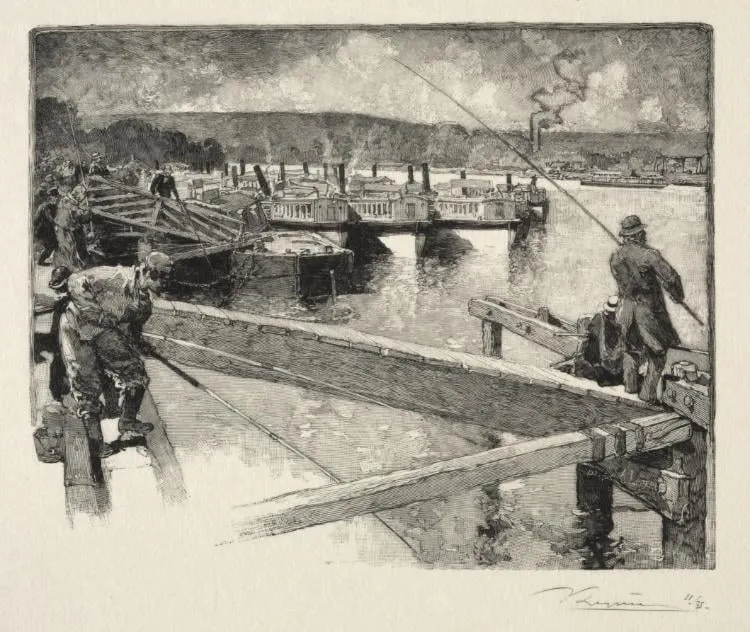
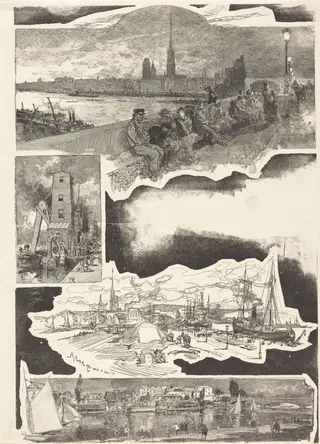
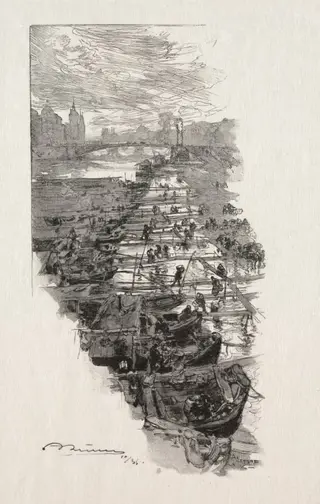
Le garage des bateaux-omnibus is a print by the Impressionist artist Auguste Louis Lepère. It dates from 1894 and is held in the collection of the Cleveland Museum of Art.
- Accession no.
- 1921.1306
- Credit line
- Gift of Leonard C. Hanna Jr.
About this work
Overview
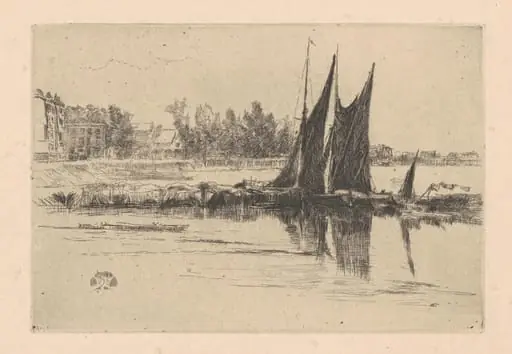
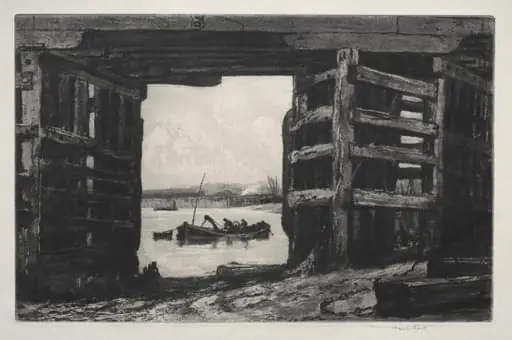
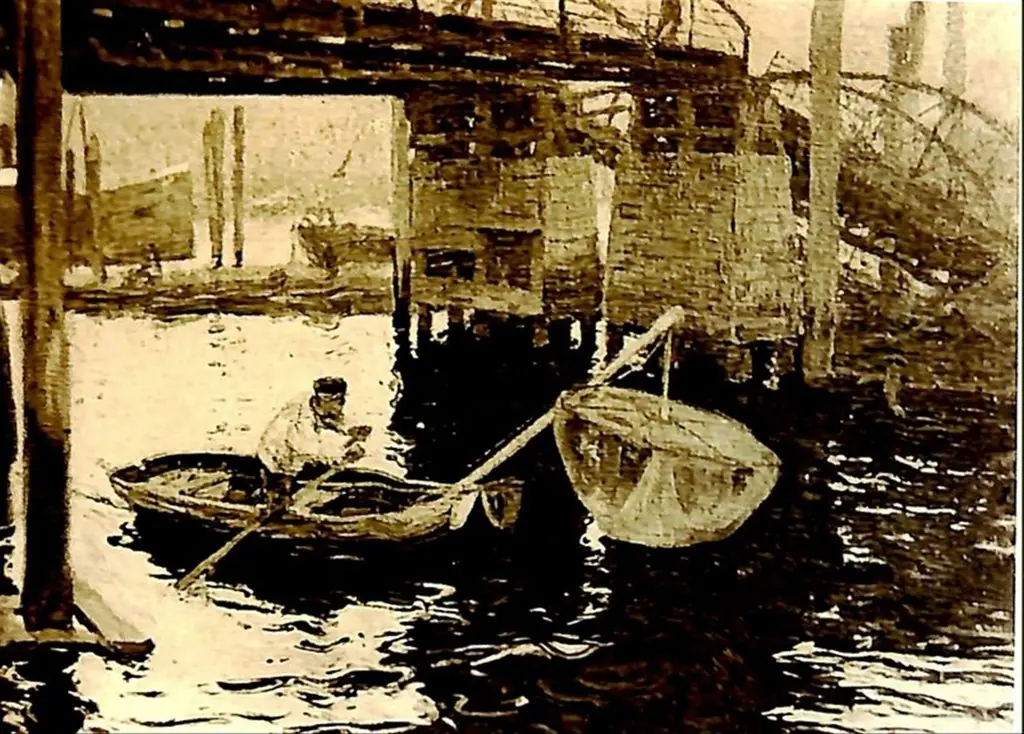
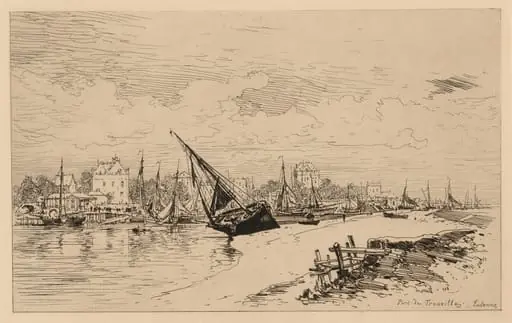
Created in 1894 by French artist Auguste Louis Lepère, Le garage des bateaux-omnibus is a wood engraving depicting a quiet riverside scene.
Created in 1894 by French artist Auguste Louis Lepère, Le garage des bateaux-omnibus is a wood engraving depicting a quiet riverside scene. Lepère, instrumental in the 19th-century revival of wood engraving as an artistic medium, used this technique to render everyday urban life with precision and nuance. The work is part of the Cleveland Museum of Art’s collection, reflecting its significance in the history of printmaking.
Subject & Meaning
The scene captures dockworkers and passengers near a fleet of passenger boats, engaged in routine tasks, loading, waiting, or conversing. No dramatic event unfolds; instead, the focus is on the rhythm of daily labor and transit. The composition suggests the quiet efficiency of urban water transport in late 19th-century France, portraying ordinary life without idealization or sentiment.
Technique & Style
Lepère employed fine, controlled lines in wood engraving to model light, texture, and spatial depth. The water’s surface, wooden piers, and distant buildings are rendered with subtle tonal gradations, achieved through meticulous carving. The absence of broad color fields emphasizes the medium’s monochrome strength, aligning with the detailed realism favored in printmaking revival circles of the era.
History & Provenance
The print was produced during a period when Lepère was actively promoting wood engraving as a fine art form, distinct from commercial illustration. It entered the Cleveland Museum of Art’s collection in the 20th century, likely through acquisitions focused on European prints. Its preservation reflects institutional interest in the technical innovations of late 19th-century printmakers.
Context
In 1894, Paris and its surrounding waterways relied on boat-omnibus services for public transit, linking neighborhoods before widespread rail expansion. Lepère’s choice of subject mirrors a broader artistic interest in modern urban life, shared by contemporaries who documented industrial and transportation shifts. His work stands apart from Impressionist brushwork, favoring the clarity and control of engraved line.
Legacy
Lepère’s prints, including this one, helped reestablish wood engraving as a respected medium in fine art. Though less widely known than his painterly peers, his technical rigor influenced later generations of printmakers. Le garage des bateaux-omnibus remains a quiet testament to the dignity of everyday labor and the potential of engraving to capture subtle atmospheric detail.
Artist & collection

Artist
Louis-Auguste Lepère (30 November 1849 – 20 November 1918) was a French painter and etcher. Lepère is also considered a leader in the creative revival of wood engraving in Europe.