Artwork
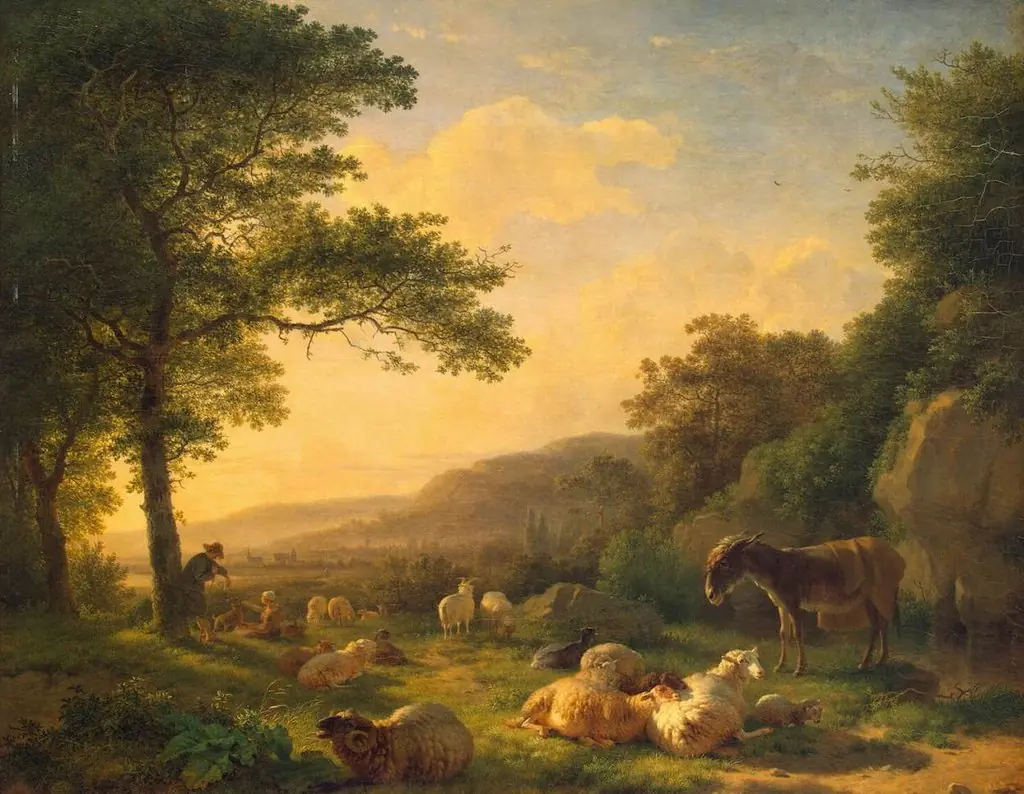
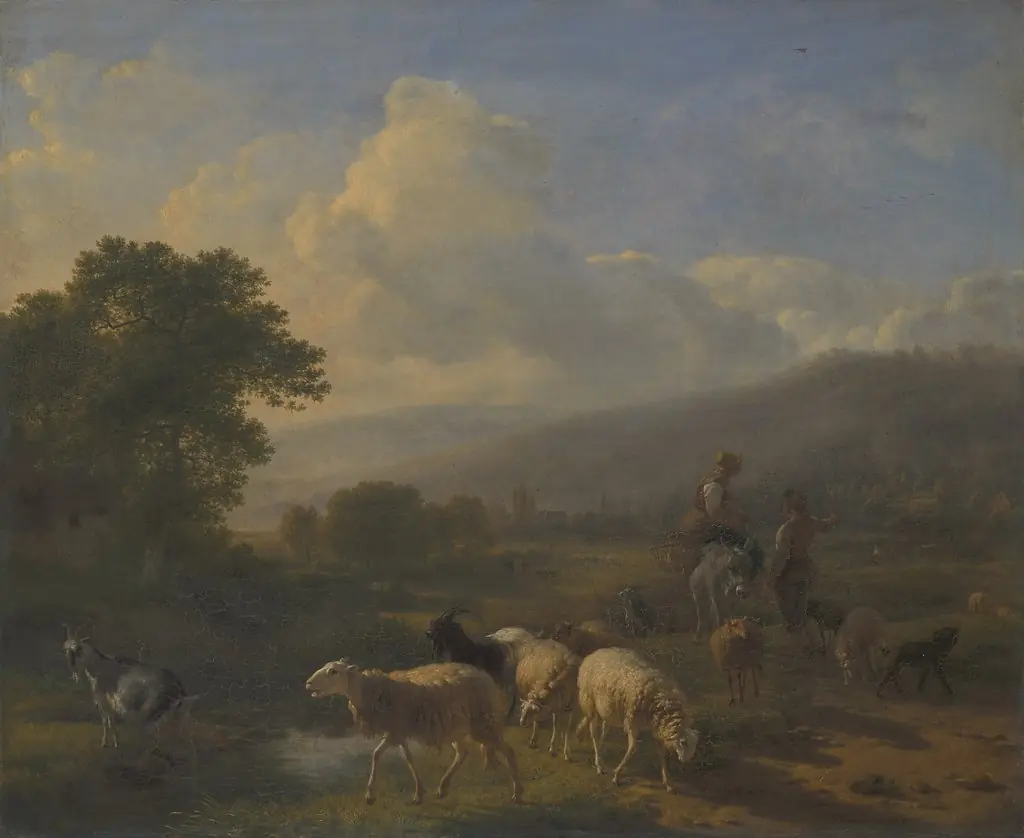
Landscape with Sheep and a Hay Wagon
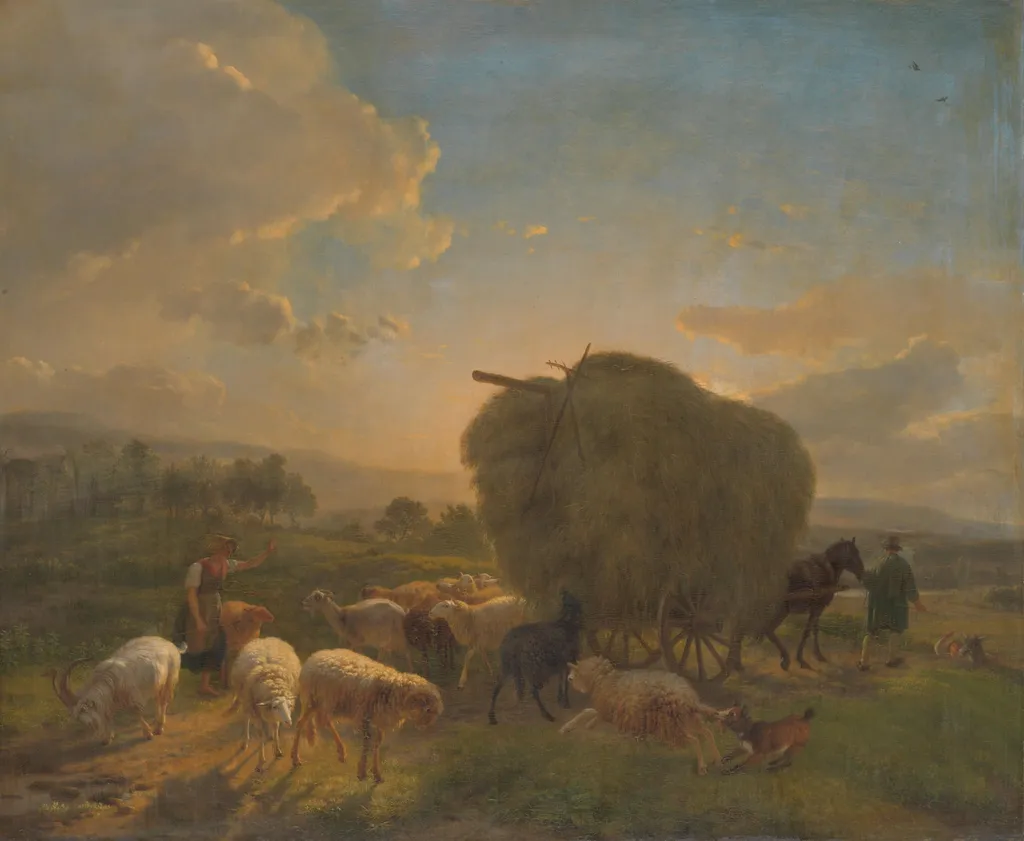
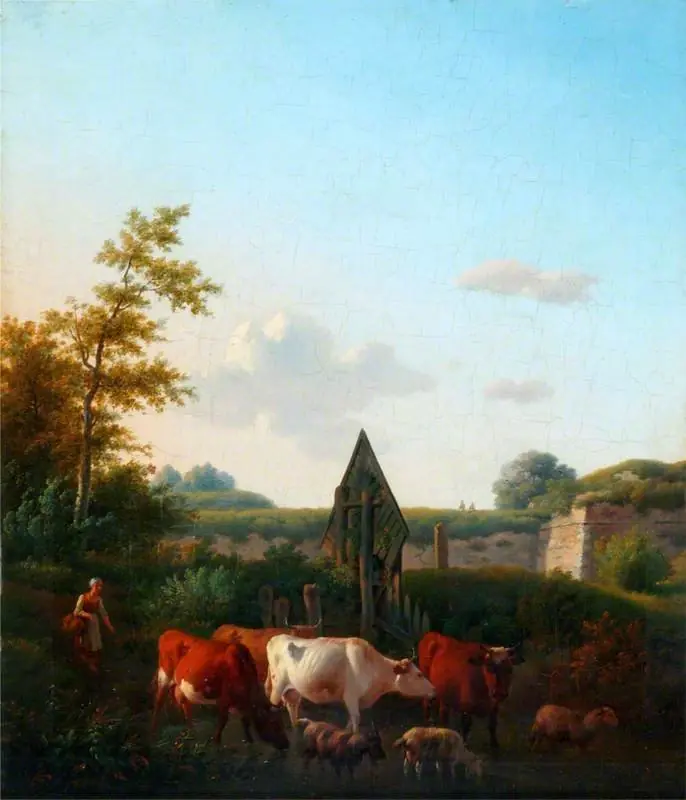
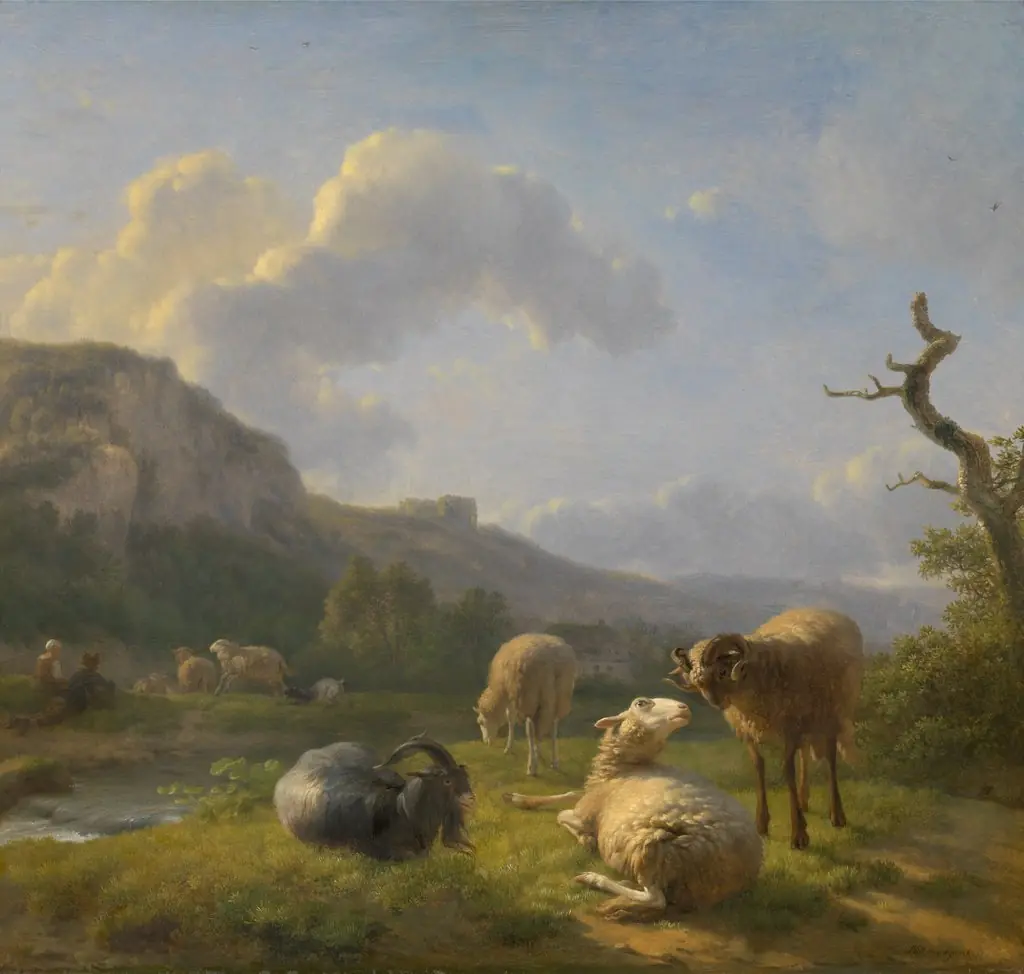
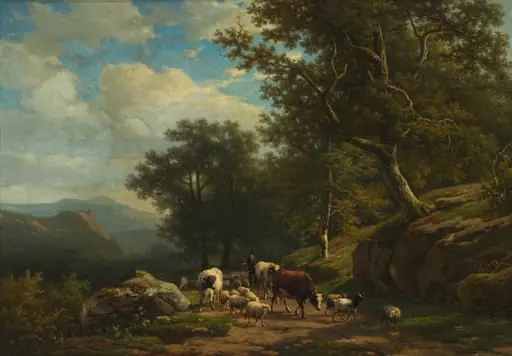
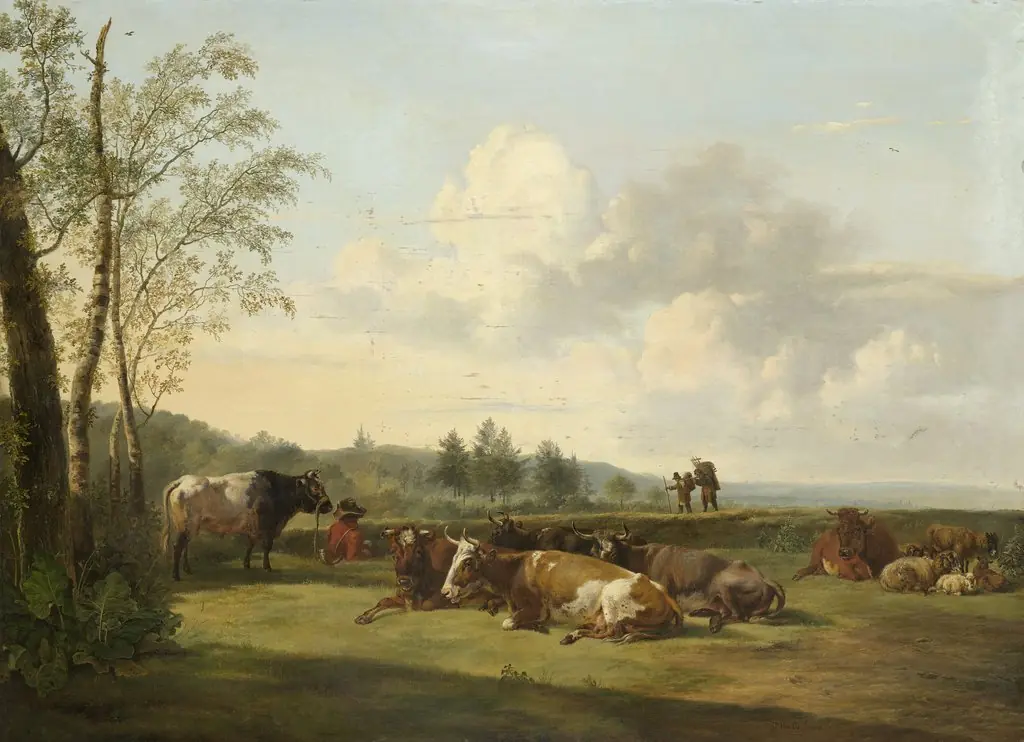
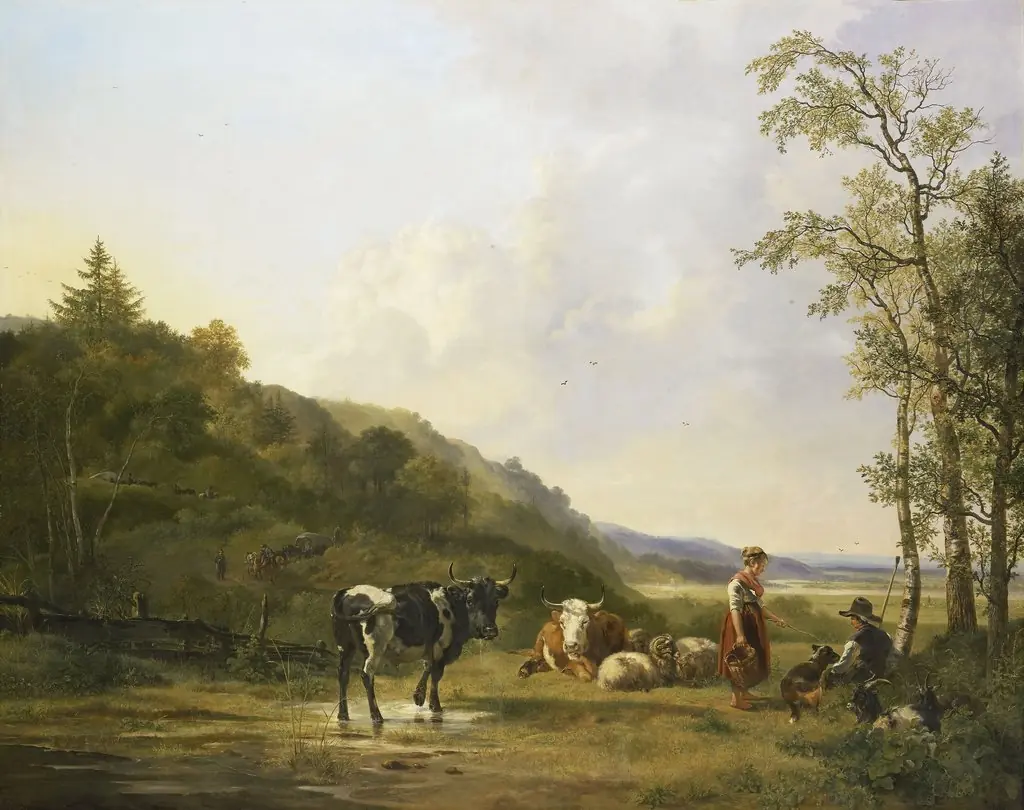
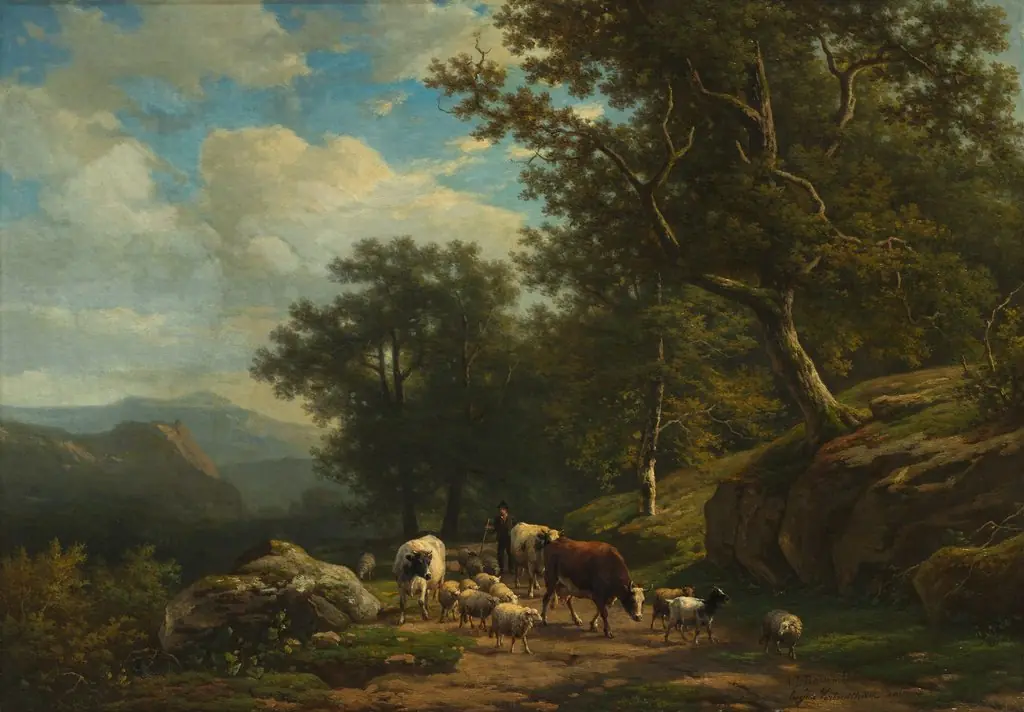
Landscape with Sheep and a Hay Wagon is an unspecified painting by the Hague School artist Balthasar Paul Ommeganck. It dates from 1823 and is held in the collection of the Rijksmuseum. This unsigned painting depicts a serene rural scene, featuring a green field populated by sheep, a few goats, and a hay wagon.
About this work
Subject & Meaning
The painting depicts a pastoral landscape populated by sheep and a hay wagon, reflecting Balthasar Paul Ommeganck’s specialization in rural scenes and animal husbandry. As a Flemish artist known as "the Racine of sheep," Ommeganck focused on the detailed rendering of animal coats, particularly sheep, within undulating countryside settings. The work synthesizes the atmospheric light of 17th-century Dutch Italianate traditions with a topographical observation of local nature, creating an idealized yet descriptive representation of the Low Countries' picturesque environment. These compositions often feature atmospheric conditions and the warm glow of rising or setting suns, blending realism with a conventional, contrived charm that defined his contribution to the revitalization of landscape painting in the region.
Technique & Style
This approach reflects the artist's commitment to combining detailed naturalism with the contrived, picturesque conventions of the classic tradition.
Landscape with Sheep and a Hay Wagon is an oil painting on panel, executed by Balthasar Paul Ommeganck between 1822 and 1824. The work exemplifies the artist's signature synthesis of 17th-century Dutch Italianate lighting with precise, topographical observation of nature. Stylistically, the piece features undulating landscapes populated by animals, a subject for which Ommeganck was renowned, particularly his meticulous rendering of sheep coats. The composition balances realistic detail with an idealized representation of the countryside, utilizing a sure line and subtle color palette to capture atmospheric conditions and the warm light of rising or setting suns. This approach reflects the artist's commitment to combining detailed naturalism with the contrived, picturesque conventions of the classic tradition.
Context
Painted between 1822 and 1824, Landscape with Sheep and a Hay Wagon belongs to the late output of Balthasar Paul Ommeganck, the Antwerp-based landscape and animal painter whose career bridged the late 18th and early 19th centuries. Through his work and his institutional roles, Ommeganck is credited with giving an important impetus to the revitalization of landscape painting in the Low Countries, combining the warm light of 17th-century Dutch Italianate painters with detailed observation of nature. Ommeganck's style was widely followed in the 18th and early 19th century, and his sheep paintings earned him the French epithet "Le Racine des moutons." However, later critics have not always been equally positive, with some reproaching his tradition for a "hopeless traditionalism" rooted in classic, picturesque conventions. The 1822-1824 dating situates the work within the final phase of his career, shortly before his death in Antwerp in 1826.
Legacy
Balthasar Paul Ommeganck's 1822-1824 Landscape with Sheep and a Hay Wagon established a realist-idealized landscape synthesis that shaped 19th-century European painting, particularly influencing French academic landscape traditions and later animal painters. His technique of combining Dutch Italianate lighting with detailed natural observation became a model for artists seeking balanced compositions, though 19th-century critics later dismissed his work as overly traditional. The painting's enduring reputation stems from his role in revitalizing Flemish landscape painting through meticulous atmospheric rendering and topographical accuracy, as documented in contemporary records of his exhibitions and institutional influence.
Own this work as a print
Artist & collection

Artist
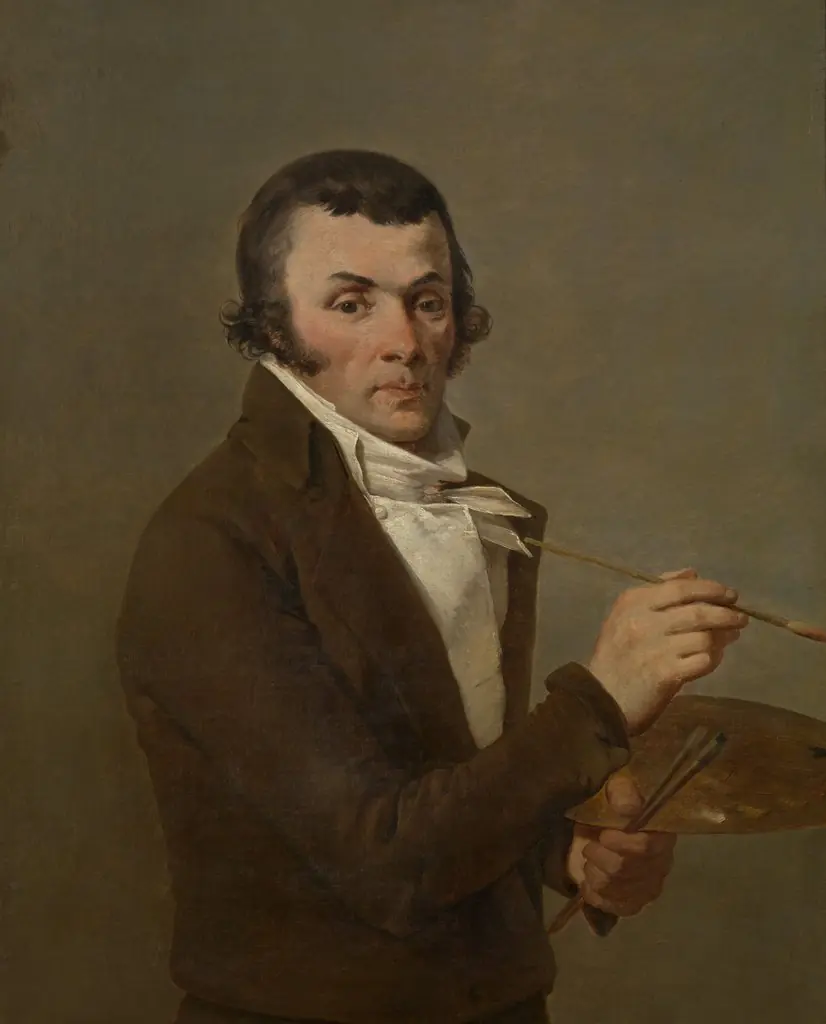
Balthasar Paul Ommeganck (sometimes also: Paul Balthasar Ommeganck) (1755–1826) was a Flemish painter of landscapes and animals active in Antwerp.