Artwork
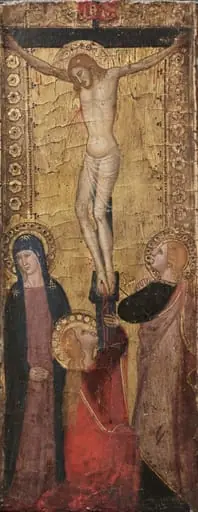
The Crucifixion and Lamentation
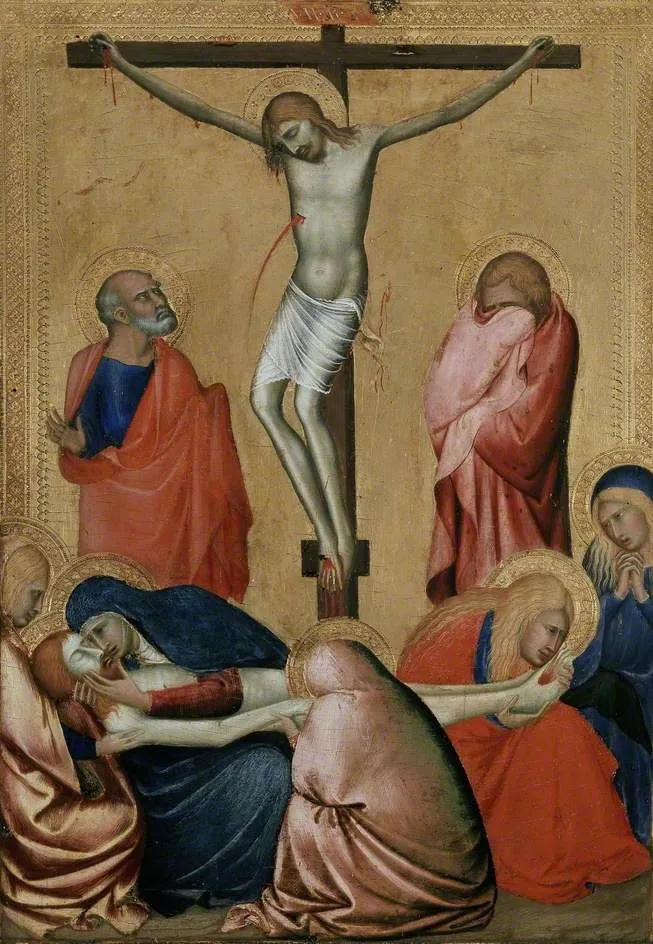
The Crucifixion and Lamentation is an unspecified painting by the Sienese School artist Barna da Siena. It dates from 1330 and is held in the collection of the Ashmolean Museum.
About this work
Overview
Barna da Siena’s early 14th‑century panel, titled The Crucifixion and Lamentation, presents the moment of Christ’s death on the cross surrounded by mourners. Executed around 1330, the work is part of the Ashmolean Museum’s collection and exemplifies the devotional imagery common to Italian Gothic painting.
Subject & Meaning
The composition juxtaposes the lifeless figure of Jesus, his body draped in a simple white cloth, with a group of grieving figures below. One woman cradles the dead Christ while another leans against the cross, embodying the Christian theme of sorrow and the theological emphasis on human compassion toward the divine sacrifice.
Technique & Style
Barna employs a restrained palette of light brown tones for the background, allowing darker edge shadows to frame the scene. The figures are rendered in modestly detailed robes, their postures, kneeling, seated, or leaning, conveying a solemn stillness characteristic of the Sienese Gothic aesthetic.
History & Provenance
Created circa 1330, the panel has remained in the United Kingdom since its acquisition by the Ashmolean Museum. Its attribution to Barna da Siena aligns it with a small body of work that illustrates the transition from Byzantine rigidity to a more expressive, narrative-driven style in early Italian painting.
Artist & collection
Artist
Siena’s 1300s altarpieces glow with gold leaf and storybook scenes. Barna da Siena painted The Mystical Marriage of Saint Catherine and The Crucifixion and Lamentation in jewel-bright tempera, giving saints and angels…

- The Crucifixion
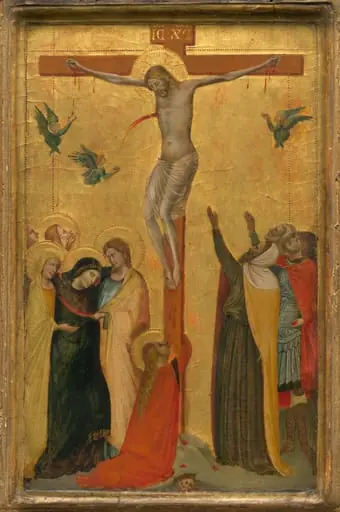 The Crucifixion
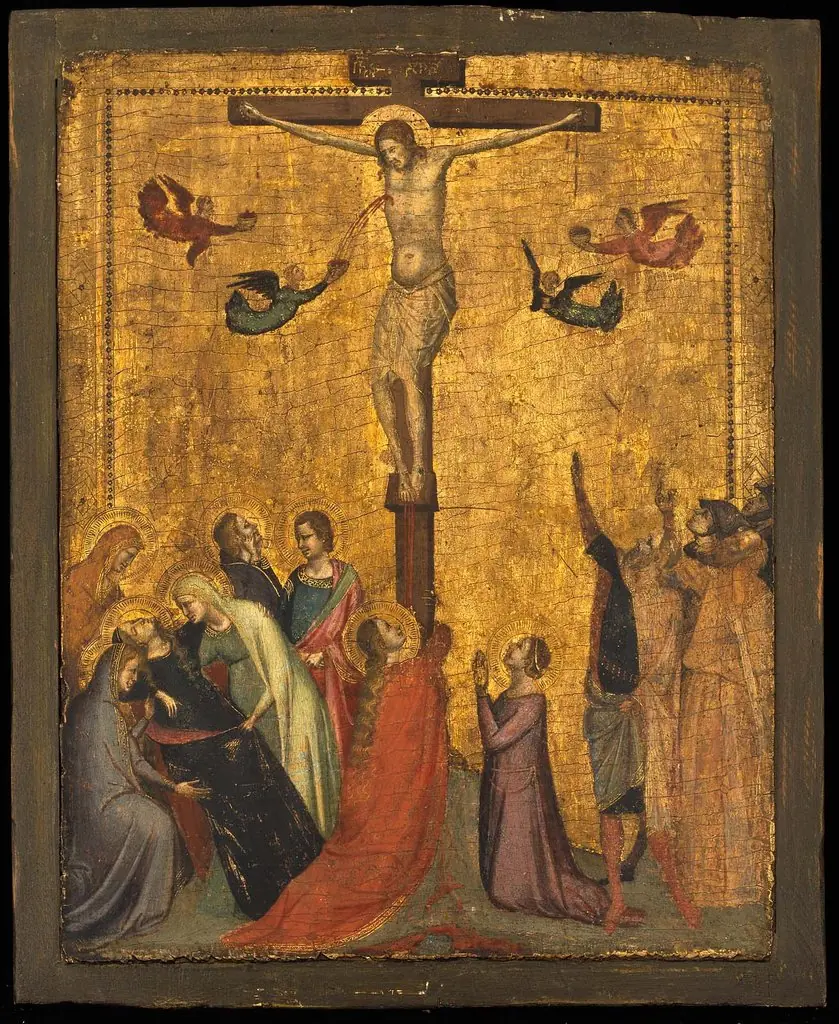 The Crucifixion
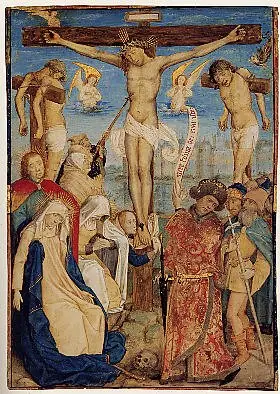 The Crucifixion
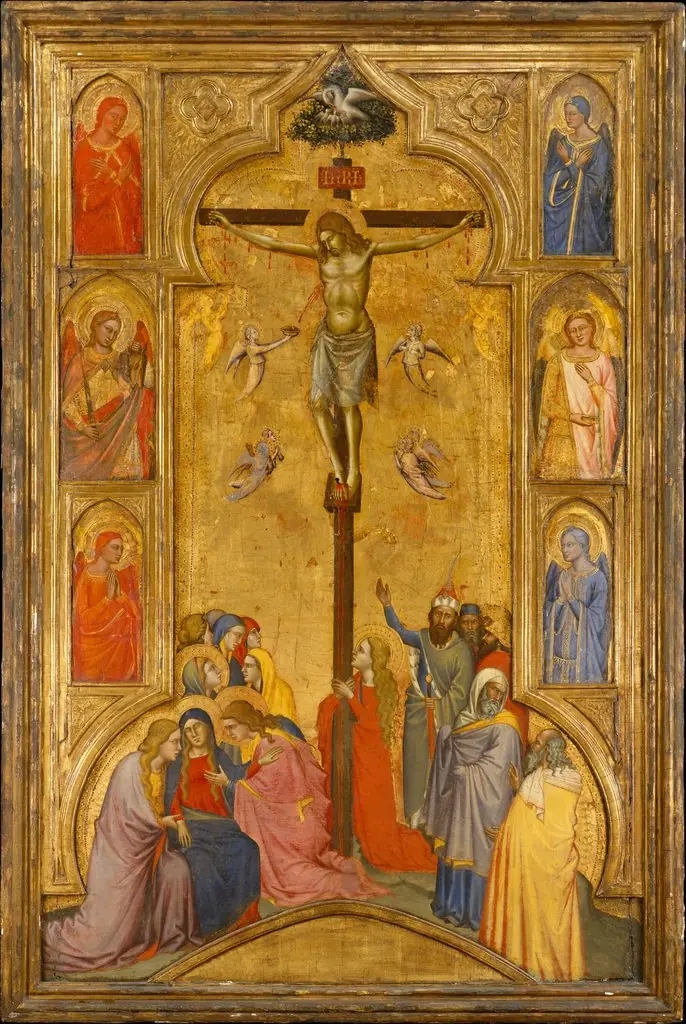 The Crucifixion
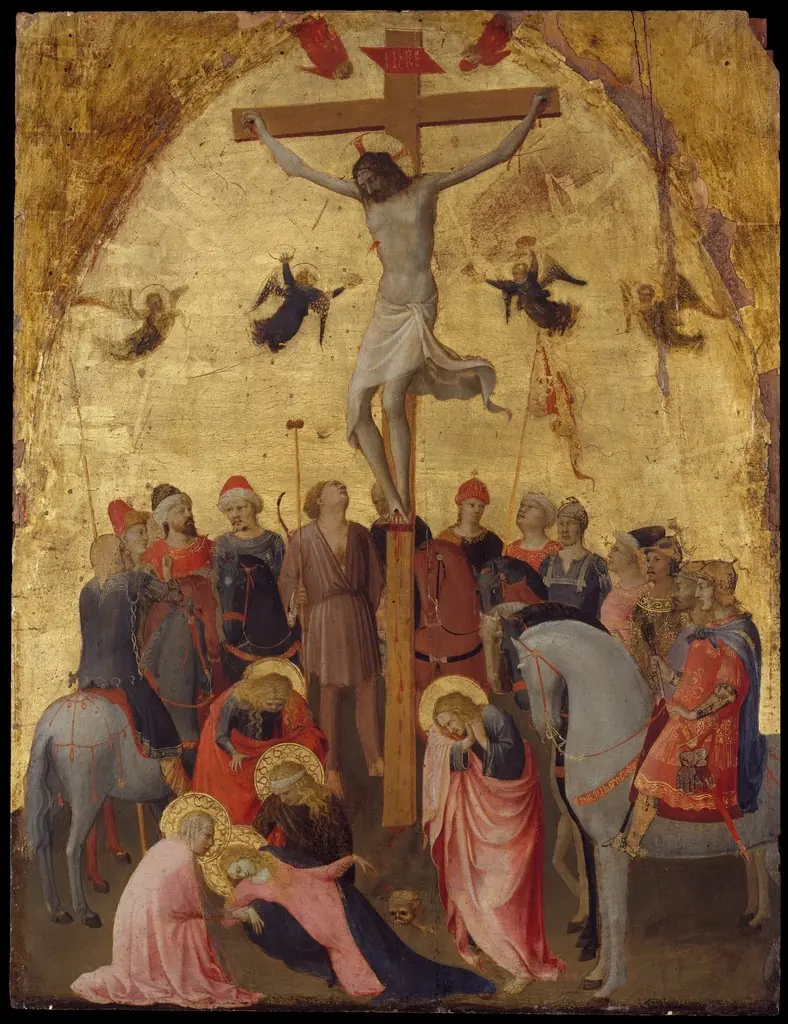 The Crucifixion
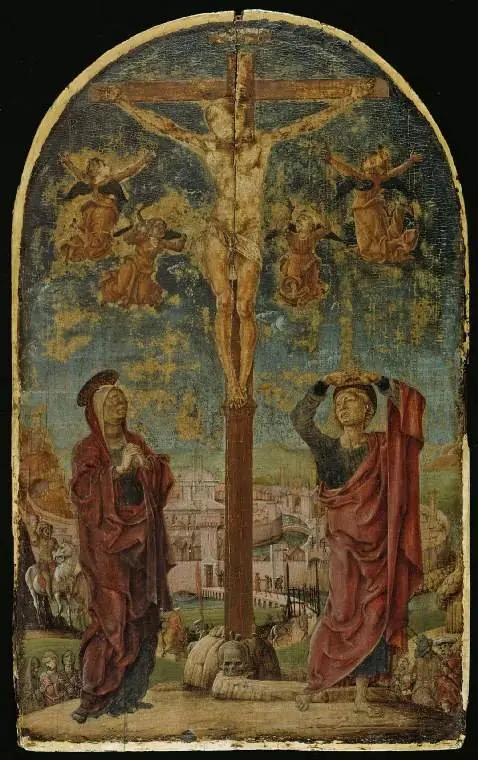 The Crucifixion
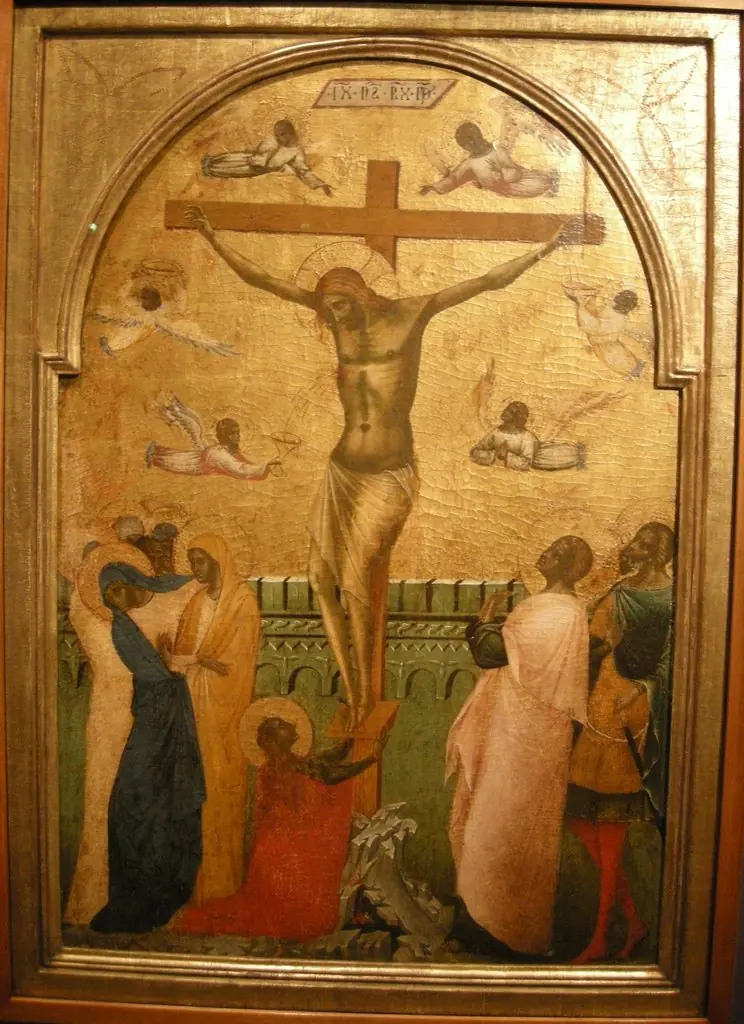 The Crucifixion
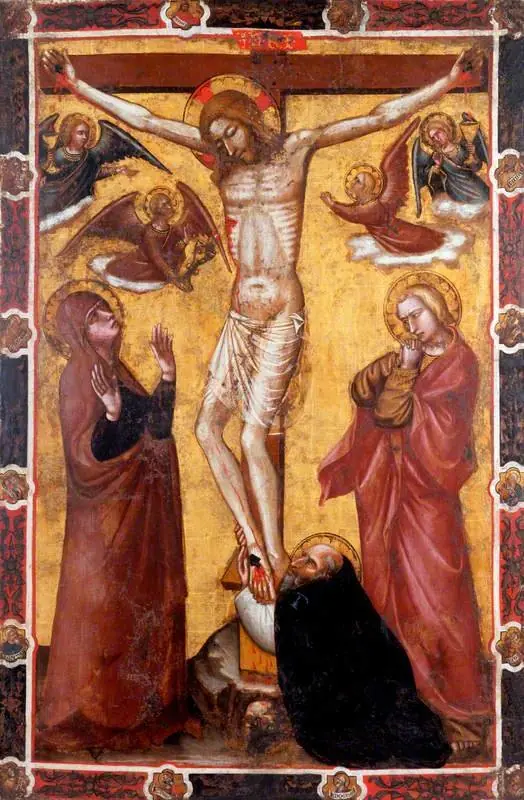 The Crucifixion with the Virgin and Saint John; Saint Anthony Abbot at the Foot of the Cross (one side of a processional banner) (formerly attributed to Barnaba da Modena)
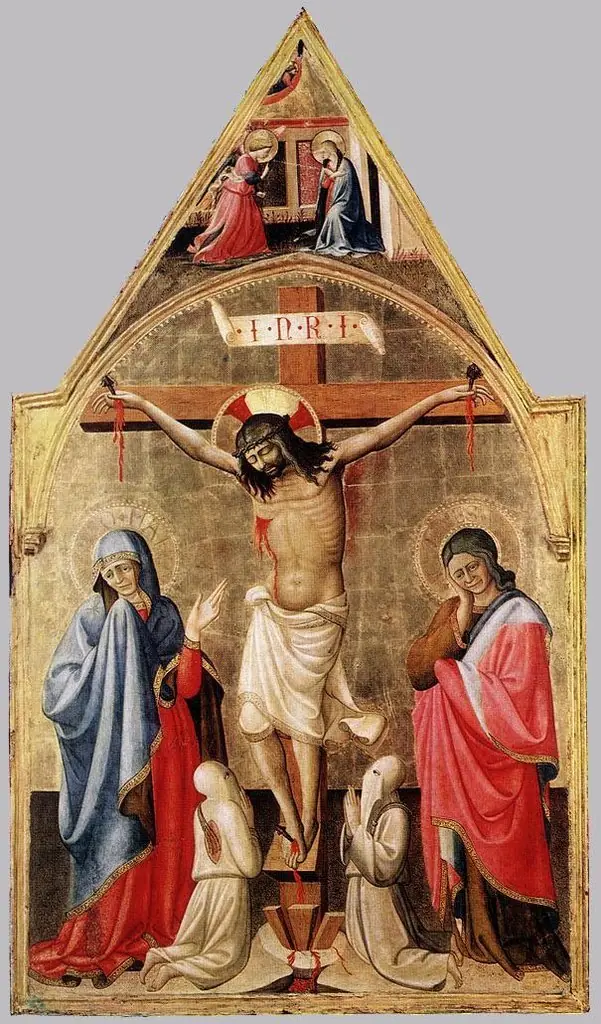 Crucifixion with Mary and St John the Evangelist
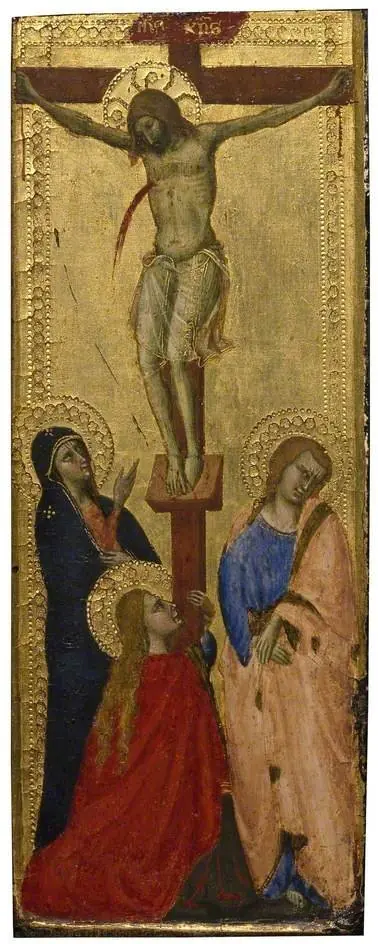
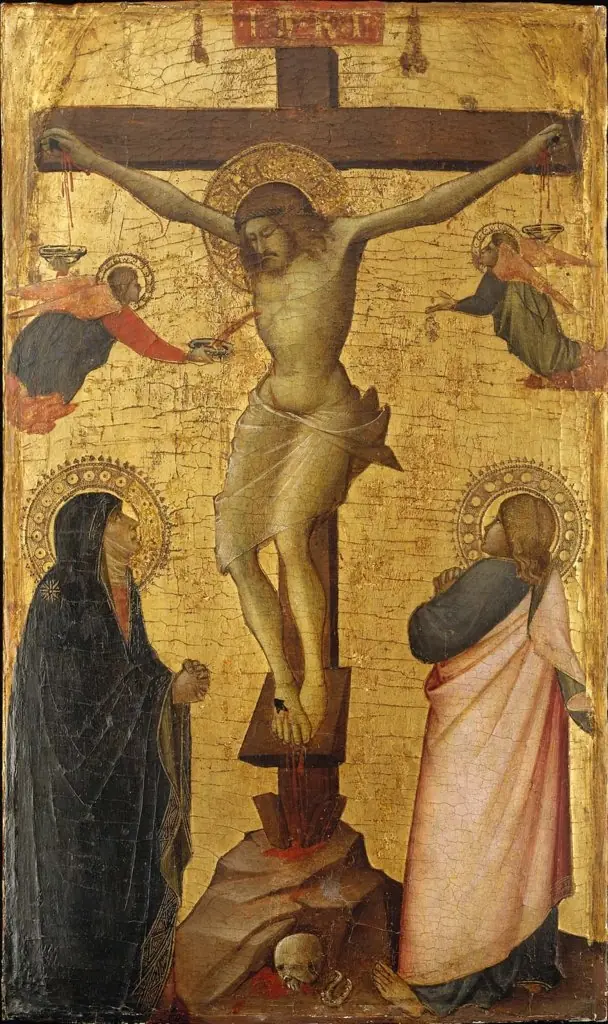 The Crucifixion with the Virgin and Saint John
 The Crucifixion