Artwork
The Crucifixion
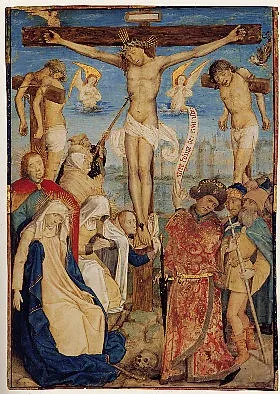
The Crucifixion is a tempera painting by the Northern Renaissance artist Monogrammist IM. It dates from 1490 and is held in the collection of the Metropolitan Museum of Art.
About this work
Subject & Meaning
According to the sources, the leaf depicts Christ on the cross accompanied by a woman identified as Mary, underscoring her role as witness and mourner.
The work portrays the crucifixion of Jesus Christ, the central event of Christian salvation history. According to the sources, the leaf depicts Christ on the cross accompanied by a woman identified as Mary, underscoring her role as witness and mourner. This composition follows the traditional Netherlandish iconography of the Crucifixion, where the suffering Savior is flanked by the Virgin Mary, emphasizing themes of sacrifice, compassion, and divine love.
The image thus functions as a devotional reminder of Christ’s redemptive death and the promise of eternal life for believers.
Technique & Style
The work is a small tempera painting executed on a parchment leaf measuring roughly 27 × 19 cm, dating to around 1480. It belongs to the religious genre and portrays the crucifixion of Jesus, with the central figure of Christ flanked by Mary and other attendant figures. The medium is tempera, applied to the parchment support typical of early Netherlandish devotional leaves, and the composition follows the conventional iconography of the period for a crucifixion scene.
The piece was part of a missal, originates from the Southern Netherlands, and is now housed in the Metropolitan Museum of Art, having been collected by Robert Lehman.
History & Provenance
Created circa 1480, this tempera painting on parchment was executed by the artist known as the Monogrammist IM. Originally functioning as a leaf from a Southern Netherlandish missal, the work measures approximately 27 by 19 units. The piece entered the collection of the Metropolitan Museum of Art through the Maurice Kann and Robert Lehman holdings.
It is currently cataloged under the accession number 1975.1.2475 within the museum's religious art department, where it remains part of the permanent collection.
Context
The Crucifixion attributed to the Monogrammist IM dates to 1480 and exemplifies Southern Netherlandish religious painting. Executed in tempera on parchment, the work depicts the crucifixion of Jesus accompanied by the Virgin Mary and other figures, aligning with the genre’s devotional focus. Its inclusion in the Metropolitan Museum of Art, originally part of the Robert Lehman collection, underscores its importance within the study of early Netherlandish masters and the broader corpus of the Monogrammist IM.
Scholarship on the piece highlights its stylistic connections to contemporary altar panels and its role in understanding devotional practices of the late fifteenth century.
Overview
This painting, titled The Crucifixion, presents the pivotal event of Christian theology. Executed in tempera, the artwork places Jesus prominently on the cross, his arms outstretched, at the composition's core. Surrounding him are numerous figures, rendered in vibrant hues, set against a backdrop featuring a detailed cityscape beneath a somber sky. The work invites contemplation of its solemn subject matter through its specific visual choices and detailed execution.
Artist & collection
Artist
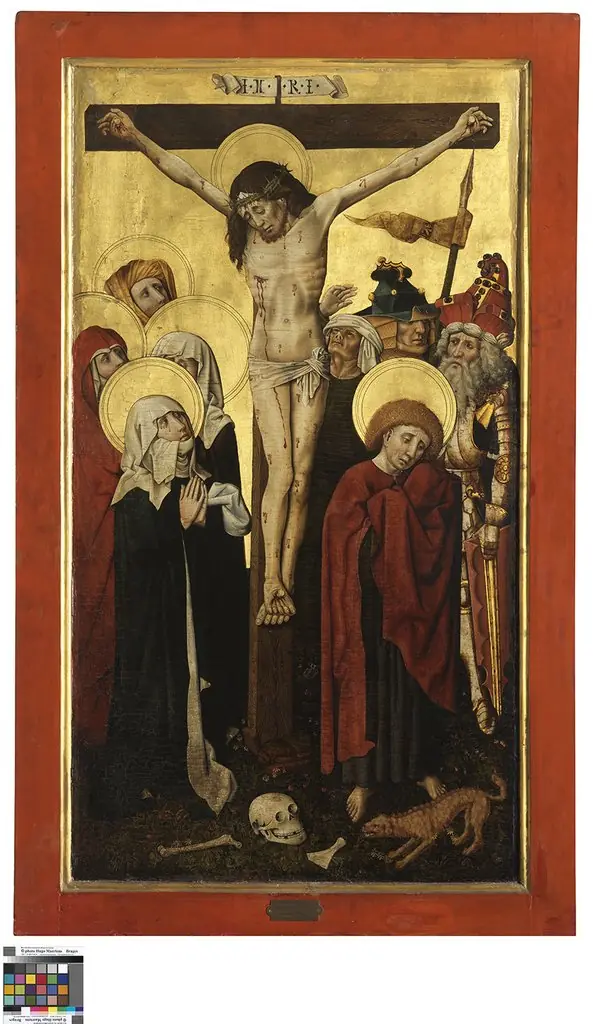
Monogrammist IM, an unknown painter of the late 1400s, made small, detailed tempera panels of religious scenes.

- Crucifixion
 Legnica polyptych
 The Crucifixion
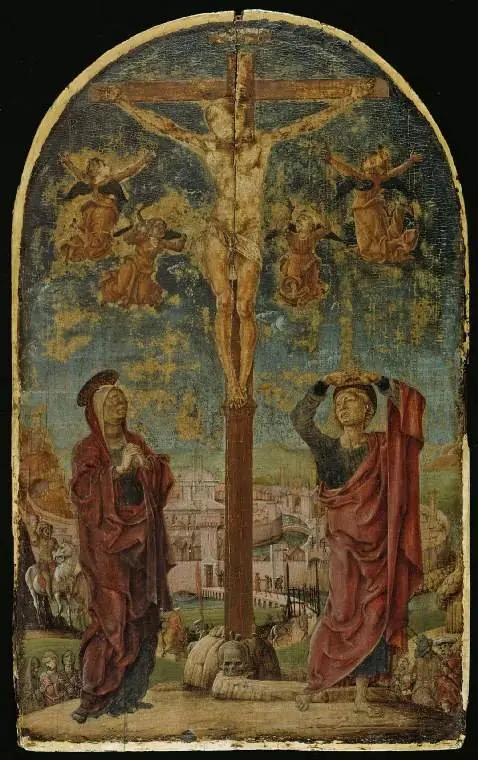 The Crucifixion
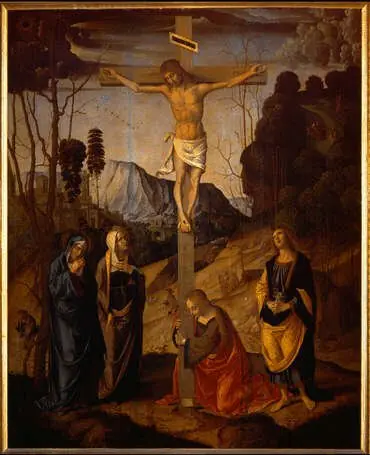 Crucifixion
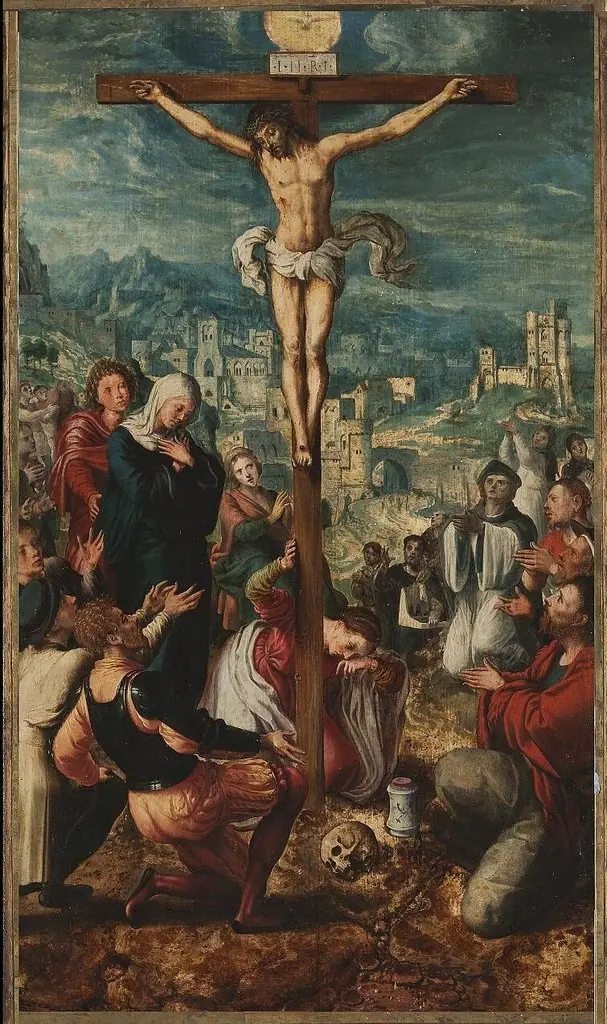 Triptych:Crucifixion of Jesus (central panel)
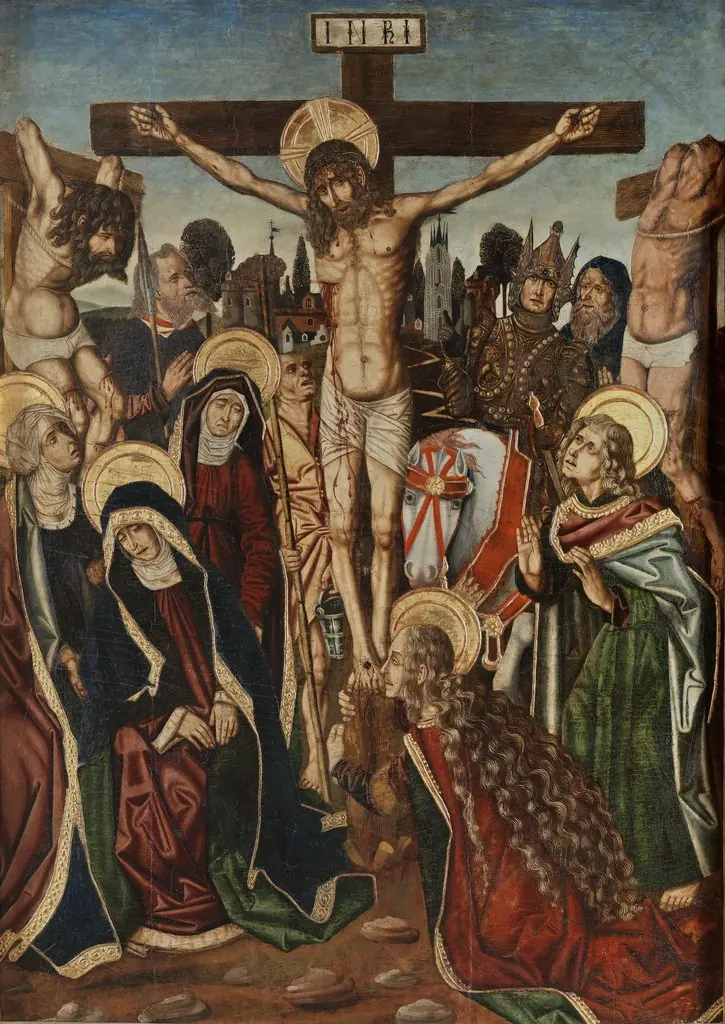 The Crucifixion
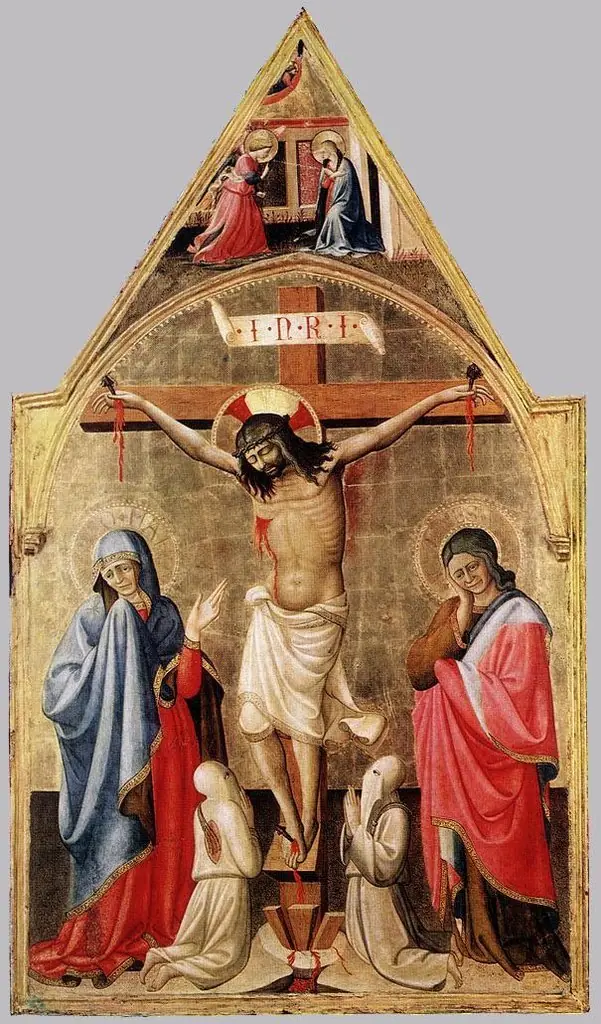 Crucifixion with Mary and St John the Evangelist
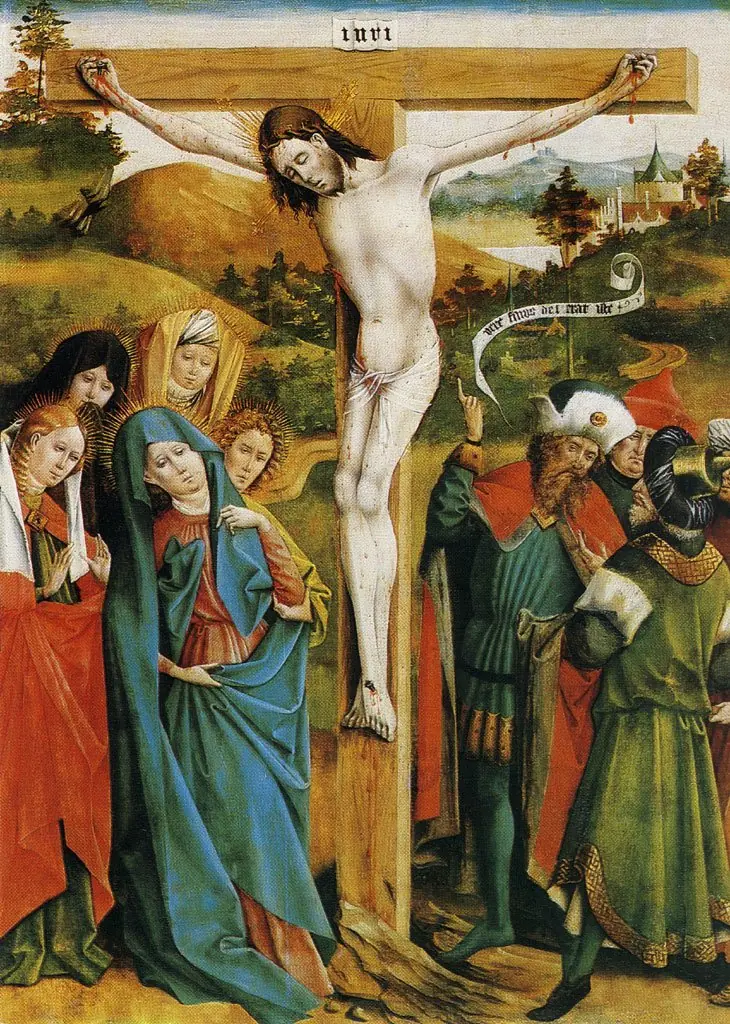 Crucifixion of Christ
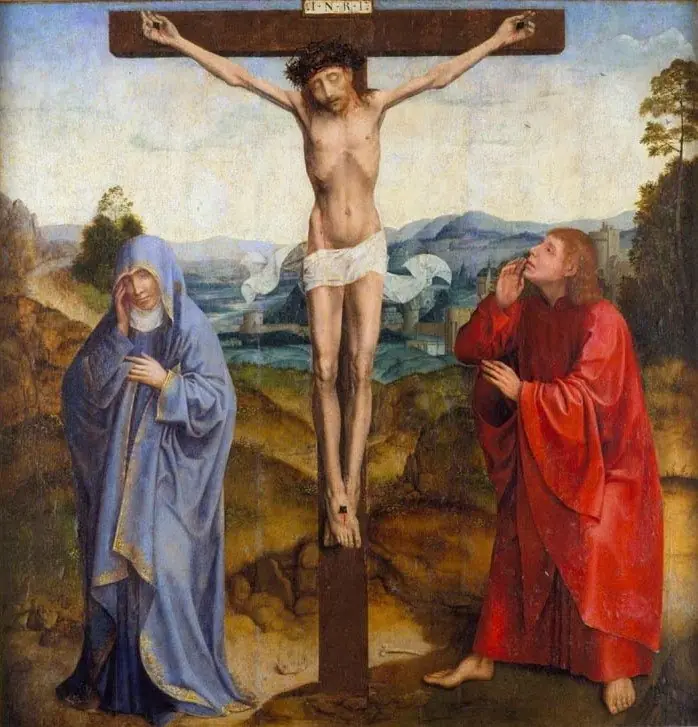 Calvary
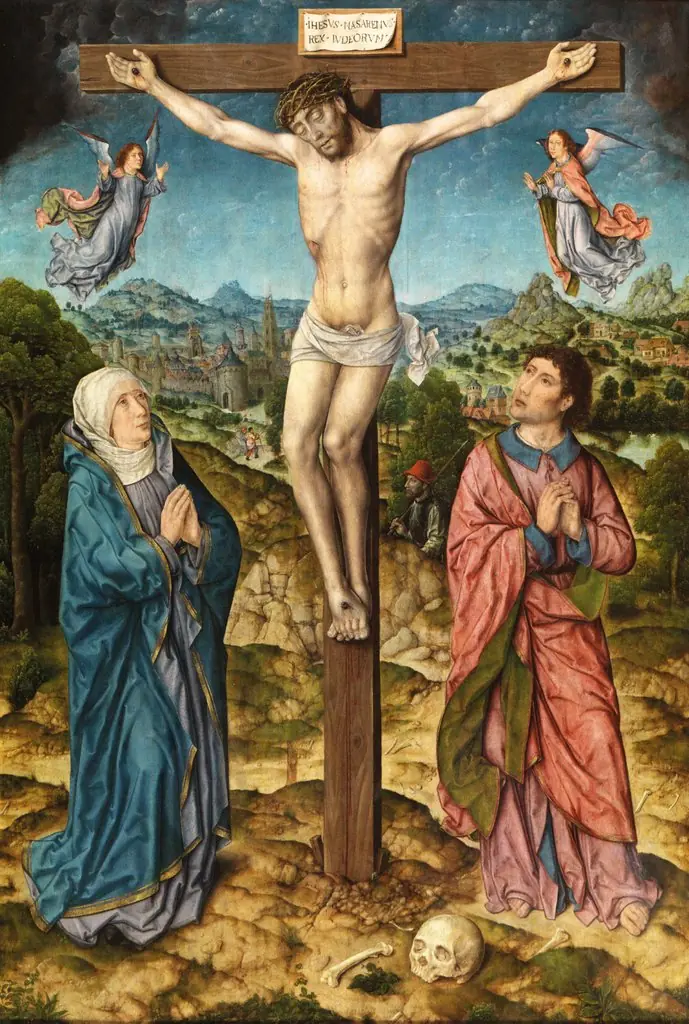 The Crucifixion
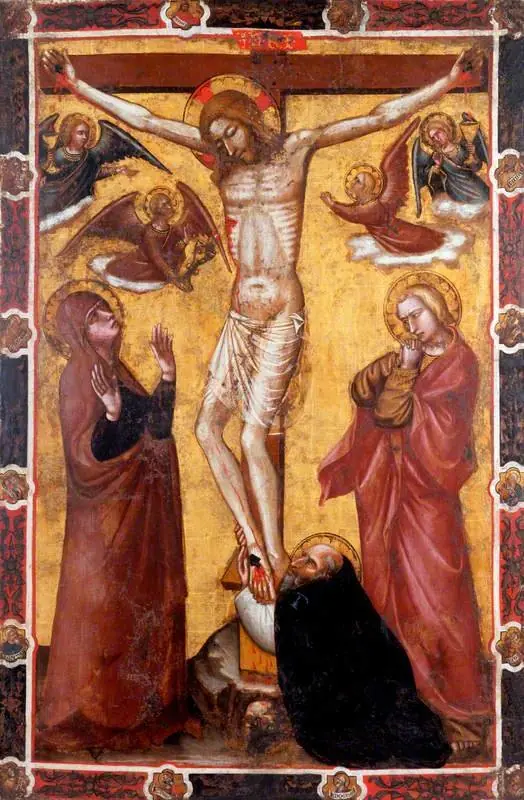 The Crucifixion with the Virgin and Saint John; Saint Anthony Abbot at the Foot of the Cross (one side of a processional banner) (formerly attributed to Barnaba da Modena)