Artwork
Augustus II, Elector of Saxony
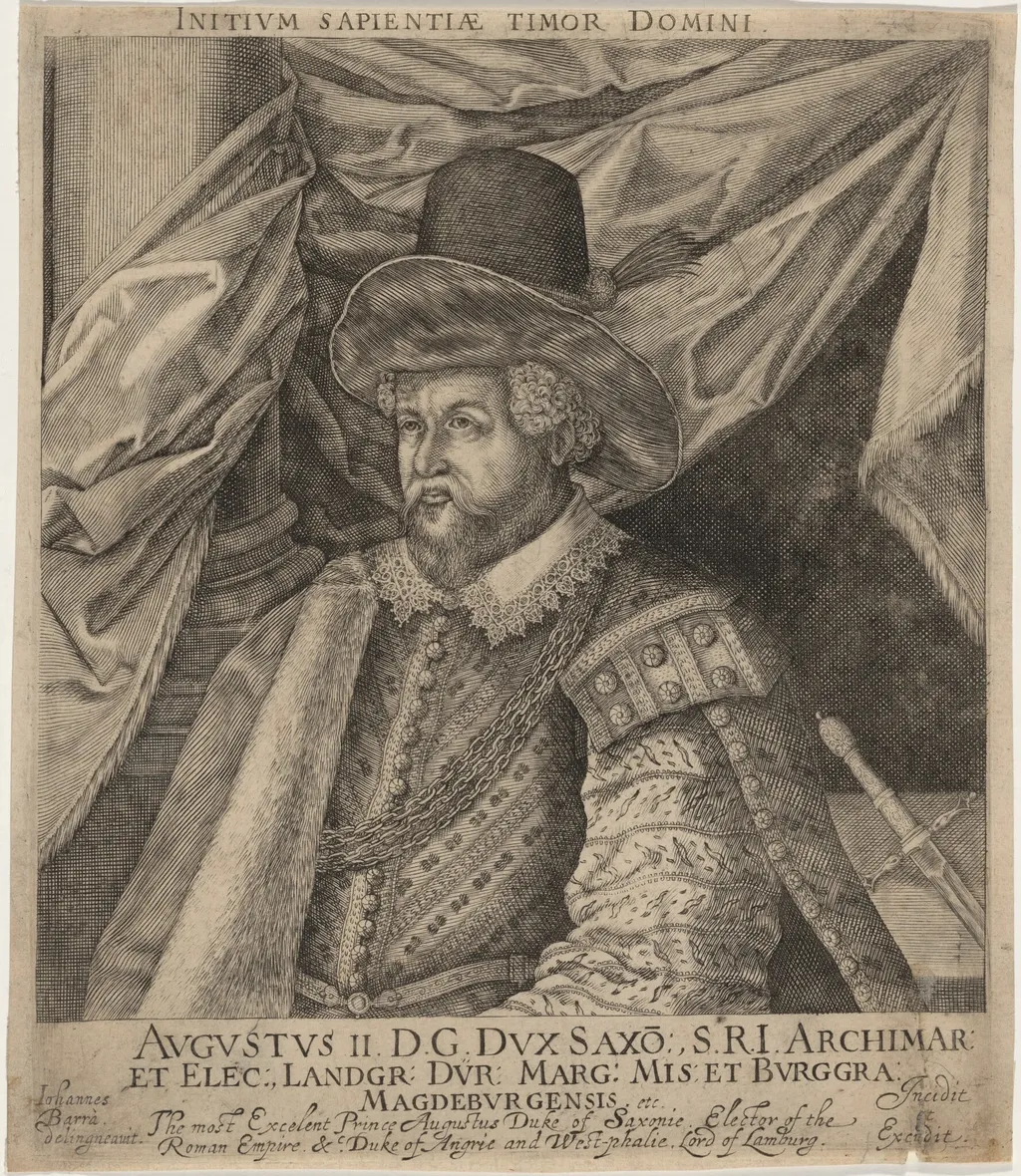
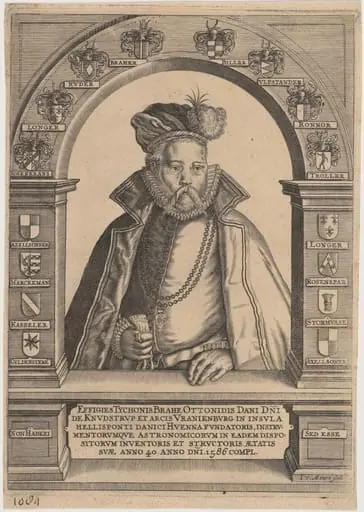
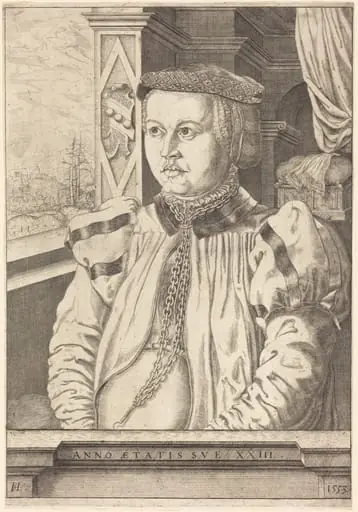
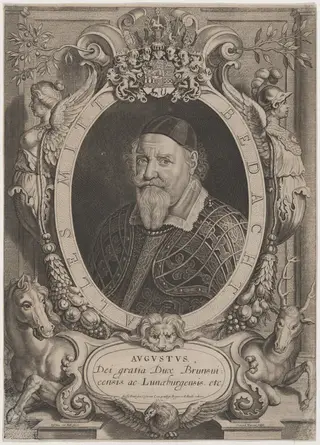
Augustus II, Elector of Saxony is an ink print by the Renaissance artist Johan Barra. It dates from 1608 and is held in the collection of the National Gallery of Art.
About this work
Overview
This black-and-white print, created in 1608 by Johan Barra, depicts Augustus II, Elector of Saxony, as a dignitary of the Holy Roman Empire.
This black-and-white print, created in 1608 by Johan Barra, depicts Augustus II, Elector of Saxony, as a dignitary of the Holy Roman Empire. Executed in engraving, the image relies entirely on incised lines on a metal plate to render form and texture. No color or wash is used; the portrait’s depth emerges through precise, controlled etching, capturing the weight of fabric, the texture of beard, and the sheen of metal ornaments with meticulous line work.
Subject & Meaning
Augustus II is portrayed in ceremonial attire, emphasizing his political and dynastic authority. The heavy robes, ornate chain, and staff signify his status as both ruler and patron. The aged features and long beard convey experience and gravitas, aligning with Renaissance ideals of leadership rooted in wisdom and endurance. The draped background frames the figure without distraction, focusing attention on his presence and regalia.
Technique & Style
Barra employed fine, parallel lines and cross-hatching to model volume and shadow, a hallmark of Northern European engraving. The texture of the beard, the folds of the robe, and the metallic glint of the chain are built through incremental line density rather than tone. The precision of the carving reveals the artist’s control over the burin, translating three-dimensional form into a flat, inked impression with remarkable subtlety.
History & Provenance
Created in 1608, the engraving likely served as a portrait for distribution among nobility or as part of a collection documenting Saxon rulers. Its survival suggests it was valued for its accuracy and craftsmanship. Though specific early ownership records are sparse, such prints were commonly circulated in elite circles to affirm political identity and lineage during the early 17th century.
Context
In early 17th-century Saxony, portraiture in print played a key role in reinforcing dynastic legitimacy. Engravings like this one were produced alongside coins and paintings to project authority across territories. Barra’s work reflects the influence of Flemish and German print traditions, where detailed realism and symbolic attire were standard tools for conveying power beyond the canvas.
Legacy
Barra’s engraving remains a representative example of early modern portraiture in print, illustrating how technical precision could convey social status without color or embellishment. It contributes to a broader archive of Saxon rulers, offering insight into how visual culture supported political identity. The work is preserved in institutional collections, valued for its craftsmanship and historical documentation.
Own this work as a print
Artist & collection