Artwork
Augustus, Duke of Brunswick
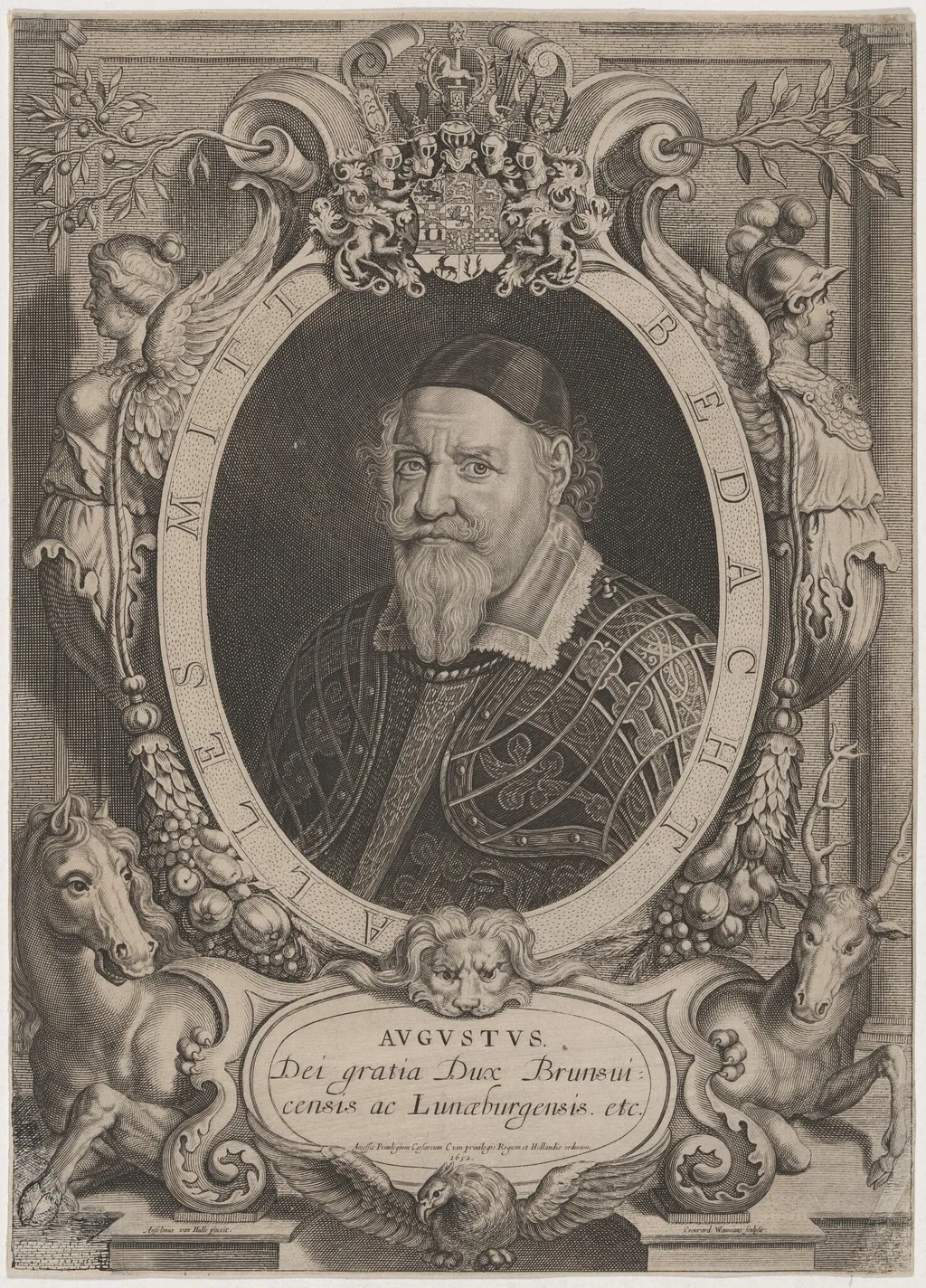
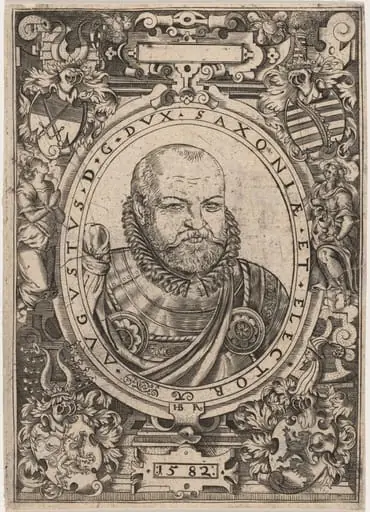
Augustus, Duke of Brunswick is an ink print by the Baroque artist Conrad Waumans. It dates from 1652 and is held in the collection of the National Gallery of Art.
About this work
Overview
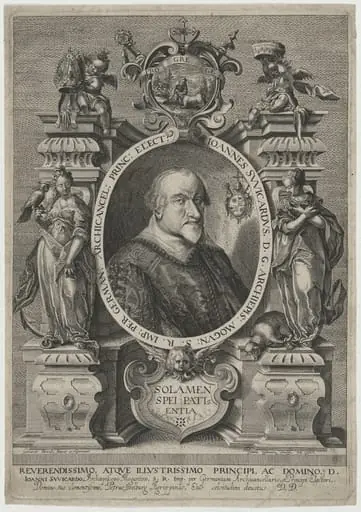
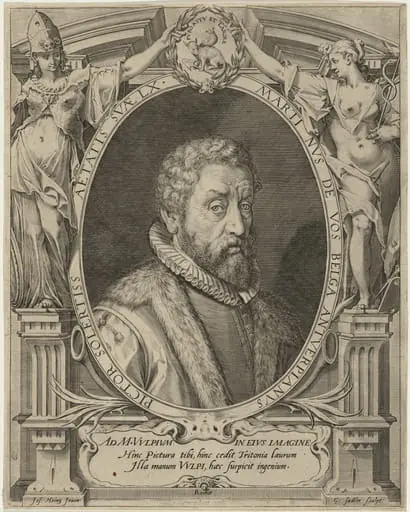
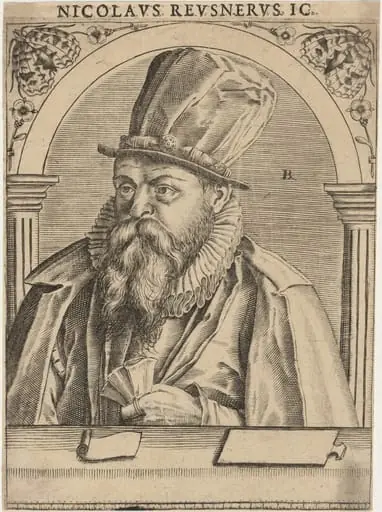
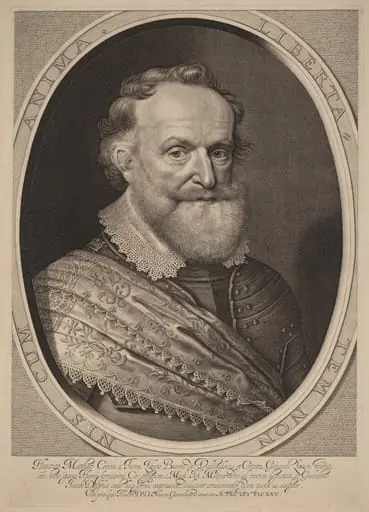
Conrad Waumans’ 1652 engraving presents Augustus, Duke of Brunswick, in a formal portrait. Rendered in black and white, the image shows the duke as an older man with a full beard, a solemn expression, and a dark, ruffled collar. A decorative background features swirling motifs, a crown positioned above his head, and enigmatic faces that emerge from the margins, framing the figure.
Subject & Meaning
The work identifies its sitter explicitly as the Duke of Brunswick, a title indicating his status within the German princely hierarchy of the 17th century.
The work identifies its sitter explicitly as the Duke of Brunswick, a title indicating his status within the German princely hierarchy of the 17th century. The inclusion of regal symbols such as the crown and the ornate chain suggests an emphasis on authority and noble lineage, while the surrounding fantastical elements may reflect contemporary allegorical conventions that associate rulership with both power and mystery.
Technique & Style
Waumans employs fine, cross‑hatching lines to model the duke’s facial features and clothing, creating a subtle gradation of tone that imparts a three‑dimensional quality to the portrait. The intricate background patterns are achieved through delicate stippling and linear ornamentation, characteristic of mid‑Baroque engraving practices that combined portraiture with elaborate decorative frames.
History & Provenance
Created in 1652, the engraving was likely intended for circulation among the duke’s court or as a commemorative image. While specific ownership records are scarce, prints of this type were commonly collected by aristocratic patrons and later entered museum collections as examples of early modern German portrait engraving.
Own this work as a print
Artist & collection