Artwork
The Trinity
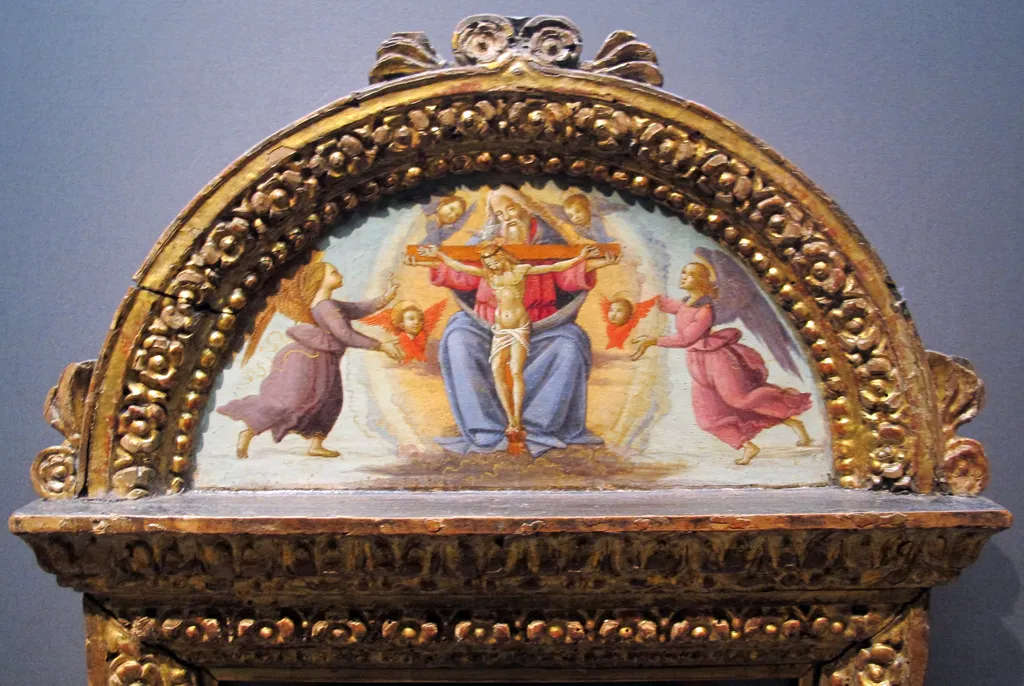
The Trinity is a tempera painting by the Early Renaissance artist Bartolomeo di Giovanni. It dates from 1498 and is held in the collection of the Metropolitan Museum of Art.
About this work
Subject & Meaning
The painting depicts the Holy Trinity through the figures of God the Father, the crucified Christ, a dove, and an angel.
The painting depicts the Holy Trinity through the figures of God the Father, the crucified Christ, a dove, and an angel. Together these elements visually articulate the Christian doctrine of one God in three persons. The Father's presence conveys divine authority, Christ's crucifixion underscores the sacrificial aspect of the Son, the dove alludes to the Holy Spirit, and the angel serves as a heavenly attendant.
By combining these symbols, the work expresses the unity and mystery of the Trinity within a devotional context.
Technique & Style
Bartolomeo di Giovanni executed The Trinity in 1498 using tempera paint applied to a wooden panel support. This devotional panel measures 13 centimeters in height and 26 centimeters in width. As a religious work, the painting depicts the Holy Trinity, featuring God the Father, a dove, an angel, and the crucified Christ.
The medium of tempera on panel was a standard technique for Florentine painters of the late fifteenth century, allowing for precise detail and luminous coloration suitable for the subject matter.
History & Provenance
Created in 1498, The Trinity is a tempera painting on panel by Bartolomeo di Giovanni. The work depicts the Holy Trinity, featuring God the Father, an angel, a dove, and the crucified Christ. While the original commission and early ownership history are not detailed in the available records, the painting eventually entered the collection of the Metropolitan Museum of Art, where it is currently housed.
The piece measures 13 centimeters in height and 26 centimeters in width and is classified as a religious genre work within the museum's holdings.
Overview
The tempera painting titled "The Trinity" presents a solemn religious composition. Encased within an elaborate gold frame, the artwork features a central robed figure supporting a cross with a smaller body. Three additional figures, two kneeling and one standing, are depicted reaching towards this central scene.
The overall arrangement conveys a profound sense of devotion and spiritual significance, characteristic of its sacred subject matter.
Own this work as a print
Artist & collection
Artist
Bartolomeo di Giovanni di Domenico (1458? – 1501) was an Italian Renaissance painter active in Florence. His works were first identified by the art historian Bernard Berenson, who did not know the painter's real name so…

- The Crucifixion
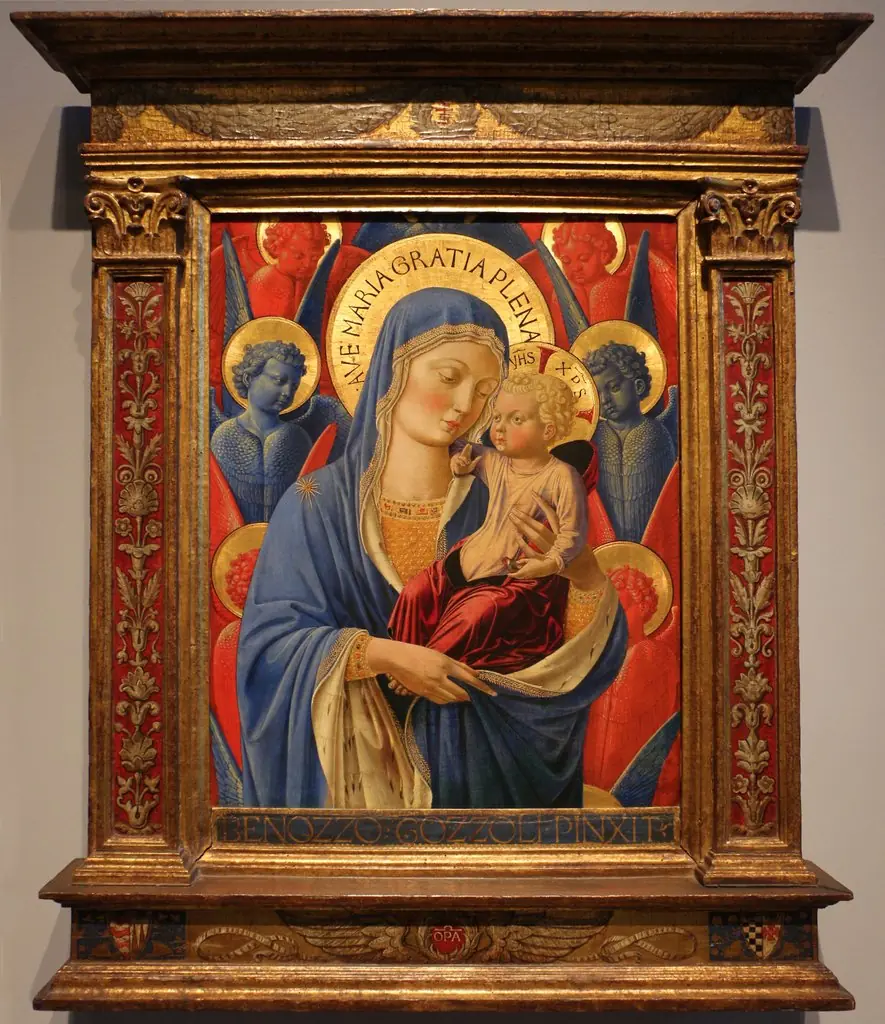 madonna col bambino e angeli
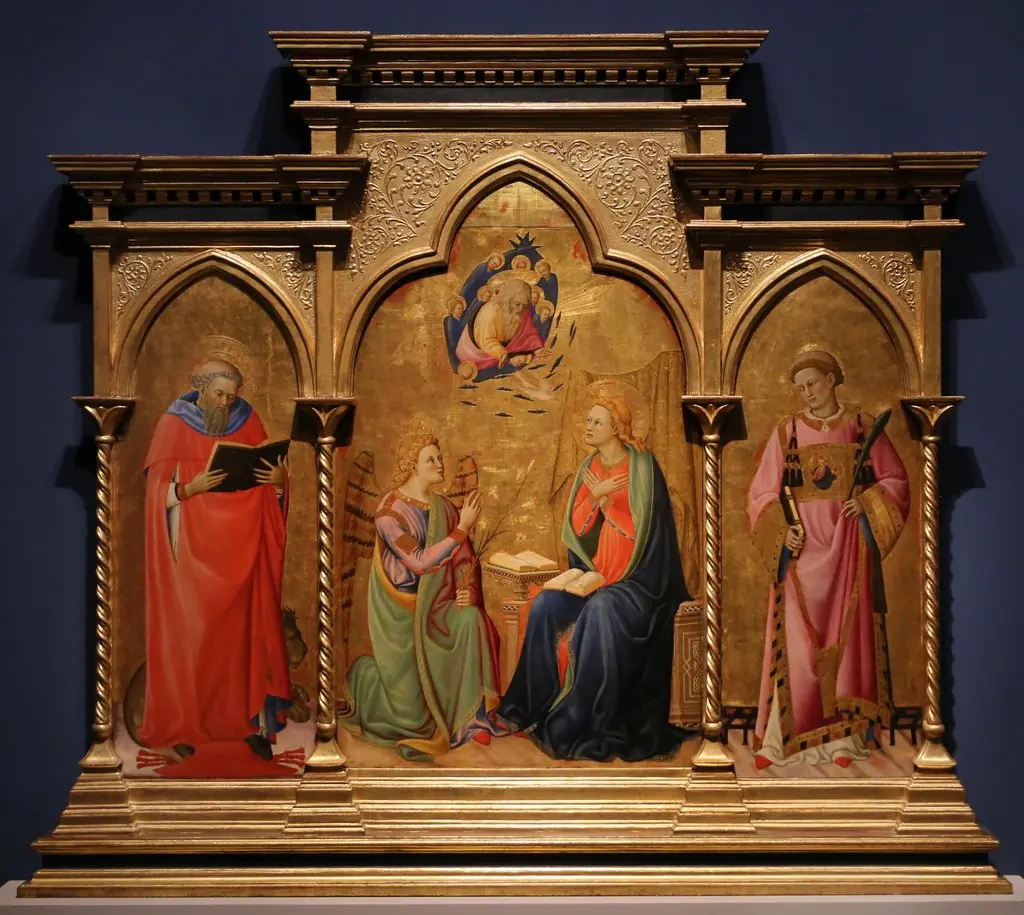 Parts of a triptych: Annunciation and saints Jerome and Lawrence
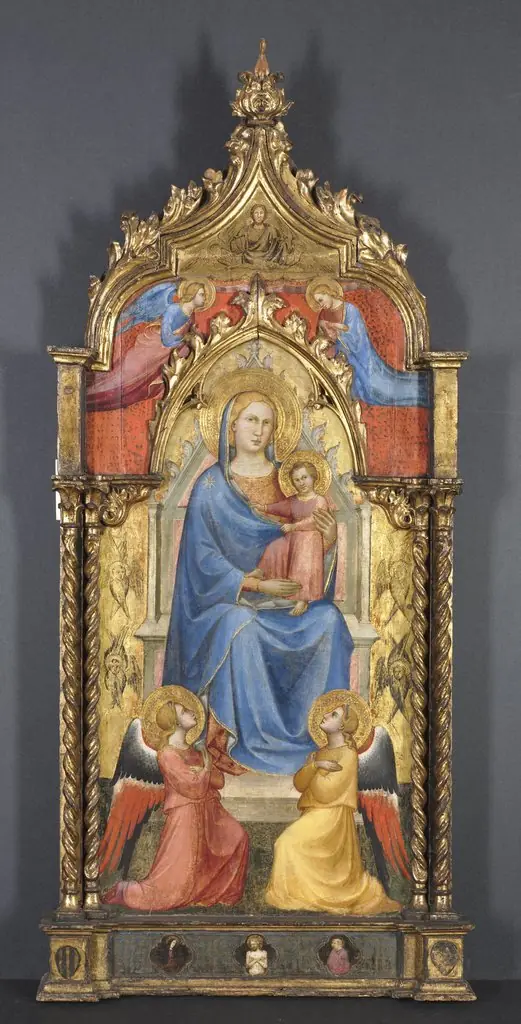 Virgin and Child with Angels
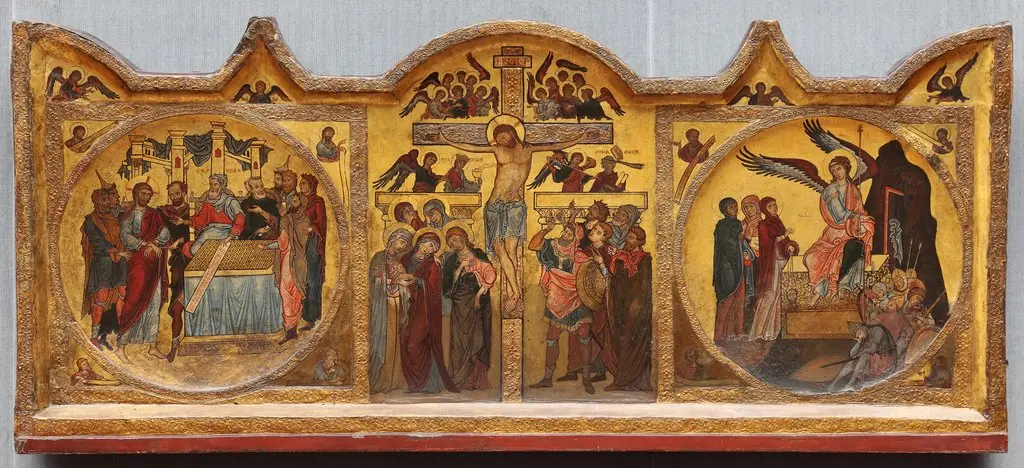 Crucifixion retable from Soest
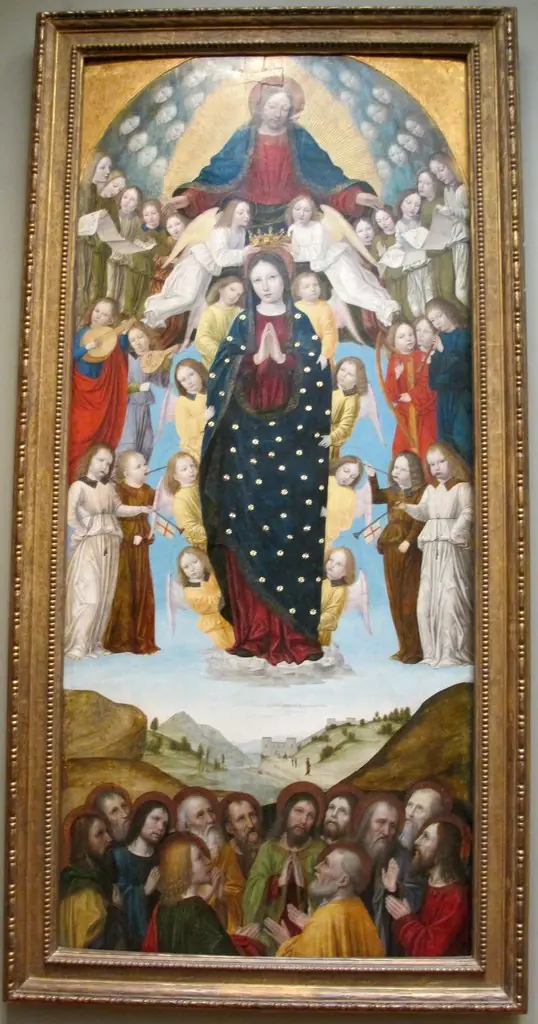 Assumption of the Virgin
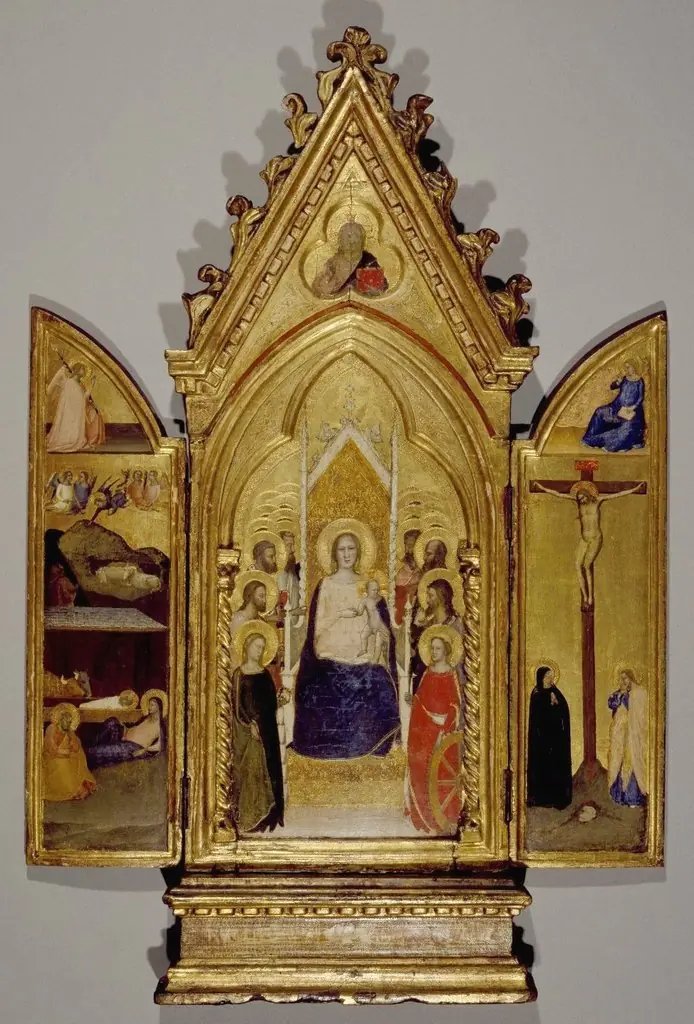 Triptych: Madonna with Saints and Christ Blessing (Center); The Nativity and the Annunciate Angel (Left Wing); Crucifixion and the Virgin Annunciate (Right Wing)
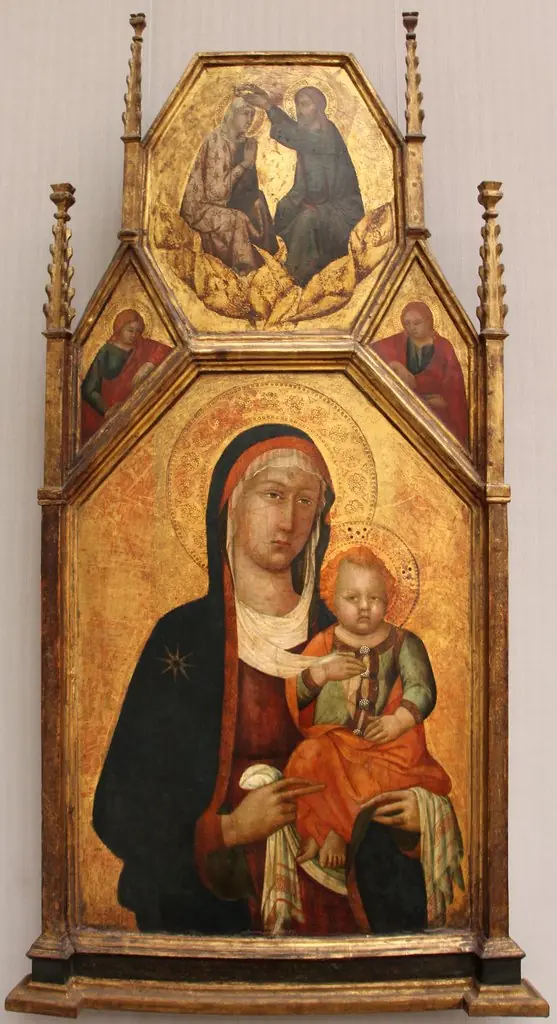 Maria mit dem Kind
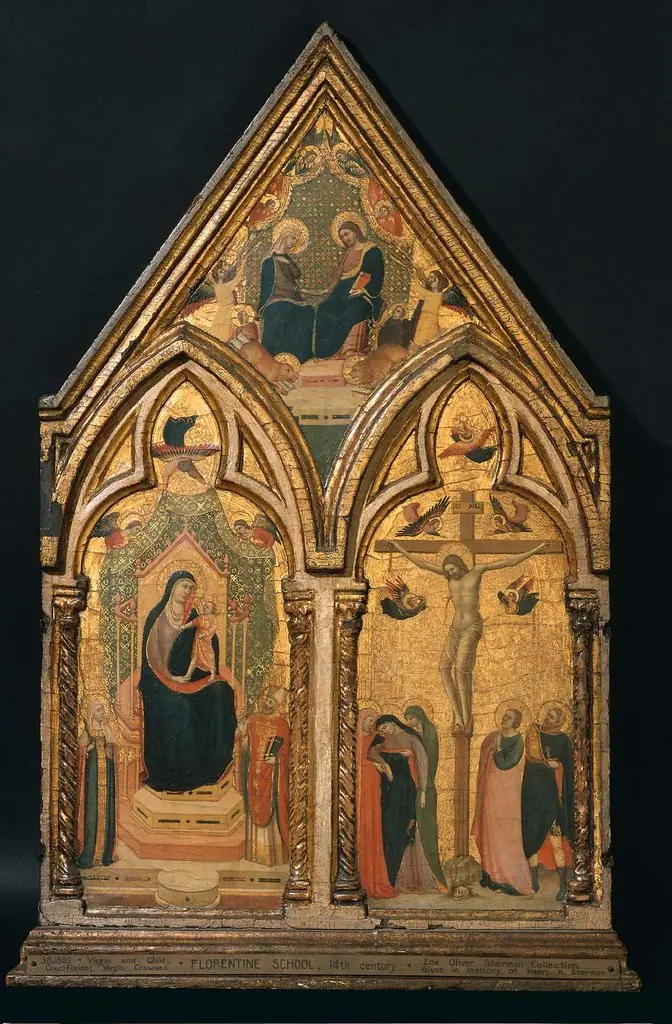 Virgin and Child Enthroned with Saints; Crucifixion; Coronation of the Virgin
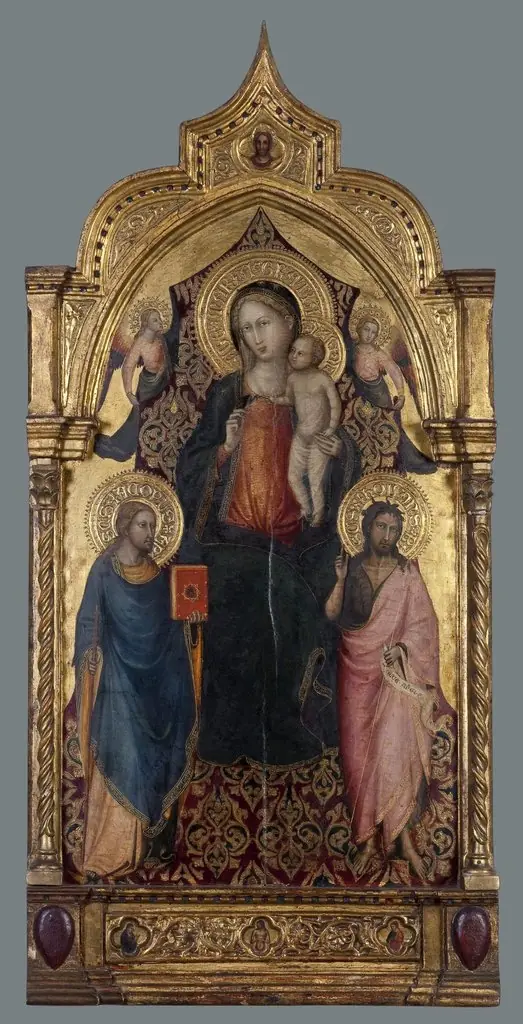 Madonna and Child, with St Jacob the Younger, St John The Baptist and Angels
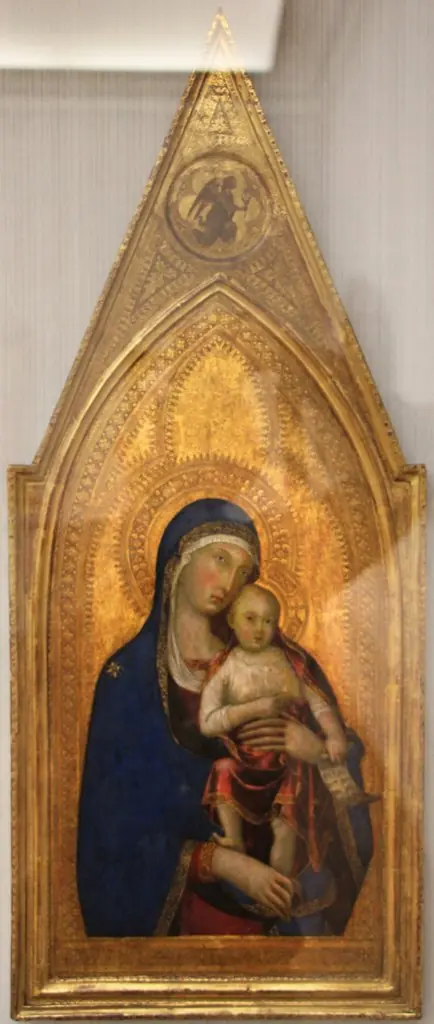 Maria mit dem Kind
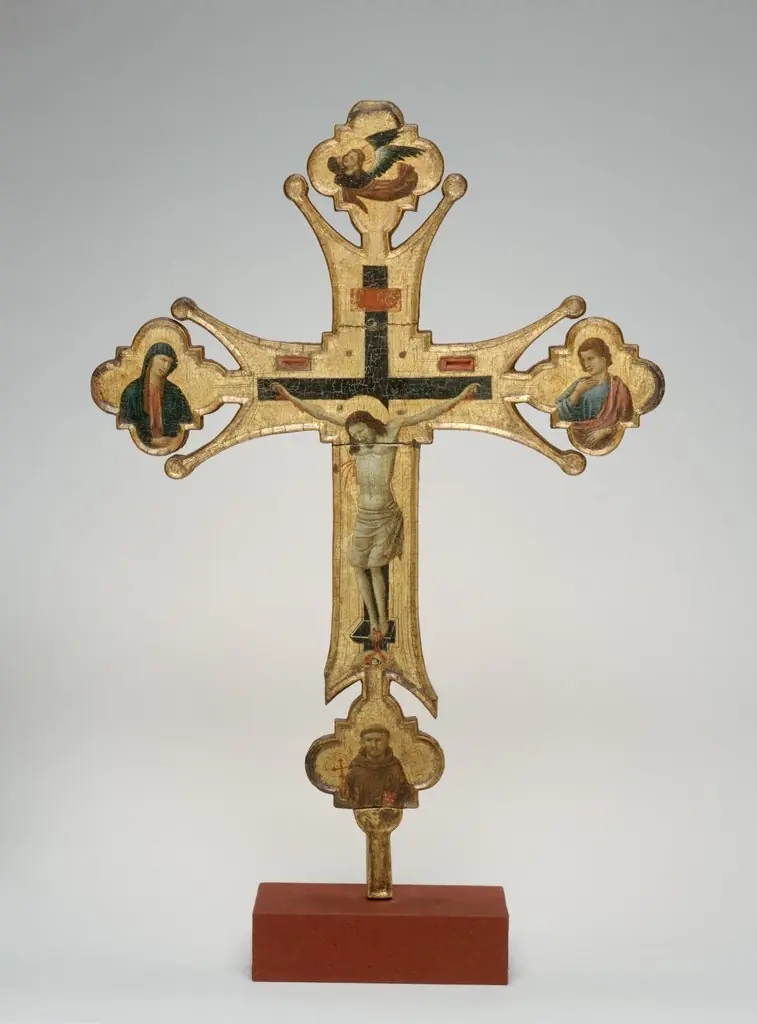 Processional Cross