Artwork
Saints George and Sebastian
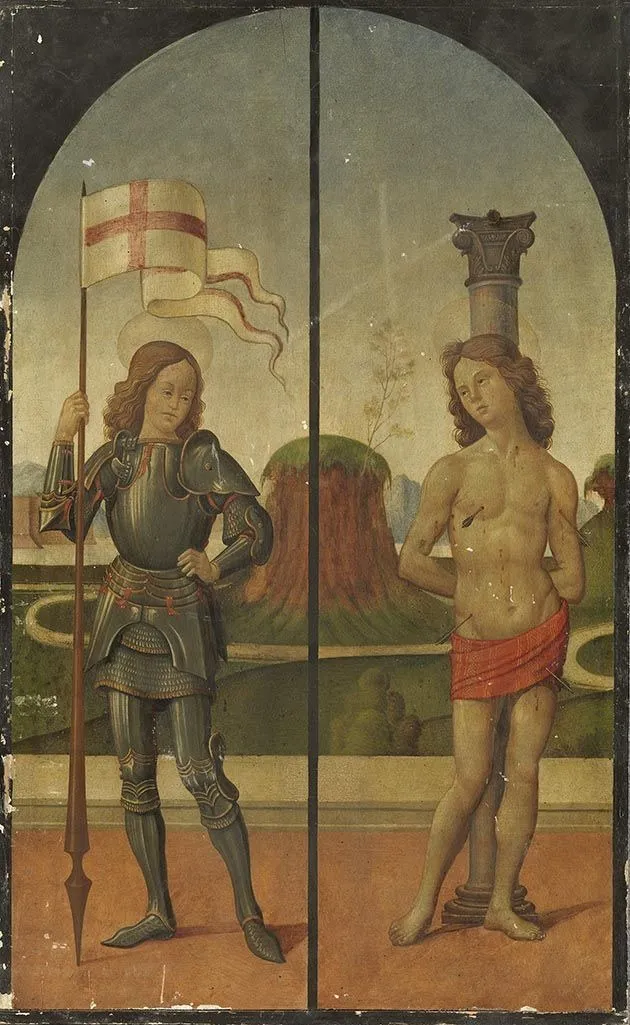
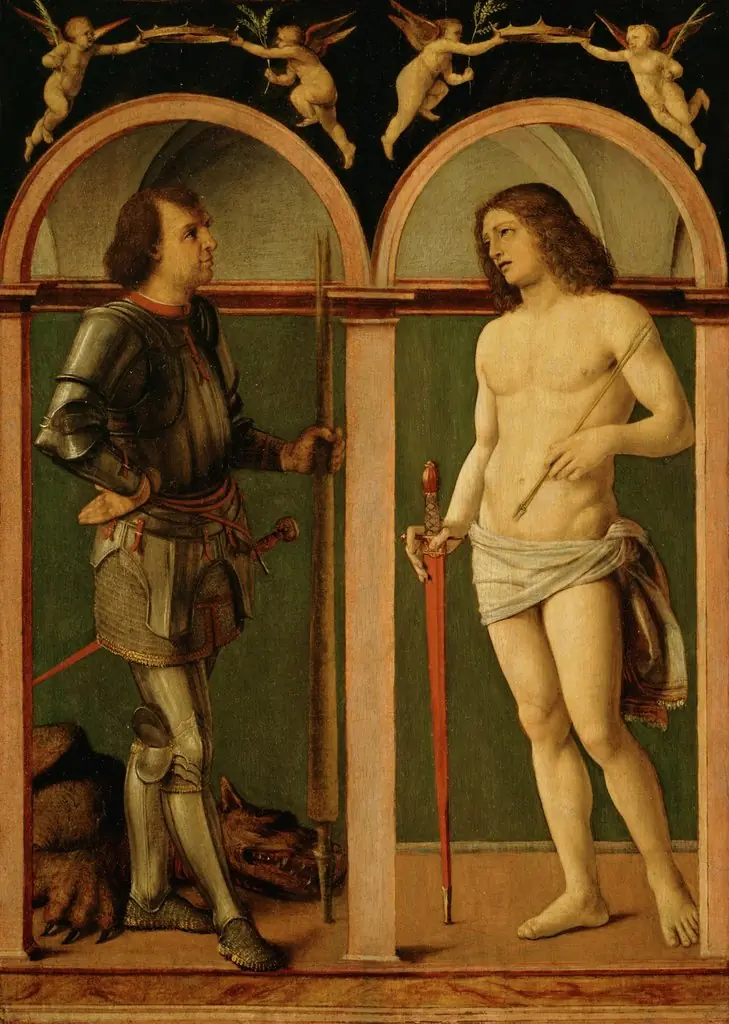
Saints George and Sebastian is an oil painting by the Early Renaissance artist Bartolomeo di Giovanni. It dates from 1496 and is held in the collection of the Bavarian State Painting Collections.
About this work
Subject & Meaning
The painting portrays the Christian martyr saints George and Sebastian, figures associated with military valor and steadfast faith.
The painting portrays the Christian martyr saints George and Sebastian, figures associated with military valor and steadfast faith. George is traditionally identified by his lance and a dragon defeated, symbolizing triumph over evil, while Sebastian is shown pierced by arrows, representing endurance of persecution. Their inclusion reflects the devotional emphasis on protective intercession during the late fifteenth century.
The work belongs to the religious art genre and was created for devotional use within a German collection context.
The composition draws on established iconographic conventions that convey both narrative and theological meaning, linking personal piety to broader themes of sacrifice and divine protection.
Technique & Style
Saints George and Sebastian is executed in oil paint on a poplar panel, a support and medium combination typical of late fifteenth-century Florentine practice. The work is a small, vertically oriented panel measuring 54.8 cm in height and 33.7 cm in width, a format suited to private devotional use. Its religious genre and paired depiction of Saint George and Saint Sebastian align with the late Quattrocento Florentine tradition of combining warrior-saint iconography in a single intimate composition.
History & Provenance
Saints George and Sebastian was created by Bartolomeo di Giovanni in 1490, executed in oil paint on a poplar panel. The work is held in the Bavarian State Painting Collections and is located at the Alte Pinakothek, where it remains part of the institution's holdings.
No further details about the commission, original patron, or successive private ownerships are documented in the available sources, leaving the early provenance chain beyond its current institutional custody unspecified.
The painting is housed in the Alte Pinakothek within the Bavarian State Painting Collections. It entered the collection as part of the museum's holdings, with its location recorded at the Alte Pinakothek. The work has been exhibited in major displays of Renaissance religious art at the institution, including retrospectives of Bartolomeo di Giovanni's output.
Context
The painting was created by Bartolomeo di Giovanni in 1490 as an oil work on poplar panel, depicting Saints George and Sebastian. It belongs to the religious genre and was produced within the context of late 15th-century Florentine workshop practice, reflecting di Giovanni's role in continuing his father Neri di Bicci's artistic legacy. The work is part of the Bavarian State Painting Collections, housed at the Alte Pinakothek in Munich, where it has been on continuous display since its acquisition.
Art historians regard it as a representative example of the transition from Quattrocento to early Renaissance devotional painting, particularly noting its devotional intensity and precise characterization of the martyr saints. Its stylistic analysis contributes to broader scholarship on Florentine painting workshops and the development of saintly iconography in early Renaissance art. The attribution to Bartolomeo di Giovanni has been consistently supported by both technical analysis and stylistic comparison with documented works, reinforcing understanding of his artistic development within the di Giovanni workshop tradition.
Overview
Created in 1496, this oil painting presents two figures side by side: a fully armored knight bearing a red‑and‑white banner marked with a cross, and a partially clothed youth leaning against a column. The composition is set against a muted landscape, with the figures positioned on a plain floor that emphasizes their distinct attire and gestures.
Artist & collection
Artist
Bartolomeo di Giovanni di Domenico (1458? – 1501) was an Italian Renaissance painter active in Florence. His works were first identified by the art historian Bernard Berenson, who did not know the painter's real name so…

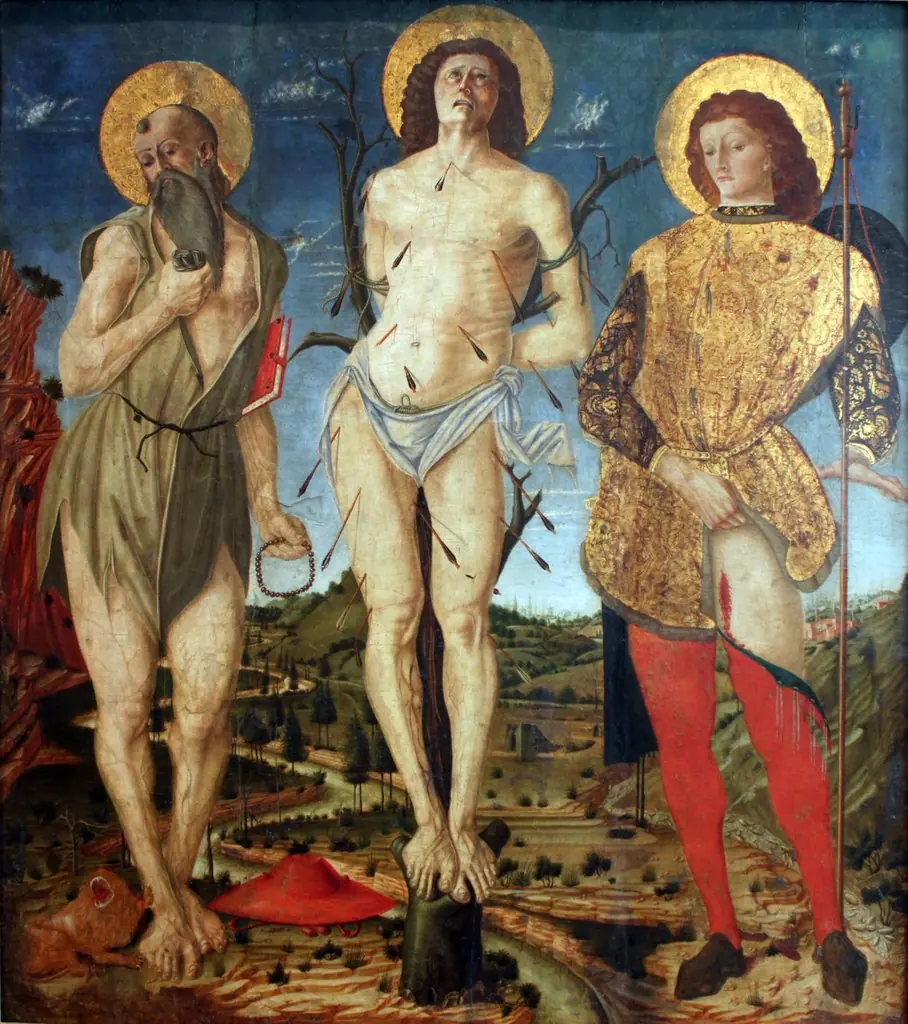 The St. Jerome, Sebastian and Rochus
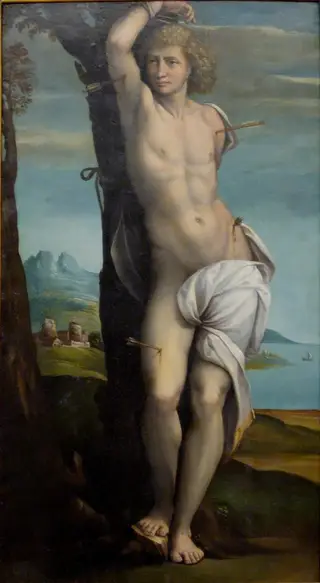 Saint Sebastian
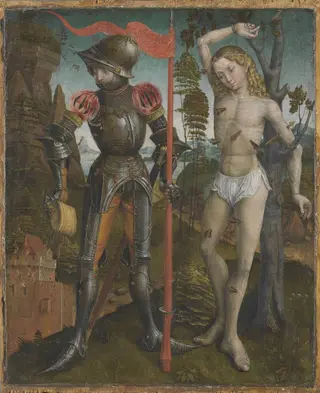 Die hll. Florian und Sebastian
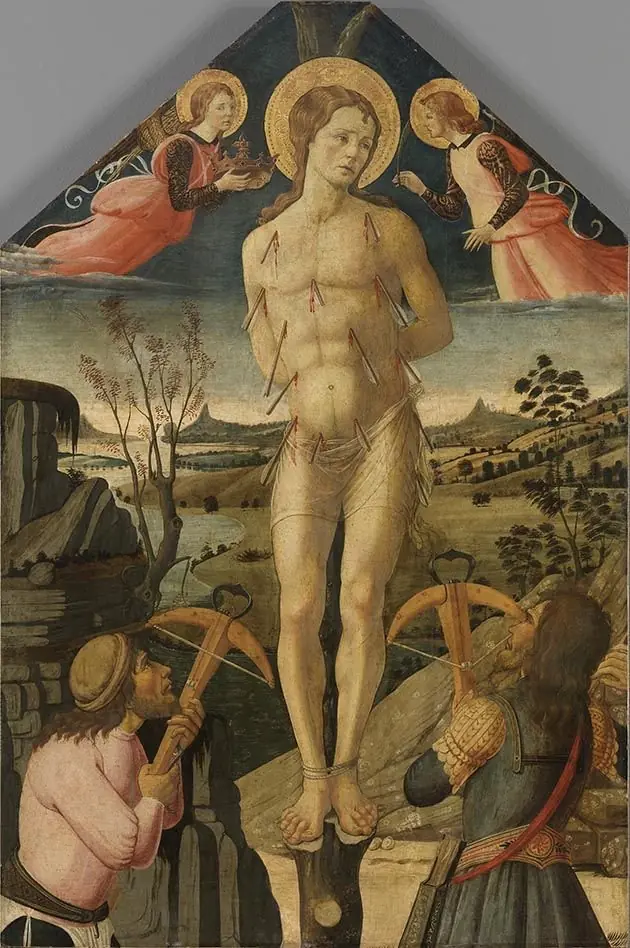 The martyrdom of Saint Sebastian
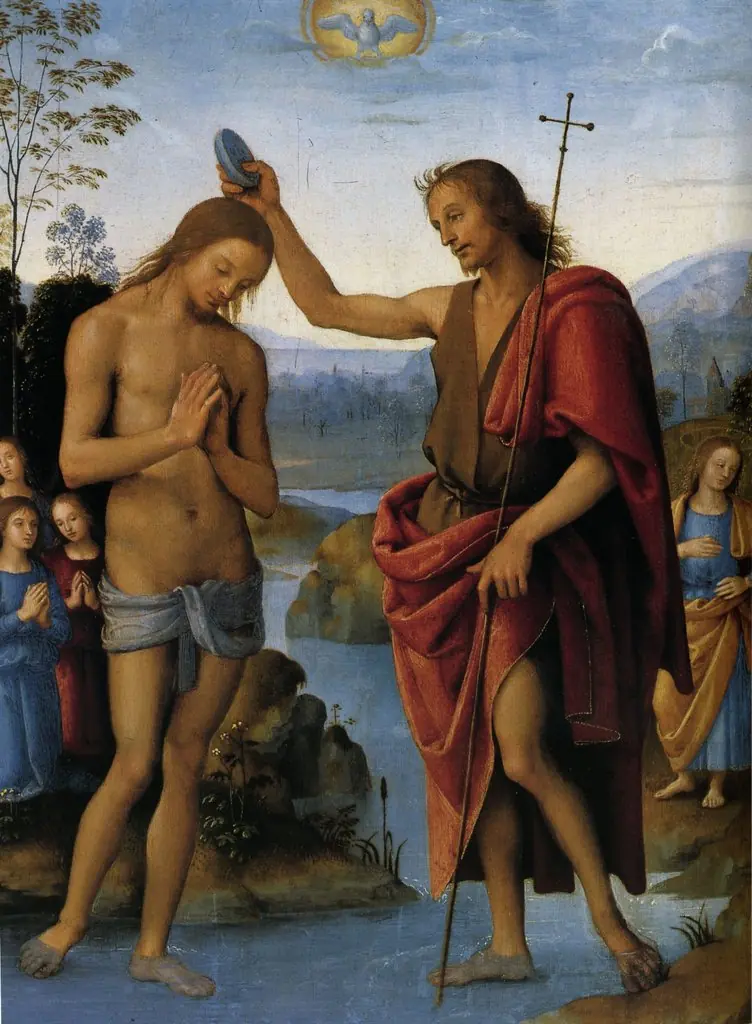 The Baptism of Christ
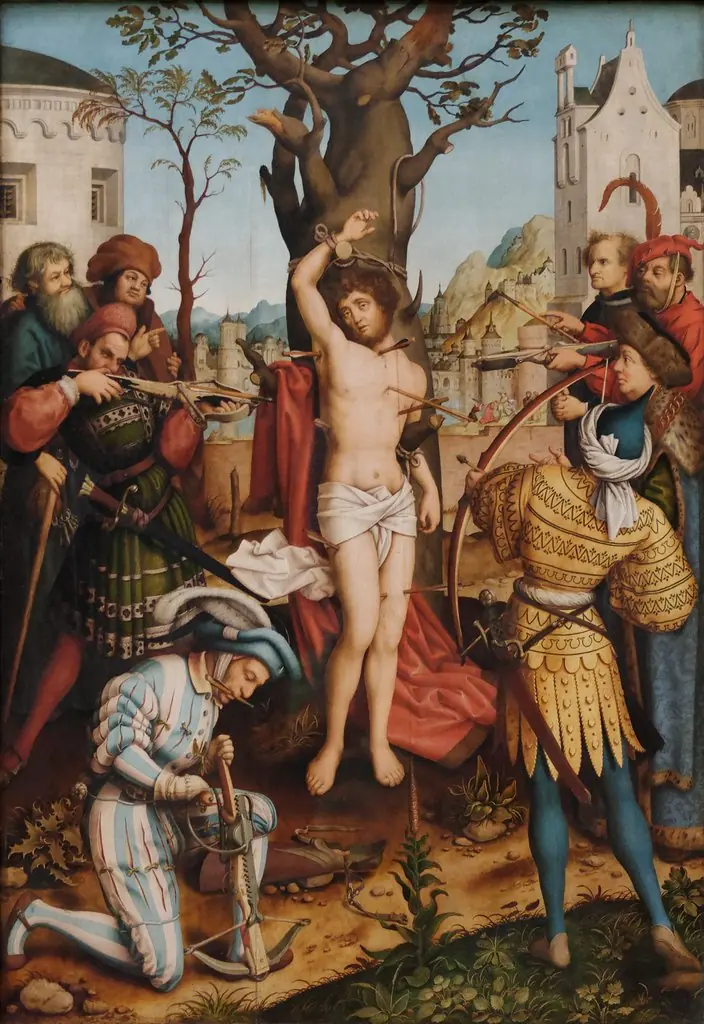 St. Sebastian Altar: The Martyrdom of St. Sebastian
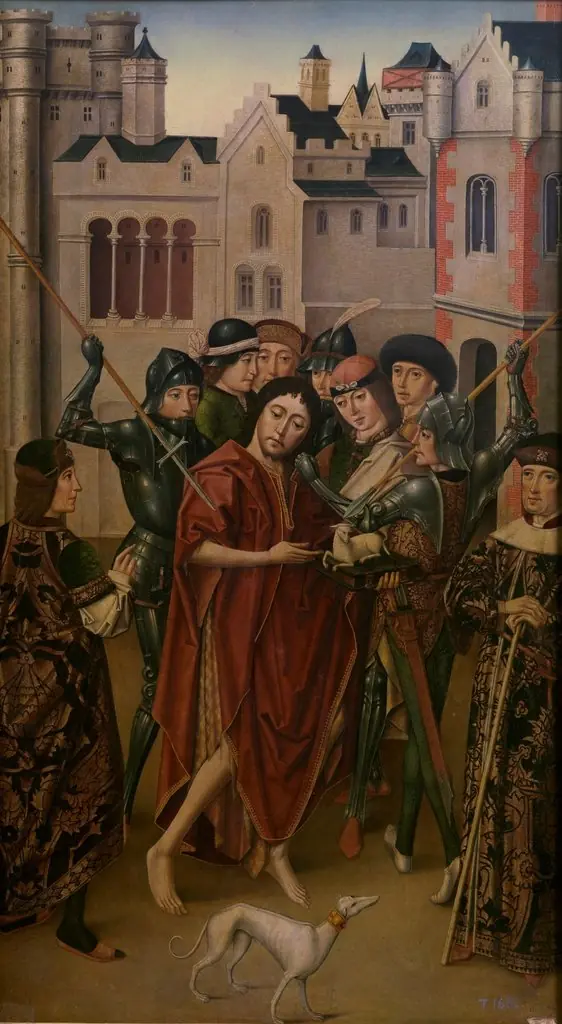 The Arrest of Saint John the Baptist
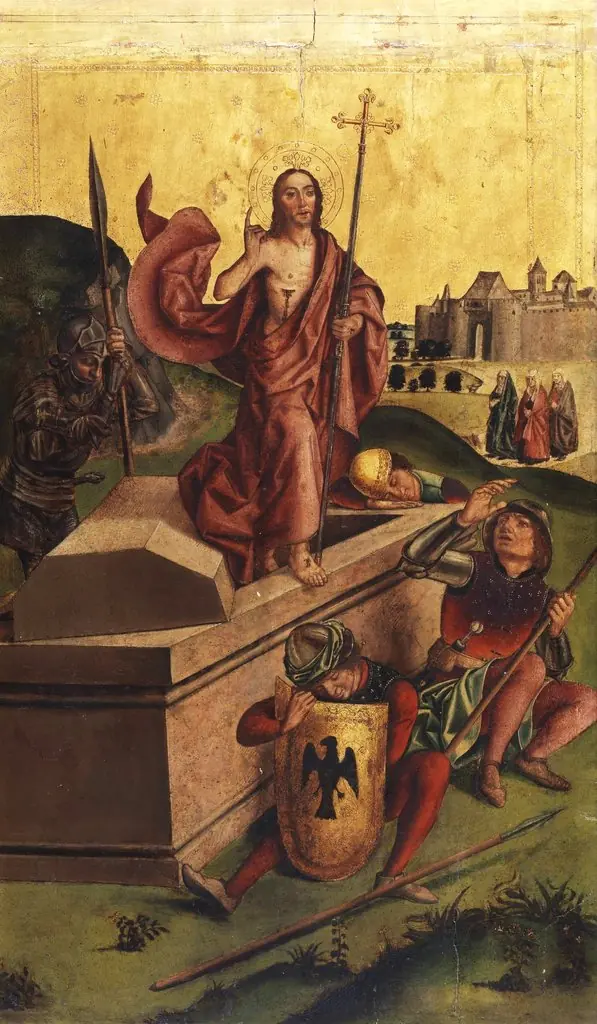 Resurrection of Christ
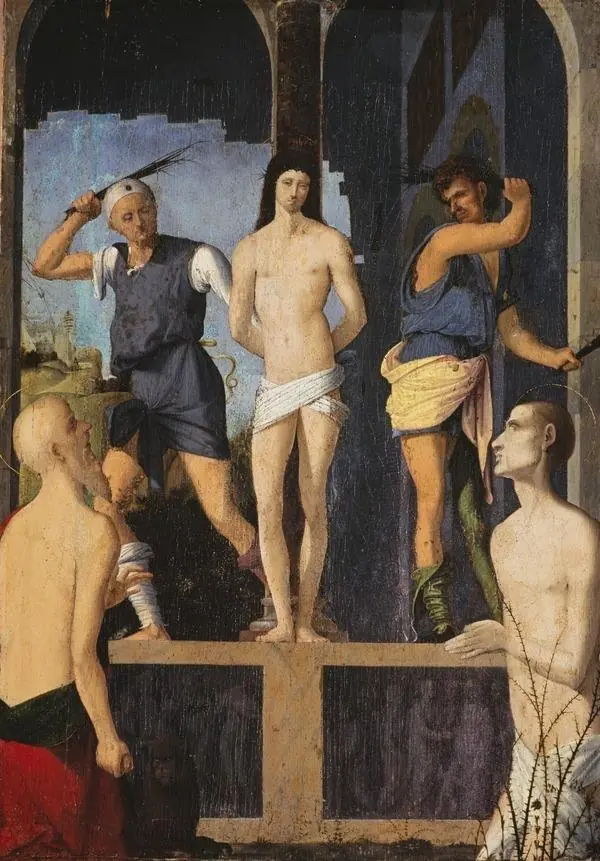 The Scourging of Christ with Saints Jerome and Benedict
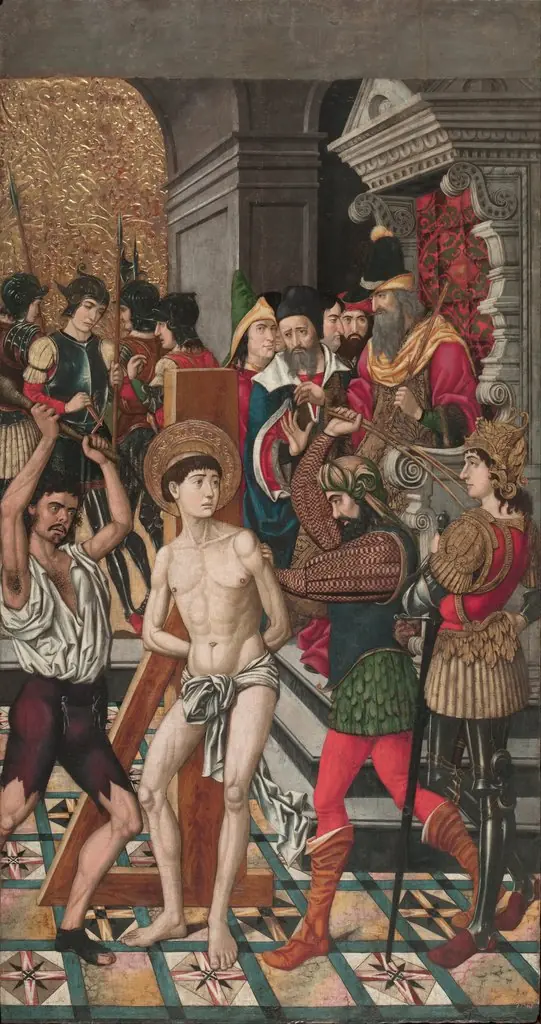 Flagellation of Saint Vincent
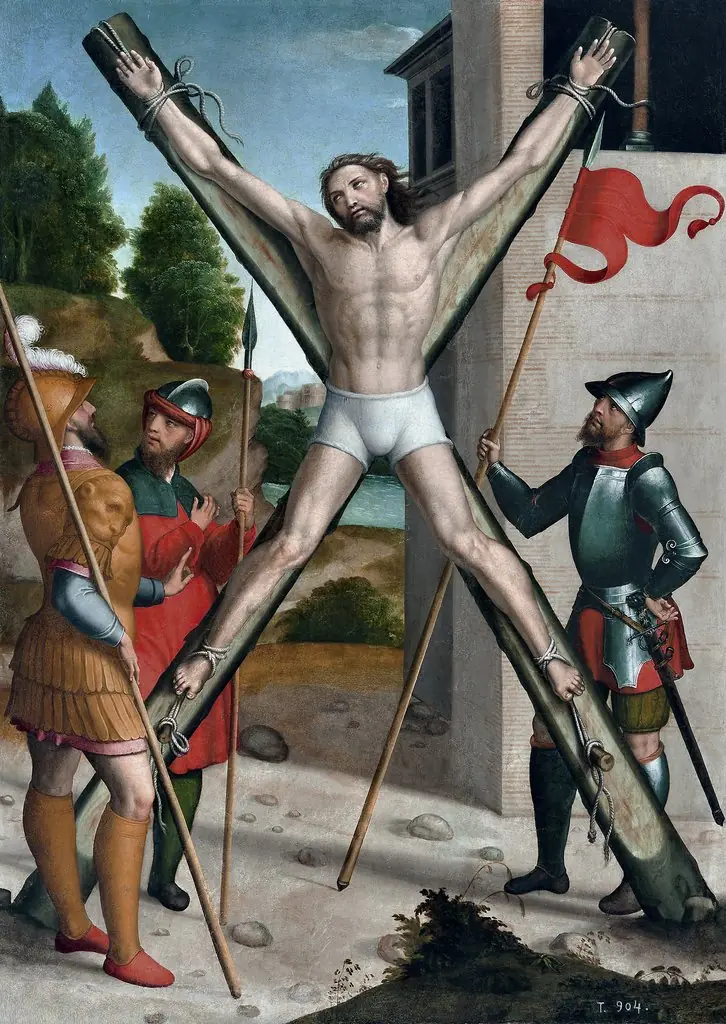 Martirio de San Andrés
- Saint George and Saint Sebastian